





 Portuguese
  English
  Spanish
 4 min of reading
  0 comments


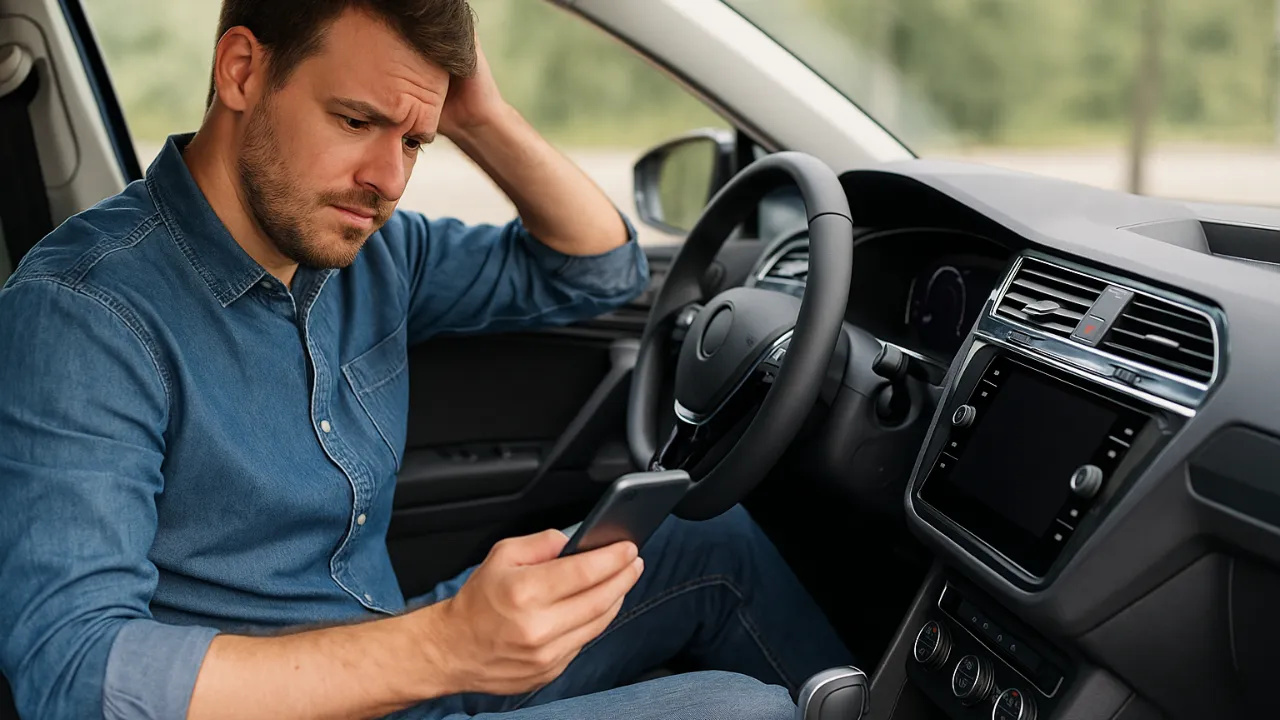
Imagine buying a new car, all high-tech, full of screens, only to find out it doesn’t support your Apple CarPlay or Android Auto anymore. That’s what’s about to happen with the new Chevrolet models. The decision caught many people by surprise and raised an important question: how will drivers pair their phones now?
The answer involves profound changes in how automakers view the modern car — and also in the relationship between you, your smartphone, and the vehicle’s dashboard.
Why Chevrolet Is Giving Up Apple CarPlay and Android Auto
The reason may seem technical, but it’s also strategic. Chevrolet, part of General Motors (GM), decided to forge its own path. The automaker wants to stop relying on Apple and Google’s systems to create a platform that is 100% its own, more integrated with the car and with total control over the user experience.
-
A French brand placed a car on four huge red balloons to prove that its suspension made the vehicle “float,” and the surreal scene became one of the most iconic and unusual images in automotive history.

-
Jeep Avenger begins production in Brazil, debuting as the brand’s new entry-level SUV and inaugurating an unprecedented phase by becoming the first national Jeep manufactured outside of Goiana, as part of a R$ 3 billion plan.
-
Costing R$ 12,490, the new Shineray Urban Lite 150 “cheap one” arrives in Brazil with a CVT transmission, digital dashboard, and LED lights, making it more affordable than the Biz and targeting those who want to abandon the bus.
-
Ducati brings to Brazil the Superleggera V4 Centenario: 228 hp that become 247 with a track kit, carbon fiber and carbon-ceramic brakes, estimated price between R$ 1.5 and 2 million, deliveries only in 2027.


In other words, instead of mirroring your phone’s screen on the dashboard — as Apple CarPlay and Android Auto do — the new cars will have their own system, which already comes with apps and functions similar to those on your phone. Everything will run directly on the vehicle’s system, without needing to connect anything.
The idea seems modern, but opinions are divided. On one hand, GM claims the new system will be faster, safer, and free from glitches. On the other, many drivers feel they’re losing something familiar — that practical way of plugging in a cable and seeing Waze, Spotify, and messages on the car screen.
What Comes in Place of Traditional Systems
Chevrolet’s new system will be based on Android Automotive, a version of Android designed to run inside cars, without relying on the phone. This means that Google Maps, YouTube Music, and even Google Assistant will already be available directly on the multimedia center, even if you don’t use Android on your smartphone.
For iPhone users, the change may seem even more radical, as Apple CarPlay will cease to function. But GM promises that it will be possible to connect the phone via Bluetooth and access basic functions like calls and audio. The rest — like maps and voice assistants — will be handled by the car’s system.
The promise is of a more “automotive” and less “mirrored” experience. In practice, you will be able to give voice commands, receive directions, and listen to music, all without needing to touch your phone. The car will literally become a smart device on wheels.
The Side No One Talks About: Control and Data
Behind this change, there is also a matter that few discuss: data control. While Apple CarPlay and Android Auto belong to tech companies, the new system will allow GM direct access to information about routes, preferences, and app usage — which can help improve services and, of course, open up new business opportunities.
This could mean automatic updates, new applications, and even subscription packages inside the car. Something similar to what already happens in smartphones, but now adapted to the routine of those who drive. It’s a global trend that promises to transform the dashboard into a kind of “digital hub.”
How You Will Pair Your Phone in New Generation Cars
The question many drivers have is: “And what about me, how will I pair my phone now?”. The answer is simple, but different from what has been done so far. In the new Chevrolet models, the connection will be made primarily via Bluetooth and integrated Wi-Fi, rather than through a USB cable.
You will be able to use your smartphone only to mirror notifications, calls, and playlists. Everything else will be controlled by the car’s system. Instead of opening Waze on your phone, for example, you will open Google Maps directly on the vehicle’s central display — which will use its own data connection.
In practice, the phone will continue to be part of the experience, but no longer the center of it. The car will become the new “main device.”
A Change That Goes Beyond Technology
Chevrolet’s decision shows how the automotive industry is transitioning to a model where the car behaves more like a computer than a machine. This may generate resistance at first, but it is the type of change that ultimately defines the future.
Perhaps, in a few years, the question “does it have Apple CarPlay and Android Auto” will no longer make sense — because all systems will be integrated by default, without the need for cables, or mirroring.










Seja o primeiro a reagir!