





 Portuguese
  English
  Spanish
  5 min of reading
  0 comments



Discover How Engineering Project Management Has Evolved Throughout History, Understand Its Principles, and See Why This Field Is Essential for Turning Ideas Into Great Achievements.
Engineering project management transforms ideas into reality by integrating technical, practical, and strategic knowledge.
From the great works of antiquity to modern infrastructure systems, project managers, even in a rudimentary way, enabled the advancement of civilizations and the improvement of the structures that support our daily lives.
To understand how this field developed, we need to go back in time.
-
Abandoned house for 15 years disappears in the woods, shocks owner with unrecognizable scenery and is reborn in an intense transformation after almost 90 hours of work in just 10 days.

-
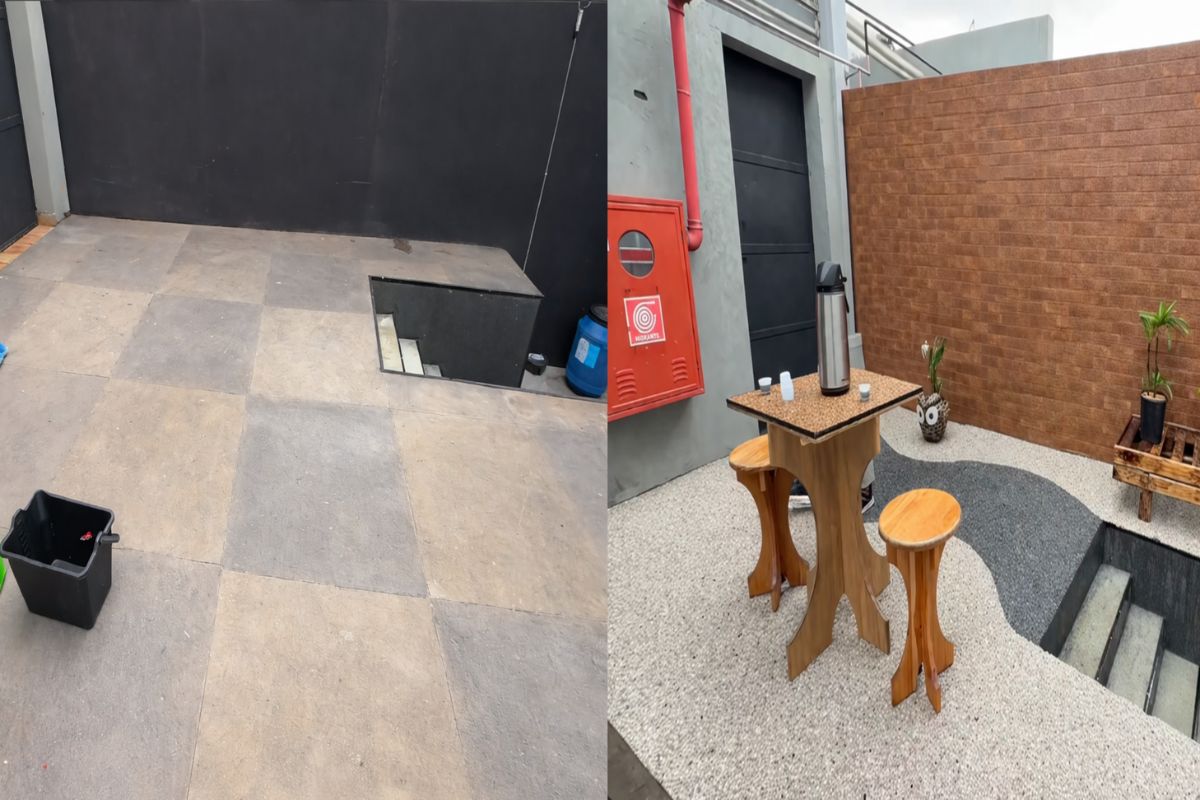
In just three hours, a natural stone floor transforms the entrance of the house with an organic effect, immediate drainage, and a sophisticated non-slip finish that doesn’t puddle water, dries quickly, and impresses with the final result.
-
‘Interlocking brick’ made of earth arrives in the construction industry with cost reductions of up to 40% on the project.

-
Espírito Santo will receive the largest engineering project in its history with the duplication of BR 262, which will have 50 viaducts, 28 bridges, and 2-kilometer tunnels cutting through the most challenging mountainous region of the entire state.


For example, the construction of the Pyramids of Egypt, Roman aqueducts, and medieval cathedrals were undertakings that required organization, leadership, and resource control, even before the formal existence of engineering as a science.
Moreover, these grand projects demanded rigorous planning, specialized labor, and schedule control—concepts that today form the basis of project management.
According to the British Museum, the Pyramids of Giza, built between 2600 and 2500 B.C., are a classic example of a complex project in antiquity, highlighting the need for detailed planning and team management.
With the Industrial Revolution, which began in the 18th century, engineering increasingly took on a more technical and scientific role.
Complex machines, railways, metal bridges, and factories required a much higher level of coordination.
The need to accurately forecast deadlines, costs, and materials motivated the creation of more systematic methods.
These include the Gantt charts, created in the early 20th century, and later techniques like PERT (Program Evaluation and Review Technique) and CPM (Critical Path Method), developed in the 1950s.
According to the Project Management Institute (PMI), founded in 1969, these tools marked the beginning of the professionalization of project management, allowing for greater control and efficiency in engineering projects.
The Professionalization of Project Management in Engineering
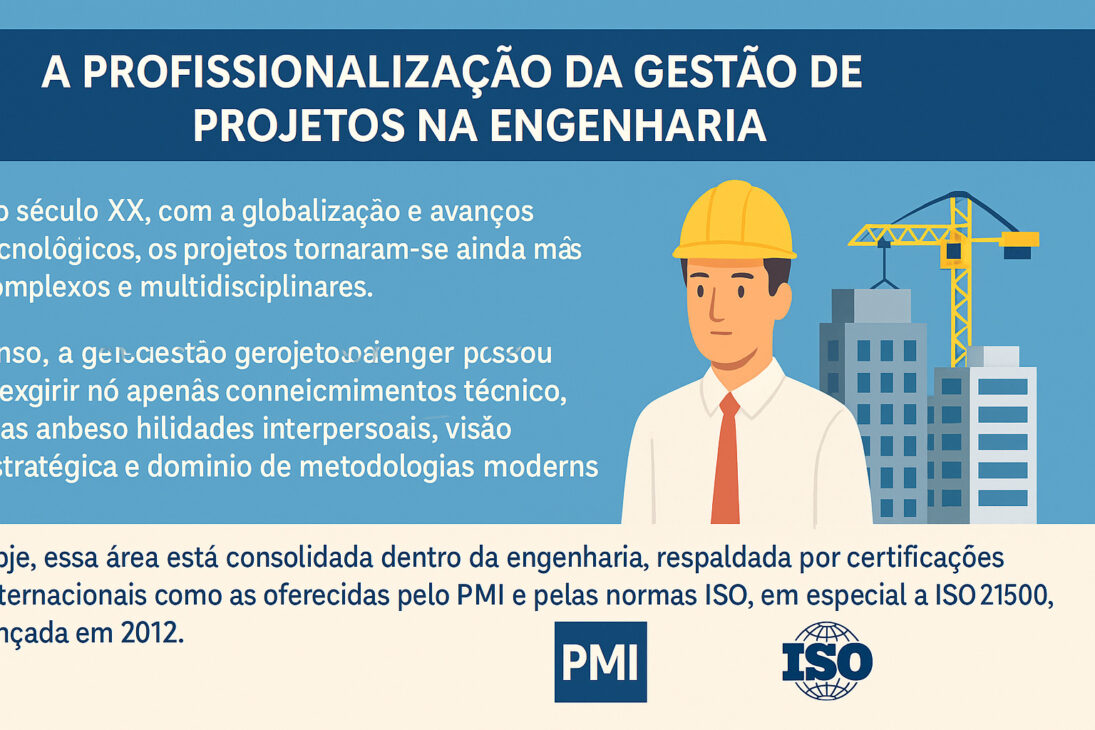
In the 20th century, with globalization and technological advancements, projects became even more complex and multidisciplinary.
Large-scale works, such as dams, highways, and urban transportation systems, began to involve diverse teams and interdependent stages.
Thus, engineering project management came to require not only technical knowledge but also interpersonal skills, strategic vision, and mastery of modern methodologies.
Today, this field is established within engineering, supported by international certifications such as those offered by PMI and ISO standards, especially ISO 21500, released in 2012 by the International Organization for Standardization (ISO).
According to ISO, effective project management must encompass all phases of the life cycle, from feasibility study to final delivery, ensuring planning, time control, resource allocation, risk identification, quality assurance, and alignment with client or organizational objectives.
Furthermore, increasing technical and environmental standards have brought new challenges. According to the United Nations Environment Program (UNEP), established in 1972, sustainability has become a fundamental requirement for any project.
This has required managers to seek solutions that minimize environmental impact and promote the conscious use of natural resources.
Challenges and Responsibilities of the Project Manager
In the context of engineering, project management takes on specific characteristics.
The work goes beyond technical drawing or construction execution.
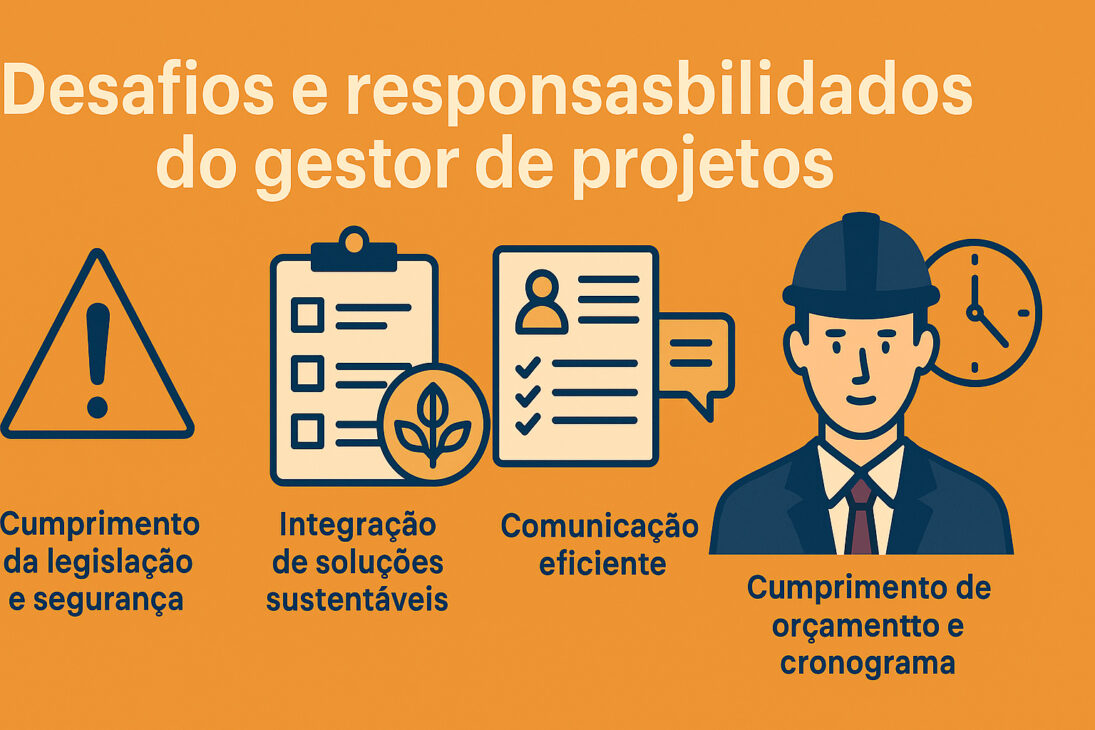
The manager must also ensure compliance with legislation, guarantee worker safety, respect the environment, and integrate sustainable solutions.
Thus, the engineering manager must keep the project within budget and on schedule, avoiding waste and delays that compromise the success of the work.
Another crucial point is effective communication.
According to PMI, engineering projects typically involve multiple stakeholders, such as investors, suppliers, technical teams, regulatory agencies, and local communities.
Keeping everyone informed and engaged requires clarity, leadership, and negotiation skills.
Failures in this communication can jeopardize the credibility and even the viability of the project.
Moreover, digital transformation has revolutionized project management.
Modern software allows real-time tracking of stages, precise cost control, and three-dimensional visualization of structures.
The growing use of agile methodologies, initially developed for information technology, is also being adapted for engineering, promoting more flexible processes that respond to changes.
The advancement of <strongartificial intelligence and data analysis, according to the Software Engineering Institute, helps anticipate risks and optimize planning.
These innovations indicate that the future of project management in engineering will be even more technological, prioritizing speed and accuracy.
However, the human factor remains essential. The experience, ethical decision-making, commitment to quality, and strategic vision of the manager define the success or failure of any undertaking.
Additionally, empathy and the ability to lead teams under pressure are skills that remain irreplaceable.
The Importance of Education and the Future of Management
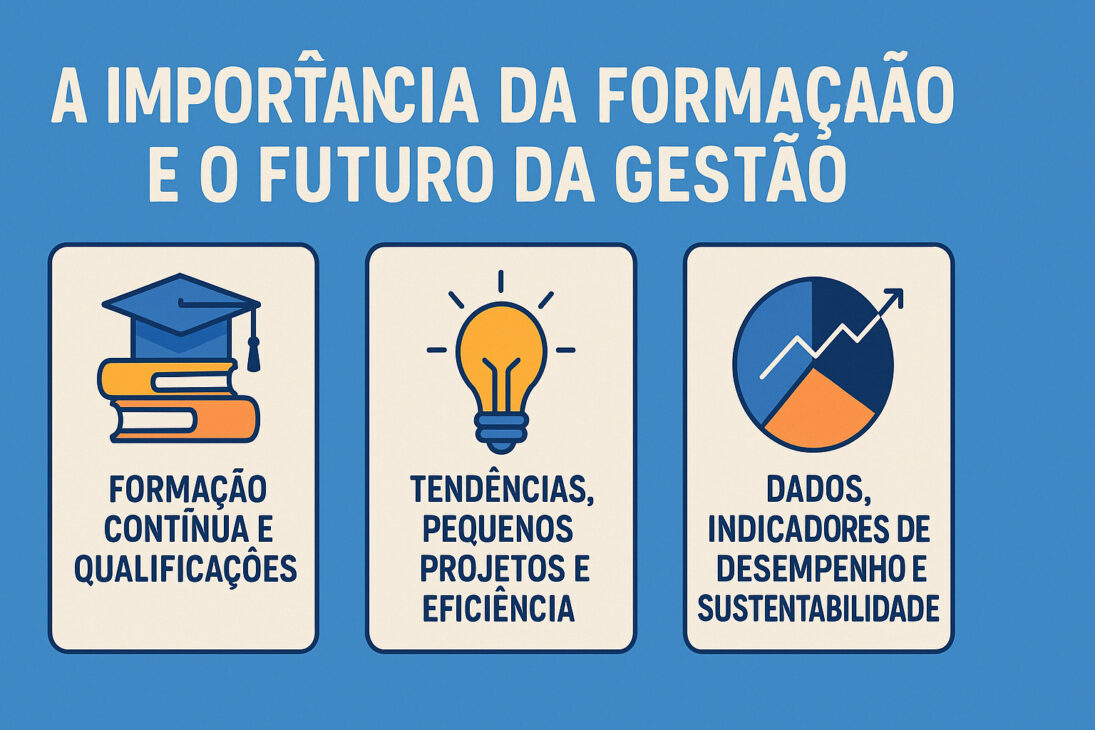
Therefore, continuing education has become essential. Many professionals seek postgraduate degrees, MBAs, and specializations in areas such as production engineering, construction management, and project management.
Participating in conferences, workshops, and study groups is essential to keep up with trends and exchange experiences.
It is worth noting that, while engineering project management is often associated with large undertakings, its principles also apply to smaller projects, such as renovations, installations, and industrial maintenance.
On any scale, efficiency, control, and planning are important differentiators. Small projects also require careful attention and management to achieve success.
According to PMI, the future of project management points to an integrated approach grounded in data, performance indicators, and sustainability.
The growing demand for efficient constructions, with lower consumption of natural resources and higher quality of life, will require prepared, ethical managers who are aware of the social and environmental impact of their decisions.
Moreover, constant innovation and adaptation to market changes will be fundamental requirements.
The Essential Role of Project Management in Engineering
In summary, engineering project management is a dynamic and constantly evolving field. It combines tradition and innovation to meet the needs of contemporary society.
Understanding this field means understanding how ideas come to life, how resources are used intelligently, and how each project contributes to a safer, more functional, and sustainable world.
Whether you are a student, professional, or interested party, mastering the fundamentals of project management is essential to act responsibly and excel in today’s engineering.











Seja o primeiro a reagir!