





 Portuguese
  English
  Spanish
  6 min of reading
  0 comments



Discover How Oil Industry Salaries Work, What Factors Influence the Values Paid, and What to Expect When Pursuing a Career in This Strategic Sector.
The oil industry has always played a fundamental role in the global economy.
Since it consolidated as the engine of industrial development in the 19th century, oil has transformed not only how the world moves and heats but also the job market in various countries.
According to the International Energy Agency (IEA), the commercial exploitation of oil began in 1859, with the first well drilled in the United States, marking the start of a new energy era.
-
Petrobras evaluates suspension of sales to distributors and considers canceling the cooking gas auction following guidelines from the Federal Government.
-
Lula reveals a masterstroke by Petrobras to undo a deal made by Bolsonaro, which involves the return of an important refinery that currently produces less than half of what was expected and makes Brazil dependent on international diesel.
-
A study confirms that the natural gas sector will reduce greenhouse gas emissions in Brazil by 0.5% and accelerate the energy transition by 2026.

-
Petrobras implements a severe adjustment and confirms a 55% increase in the price of aviation kerosene with a proposal for installment payments for the companies.


From there, oil became essential for economic and industrial growth on a global scale.
Speaking about oil industry salaries is, therefore, more than just discussing numbers: it means understanding a strategic, complex, and highly specialized sector, requiring skilled professionals to handle technical and environmental challenges.
Additionally, oil activity impacts the social and economic conditions of the regions where it occurs. Often, the industry transforms cities and states, generating jobs and infrastructure.
Thus, salaries in the sector reflect not only the complexity of the work but also the social and environmental responsibility involved.
A Historical Look at the Oil Industry
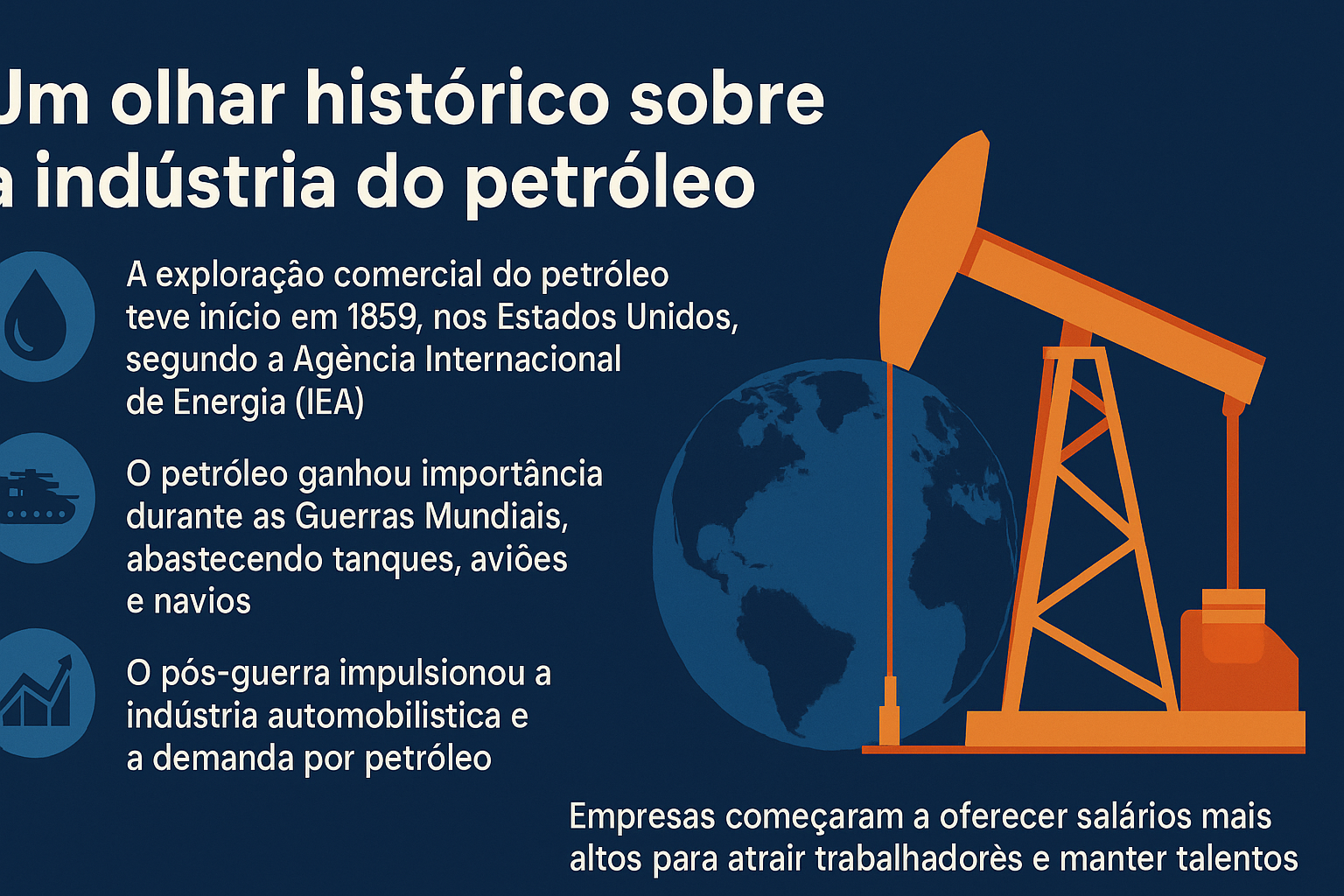
The commercial exploration of oil began in 1859 in the United States, according to historical information from the International Energy Agency (IEA).
From this milestone, the resource became increasingly essential for industrial development.
During World War I and World War II, oil gained decisive importance, fueling tanks, airplanes, and ships.
The U.S. Department of Energy (DOE) highlights that controlling oil production was a strategic factor for military success in these conflicts.
In the post-war period, the growth of the automotive industry and the global economy drove demand for oil.
This accelerated growth increased the demand for specialized professionals in extraction, refining, transportation, and marketing of oil.
Over time, companies in the sector have begun to offer attractive salaries to attract and retain talent, especially in hard-to-reach or high-risk areas, such as offshore platforms and conflict zones.
Furthermore, the technological development of recent decades has brought significant changes to the industry.
The automation of processes, the use of robotics in dangerous environments, and advances in reservoir geology require professionals to constantly update their skills to keep pace with the sector’s evolution. These technical demands directly influence remuneration.
The National Union of Oil Companies (SINDIPETRO) published a report in 2023 indicating growth above inflation in the average salary of the sector over the past decade, in line with technological advancements and operational challenges.
How Oil Industry Salaries Work
Oil industry salaries vary depending on the role, level of qualification, experience, country of operation, and type of operation (onshore – on land, or offshore – at sea).
Salaries in the oil industry are generally higher than in other industrial areas for several reasons:
The need for technical qualification, exposure to risks, a differentiated work regime (such as long shifts, geographic isolation, and rotations) and the high strategic value of the energy sector.
Thus, positions such as drilling engineer, specialized geologist, rig operator, offshore maintenance technician, and project manager usually receive high salaries. Administrative functions, while important, typically have lower remuneration.
The sector offers well-structured career plans. Professionals who start in operational or technical roles can advance to managerial positions over time, with progressive salary increases.
Experience and dedication make a difference in salary growth.
According to the National Agency for Oil, Natural Gas, and Biofuels (ANP), in its 2024 report, the sector reported growth in hiring qualified professionals over the past five years, following the expansion of pre-salt exploration.
Onshore and Offshore Work: Differences That Impact Salary
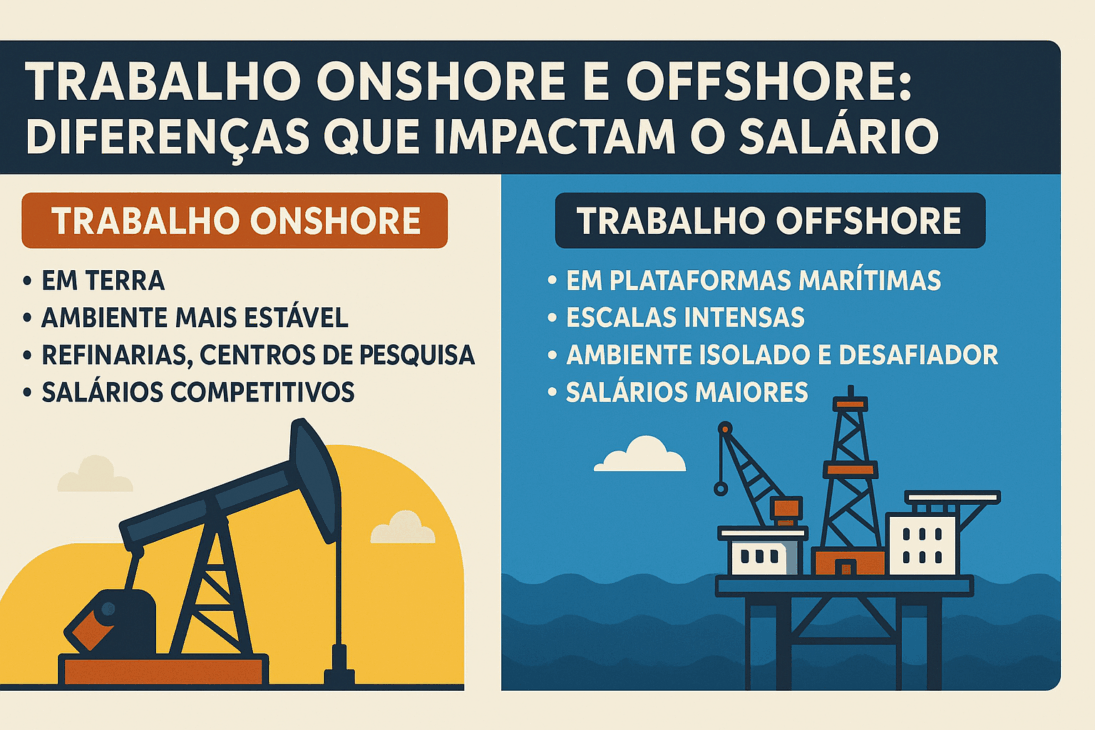
To understand oil industry salaries, it’s important to highlight the difference between onshore and offshore work.
Those who work offshore, on oil rigs, tend to work on intense schedules – such as 14 days on board followed by 14 days off.
This requires adaptation to an isolated environment, strict hours, and challenging weather conditions.
In return, salaries tend to be higher to compensate for these difficulties.
On the other hand, onshore work, in refineries, research centers, administrative areas, or land production units, presents a more stable environment.
Salaries remain competitive, especially for technical roles, but usually do not reach the same levels as offshore roles.
Offshore work requires various specific training courses, such as first aid, firefighting, and emergency evacuation.
These trainings ensure worker safety in hazardous environments and influence salary and benefits determinations by companies.
Professional Qualification and Salary Appreciation
Qualification directly influences oil industry salaries. Companies seek professionals with technical or higher education in engineering (mainly oil, mechanical, chemical, electrical, and civil), geosciences, automation, logistics, and occupational safety.
Technical courses related to oil production, maintenance, and machine operation also hold great value, especially with practical experience.
Specific certifications (such as confined space safety, NR-10, NR-35, maritime survival courses) are required for those working offshore.
The more specialized, the greater the chance of securing better salaries and leadership positions.
Mastery of new technologies, such as simulation software and data analysis, along with knowledge in sustainability and environmental management are also valued.
Companies that invest in innovation pay better for professionals with this differential.
The Brazilian Institute of Oil and Gas (IBP) reported in 2023 that the search for professionals specialized in emerging technologies has increased, reflecting in salary appreciation.
The Influence of Oil Market Fluctuations
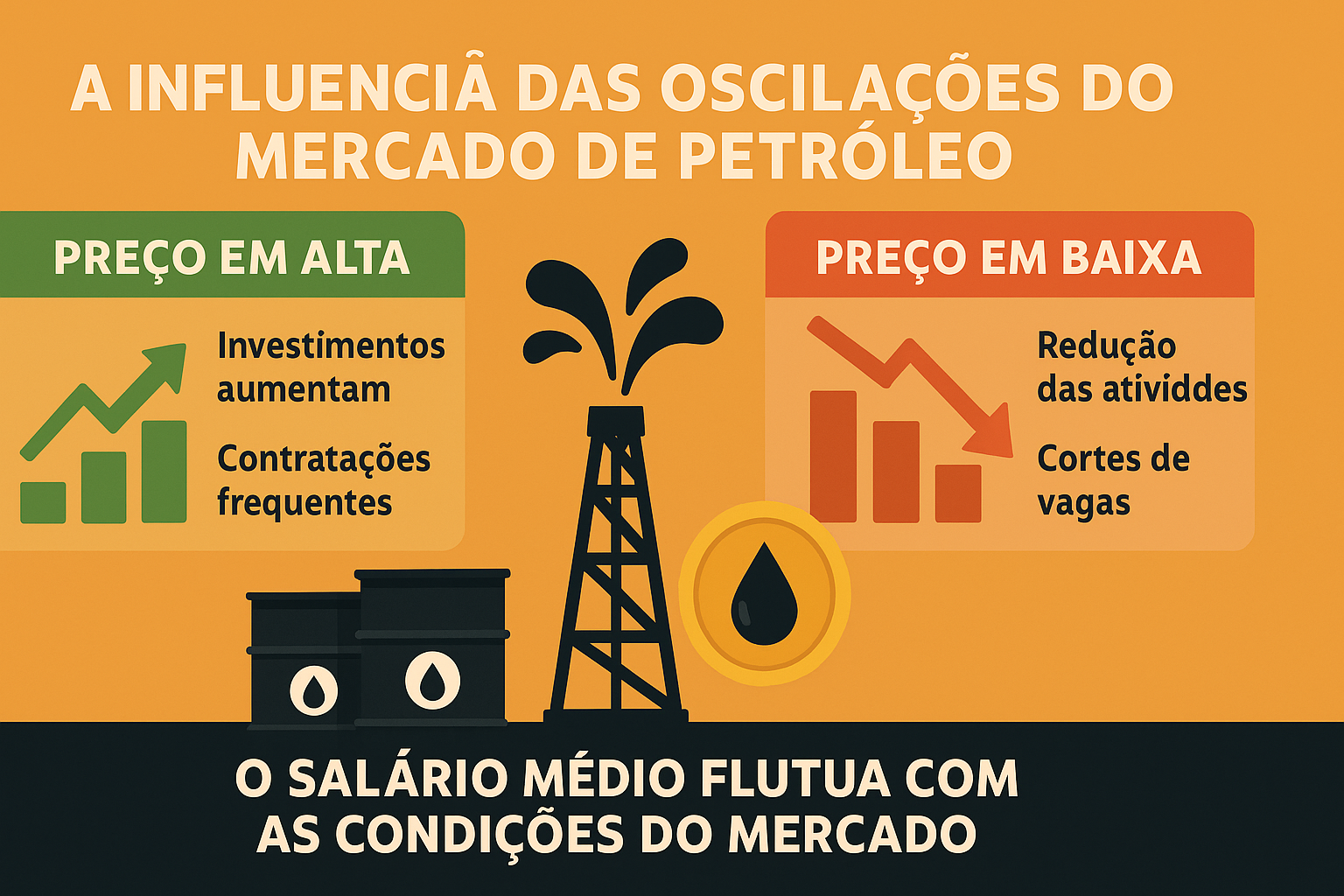
Salaries in the oil industry follow the fluctuations of the global market.
When the price of a barrel of oil rises, investments increase and hiring becomes more frequent, raising the average salary.
On the other hand, during downturns, such as between 2014 and 2016 or during the COVID-19 pandemic, there was a reduction in activities, job cuts, and salary freezes.
Even so, the industry maintains a salary standard above average, requiring preparation and resilience from professionals to face periods of instability.
The global geopolitical scenario also directly influences the sector.
International conflicts, agreements between oil-producing countries, and environmental policies alter production and prices, impacting working conditions and remuneration.
According to the Organization of the Petroleum Exporting Countries (OPEC), in its 2023 report, market volatility is a constant that directly affects the salary dynamics of the sector.
The Salary Reality in Brazil
In Brazil, the oil industry has significant economic weight, especially with the exploration of the pre-salt layer.
Companies like Petrobras, along with international operators and logistical and technical support companies, generate thousands of direct and indirect jobs.
On average, an oil and gas technician earns between R$ 4,000 and R$ 8,000 per month.
Engineers start with salaries between R$ 7,000 and R$ 12,000, potentially exceeding R$ 20,000 in senior or specialized positions.
Onboard professionals receive hazard pay, health risk pay, and productivity bonuses, significantly increasing their total remuneration.
In addition to salaries, the benefits are attractive, including medical assistance, transportation, meals, career planning, and annual bonuses.
The Brazilian sector has also made progress in valuing diversity and inclusion.
Companies increasingly seek to enhance the participation of women and minorities, creating a more representative and inclusive environment, which expands career opportunities.
Data from the Petrobras Annual Report, 2023, shows that the commitment to diversity and technical training has propelled talent development and improved salary competitiveness.
Future Prospects for Oil Industry Salaries
Even with the growth of renewable energy sources, oil remains central to the global energy matrix.
The energy transition occurs gradually, keeping the sector active and the demand for qualified professionals high.
Major companies invest in technologies such as automation, artificial intelligence, and data analysis, creating new job opportunities and salary appreciation for those adept in these areas.
Oil industry salaries are expected to remain high, especially for professionals who seek continuous education and face the sector’s challenges.
The future holds opportunities in the integration of oil and alternative energies.
Professionals with a multidisciplinary vision will experience increasing appreciation.
According to the World Energy Council (WEC), in its 2024 report, the oil industry will continue to be relevant in the coming years, with positive salary prospects.
With qualification, experience, and dedication, it is possible to build a solid and well-paid career in this strategic sector of the global economy.











Seja o primeiro a reagir!