





 Portuguese
  English
  Spanish
  4 min of reading
  0 comments



The Planet HD 137010 b Was Detected 150 Light Years Away, Is 6% Larger Than Earth, Orbits Near Mars in 355 Days, and Appears With a 50% Chance in the Habitable Zone, but the Coldest Star May Lead to Less Than -70°C According to a Study in the Astrophysical Journal Letters.
The planet HD 137010 b came onto the radar after being described as a meeting point between Earth and Mars, with an estimated 50% chance of being in the habitable zone of its star. The relative proximity, the 355-day orbit, and the almost Earth-sized dimensions place the candidate under scrutiny.
The international team led by the University of Southern Queensland, in partnership with scientists from Harvard University and the University of Oxford, published the results in the Astrophysical Journal Letters. Still, the signal from the planet remains solitary, because only one transit has been observed so far.
What Is Known About Planet HD 137010 b

The planet HD 137010 b is located about 150 light years from Earth, in the Milky Way.
-
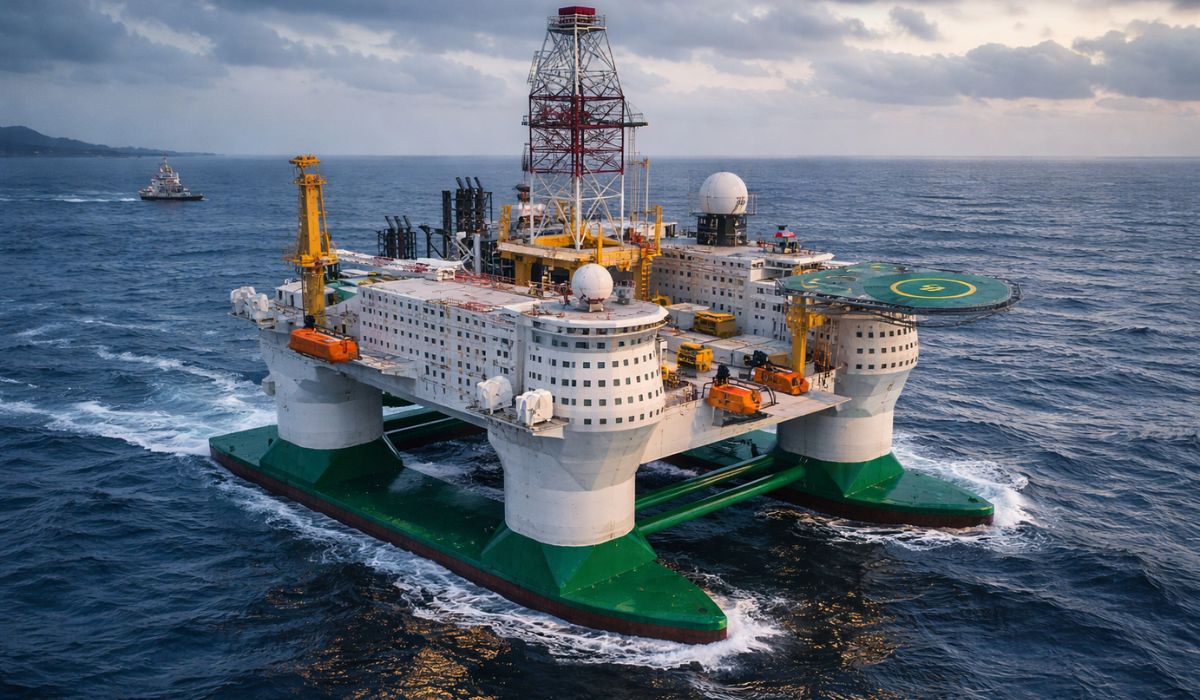
China has launched the world’s first floating artificial island, a scientific structure designed to face open seas, test equipment weighing hundreds of tons, and reach depths of 10,000 meters.
-
China accelerates global science and may surpass the United States in 2 years with increased public investment, continuous growth, and direct impact on the global technological competition.

-
Scientific studies indicate that drought may be strengthening a much greater silent threat: more resistant superbugs.

-
Man builds functional 5-meter submarine in his garage using gas cylinders, PVC pipes, and a refrigerator motor, and navigates with the vessel on a lake in Colombia.

In dimensions, the planet is about 6% larger than Earth, which brings it closer to the physical profile described as similar to Earth.
In terms of orbital dynamics, the planet HD 137010 b completes a rotation around its star in an estimated period of 355 days.
The researchers also highlighted that the orbital distance is comparable to that of Mars in relation to the Sun, reinforcing the idea of a planet between Earth and Mars.
Why the Habitable Zone Appears With a 50% Chance

The study classified the planet as a promising candidate in the habitable zone, the range in which temperatures may allow liquid water on the surface. For planet HD 137010 b, the authors indicate approximately a 50% chance that it is within the habitable zone of the star.
This 50% margin exists because the position is intermediate and depends on the conditions of the system, including the brightness and temperature of the star. Thus, even with the habitable zone on the horizon, the planet may still be outside the most favorable range.
Colder Star, Less Brightness, and the Risk of Ice


Although planet HD 137010 b is described as similar to Earth in size and orbital period, scientists warn that the star is colder and less bright than the Sun. This changes the energy balance that reaches the planet.
The consequence pointed out is the possibility of surface temperatures below -70°C, similar to those found on Mars.
In this scenario, the habitable zone does not guarantee liquid water, and the planet may have a surface dominated by ice.
How the Planet Was Detected Using the Transit Method
Planet HD 137010 b was identified using the transit method, when the body briefly passes in front of its star and causes an almost imperceptible decrease in brightness.
The initial signal came from data collected in 2017 by the Kepler space telescope during the extended K2 mission.
The first identification of the phenomenon was made by citizen scientists of the Planet Hunters project.
Among them was Alexander Venner, now a PhD in astrophysics, who participated in the initiative while still in high school and noted that going back to the data and finding something relevant was an incredible experience.
Why the Signal Still Does Not Officially Confirm the Exoplanet
Experts who did not participate in the study analyze the discovery with caution.
Astronomer Sara Webb from Swinburne University points out that only one transit has been observed so far, while the scientific standard requires at least three to officially confirm an exoplanet.
This means that planet HD 137010 b needs new records to move out of the solitary signal status.
Without a repeat of the transit, the interpretation remains limited, even with the 50% chance in the habitable zone.
Next Steps: Atmosphere, Telescopes, and New Observations
Because it is relatively close to Earth in astronomical terms and orbits a bright star, planet HD 137010 b is identified as a priority target for the next generation of space telescopes.
The expectation is that future observations will analyze the planet’s atmosphere and refine the assessment of favorable conditions.
Until then, the planet’s story remains open between Earth and Mars.
The most practical step to follow the case is to monitor the search for new transits and the atmospheric analyses that could confirm or dismiss the 50% chance in the habitable zone.
What Do You Think Is More Decisive in Considering This Promising Planet: Its Earth-like Size, Position Relative to Mars, or the Confirmation of New Transits?








-

-

-

-

10 pessoas reagiram a isso.