





 Portuguese
  English
  Spanish
  3 min of reading


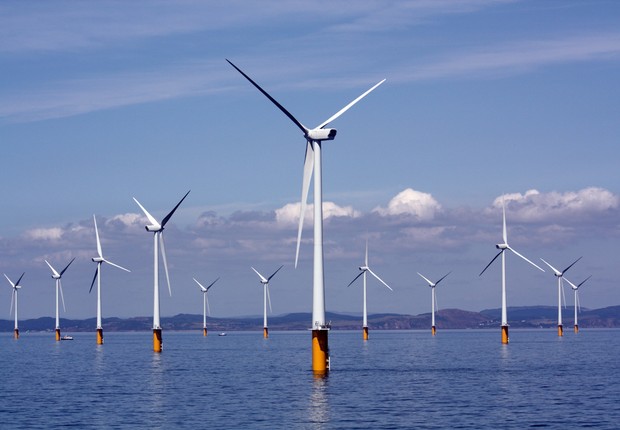
Equinor Plans to Expand Its Wind Farm Acquisition and Will Continue to Leverage Its Position in Offshore Wind Energy, the Company States in a Press Release Dated November 2.
The leading company in the offshore oil and gas industry – Equinor, states that it has made significant strides in wind energy in recent years, will establish renewable energies as a separate reporting segment starting in the first quarter of 2021, the company said on November 2, as it announced its net zero plans for 2050.
Also Read
- Naval Sector Company Hires Candidates with Completed High School for Offshore Maintenance
- Petrobras and Federal Government Close to Agreement on Costly Assignment.
- To Meet Onshore Contracts in Rio de Janeiro, Total Launched Today a Selection Process for Production Coordinator
- The Brazilian Oil Company PetroRio Selects Professionals for Offshore and Onshore Activities in Rio de Janeiro
“Equinor has demonstrated for years the ability to meet climate ambitions and has a strong track record of reducing emissions in the offshore oil and gas industry. Now, we are ready to further strengthen our climate ambitions, aiming for net zero by 2050,” said Anders Opedal, who took over as CEO and President of Equinor on November 2.
Equinor Expects to Contribute More to the Offshore Oil and Gas and Wind Energy Industry
In the offshore industry, Equinor expects to deliver an average annual production growth of around three percent from 2019 to 2026, as the company prepares for a gradual decline in global demand for oil and gas expected from around 2030 onwards.
-
Renewable energy advances over protected areas in Brazil, and a survey by the Energy Transition Observatory reveals silent impacts that challenge environmental conservation and pressure sensitive traditional territories.

-
Rio Grande do Sul accelerates energy transition: State invests in renewable technologies and consolidates decarbonization strategies and pathways to attract billions in new industrial investments.

-
With 160,000 m² of collectors, an area larger than 20 football fields, Silkeborg, in Denmark, hosts a solar thermal plant that heats 19,500 homes and could become the largest solar heating plant in the world.

-
A study reveals the expansion of renewable energy procurement in Brazil and shows how companies are taking advantage of opportunities to reduce expenses, ensure energy efficiency, and strengthen strategic environmental commitments.


“Value creation, not volume replacement, is and will be guiding Equinor’s decisions. In the long term, Equinor expects to produce less oil and gas than it does today,” the company stated.
When it comes to wind energy, Equinor stated that this will be a significant area of growth as it develops into a broad energy company, with previously set ambitions for profitable growth within renewable energies and expected production capacity of 4-6 GW by 2026 and 12-16 GW by 2035.
Company Revealed Plans to Acquire Additional Renewable Energy Area, Adding that It Would Continue to Leverage Its Leadership Position in Offshore Wind Energy
The company also added that it assumes a well-functioning market for carbon capture and storage (CCS) and natural sinks, as well as the development of a hydrogen market. Additionally, the company assumes an increasing share in the offshore oil and gas industry, which will be used for petrochemical products by 2050.
Looking at the net zero plans, Equinor stated that success would depend on society achieving near zero by 2050. In offshore wind energy, Equinor has made headlines several times just earlier this year.
The construction of Hywind Tampen, the largest floating wind farm in the world and the first to power oil and gas facilities, began in early October in Norway.









Seja o primeiro a reagir!