





 Português
  Inglês
  Espanhol
  5 min de leitura
  0 comentários


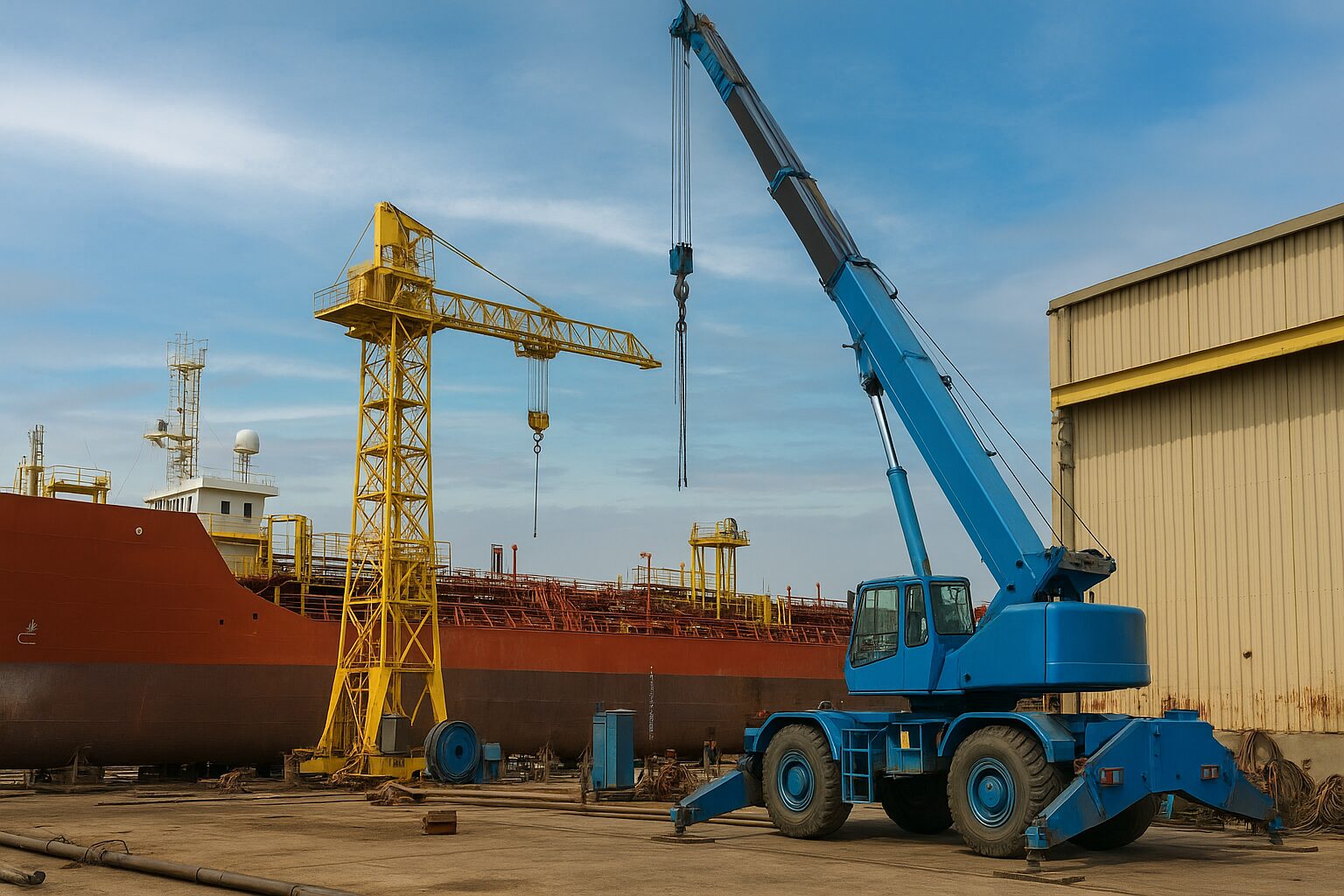
Know Why Naval Industry Equipment Is Essential for the Construction, Operation and Safety of Vessels, and How They Have Evolved Over Time with Technology.
The naval industry represents one of humanity’s oldest technological areas related to transportation.
Since the times of great navigation, humanity has been developing equipment to build and maintain vessels, which have evolved alongside science and engineering.
Today, when we talk about naval industry equipment, we refer to a complex and indispensable set of technologies, tools, and machines that ensure the efficient operation of ships and other maritime structures.
-
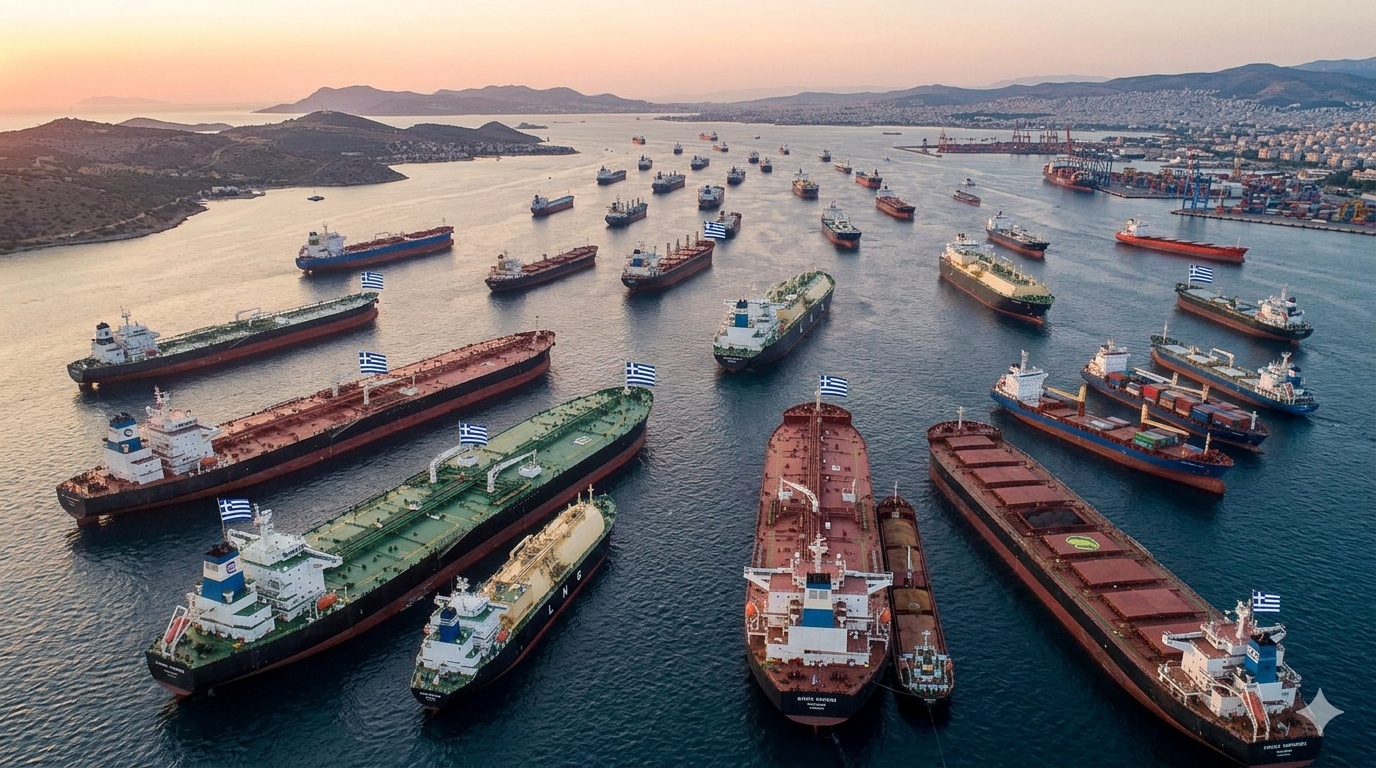
Neither the USA nor China: a small European nation has become one of the largest maritime powers on the planet, controlling one of the largest merchant fleets in the world with thousands of ships and dominating the global transportation of oil and strategic cargo.
-
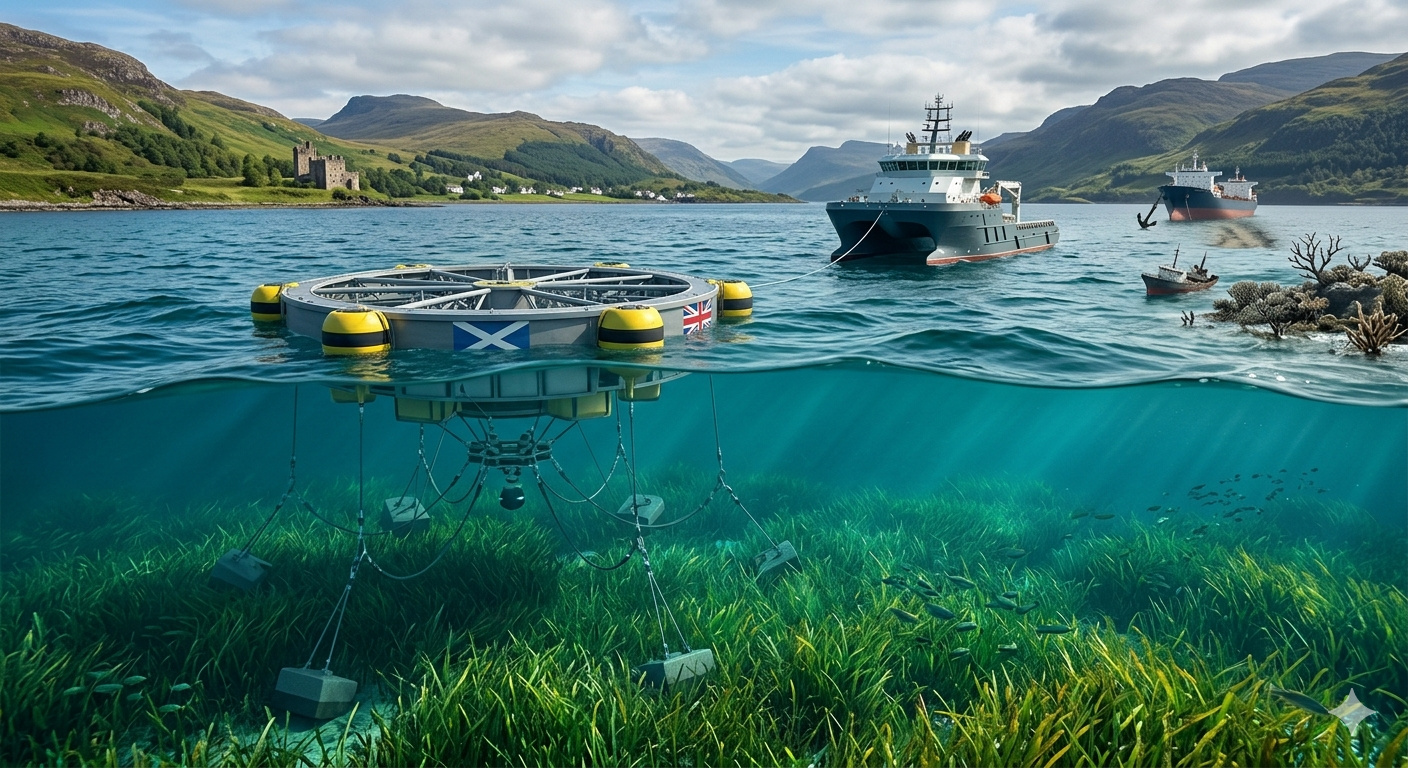
Scotland and the United Kingdom have created a new anchoring system that floats in the water without touching the seabed, after discovering that the current from a conventional anchor destroys up to 50 m² of seagrass meadow per event and that ship-damaged reefs showed no signs of recovery even ten years later.
-
Weighing 175,500 Tons, Measuring 345 Meters Long, and With Capacity for Over 4,300 Passengers, the Sun Princess Becomes the Largest Ship Ever Built by Princess Cruises and Attracts Global Attention for Its Huge Glass Dome Inspired by Santorini’s Architecture Installed on Top of the Vessel

-
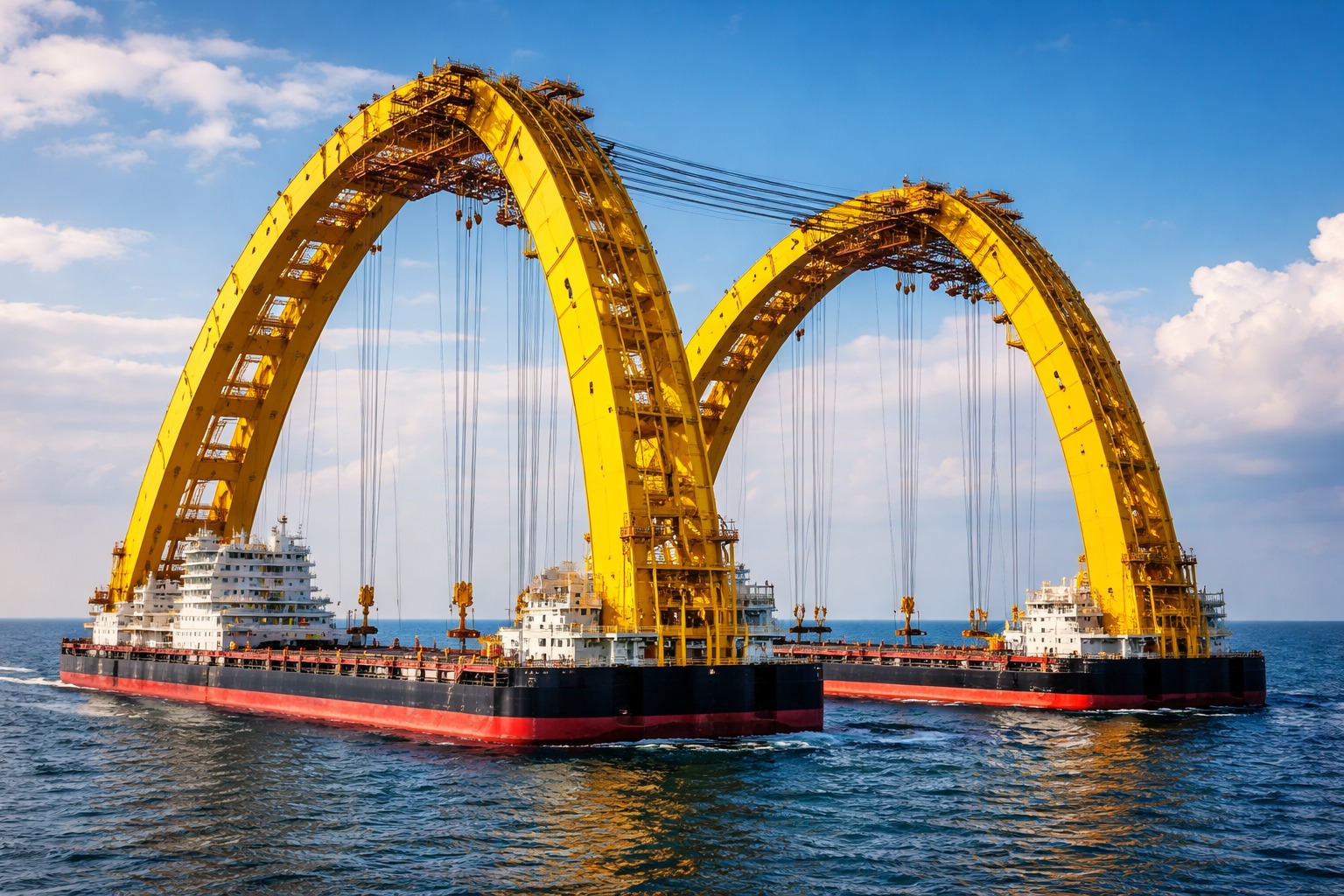
TX-10, The Colossus of The Sea: Largest Lifter Ship in The U.S., With Two Giant Barges, 73-Meter Tall Structure, and Strength to Raise 7,500 Tons of Sunken Oil Rigs
According to the United Nations Industrial Development Organization (UNIDO):
Maritime transport is responsible for about 80% of global trade by volume, highlighting the need for reliable equipment for this sector.
Understanding the importance of this equipment helps to better understand the operation of the naval industry in logistical, commercial, and technological terms.
Furthermore, this equipment operates from manufacturing to the daily operation of vessels at sea.
With the development of humanity and the increased demand for maritime transportation, the equipment of the naval industry keeps up with the growing need to transport larger loads, navigate more challenging seas, and ensure the safety of crew members and valuable cargo.
Therefore, constantly investing in technology for this equipment becomes essential to keep up with the current and future demands of the maritime sector.
The Historical Evolution of the Naval Industry
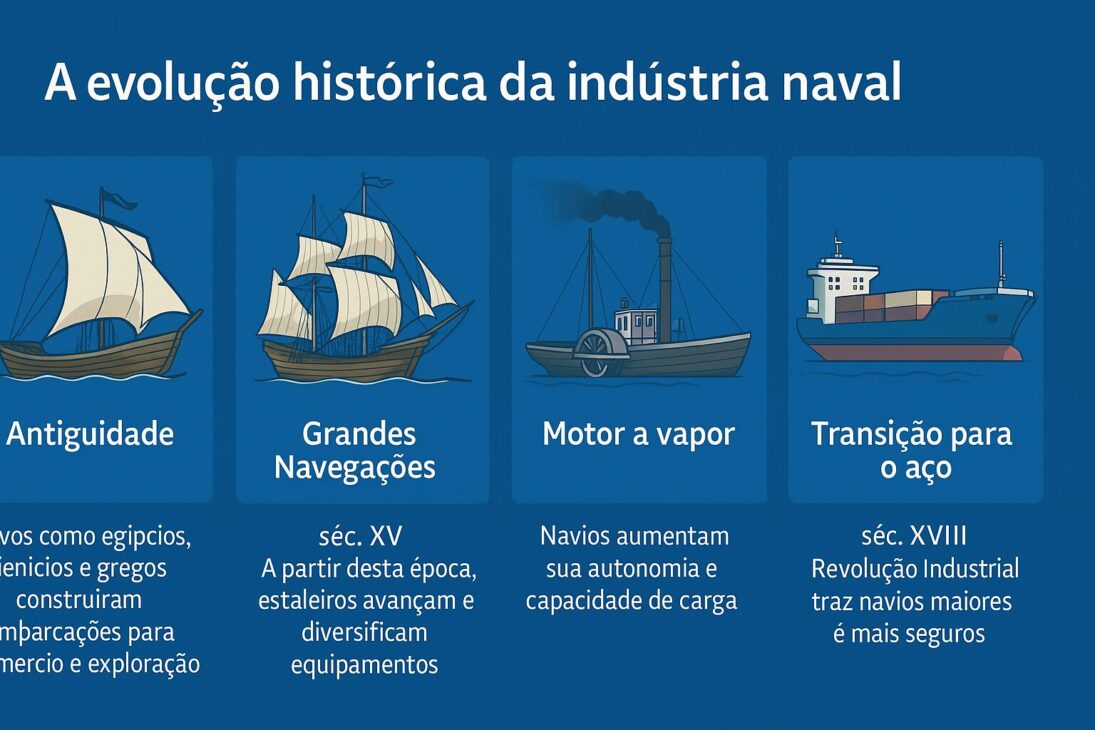
Maritime navigation dates back to Antiquity. Peoples such as Egyptians, Phoenicians, Greeks, and Romans were already building vessels for trade, war, and exploration.
According to the National Museum of American History, in 1500 BC, the first vessels already used advanced techniques for the time, marking the beginning of naval development. The boats were made of wood and powered by oars or sails, requiring artisanal construction and simple tools.
The history of naval development changed profoundly beginning with the Great Navigations in the 15th century.
The National Institute of Educational Studies and Research Anísio Teixeira (INEP) highlights that this phase marked the advancement of shipyards and the diversification of equipment for the construction and maintenance of ships.
With the advent of the steam engine, new propulsion systems began to integrate ships, increasing their autonomy and cargo capacity.
The Industrial Revolution, which began in the 18th century and consolidated in the 19th century, brought the use of steel as the main structural material, making ships larger, faster, and safer.
According to the Science Museum of London, the transition from wood to steel, along with advancements in naval engineering, allowed equipment to become more sophisticated, efficient, and varied.
In addition to mechanical advancements, naval engineering began to rely on rigorous studies of hydrodynamics and material resistance, resulting in more stable and economical vessels.
Despite advancements, the basic foundations of naval industry equipment remain: ensuring that ships can face the challenges of the sea with safety and efficiency, from the hull to the propulsion system.
What Are Naval Industry Equipment?
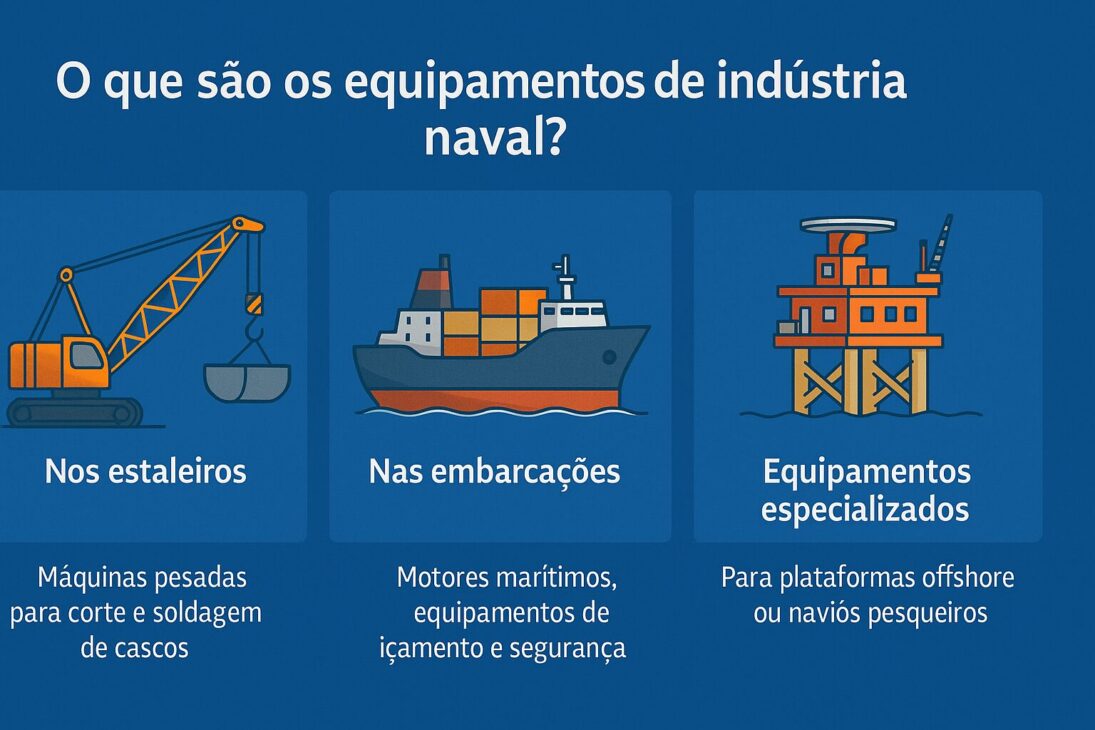
Currently, naval industry equipment encompasses a wide variety of items used in shipyards, vessels, and throughout the naval production chain.
They range from heavy machines for cutting and welding to technological components for navigation and safety.
In shipyards, large cranes, hull block movement systems, painting equipment, welding cabins, and pneumatic tools play fundamental roles in ensuring safe, precise construction and repair within the scheduled deadlines.
On vessels, the equipment varies according to the type of ship and its purpose.
Cargo ships have lifting and internal transport systems, powerful marine engines, safety equipment such as lifeboats and vests, as well as electronic navigation, radar, and communication systems.
There are also specialized equipment for specific vessels, such as offshore platforms that require systems for oil and gas extraction, or fishing boats equipped with technologies for catching and preserving fish.
According to the International Association of Classification Societies (IACS), proper maintenance of this equipment is essential to prevent accidents and prolong the lifespan of vessels.
Furthermore, maintenance and inspection equipment, such as tools for hull cleaning and ultrasonic corrosion detection, ensure durability and safety over time.
Innovations and Technology
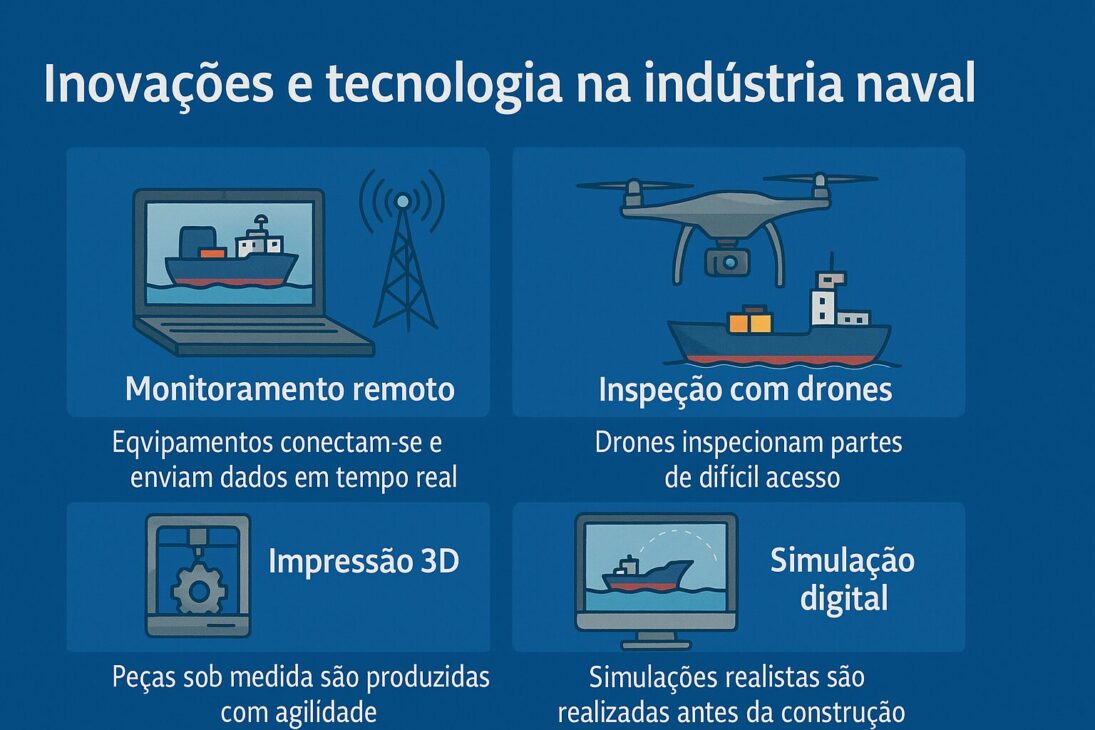
In recent years, the naval industry has undergone significant technological transformation.
The so-called Industry 4.0 has also reached the seas.
Automated systems, smart sensors, artificial intelligence, and remote monitoring are now part of the daily routine of many shipyards and vessels.
The equipment is increasingly connecting and sending real-time data to control centers on land.
This allows for more efficient maintenance, identifying problems before they escalate, and optimizes the performance of vessels during their routes.
Drones have started inspecting hard-to-reach parts of ships and platforms.
Additionally, 3D printers produce custom parts quickly and at low cost, especially in remote locations like offshore platforms.
Another significant advancement is in digital simulation.
Even before construction begins, we can perform realistic simulations of ship performance at sea.
We test different configurations of equipment and materials.
This reduces risks and allows for smarter and more economical solutions.
Training teams with virtual reality and simulators prepares crews and technicians to operate complex equipment and respond to emergencies more effectively.
The digitization of processes also contributes to more efficient resource management.
This reduces waste and costs, promoting more sustainable and integrated logistics.
According to a report from the International Maritime Organization (IMO) published in 2023, digitization and automation are expected to further increase the efficiency of the naval industry by 2030.
Impact on the Economy and Global Trade
The naval industry is directly linked to international trade.
About 90% of goods transported worldwide pass through ships, according to the World Bank.
Therefore, naval industry equipment directly impacts the global economy.
Ship downtime due to technical issues causes million-dollar losses and logistical delays that affect entire production chains.
Moreover, the naval industry generates thousands of direct and indirect jobs.
It drives sectors such as mining, steelmaking, oil, gas, tourism, and fishing, and plays a key role in the development of coastal regions.
Thus, the construction and maintenance of ships, platforms, submarines, and other vessels depend on high-quality equipment.
They are operated by skilled professionals who are updated with new technologies.
Investing in adequate equipment and the technological innovation of the naval industry also means investing in the economy of the country and in the sustainable development of the maritime chain.









Seja o primeiro a reagir!