





 Portuguese
  English
  Spanish
  6 min of reading
  0 comments


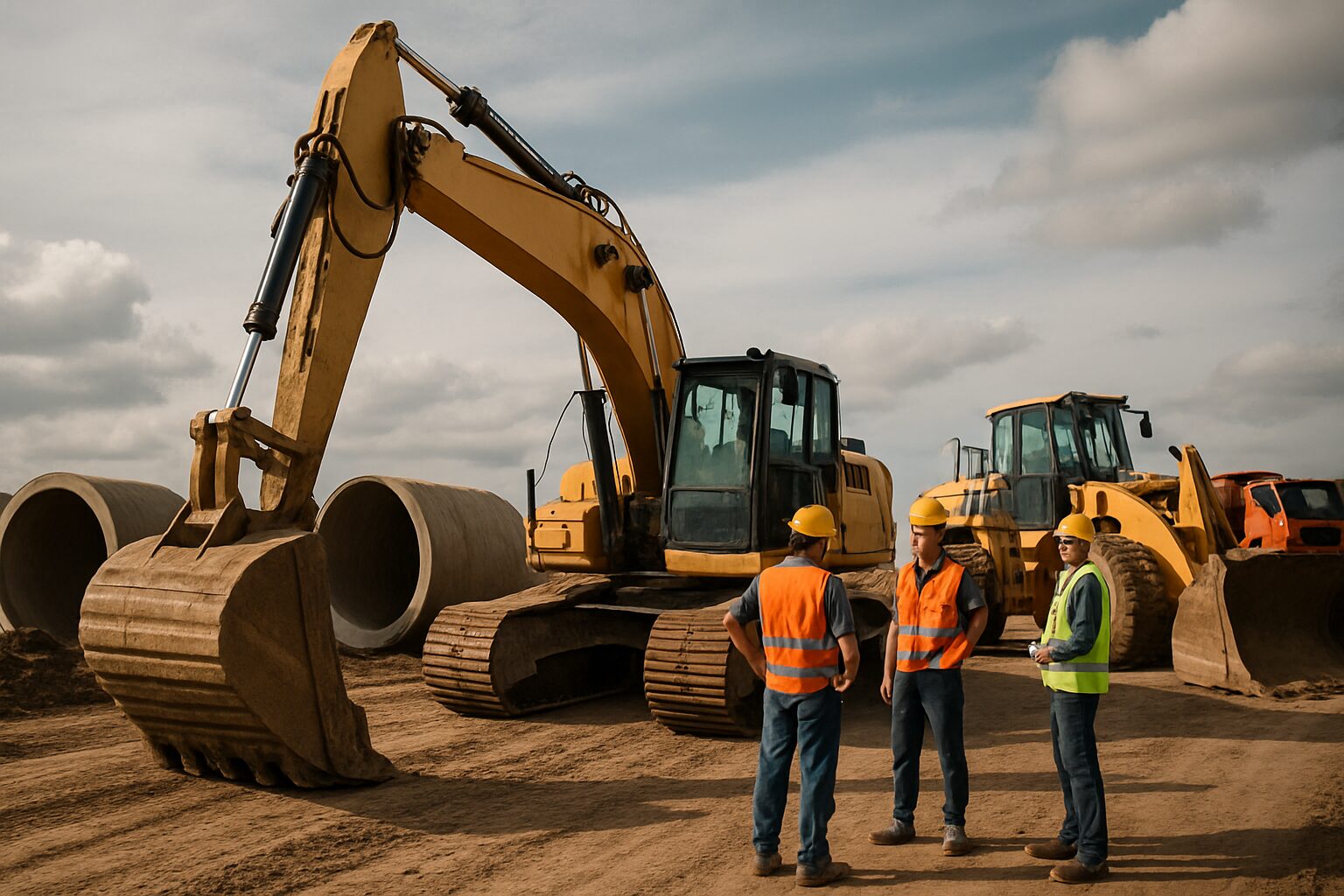
Discover How Infrastructure Equipment Shapes the Labor Market, Drives Development, and Offers Opportunities in Various Professional Fields.
Infrastructure forms the foundation of any modern society.
From the earliest civilizations to the present day, the construction of roads, bridges, water supply networks, energy, and transportation has always been crucial for economic, social, and technological development.
According to the United Nations (UN), basic infrastructure is essential to ensure the population has access to essential services such as health, education, and transportation.
-
Employee Fired After Accumulating 114 Days of Medical Leave in One Year, Labor Court Upholds Company’s Decision

-
Employee Fired While Treating Depression Wins in Court and Vale Is Required to Rehire Him Following Decision Based on the CLT and INSS Benefits

-
Workers Should Be Aware! March 6 Will Be The Fifth Business Day Of March And The Final Deadline For Companies To Pay Salaries According To The CLT

-
2026 FGTS Anniversary Withdrawal Is Released According to Birth Month, Sets Amounts by Balance Range, Establishes Deadlines for March and April, and Changes Rules in Case of Dismissal


Behind this physical structure are the infrastructure equipment — tools and machines that turn projects into reality.
Therefore, this article serves as an essential guide for those who wish to understand the role of these equipments in the labor market, their evolution over time, and their importance for various professional fields.
Whether you are a student, a construction worker, an engineer, or just someone curious about the subject, this content will help you better understand this universe.
From Simple Tools to Heavy Machinery
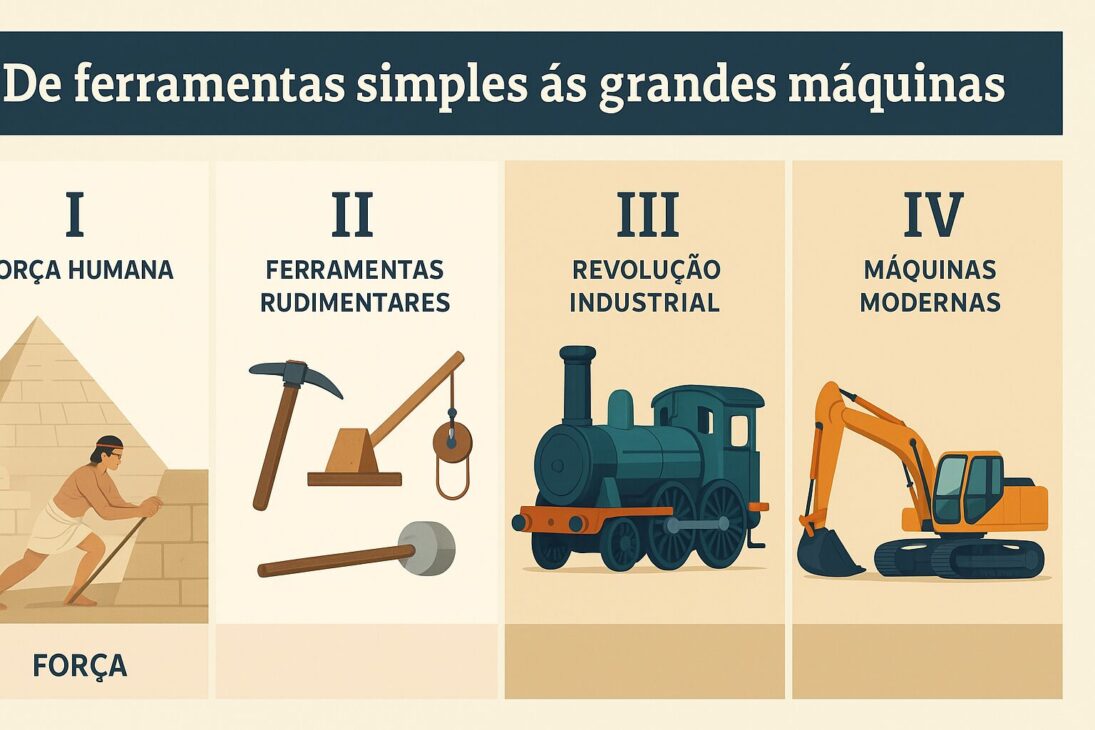
In ancient times, before machines existed, infrastructure construction occurred with human labor and the aid of rudimentary tools.
One of the biggest examples is the construction of the Pyramids of Egypt, which involved complex work organization, ropes, pulleys, levers, and a lot of manpower.
Historians from Harvard University point out that the pyramids were erected around 2600 B.C., and the ability to manipulate heavy objects manually demonstrated the importance of having tools to make work more efficient.
As the centuries passed, especially during the Industrial Revolution, machines began to completely transform the infrastructure sector.
The invention of the steam engine, for example, enabled the creation of the first excavators, cranes, and locomotives, changing the way large infrastructure works were carried out.
According to the Institute of History and Technology (IHT), the use of the steam engine in construction consolidated in the 19th century during the railway expansion, which was one of the largest infrastructure projects of that time.
As modern infrastructure equipment emerged, such as mixers, paving machines, and hydraulic systems, they brought more precision to constructions, paving the way for even more ambitious projects.
It was at this moment that the fields of civil engineering and mechanical engineering began to consolidate in the market, requiring technical training and specific knowledge.
What Are Infrastructure Equipment?
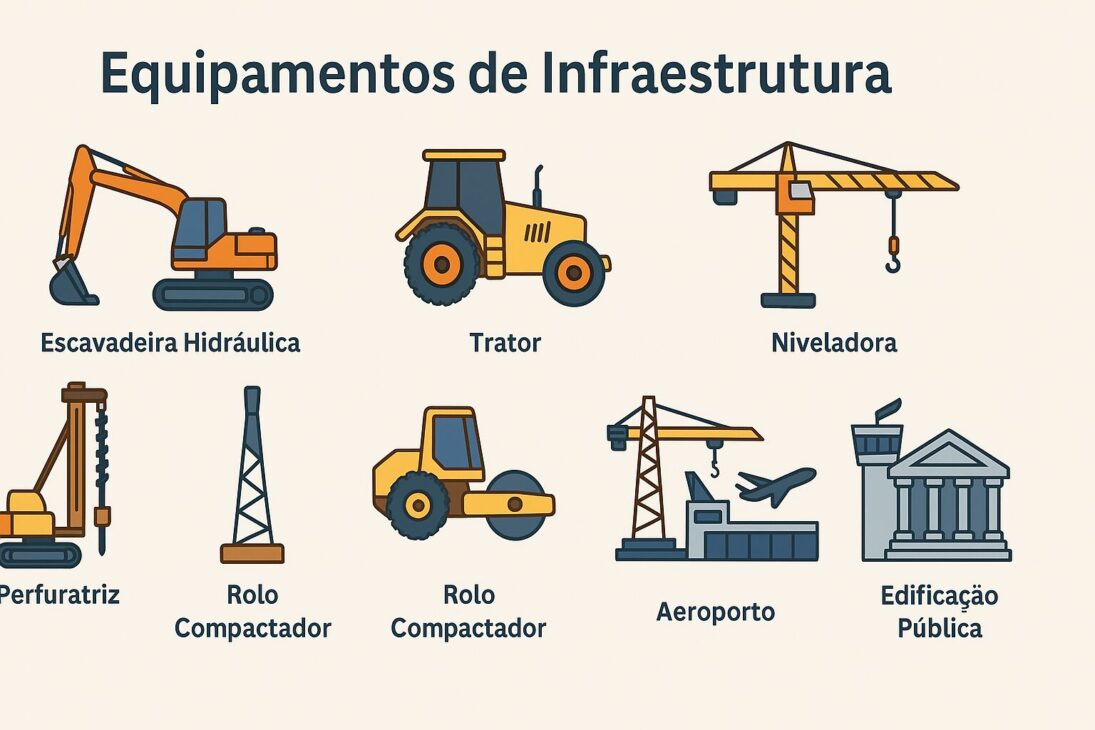
Infrastructure equipment are machines, tools, and devices used to build, maintain, and modernize physical structures that serve the public or industry.
This includes, for example, roads, highways, railways, airports, ports, power networks, sewage systems, public buildings, among others.
Classic examples include hydraulic excavators, tractors, graders, drills, compactors, and cranes.
Each of these equipments has a specific function and is essential in certain stages of the construction.
The excavator, for example, is crucial for moving large volumes of earth, while the crane is used to lift heavy structures to hard-to-reach places.
Moreover, with the advancement of technology, many of these equipments now feature smart systems, sensors, GPS, connectivity with management software, and remote operation, making life easier for professionals and increasing the precision and efficiency of construction.
According to the National Council of Engineering and Agronomy (Confea), digitalization in the construction sector has been steadily increasing since the 2010s, reflecting the modernization of equipment use and the increase in safety on construction sites.
Other examples include automated concrete plants, which reduce material waste and optimize construction time.
These equipments make the construction process more sustainable and economically viable, even in large-scale projects.
As highlighted by the Brazilian Agency for Industrial Development (ABDI), the implementation of technologies like these has allowed for greater competitiveness and innovation in the construction market.
Professions and Opportunities in the Sector
The infrastructure sector is undoubtedly one of the largest job creators in the world.
According to the International Labor Organization (ILO), the construction sector accounts for a significant share of employment in many economies, especially in developing countries.
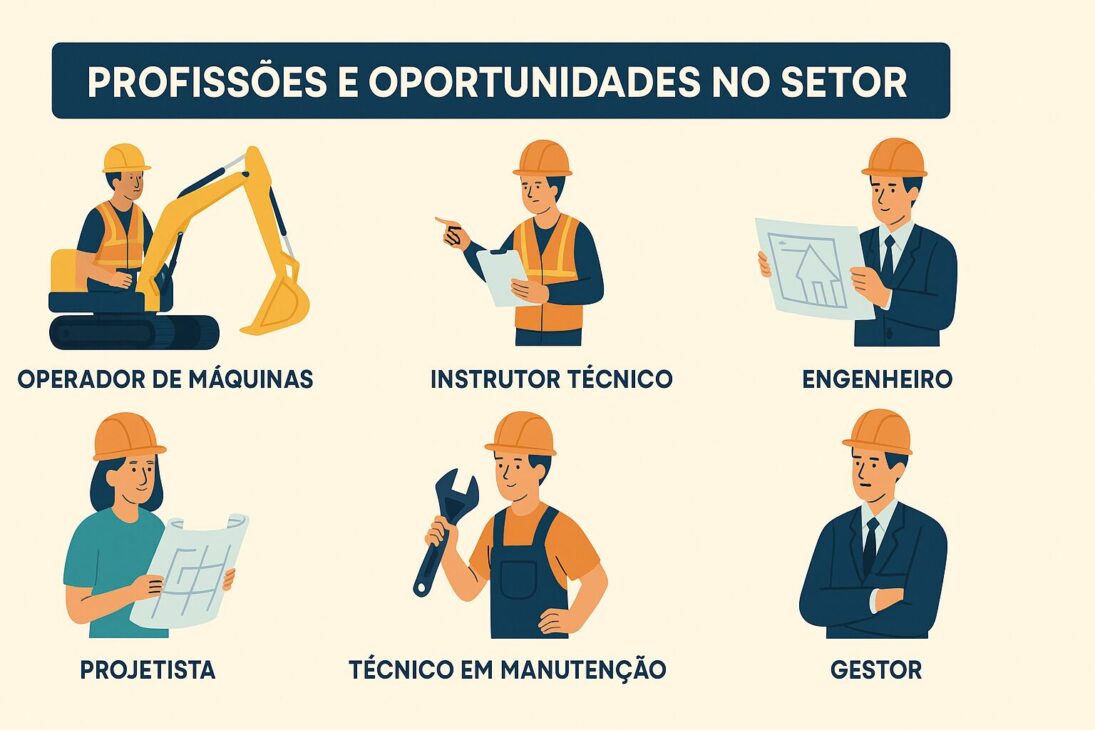
Each project involves various professional categories, from laborers and technicians to engineers, designers, and managers.
With the use of infrastructure equipment, new job opportunities arise for machine operators, specialized mechanics, technical instructors, and maintenance professionals.
Mastering the use of these tools can be a significant differentiator for those looking to grow professionally.
Therefore, companies in the sector increasingly value professionals who know how to operate machines with safety, efficiency, and environmental responsibility.
According to the job portal Glassdoor, professionals specialized in handling heavy equipment have a high employment rate and higher salaries, especially in public and private infrastructure projects.
Additionally, with the modernization of machines, there has also been a need for workers with digital skills. Many current equipments require knowledge in software, reading digital panels, and basic programming. As a result, this digital transformation has changed the profile of professionals and required constant updating.
Digitalization has also brought new fields of action, such as data analysis on machine performance, programming automated systems, and remote technical support.
This demonstrates how infrastructure equipment is linked not only to construction but also to technology, management, and innovation.
Sustainable and Technological Advances
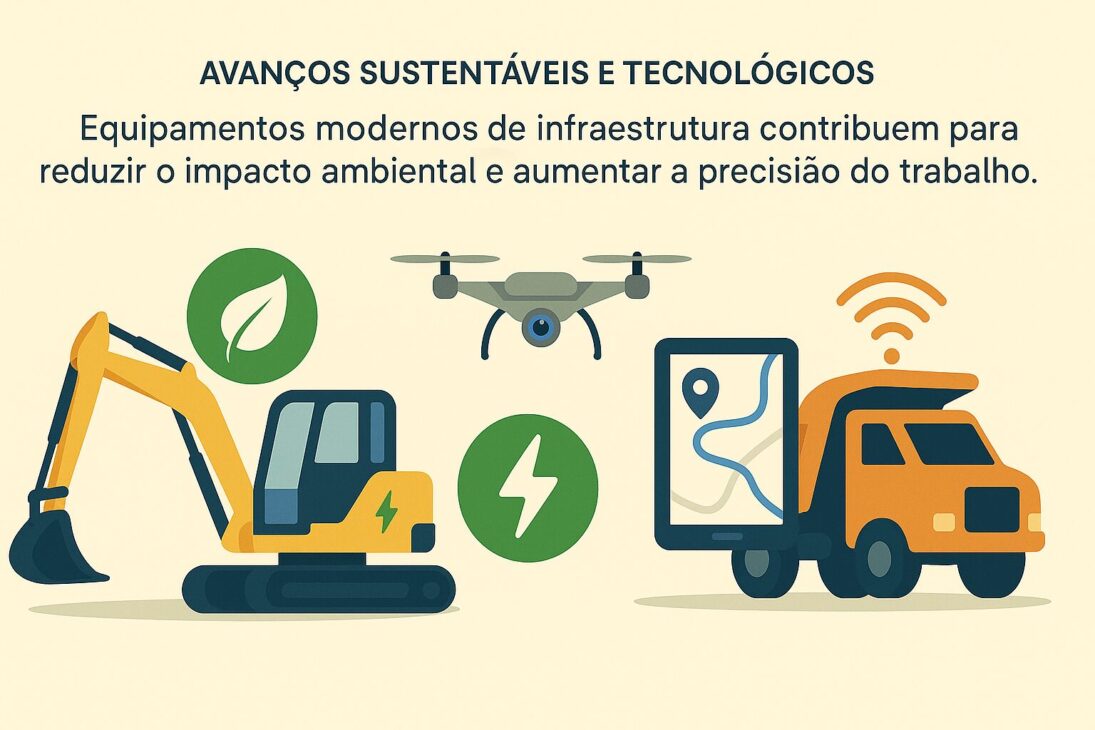
In recent years, the concern with sustainability and the environmental impact of construction has directly influenced the development of new infrastructure equipment.
It is increasingly common to find electric or hybrid equipment on construction sites, especially in developed countries.
Moreover, technologies such as telemetry, the use of drones for mapping and inspection, and automation systems have contributed to making work safer and more precise.
The ANEEL (National Agency for Electric Energy) has encouraged modernization of the sector with the launch of programs aimed at promoting energy efficiency in large infrastructure projects since 2015.
Another important point is the circular economy.
Many companies have already adopted practices of material reuse and recycling of construction waste, and modern equipment is designed to facilitate this process.
Consequently, this has driven a new perspective for the sector: more conscious, innovative, and connected with the environmental needs of our time.
According to the Brazilian Institute of Consumer Defense (Idec), recycling initiatives in infrastructure projects have been more prevalent since 2017, demonstrating the growing relevance of sustainability.
The Future of Infrastructure Equipment
The future of infrastructure directly depends on the advancement of equipment.
The so-called “smart cities” require modern solutions for mobility, energy, sanitation, and housing. This necessitates more technological, sustainable machines that are integrated into digital systems.
Therefore, the trend is for automation to advance even further, with the introduction of autonomous equipment on large-scale projects.
This is already being tested in countries like Japan, the United States, and Germany.
Furthermore, artificial intelligence and the use of big data will also be crucial for planning and executing projects with greater efficiency.
This means the professional of the future needs to be prepared.
It is no longer enough to have only physical strength or practical experience: it is necessary to have an open mindset towards technology, innovation, and continuous learning.
Additionally, partnerships between universities, engineering companies, and machine manufacturers accelerate the development of safer, more efficient, and connected solutions.
According to the Ministry of Science, Technology, and Innovations (MCTI), these collaborations are growing, with a focus on innovations in the use of infrastructure equipment in a more intelligent and sustainable way.
Thus, the infrastructure market creates more jobs and promotes faster projects, with lower costs and higher quality, benefiting society as a whole.
Infrastructure equipment forms the backbone of the large works that transform cities, connect regions, and improve the quality of life for the population.
With a long trajectory that begins in antiquity and continues to evolve, these machines represent much more than work tools: they are symbols of progress, development, and opportunity.











Seja o primeiro a reagir!