





 Portuguese
  English
  Spanish
  3 min of reading
  0 comments



The ERJ145 Accumulated “Only 10 Total Losses” and “No Fatalities” in Accidents with the Model, a Rare Safety Record While “Over 900 Aircraft of the RJ Family Are Still in Service Worldwide, According to the Source’s Own Narrative.
The Brazilian Jet ERJ145 marked a turning point in the national aviation industry. Launched in 1995, it emerged in response to the demand for modern regional aircraft capable of replacing the worn-out turboprops of previous decades.
More than that, the model consolidated Embraer as one of the leading global manufacturers, opening the door for the future E-Jets.
How the Brazilian Jet ERJ145 Was Born
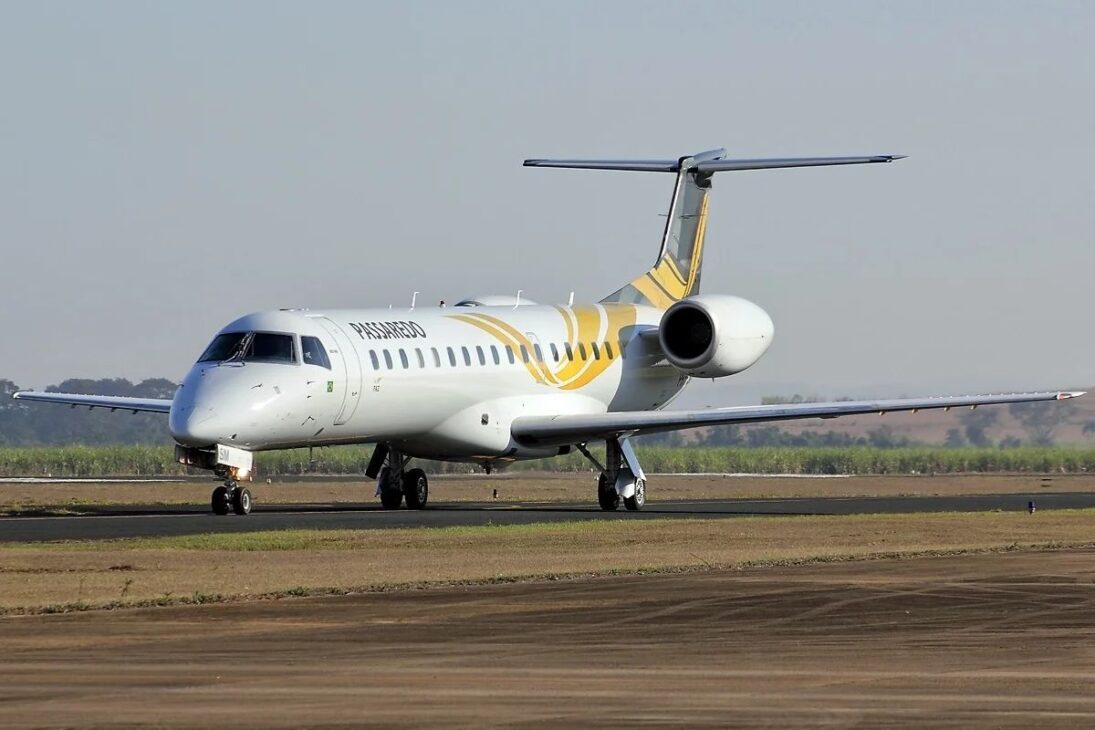
In the 1980s, the initial idea was to stretch the Brasília (EMB-120), but the technical team soon realized that much more would be needed.
-
Chaos On Airplane Could Be Expensive: Proposal Aims To Prevent Disruptive Passengers From Flying For Up To 1 Year In Brazil And Face Fines Of Up To R$17,500

-
Man Arrested After Halting Takeoff of Fire Department Helicopter During Child Rescue in Guaratuba

-
With 37 Tons of Cargo, Over 8,000 km Range, and Ability to Land on Unpaved Runways, the Airbus A400M Demonstrates How Europe Created a Military Giant That Transports Armored Vehicles, Aerially Refuels Fighters, and Operates in Conflict Zones and Humanitarian Missions Worldwide
-
Emergency Landing in Campos Amarais After Bird Strike on Small Plane


The project incorporated cantilever wings, tail-mounted engines, and a range of nearly 3,000 km. The privatization of Embraer in 1994 accelerated the process.
On August 11, 1995, the prototype PT-ZJA took off from São José dos Campos.
Shortly thereafter, the Brazilian jet received triple certification: from the DAC (Brazil), the FAA (USA), and the JAA (Europe). This achievement was crucial for the aircraft to be accepted in highly competitive markets.
Entry into Service and International Expansion
The first commercial flight took place in April 1997 by Continental Express in the United States. The ERJ145 quickly gained traction in Europe and other continents.
To cater to different airlines, Embraer created a family of variants:
- ERJ135 (37 seats),
- ERJ140 (44 seats),
- ERJ145XR (extended range of nearly 3,700 km).
The engines were handled by the reliable Rolls-Royce AE3007, while the cabin adopted the “dark cockpit” concept, enhancing safety.
Importance in Brazil and the Shuttle Service
In Brazil, Rio-Sul was the first major customer. In September 2002, with the operational merger of Varig, the Brazilian jet debuted on the Rio–São Paulo shuttle service, one of the most strategic markets in the country.
This debut solidified the aircraft’s prestige nationally as well.
Companies like Passaredo and Nordeste also used the model on regional flights. The Brazilian Air Force incorporated military versions such as the E-99, aimed at aerial surveillance.
Safety Record and Executive Use
The ERJ145 has a total of only 10 total losses and no fatalities, one of the best safety records in commercial aviation.
Part of the fleet still operates in companies like Piedmont Airlines (USA), Airlink (South Africa), and Loganair (UK).
The model also gained an executive version, the Legacy 600, operated by businesspeople, authorities, and even famous pilots like Rubens Barrichello.
The aircraft also served as a basis for important military programs.
The Legacy of the ERJ145
According to the channel Aviões e Músicas, the Brazilian jet ERJ145 not only revolutionized regional transport but also paved the way for the E-Jets, which elevated Embraer to new global heights.
Today, more than 900 units of the RJ family remain active, proving its technological and operational relevance.
For you, was the ERJ145 the biggest technological leap in Brazilian aviation or the beginning of the path that led to the success of the E-Jets?
Leave your opinion in the comments — we want to hear from those who witnessed or flew this milestone of Embraer.










Seja o primeiro a reagir!