





 Portuguese
  English
  Spanish
  7 min of reading
  10 comments


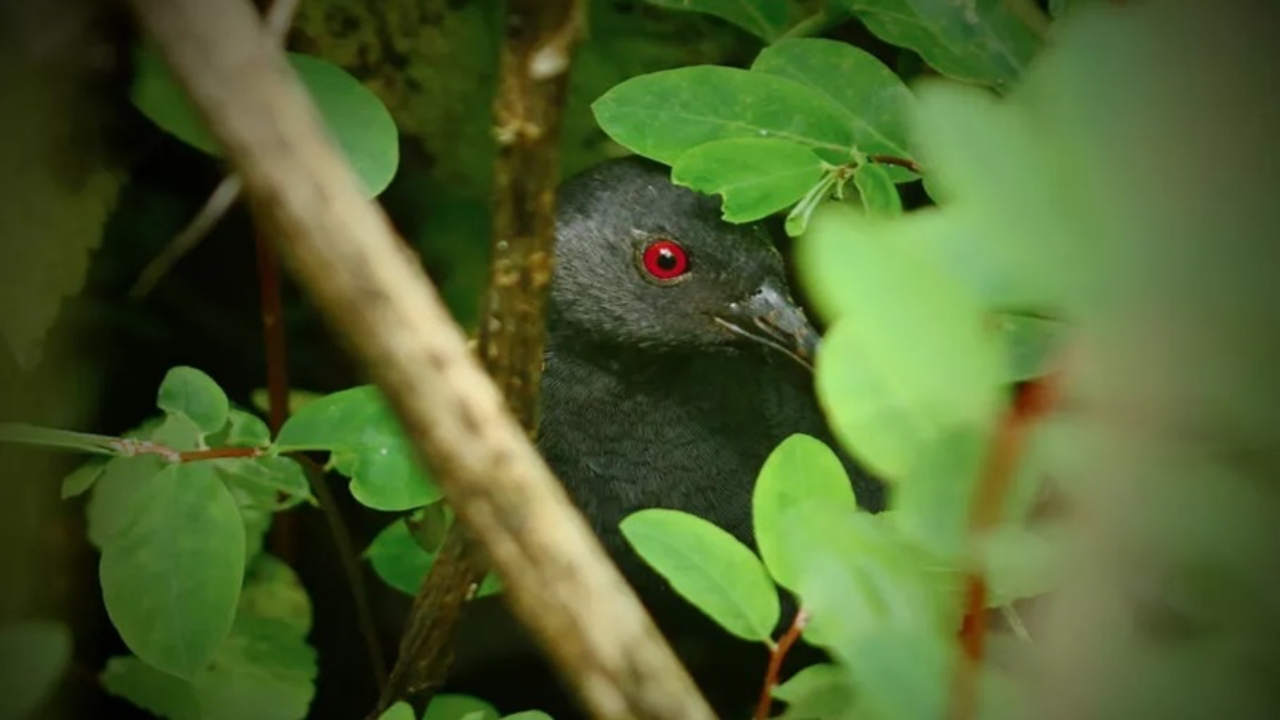


In Floreana, Conservation Organizations and Authorities Carried Out the Eradication of Wild Rats and Cats with an Operation Started at the End of 2023 to Restore the Ecosystem, Triggering an Explosion of Native Life and Drawing the Attention of Scientists Studying Birds.
The island of Floreana, in the Galápagos archipelago, lived for almost two centuries with a void that seemed definitive. A shyer bird, almost unable to fly, had simply not been seen there since the 19th century.
What seemed impossible changed after wild rats and cats, considered one of the main drivers of wildlife loss on islands, were removed from the scene. In no time, rare species began to appear more frequently.
And the most attention-grabbing detail came unexpectedly. The Galápagos flycatcher reappeared in Floreana, even without anyone predicting this return, and it also paved the way for a rare phenomenon: young finches began to sing new melodies on the island.
-
Oldest tree on the planet reappears after 130 years of searches: Wattieza, 385 million years old, was 10 meters tall and had no leaves or seeds; Gilboa fossils in New York solved the mystery in 2007.

-
A 48-square-meter house assembled in hours with 4,000 bricks made of recycled plastic that does not absorb moisture, has natural thermal insulation, and costs less than 90,000 reais in a complete kit.

-
Luciano Hang revealed that Havan’s air fleet has already accumulated more than 20,000 landings, 10,000 flight hours, and 6 million kilometers traveled, and he says that without the planes, the company would never have grown so quickly.

-
A historical discovery in the Andes Mountains reveals a gold deposit valued at 770 billion reais hidden over 4,000 meters above sea level on the border between Chile and Argentina, and the whole world is watching.


The Bird That Disappeared from Floreana for Nearly 200 Years and Returned Without a Clear Explanation

For nearly 200 years, the Galápagos flycatcher was absent from Floreana, a small uninhabited island in the Galápagos archipelago. The species is not considered extinct in the archipelago because it still exists on other islands, but in Floreana, the last known record was from 1835.
The record was noted by Charles Darwin, who visited the island in 1835 and documented the bird’s presence. After that, there were no confirmed sightings for almost two centuries.
This year, after the removal of wild rats and cats, the flycatcher reappeared and surprised environmentalists. It remains a mystery how the animal returned to the island. According to specialists involved in the project, the hypothesis raised is that the species may have survived all this time in a small, hidden, and unnoticed population.
Paula Castaño, a wildlife veterinarian from Island Conservation, said she did not expect to find the flycatcher in Floreana and that the bird simply appeared on the island. Paola Sangolquí, a marine biologist from the Jocotoco Conservation Foundation, stated that it is now common to see the birds walking around Floreana and to hear them easily.
What Changed in 2023 and Why the Turnaround in Floreana Was So Rapid
The reappearance of the flycatcher occurred within what scientists call an extraordinary return of life in Floreana. The trigger was the elimination of invasive predators that had been causing severe damage to native species.
At the end of 2023, after a decade of preparatory work, wild rats and cats were eradicated as part of the project to restore the island’s native ecosystem.
Sonia Kleindorfer, a behavioral biologist from the University of Vienna, who has studied finches in Floreana and other islands for 20 years, described the scenario as an instant explosion of species that until the previous year had been considered very rare. For her, the recovery was remarkable and immediate, and this reinforces the direct impact of reducing predator pressure in an insular environment.
The project is led by the Galápagos National Park Directorate and executed by Jocotoco, Island Conservation, Charles Darwin Foundation, and partners.
Counts in 2025 Show Previously Rare Species Appearing More Frequently and Encourage the Reintroduction of 12 Species
With a safer environment, the bird count in 2025 indicated that several previously rare species were being observed more frequently. Birgit Fessl, lead researcher for terrestrial bird conservation at the Charles Darwin Foundation, cited examples such as Galápagos doves, lava lizards, geckos, and the cinnamon-colored caterpillar-eater.
Even with several changes already underway, the plan for the coming years is even broader. The proposal is to reintroduce 12 species that existed in Floreana when Darwin visited the island and that have become locally extinct.
The list includes several birds and also giant tortoises, which will be transferred from breeding programs and from other islands where they survived. The reintroductions are expected to begin next year, according to the plan described by those involved.
And there is more to come in terms of controlling invaders. A new eradication phase, aimed at remaining rats and mice, is planned for the end of 2026.
The Method Used to Remove Rodents and Cats and the Calculated Risk During the Operation
The eradication in Floreana began at the end of 2023, according to Birgit Fessl. The poison was dropped from planes and also distributed manually, demonstrating the scale and logistical effort to cover different areas of the island.
Researchers monitored the birds before and after the operation. And as a precaution, some species were temporarily removed during the process.
Another important detail was the management of native predators during the critical phase. Native owls were temporarily removed to prevent them from feeding on the carcasses of poisoned rats.
The result was surprising because, even before the reintroductions began, the island had already started to show rapid changes, offering a rare real-time glimpse of how an ecosystem can recover when pressure from invaders decreases.
Darwin’s Finches Began Singing Unprecedented Melodies After the Environment Became Safer
Perhaps the most unusual data was observed in the finches, small birds known for their distinctive song and short, strong beak. Kleindorfer and her team accumulated about 8,000 recordings over 20 years, with very restricted repertoires.
Originally, there were nine species of Darwin’s finches in Floreana, and four have gone locally extinct in the last 100 years. The remaining populations were aging and always repeated the same sounds, such as chee chee chee chee.
This year, with the drop in predator pressure, young finches began to test entirely new melodies. Instead of the old song, some began to emit something like choo waa, repeated in sequence. Others went further and eliminated the syllables, transforming the sound into buzzes like bzz bzz and bzz pshee.
The change was not only auditory. The young birds also became bolder, interacting more and exchanging songs between species. According to Kleindorfer, fledglings began to gather in mixed flocks, with individuals from different species learning from each other and imitating others’ songs.
Predators, Parasitic Flies, and Survival Pressure Explain Why Innovating Was Risky Before
To understand the leap in the behavior of the finches, Kleindorfer described what life on the island was like before the removal of rats and cats. When checking nests, researchers would find rats spying, inside the nests and climbing trees, with the island practically overrun by rodents.
The medium tree finch was one of the most affected species because the nests were at a height that favored different predators, including native owls. In addition, there was the impact of an introduced parasite known as the avian vampire fly.
The larvae of this parasite feed on the inside of the chicks’ beaks, deforming their nostrils and causing blood and tissue loss. Many chicks died, and in the survivors, the deformed nostrils prevented proper singing, reducing their chances of finding mates.
Kleindorfer described a cycle of losses: nests destroyed while still in the egg phase by rats, chicks devoured alive by the avian vampire fly, and when the parents tried to build nests further from the trunk to escape the rats, some of the young ended up captured by owls. The scenario led to very few surviving chicks of the medium tree finch, a critically endangered species.
With the environment almost free of predators, the pressure changed. Wild rats and cats practically disappeared from the island. The avian vampire fly has been combated with nest spraying and the provision of nesting material soaked in insecticide for the finches.
This year’s monitoring data indicated a significant success in chick fledging rates far above the standard observed before, according to Kleindorfer, with an unusual number of nests producing chicks.
The proposed explanation is straightforward: finches learn a single mating call when young and repeat it throughout their lives. They learn from older males but can alter the melody, test new sounds, or imitate other species. In an environment with predators, appearing different can be costly, as it facilitates an individual’s identification by a predator.
With predators circulating, the group tends to sing similarly, with repertoires of about 5 to 10 songs per species because this helps them blend in. When that pressure decreases, the young can experiment and innovate without dying from boldness, which Kleindorfer called a cultural revolution in a safe environment.
The next step, according to the researcher, will be to observe how females respond, whether they will prefer more experimental or more traditional partners, and which behaviors will thrive or disappear.
In the end, Floreana has become a real and impressive case of rapid recovery, with a bird once considered lost for centuries reappearing and with young finches changing even the culture of song, a striking contrast that draws attention because it shows, in practice, what a safer environment can unleash in species.








Unfortunately I saw a black domestic cat with a dove on its mouth walking around town right by the restaurant where we were having lunch only 3 months ago. SAD!
Ainda tem coragem de dizer que matou os gatos,kkkk,o ser humano só faz **** mesmo,normal
No son silvestres, ni las ratas, y no están por encima de la fauna silvestre
Um crime absurdo erradicar gatos selvagens. Eles também estão em extinção. Quem aprovou isso deveria ser preso. ABSURDO
Absurdo é você comentar uma coisa dessas sem ter a mínima noção do que leu.