





 Portuguese
  English
  Spanish
  4 min of reading
  5 comments


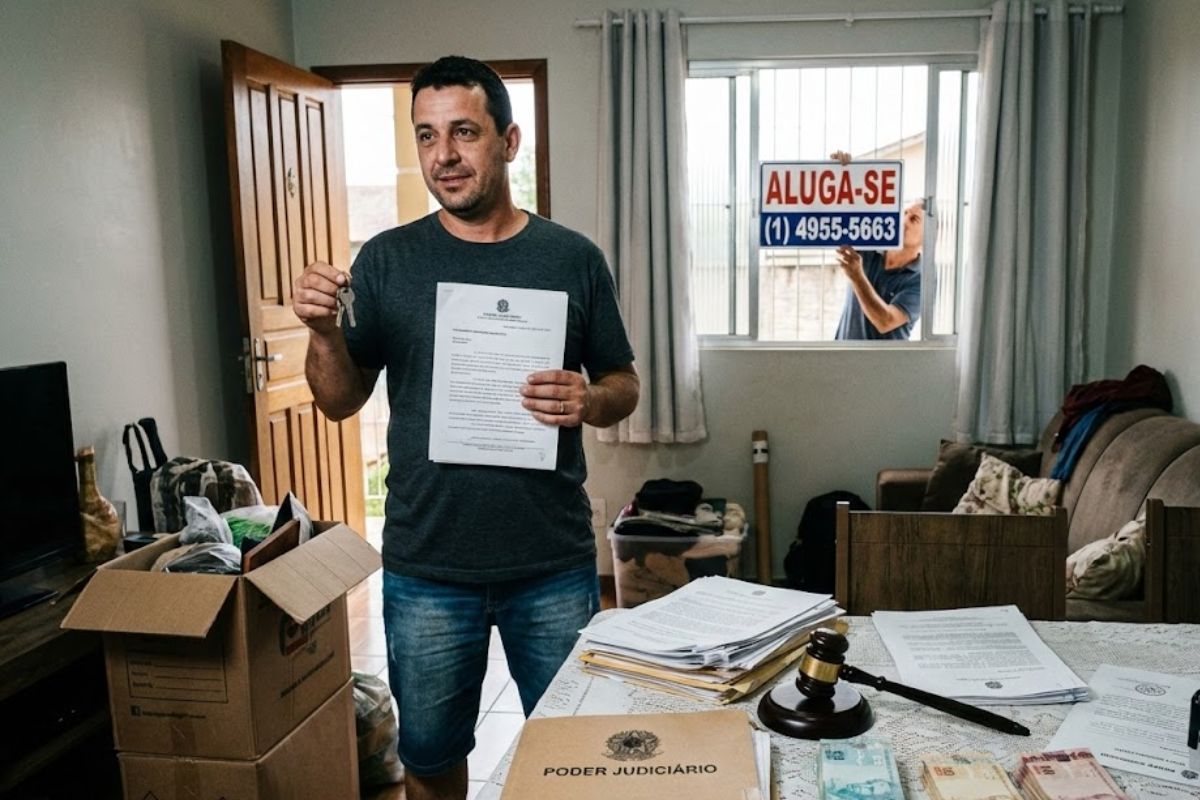


Resident of Chapecó Faced Eviction Process for Lease Agreement He Never Signed, After Notary Error in Signature Authentication, and Will Receive Reimbursement from the State of R$ 4.5 Thousand Plus R$ 10 Thousand in Moral Damages Determined by the Court of Santa Catarina, According to Ruling That Applied Objective Responsibility to the State
On December 10, 2025, the date of publication posted by the NDMAIS portal about the case, the decision of the Court of Santa Catarina that holds the State responsible and guarantees compensation for moral damages to a resident of Chapecó, in the West of Santa Catarina, who was sued for eviction based on a lease agreement he never signed, became public.
The lawsuit was filed after a notary error in signature authentication gave the document the appearance of legality and allowed the judicial charge to be directed to the resident, who had no connection to the property. Following the decision, the case came to illustrate the risks of failures in notarial services that should ensure legal security and prevent innocents from being brought to court.
Eviction Process for a Contract That Never Existed
The resident of Chapecó responded to an eviction action based on a lease agreement that, as he proved in the records, he had never signed.
-
The Senate approves a bill that criminalizes misogyny, hatred, or aversion towards women, and includes the crime in the Racism Law with a penalty of up to 5 years.
-
Chamber Approves Bill That Allows Pepper Spray for Women Over 16 and Imposes Strict Rules for Purchase, Possession, and Use as Self-Defense

-
Chamber Approves Law to Combat Leucaena, Fast-Growing Plant That Dominates Land and Threatens Native Species in Various Regions of the Country

-
Asset Division: Know What Cannot Be Divided in Case of Divorce


He was only able to free himself from the allegation after demonstrating to the Judiciary that the signature attributed to him did not correspond to reality and that he had not participated in any negotiations regarding the property.
The 3rd Appeals Chamber of the Judiciary of Santa Catarina recognized that there was an error in notarial service and determined the State’s liability for the damages caused.
The judges understood that the resident was wrongfully dragged into a judicial process due to the exclusive fault of the notary, which justifies the condemnation for the payment of moral damages.
Authentication Confused Between Father and Son at the Notary
According to the case, the notary authenticated the signature that appeared on the contract using a seal with the father’s name, even though it was the son who had signed, both having the same surname.
The notary office itself acknowledged the mistake in an official letter sent to the court, admitting the incorrect authentication and the inadequate identification of the true signatory.
For the judges, the erroneous authentication gave the appearance of regularity to the lease agreement and was decisive for filing the eviction action against someone who had no relationship with the property.
The understanding is that the notary failed precisely in its primary function, which is to ensure legal security and to rigorously check the identity of those who sign documents submitted for registration.
State Must Reimburse Expenses and Pay Compensation for Moral Damages
Due to the erroneous process, the resident had to hire a lawyer and incur defense expenses totaling R$ 4.5 thousand.
In the ruling, the 3rd Appeals Chamber determined that the State fully reimburse this amount and also pay R$ 10 thousand in moral damages, a sum fixed as compensation for the inconveniences suffered in responding to an eviction action without having any connection to the property.
In the assessment of the group, the loss borne by the resident was directly a result of the erroneous action of the notary office.
Even if there could be some questionable conduct on the part of the son who actually signed the contract, the fault of the notarial service was deemed sufficient to generate the duty to compensate and reimburse all expenses incurred by the victim.
Decision Reinforces Objective Responsibility of the Public Authority
The Appeals Chamber followed the understanding of the Supreme Federal Court, according to which the State is objectively liable for damages caused by notaries and registrars in the exercise of their functions, regardless of proof of fault.
In this regard, it is sufficient to demonstrate the link between the fault in the provision of the service and the damage experienced by the affected citizen.
The judges emphasized that notarial and registration services need to operate with maximum rigor, as their acts produce direct effects on the civil and patrimonial life of people.
In the case of Chapecó, a poorly conferred authentication was sufficient to place a resident in the position of defendant in an eviction action, a situation that the condemnation of the State seeks to curb by recognizing the responsibility and imposing payment of compensation for moral damages.
And you, do you consider the condemnation of the State to pay moral damages justified when a notary error places an innocent at the center of a judicial process?










Quem deveria pagar oe valores é o cartório uma que o erro partiu deles.
Toda profissão é passível de erro, principalmente o cartório, onde são praticados vários atos por dia, um médico pode erra numa receita errada, um juiz pode errar na dosimetria da pena, um engenheiro e um arquiteto pode erra num cálculo da planta estrutural, um político pode errar na definição de política pública, porque cartório não pode? Será que cartório são serviços perfeitos? O importante é que o tabelião reconheceu seu erro e o dano foi reparado. A vida que segue.
O dano não foi reparado. Foi indenizado. E não, um serviço notarial não pode errar. Imagina se o erro fosse vom você. Duvido ter a mesma opinião, se cedessem um imóvel seu a terceiro. Eu trabalhei em cartório e tenho registro de tabelião. A ordem sempre foi tripla conferência e ainda conferida pelo tabelião ao assinar. Um confere, o outro reconfere e emite o selo com nome e o terceiro confere antes de colar. Se existe erro, o tabelião não assina.
Mas esse país é muito pobre mesmo. Esses valores são ridículos para os cartórios. Nem vão dedicar qualquer atenção a essa jurisprudência. Tivesse a sentença fixado os valores 1000 vezes acima, o Estado teria cassado o funcionamento do cartório e todos os demais estariam preocupados. Os cartórios são fontes eternas de rendas altíssimas e garantidas.
A não não é ser pobre ou rico, foi o constrangimento que o Sr. Sofreu. Se fosse vom será que teria a mesma opinião. Cada um sabe onde seu sapato aperta.