





 Portuguese
  English
  Spanish
  4 min of reading
  7 comments


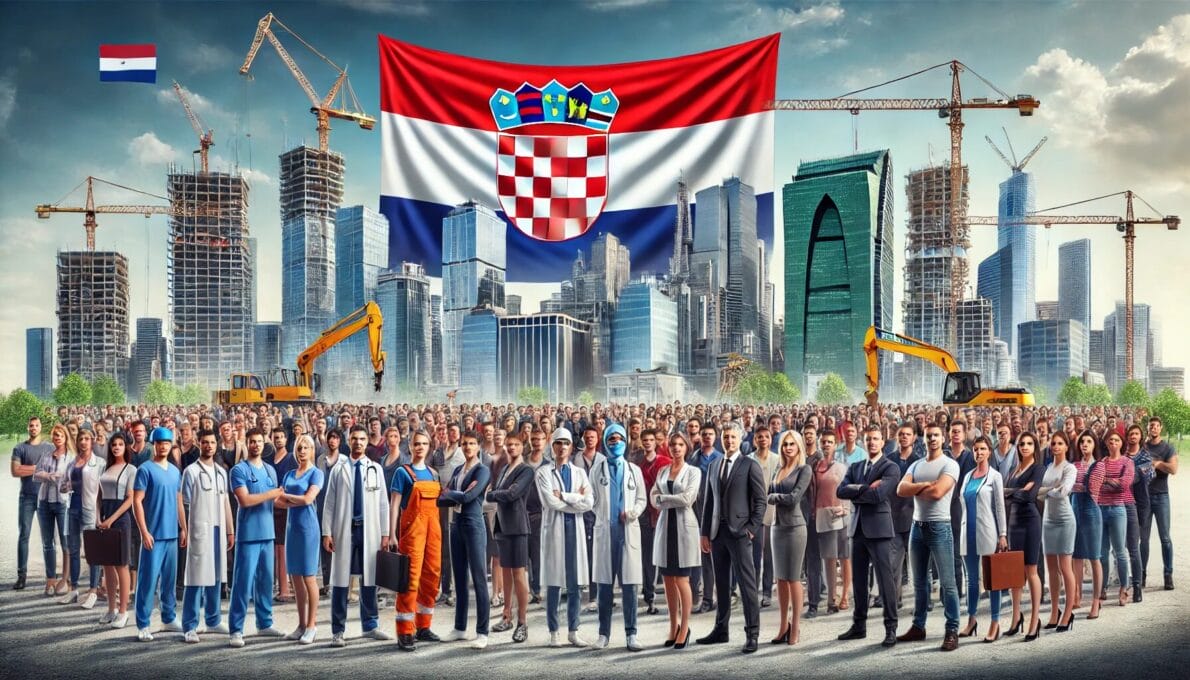

Croatia Faces Shortage Of Skilled Labor, Opening Positions For Foreigners, Including Brazilians. Areas Such As Construction, Technology And Hospitality Are In High Demand.
Croatia, known for its beautiful beaches and historical heritage, is facing a serious problem that threatens the growth of its economy: the lack of skilled workers.
This scenario of labor shortage has led the country to open its doors to foreigners, including Brazilians.
Amid a professional shortage crisis in various sectors, Croatia has become an attractive destination for those seeking new career opportunities.
-
Future profession with immediate earnings: Specialist reveals how a solar energy technician earns R$ 8,000 per month by taking advantage of the explosion in demand across the entire country.

-
Work from 8:30 AM to 5:30 PM with a 1-hour break at Sicredi as a Customer Service Assistant and receive a salary + benefits such as life insurance, dental plan, partnerships, Gympass, and much more in job openings across various states.

-
Subsea7 has job openings: the company has offshore and onshore positions available in 2026 for operators, pilots, supervisors, engineers, and much more.
-
Unimed is hiring candidates with and without experience! More than 10 job openings for Assistants, Analysts, Kitchen Assistants, and much more!


According to the report from the European Labor Authority (EURES), over 9 thousand job openings are available, especially for professionals with qualifications in specific areas, ranging from elementary education to higher education.
High Opportunities for Brazilians in Croatia: Sectors with Most Demand
With the lack of local workers, Croatia is turning to foreigners to meet the demand, and Brazilians are among the main targets of this search.
According to the EURES report, sectors such as construction, electronics, mechanics, information technology (IT), and hospitality lead the list of areas with the most opportunities.
These sectors include positions ranging from those requiring basic skills to those needing technical specializations.
Among the most sought-after professions are crane operators, heavy truck drivers, electricians, mechanics, and production technicians.
The hospitality sector, which is strong in the Croatian economy due to tourism, is also looking intensively for waiters, cooks, and attendants, roles accessible to foreigners with experience or interest in migrating to these fields.
For those with experience in information technology or mechanics, the chances of securing a position are high.
The Croatian market is in need of programmers, software developers, and systems technicians, roles that require qualifications but offer attractive benefits and chances for growth in the European country.
Why Does The Country Need So Many Professionals?
The reason behind this high demand is related to a mismatch between the skills of local workers and market needs.
According to the Croatian Employment Statistics (CES), even with over 88 thousand unemployed in May 2024, companies in the country offered around 125 thousand vacancies.
This imbalance leaves 36,700 unfilled positions, even if the entire unemployed population applied.
This discrepancy highlights the absence of training policies to prepare the local workforce for market demands, creating a scenario where, despite high unemployment, companies need to turn to foreign labor to continue operating.
Additionally, qualified local workers often seek opportunities in other European countries with more attractive salary conditions, creating a situation where the country needs foreigners to maintain essential sectors.
Saturated Sectors: Areas to Avoid
Despite the broad demand, it is important to avoid sectors where there is already an oversupply of professionals.
According to the EURES report, areas such as hotel reception, secretarial work, photography, and graphic design show high competition.
These sectors are saturated and may not offer great opportunities for foreigners, as they already have a greater supply of workers than demand.
For those wishing to succeed in an international career, it is essential to focus on areas where skills are more valued, providing better salaries and stability in the Croatian market.
Construction, for example, requires a high number of workers in roles such as bricklayers, carpenters, and painters, while the electrical sector constantly seeks electricians and specialized technicians.
Working Conditions and Growth Expectations
In Croatia, salaries vary according to the level of qualification required and the job location, with urban areas offering more competitive salary conditions.
Foreign workers are also supported by the government to facilitate adaptation, and Croatian labor legislation provides benefits such as paid annual leave and health insurance.
Still, foreigners need to consider the cost of living, especially in larger cities like Zagreb and Split.
Although the cost of living is lower than in other European Union countries, it is important to check the costs of housing and food in advance.
How Can Brazilians Take Advantage of These Openings?
To apply, interested parties should access the EURES platform, which centralizes job openings and guides the recruitment process throughout the European Union.
There, candidates will find the prerequisites for each position, as well as information on language requirements and professional certificates needed for some areas.
Proficiency in English or Croatian is an important advantage, especially for positions requiring direct communication with the public or specific technical knowledge.
The Croatian government also offers some incentives for qualified foreigners in critical areas, which facilitates the immigration process and adaptation to the local market.
Brazilian professionals with technical qualifications, such as mechanics or electrical engineering, have a good chance of finding placement relatively quickly.
Are You Ready For This Opportunity? Share Your Thoughts On Working In Croatia In The Comments!








Busco trabajo soy Mexicano
witha a pay of 900 euro sure
Estou interessado em trabalhar na Croacia.