





 Português
  Inglês
  Espanhol
  5 min de leitura
  0 comentários


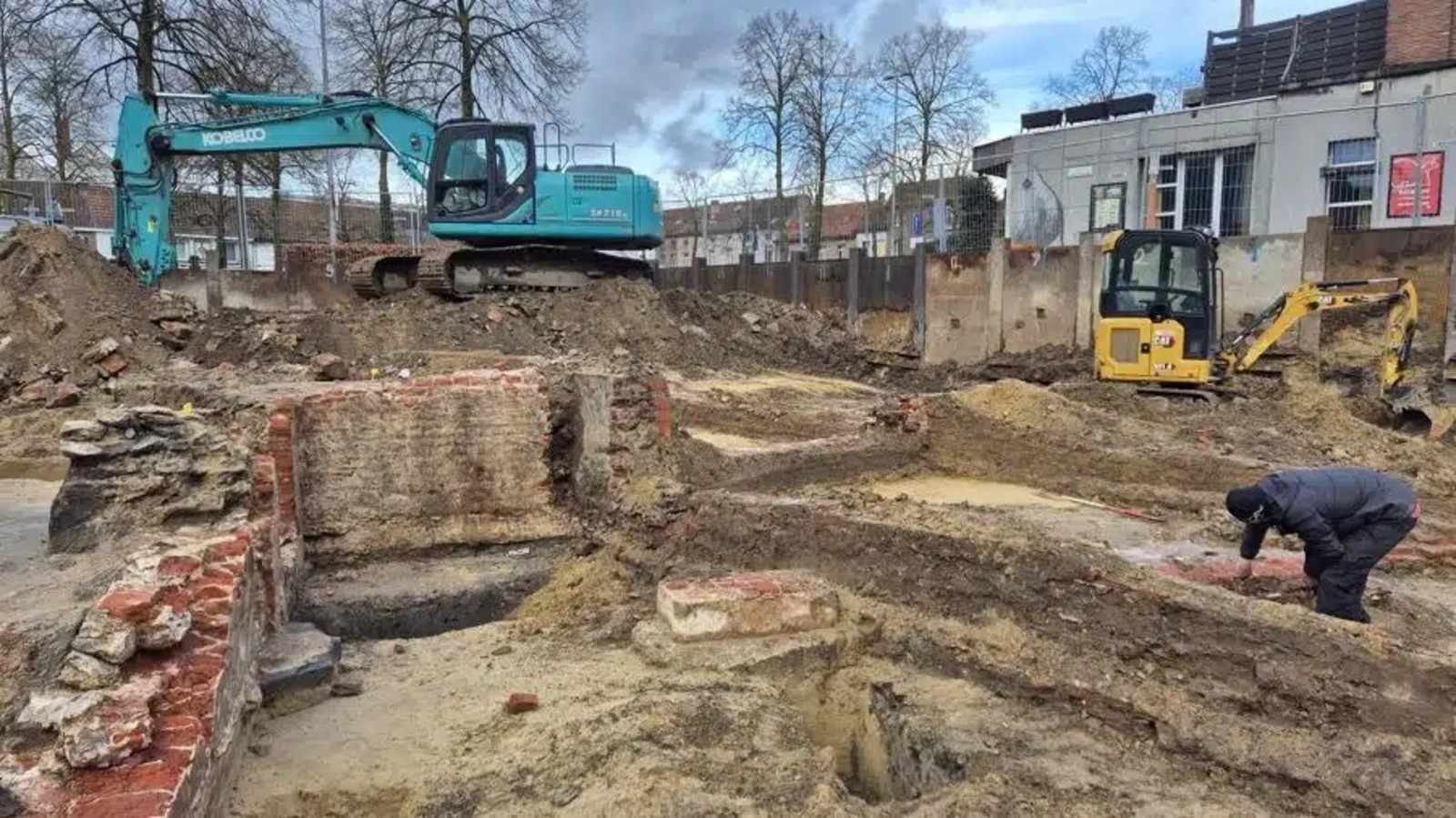
Excavations In Ghent Reveal Medieval Neighborhood Buried Beneath Fortress Built In 1540 And More Than 200 Skeletons Are Found On Site
Excavations conducted in Ghent, Belgium, revealed an ancient medieval neighborhood preserved beneath a fortress built in 1540. The discovery occurred during work for a public park and brought to light houses, a church, and a cemetery linked to the medieval period.
Excavations Reveal Hidden Structures Beneath Ancient Fortress
Trenches opened in Ghent began to reveal an unexpected discovery during the transformation of an old military site into a public park.
The excavations exposed traces of an ancient medieval neighborhood, hidden beneath modern layers of soil.
-
44 minutes on the cosmic scale: mysterious object in the Milky Way emits simultaneous radio and X-ray signals and raises an intriguing question about what is really happening in deep space.

-
Omoda & Jaecoo and AiMOGA Robotics advance in industrial artificial intelligence with a strategic debut in Thailand and a focus on advanced automation.

-
In a scenario of rising fuel prices, Omoda & Jaecoo enhance value for consumers with a range of up to 1,200 km, energy efficiency, and a new concept of worry-free mobility.

-
Cement battery inspired by chemistry used since Ancient Rome resurfaces as a rechargeable thermal solution and enters the competition for the future of industrial heat.


The work began near the former location of the Spanish Castle, at the eastern edge of the city. Machines removed asphalt and modern fill with the initial goal of locating parts of the old citadel.
Urban planners expected to find only fragments linked to the fortress built in the 16th century. However, the excavations began to reveal something much older beneath the modern layers.
As the excavators deepened the trenches, patches of dark soil mixed with carefully shaped stones emerged. The material indicated structures much earlier than the citadel built on the site.
Stone lines began to form patterns in the exposed soil. Instead of defensive walls, the outlines resembled foundations of buildings organized in rows.
The structures were rectangular in shape and aligned as if following ancient streets or property divisions. These patterns indicated the presence of an ancient medieval neighborhood buried beneath the fortress.


Confirmation Of An Ancient Disappeared Neighborhood
On February 19, 2026, researchers confirmed that the foundations did not belong to the citadel. The identified structures were part of a much older settlement.
According to reports from VRT NWS, the fortress built in 1540 ended up sealing an entire district beneath its walls. The ancient medieval neighborhood remained preserved for centuries.
As the excavations expanded, the layout of the district began to appear more clearly. The foundations revealed houses and structures linked to the historic Abbey of Saint Bavo.
The buildings were grouped along narrow alleys, indicating a densely populated urban space. Among these structures, archaeologists identified workshops, residences, and areas linked to everyday trade.
At the center of the archaeological site, the base of a large stone church emerged. The structure was dedicated to Saint Bavo, whose abbey was once a significant religious institution in the city.
The size of the church indicates that it served as a spiritual center for thousands of people. The site was surrounded by a compact set of buildings that formed the ancient medieval neighborhood.
Destruction Of The District In 1540
The neighborhood disappeared abruptly in 1540 during a conflict between the city and imperial authority. Residents of Ghent had revolted against new taxes.
In response, the Holy Roman Emperor Charles V ordered severe punishments. The decree mandated the destruction of the Abbey of Saint Bavo and approximately 800 neighboring houses.
The demolition made way for the construction of a new fortress aimed at reinforcing imperial control over the city. The citadel was erected directly over the area where the medieval neighborhood once existed.
For centuries, historians believed that the district had been completely removed before the construction of the fortress. Recent excavations indicate that this did not occur.
In practice, a large part of the settlement remained buried on-site. The fortress ended up being built directly over the ruins of the ancient district.

Fortress Preserved Historical Structures
The construction of the citadel had an unexpected effect on the archaeological layers. The thick walls and foundations ended up protecting the soil beneath the structure.
According to Geert Vermark from the Ghent Archaeological Service, the fortress functioned as a kind of protective cap. This kept the structures of the medieval neighborhood preserved.
While other areas of the city underwent reconstruction over the centuries, the buried district remained virtually intact beneath the fortress’s base.
One of the most important discoveries was a cemetery located beside the church. Archaeologists identified more than 200 human skeletons organized in rows.
The burials indicate a planned parish cemetery. The rows suggest that the site was used by the community of the ancient medieval neighborhood.
Cemetery Reveals Civil Population Of The Time
Initial examinations show that the remains belong to men, women, and children. The age distribution indicates that the cemetery was used by common residents of the district.
Archaeologists believe that the graves are older than the construction of the fortress. This suggests that the bodies do not belong to the soldiers who later occupied the citadel.
The area around the cemetery also revealed thousands of objects linked to daily life. Among them are fragments of Roman pottery, metal tools, and broken household utensils.
Each artifact found contributes to reconstructing the history of the area’s occupation. The evidence suggests ongoing human activity over different periods.
The presence of Roman materials indicates that the site may have been inhabited for over 1,000 years. This occupation predates even the emergence of the medieval neighborhood linked to the abbey.
Historical Layers Revealed By The Trenches
Archaeologists identified multiple historical layers accumulated within a few meters of soil. Each layer corresponds to a different period in the city’s history.
The deeper the researchers dig, the older the evidence found on-site becomes. The timeline seems to expand as the excavation continues.
The recovered skeletons are being carefully removed for bioarchaeological analysis. The scientists intend to study markers in the bones to understand aspects of medieval life.
The analysis includes studies on diet, health, and living conditions of the population that inhabited the ancient district. These examinations may reveal important details about the medieval neighborhood.
Vestiges Of The Spanish Fortress
Above these ancient layers existed one of the most important fortresses in the region. The citadel was completed in 1540 after the fiscal revolt against Charles V.
The structure had thick limestone walls, pointed bastions, and a large moat linked to the river. Parts of these foundations remained hidden for almost two centuries.
Recent excavations exposed sections of these structures once again. Archaeologists observed that many stones from the fortress came from the demolished abbey.
Decorative blocks and carved pillars from the Sint-Baafsabdij appear incorporated into the walls of the citadel. The material was reused during the construction of the fortress.
The builders used rubble from the destroyed district as filling material for the walls. This reuse allowed for an accelerated construction of the military structure.
The excavation also revealed remains of a wooden bridge that spanned the inner moat of the fortress. As the soil remains waterlogged, the beams survived in exceptional conditions for a nearly five-century-old structure.
With information from Daily Galaxy.







Seja o primeiro a reagir!