





 Portuguese
  English
  Spanish
  5 min of reading
  1 comment


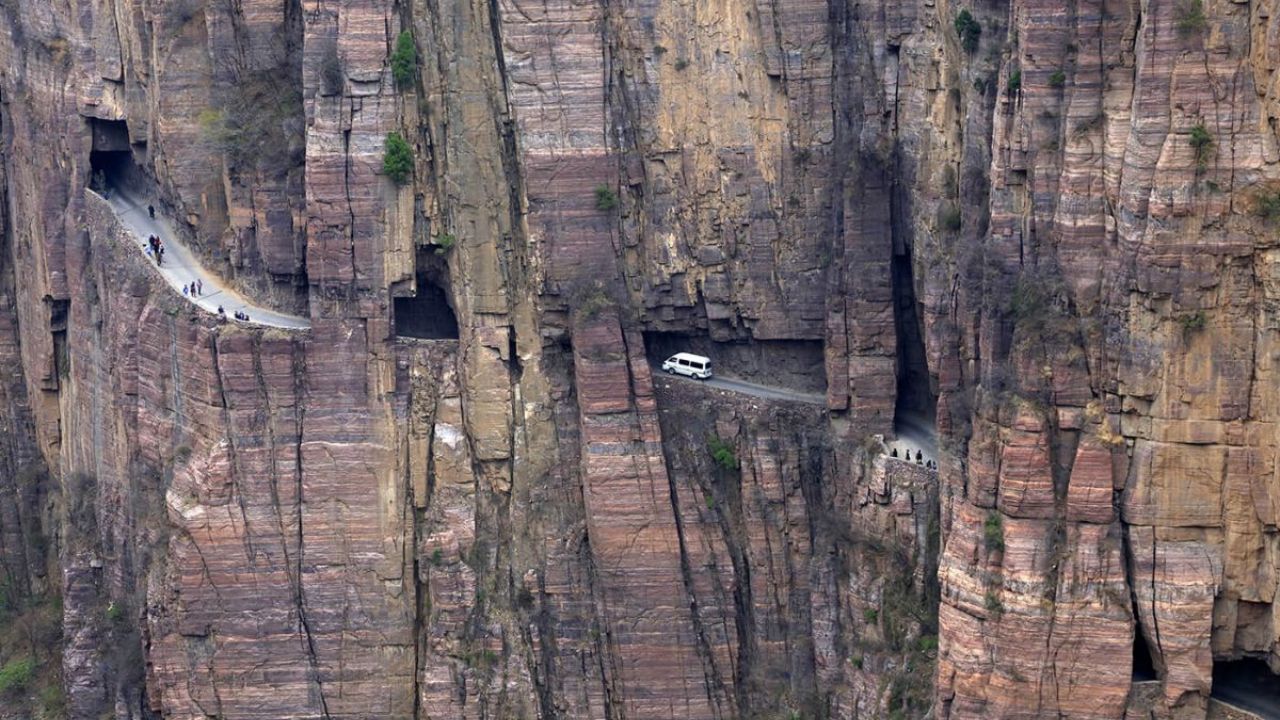


Vernacular Work By 13 Residents In The Taihang Mountains Eliminated The “Ladder To Heaven” And Transformed An Isolated Village At 1,700 Meters Above Sea Level Into A Global Tourism Icon.
On the steep slopes of Henan Province, China, a scar in the rock narrates one of the most impressive stories of human determination and improvised engineering. The 1,200-Meter Tunnel, known worldwide as the Guoliang Tunnel, was not the result of major construction companies or centralized state planning. It was hand-carved, centimeter by centimeter, by thirteen villagers who refused to accept the geographical isolation that condemned their community to poverty and stagnation.
Located in the Taihang Mountains, this stone corridor replaced a dangerous old path and became the only safe access route to a village situated at 1,700 meters above sea level. What was once a place accessible only to the most agile is today an attraction that receives millions of visitors, although its origin dates back to a period of extreme sacrifice between 1972 and 1977. The construction, done without electricity or heavy machinery, defied the governmental logic of the time and proved the effectiveness of collective will against the hardness of limestone.
The Tyranny Of Geography And The Limit On Pig Weights
Before the existence of the road, the village of Guoliang lived under a “glass ceiling” imposed by geology. The only connection to the outside world was the so-called “Ladder To Heaven” (Tianti), a treacherous route made up of 720 irregular steps carved into the rock during the Song Dynasty. This primitive infrastructure cruelly dictated the local economy. According to reports from Song Baoqun, one of the oldest residents, the logistics were so precarious that they even limited the growth of livestock.
-
The Argentine government celebrates the lowest poverty rate in 7 years, but experts warn that the methodology has changed, real wages have fallen, unemployment has risen, and the number of people on the streets of Buenos Aires has increased by 57% since Milei took office.

-
7.8 magnitude earthquake in Indonesia frightens the population, triggers tsunami alert, and hits an island with over 200,000 inhabitants this Thursday.

-
Google will finally let you change that embarrassing Gmail address you created in your teenage years without losing any accounts, logins, or old emails: the feature is already available in the United States.

-
Heading to Brazil in a Bonanza F33 single-engine aircraft: a couple departs from Florida on a visual flight, makes technical stops in the Caribbean to refuel and organize paperwork, and begins the staged crossing until they reach the country.

The pigs raised in the village could not exceed a weight of 50 or 60 kilograms. If an animal exceeded this biological limit, it became physically impossible for a man to carry it on his back up the vertical steps to the market in the valley. This forced the residents to sell their assets before time, perpetuating a cycle of structural poverty. Additionally, basic goods like salt and coal arrived in the village at inflated prices due to the cost of manual transport.
The isolation took a much higher toll on human lives. Medical evacuation was a logistical nightmare: it took eight strong men to carry a stretcher down the ladder, in an agonizing descent that took four hours to reach the nearest hospital. Many sick individuals did not survive the journey, succumbing to treatable conditions like appendicitis simply because geography prevented swift help.
Hammers Against The Mountain: Selling Livestock For Survival

Faced with the government’s refusal to build a road, deemed too expensive and technically unfeasible for a population of just 300 people, the village leadership, led by Shen Mingxin, made a radical decision in 1972. Inspired by the Chinese fable of “The Old Fool Removes The Mountains”, the villagers decided to fund the work themselves. To purchase tools, the community sold what they held most valuable: goats, sheep, and medicinal herbs harvested from the cliffs.
A shock brigade formed by thirteen farmers, with no training in engineering or mining, took on the titanic task. Armed only with determination and rudimentary tools, they faced extremely hard quartzite rock. The construction records are impressive: over five years, 4,000 hammers and 12 tons of steel were consumed in drills and chisels.
The progress was agonizing. In the densest rock sections, the team advanced at a rate of only one meter every three days. The work required a constant cycle of forging and repairing tools, worn down by the mountain’s hardness. Despite the lethal risks of working on the face of a vertical cliff, where one villager lost their life and others suffered accidents, the group persisted, driven by the certainty that stopping meant the slow extinction of the village.
The “Windows” Of The Abyss: Functionality Above Aesthetics
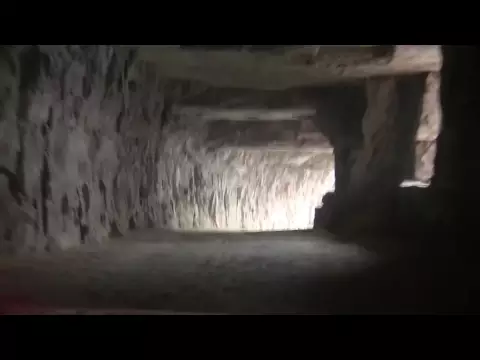
Those who observe the 1,200-Meter Tunnel today are struck by the famous irregular “windows” that open to the abyss. Although they have become the postcard of the region, these openings were not an aesthetic choice but a brilliant solution of vernacular engineering to solve critical construction problems without modern technology.
Firstly, the more than 30 windows served for rubble disposal. Removing tons of rock from a blind tunnel of more than a kilometer would be unfeasible manually; the openings allowed debris to be pushed directly into the abyss. Furthermore, without electricity, these gaps ensured the necessary lighting for daytime work and provided vital ventilation, creating an airflow that mitigated the risk of silicosis caused by excavation dust.
The final dimensions of the tunnel, 5 meters high by 4 meters wide, were pragmatically calculated to allow the passage of vehicles of the time, such as tractors. The geometry of the road is organic, following the path of least resistance through geological layers, resulting in blind curves and elevation changes that challenge modern drivers.
From Isolated Village To “Chinese Cinema Village”
The completion of the work on May 1, 1977 permanently changed the fate of Guoliang. Initially, the tunnel served its survival function: the time needed to access medical services dropped from hours to minutes, and trade began to flow. However, the true economic transformation occurred in the following decades, when the dramatic aesthetics of the site attracted filmmakers and tourists.
Now known as the “Chinese Cinema and TV Village”, Guoliang has been the backdrop for over 40 audiovisual productions. The media exposure transformed the subsistence economy into a hospitality industry. Today, the village receives around 1.4 million tourists annually. Residents like Mr. Song, one of the original builders, have seen their families transition from agriculture to managing hotels and restaurants, taking advantage of the social mobility that the road provided.
However, fame has brought new safety challenges. Frequently listed as one of the most dangerous roads in the world, the tunnel requires extreme caution. The absence of guardrails in some stretches and the abrupt light transition at the “windows” creates real risks. Today, to mitigate accidents and manage the flow, access for private cars is restricted, prioritizing the use of buses operated by experienced local drivers.
What do you think of this story of persistence? Do you believe that the tourist transformation compensated for the loss of the village’s original tranquility? Leave your opinion in the comments; we want to know your view on the price of progress.








Escolheram morar lá por que quiseram. Com tanto lugar acessível pra fixar residência foram escolher logo um lugar de difícil acesso!!