





 Portuguese
  English
  Spanish
  7 min of reading
  1 comment


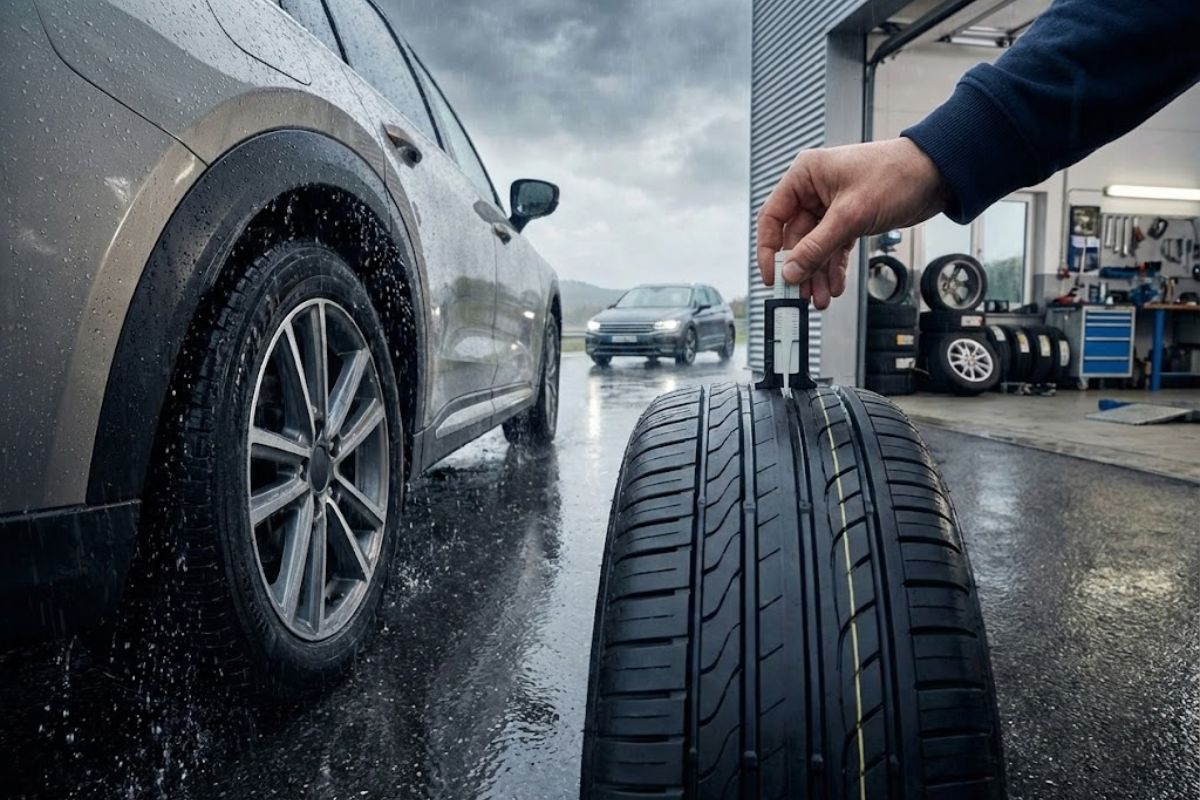


Choosing Tires Solely Based on Price or Appearance Is a Trap That Can Wear Out the Whole Car, Increase the Risk of Accidents in the Rain, and Blow Your Budget. Learn to Read Codes, Understand Tire Types, Tread, Maximum Weight, and Avoid Headaches Every Day in Your Routine.
In 2025, with streets full of potholes, speed bumps, and uneven surfaces, driving with the wrong tire has become an invitation to loss. The choice directly influences curve safety, braking time, and driving comfort, in addition to affecting fuel consumption and the lifespan of suspension, steering, and brakes.
By ignoring what is written on the sidewall of the tire and in the car manual, the driver runs the risk of using a model not designed for the weight, speed, and type of use of the vehicle. This can accelerate component wear and increase danger on rainy days, with a higher chance of hydroplaning. Next, see 8 Practical Tips to Get It Right When Choosing a Tire and Drive More Peacefully.
1. Decipher the Codes and Labels on the Tire Before Buying
The sidewall of the tire is a “RG” full of important information. Understanding these codes is the first step to avoid mistakes.
-
While the industry rushes towards automation, Omoda & Jaecoo bets on technology with a human touch and reveals its global mobility plan for 2026.

-
In just 1 year, JAECOO surpasses 7,000 units of the J5 EV delivered in Indonesia and consolidates trust in the Asian market.
-
With awards in various countries, the Jaecoo 7 is establishing itself globally and accelerating the expansion of Omoda & Jaecoo in the hybrid SUV market.

-
5 cheapest used cars than a Honda CG 160 Titan 0 km, with options starting at R$ 13,000 for those who want to trade their motorcycle for a car and escape the rain, sun, and risks of riding.


In a marking like P175/70R13 92H, each part has a meaning:
- The letter P indicates that the tire is for passenger vehicles.
- The number 175 shows the width in millimeters.
- The 70 is the sidewall height, which corresponds to 70 percent of the width.
- The letter R indicates that the tire is of radial type.
- The number 13 indicates the diameter of the wheel in inches.
Right after come the load index and the speed index, which indicate how much weight each tire can handle and what is the maximum speed it can safely support.
Understanding this “language” prevents you from putting a tire on the car that doesn’t match the vehicle’s original design.
2. Respect the Load Index of the Tire to Avoid Overloading the Car
The load index comes right after the measurements. In the example 92, this does not mean 92 kilos. A specific chart indicates the actual value and, in this case, each tire supports 630 kg at the correct inflation.
If you choose a tire with an index below what the manufacturer recommends, the combination of wheel, suspension, and brakes begins to work at the limit.
In cars that carry many people, pickups, and utility vehicles, exceeding this maximum load can cause serious failures and accidents.
Always check what index appears in the car manual and compare it with what is engraved on the sidewall of the tire.
3. Check the Ideal Speed Index for Your Use
Next to the load index, is a letter that indicates the maximum speed supported by the tire.
In the example, the letter H means it was designed to run up to 210 km/h. Other common letters are:
- Q up to 160 km/h
- R up to 170 km/h
- S up to 180 km/h
- T up to 190 km/h
- V up to 240 km/h
In practice, this shows how much the tire can withstand without compromising safety and internal structure.
In cars that frequently travel on highways, choosing a tire with a very low speed index is a mistake that can be costly.
Even if you don’t race, respecting this limit is mandatory.
4. Use Treadwear to Balance Durability and Adhesion
Another important number is the Treadwear, which typically ranges from 60 to 700. It indicates the relative durability of the tire.
Generally, the higher the value, the longer the tire tends to last. However, there is a balance:
- Tires with softer rubber wear out faster, but stick better in curves and during braking.
- Tires with higher Treadwear tend to have harder rubber, last longer, but may grip less on asphalt, especially on wet surfaces.
Additionally, the actual lifespan of the tire depends on the condition of the shock absorbers, alignment, and driving style.
Lasting longer does not mean it’s the best choice for everyone, especially if you prioritize safety in the rain and in curves.
5. Observe the EU Standard Label Mandatory Since 2018
Since April 2018, tires sold in Brazil must have a standardized European-style label, which makes it easier to compare models. It contains three essential pieces of information:
- Fuel efficiency.
- Wet grip.
- Noise level generated by the tire.
This label helps quickly assess if it’s worth paying a bit more for a tire that saves fuel and grips better in the rain, or if the cheaper option will cost more in the long run. Before finalizing the purchase, check this label carefully.
6. Consult the Car Manual Before Changing Any Measurements
The vehicle manual provides the exact combination of size, width, profile, and pressure that has been tested by the manufacturer’s engineering.
There lies the primary reference for choosing tires. Ignoring these specifications can:
- Compromise suspension and steering.
- Alter behavior in curves.
- Increase fuel consumption.
- Elevate the risk of structural failures.
The components of the car are designed to work within certain limits. When the tire falls outside this range, greater forces are exerted on parts that were not sized for this, accelerating wear and opening up space for breaks.
7. Choose a Tire Compatible with the Type of Vehicle
Not all tires fit any type of car.
The letter on the sidewall also indicates the application:
- P for passenger cars.
- LT for light trucks and some large SUVs.
- ST for trailers and motorhomes.
- C for larger trucks, vans, and pickups.
Using a passenger tire on a vehicle designed for carrying loads, for example, is a shortcut to problems.
Those who often fill the bed or cabin need a reinforced tire, with a structure designed to withstand weight and impact.
8. Consider Where You Drive: City, Highway, or Dirt
The most common route also changes the ideal tire. For urban use, where speed is lower, a speed index like Q may be sufficient.
For those who drive a lot on highways, it’s worth looking for tires with letters S or T, designed for higher speeds with safety.
The type of terrain matters as much as speed. There are tires better suited for asphalt, for dirt, or for mixed use.
On dirt roads, for example, a very high Treadwear and hard rubber may mean less grip.
On asphalt, an urban tire with the right tread ensures comfort and safety without wasting money.
9. Get It Right with the Tread and Width of the Tire
The tread is the design that touches the ground. In urban-use tires, the most common design is symmetrical, with equal grooves on both sides, good for everyday use in the city.
Meanwhile, asymmetrical tires have different designs on each side to better channel water, provide more grip in curves, and reduce the risk of hydroplaning.
In tires for off-road use, in addition to deep grooves, there are rubber blocks that help dig through mud and expel rocks and debris, increasing traction.
All this needs to match where you drive the most.
The width of the tire also affects performance. Going too wide may seem to improve stability, but increases fuel consumption and overloads the suspension and steering.
More contact with the ground means more friction. The key is to stay close to the measurement indicated in the manual and avoid excesses.
10. Respect the Maximum Weight Supported to Avoid Exceeding the Limit
Those who have a pickup, SUV, van, or often travel with a full car need to pay extra attention to the maximum weight supported by the tire.
Driving consistently at or above the limit heats up the internal structure, deforms the casing, and increases the risk of sudden failure.
If frequent use involves heavy loads, it’s worth looking for tires with a higher load index, always within the measurements recommended by the vehicle manufacturer.
This simple choice can prevent accidents and significant losses from suspension and wheel failures.
11. Beware of Recapped Tires and Unknown Brands
When looking to save money, many people fall into the temptation of recapped tires or brands they’ve never heard of.
On the outside, the tire may appear new, but on the inside, the structure may be compromised, with poorly made seams and low-quality materials.
The result is a dangerous package: increased chances of blowouts at speed, uneven wear, and loss of grip precisely when you need it most, like in an emergency stop in the rain.
And you, have you ever had any problems from choosing the wrong tire or still have doubts about which model to put on your car?










Boa matéria . Realmente correta e resumida. Tudo bem explicado.
Parabéns