





 Portuguese
  English
  Spanish
  3 min of reading
  0 comments


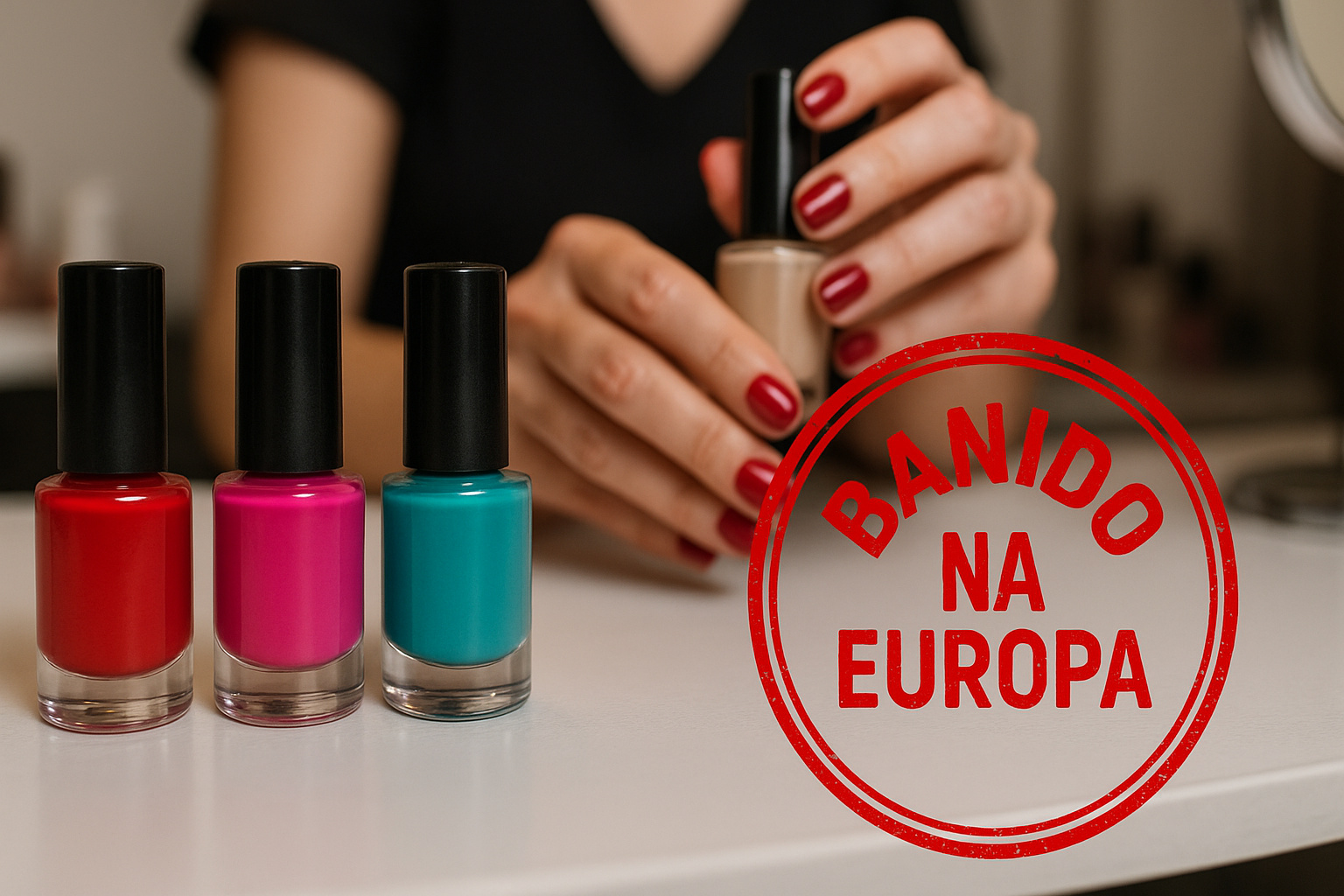
European Union Banned The Use Of TPO, A Compound Linked To Reproductive Risks, While In Brazil Anvisa Has Not Yet Restricted The Substance Present In Gel Nail Polishes.
A recent news has stirred the beauty sector: the European Union banned the use of gel nail polishes that contain TPO (trimethylbenzoyl diphenylphosphine oxide), a substance considered toxic for reproduction. The compound is widely used to ensure that gel nail polish hardens under LED or UV light, a process that guarantees greater durability and shine.
The European decision was made after studies pointed out that TPO could affect fertility in animals, raising concerns about similar risks in humans. The precautionary principle prevailed: as there is no proof of total safety, regulators preferred to ban the substance.
Why Was TPO Banned
The Scientific Committee on Consumer Safety of the European Union assessed TPO and concluded that its reproductive toxicity justified restrictive measures. The compound was added to the list of substances banned in cosmetics sold in the European bloc.
-
The Argentine government celebrates the lowest poverty rate in 7 years, but experts warn that the methodology has changed, real wages have fallen, unemployment has risen, and the number of people on the streets of Buenos Aires has increased by 57% since Milei took office.

-
7.8 magnitude earthquake in Indonesia frightens the population, triggers tsunami alert, and hits an island with over 200,000 inhabitants this Thursday.

-
Google will finally let you change that embarrassing Gmail address you created in your teenage years without losing any accounts, logins, or old emails: the feature is already available in the United States.

-
Heading to Brazil in a Bonanza F33 single-engine aircraft: a couple departs from Florida on a visual flight, makes technical stops in the Caribbean to refuel and organize paperwork, and begins the staged crossing until they reach the country.


As a result, gel nail polishes manufactured or sold in Europe need to be reformulated, replacing TPO with safer alternatives. Brands are already rushing to adapt their products and maintain space in the market.

Situation In Brazil: Allowed, But Under Observation
While Europe took swift action, Brazil still permits the use of TPO in gel nail polishes. The National Health Surveillance Agency (Anvisa) has not banned the substance so far, but is monitoring international debates and may reevaluate the regulation.
This means that gel nail polishes sold in Brazil may contain TPO in their formulation. Beauty salons, manicurists, and consumers, in general, continue to use the product without any legal impediment.
The Health Risks
The alert regarding TPO is related to its reproductive toxicity. In animal tests, the compound showed potential to harm fertility and reproductive development.
Although there is no direct evidence of the same effects in humans, specialists recommend caution. In addition to toxicity, the frequent use of gel nail polishes already raises dermatological concerns such as contact allergies and nail fragility, especially in people predisposed to irritations.
How To Identify If The Nail Polish Contains TPO
For Brazilian consumers, the way is to observe the labels and packaging. TPO may appear on the ingredient list as “Trimethylbenzoyl Diphenylphosphine Oxide”.
However, this information is not always clear on the bottles sold at retail. Many gel nail polishes marketed in salons do not display a complete list of components, making it difficult to make an informed choice.
The Beauty Market On Alert
The ban in Europe creates pressure on manufacturers worldwide. International brands that have already reformulated their nail polishes to meet European requirements will soon make versions without TPO available in other markets, including Brazil.
Professionals in the aesthetics and health fields are also divided. Some argue that occasional use poses no significant risks, while others warn of the precautionary principle: if there are safe alternatives, why insist on using a substance under suspicion?

Expectations For Brazil
It is likely that Anvisa will reevaluate the regulation of TPO in the coming years, following the international movement. This may result in a ban, concentration restriction, or requirement for warnings on labels.
In the meantime, specialists recommend that consumers seek direct information from manufacturers and, when possible, opt for gel nail polishes that already advertise TPO-free formulas.
Public Health, Responsibility, And Transparency
The TPO case exposes how cosmetics regulation can vary between countries. While the European Union has already banned the substance due to reproductive risks, Brazil still allows its use, leaving the consumption decision in the hands of professionals and customers.
The discussion, however, goes beyond aesthetics: it involves public health, corporate responsibility, and information transparency. With the globalized market and increasingly aware consumers, it is likely that the debate will pressure Brazilian authorities to take a position soon.
Until then, it is up to each consumer to decide — with information in hand — whether to continue using gel nail polishes that may contain TPO.









Seja o primeiro a reagir!