





 English
  Francês
  Alemão
  Italiano
  Japonês
  Norueguês
  Portuguese
  Spanish
  3 min of reading


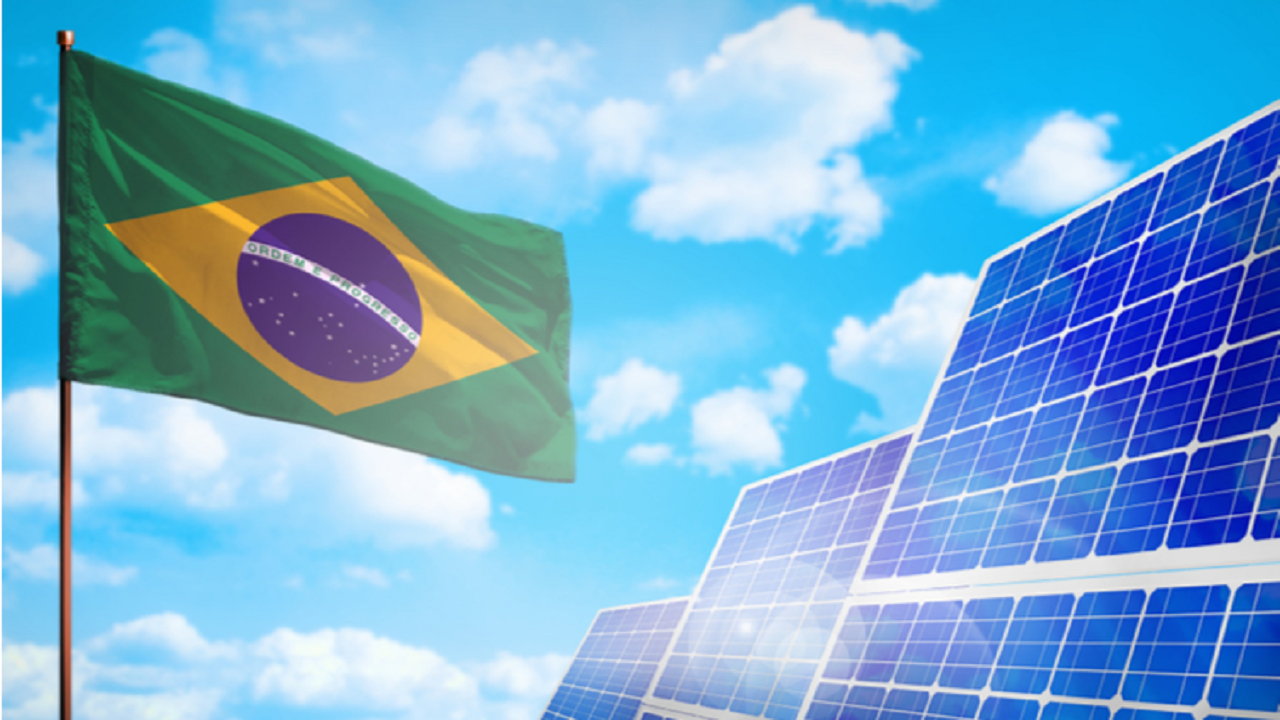
According to EPE, in 2050 it is possible that solar energy will be predominant in the country, boosting the use of a “free energy”.
According to the Electric Research Company, the cost and installation of a structure for generating free energy from solar power for stationary applications in Brazil is 1.5 billion MWh annually. The same applies to mobility, where it would be necessary to install 500 thousand MWp in solar energy for mobility to have free energy for the next 20 years. Unlike mobility-focused energy, which stores electricity in batteries, electricity for stationary applications does not have immediate storage.
Also Read:
Aneel Highlights That Less Electricity Is Consumed Than Generated.
According to Aneel, out of every 100 MWh generated, only 83 MWh are consumed or billed against the system, with the remainder characterized as losses. Brazil falls into the group of countries with loss rates above 15%.
Thus, based on the premise that the country could achieve a loss rate similar to the US, which is 5%, we would have an additional 150 million MWh per year for storage or consumption, resulting in free energy from solar energy or other sources.
-
Renewable energy advances over protected areas in Brazil, and a survey by the Energy Transition Observatory reveals silent impacts that challenge environmental conservation and pressure sensitive traditional territories.

-
Rio Grande do Sul accelerates energy transition: State invests in renewable technologies and consolidates decarbonization strategies and pathways to attract billions in new industrial investments.

-
With 160,000 m² of collectors, an area larger than 20 football fields, Silkeborg, in Denmark, hosts a solar thermal plant that heats 19,500 homes and could become the largest solar heating plant in the world.

-
A study reveals the expansion of renewable energy procurement in Brazil and shows how companies are taking advantage of opportunities to reduce expenses, ensure energy efficiency, and strengthen strategic environmental commitments.


In 5 years, this would amount to about R$ 150 billion that could be redirected and amortized for investments. Besides the reduction of losses, increasing energy efficiency represents an easy way to obtain free energy without building additional power plants. The idea is to use less electricity to do the same amount of work.
20% Savings with Hydroelectric Plants.
In the ranking by ACEEE, Italy and Germany score 75.5 points out of a possible 100 points. In contrast, Brazil only reaches a score of 35 points. A collective effort that could bring the country an efficiency level similar to that of the US would represent an additional solar energy equivalent to 10%.
For this optimization work in the electricity network, the repowering of the 200 plants would allow for a 20% savings, amounting to 1.2 to 1.5 billion MWh per year consumed, with a consequent increase in free energy in our “battery”.
Of this total, about 40% is consumed daily and can be used synchronously during solar energy generation with an implementation cost of R$ 660 billion. Currently, Brazilian consumers already pay around R$ 100 billion annually for electricity. Thus, in 6 and a half years, it would be possible to amortize the investment.
How Would the 60% Be When There is No Solar Energy?
Considering the work to optimize the transmission system, 60% of the energy consumed in the country equals 720 million MWh annually. The average accumulated energy in hydroelectric reservoirs is approximately 520 million MWh per year.
The proposed optimization would provide more than enough energy storage to cover the 200 million MWh per year needed for the safe operation of the system.










Seja o primeiro a reagir!