





 Portuguese
  English
  Spanish
  4 min of reading
  0 comments


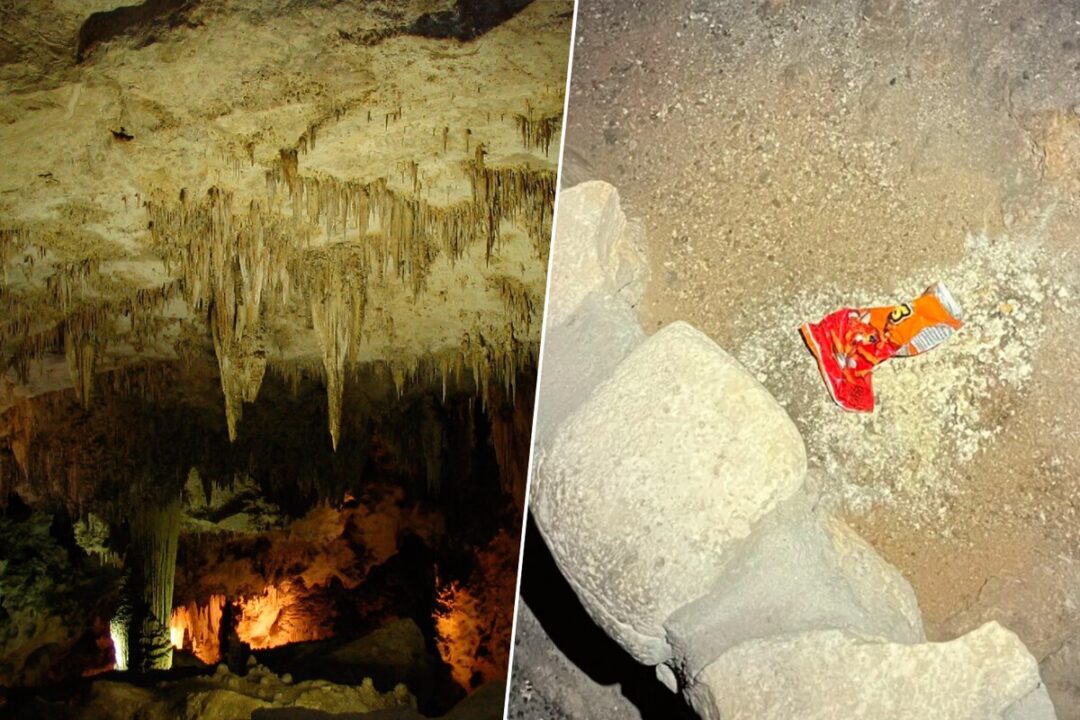
The Shocking Impact Of A Bag Of Cheetos Left In The Largest Cave In The U.S.: Discover How Small Human Errors Can Cause Great Ecological Disasters!
That humans can cause the greatest chaos in the ecosystems around us is beyond any doubt. However, unlike other animals, no matter how big the mistake is, we are capable of repeating it in a short time. Therefore, what happened in one of the most fascinating areas of the United States is a good example. Even if it was just a simple bag of Cheetos.
The Importance Of Carlsbad Caverns
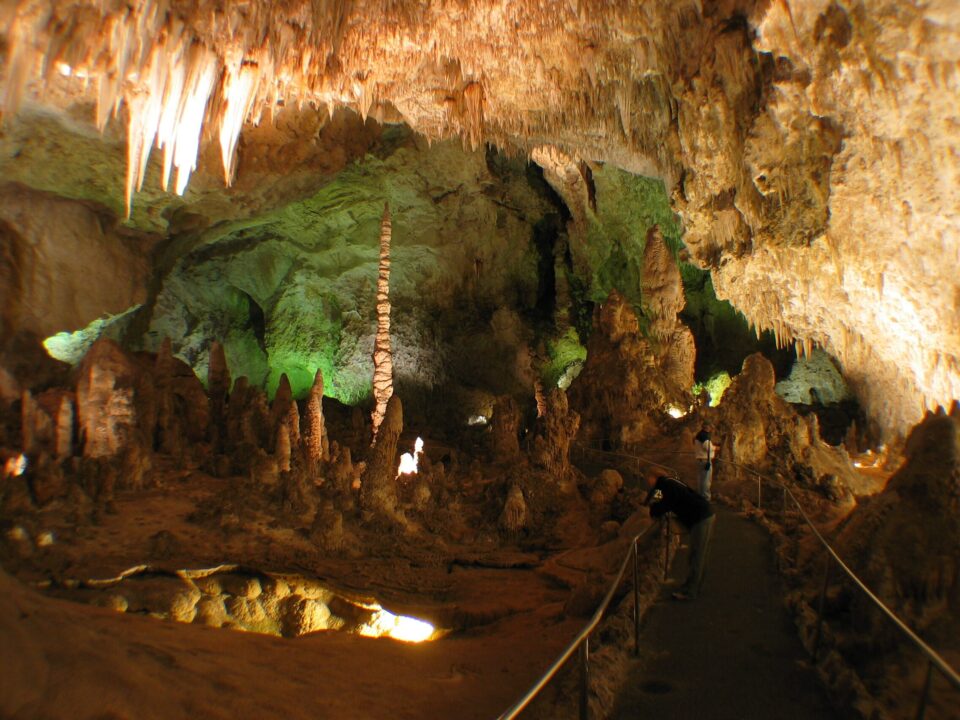
Located in the state of New Mexico, this is a group of over 119 underground caves of great geological and ecological importance. Formed by the action of acidic water that dissolved the limestone over millions of years, these caves stand out for their vast network of passages and chambers, including the famous “Big Room,” one of the largest underground chambers in the world.
These unique geological formations include impressive stalactites, stalagmites, and columns, making them of great scientific interest for the study of cave formation processes and the geological history of the southwestern United States. However, this site, named a World Heritage Site by UNESCO, has also become a must-see destination for mass tourism.
The Impact Of A Bag Of Cheetos On The Ecosystem
According to the National Park Service (NPS), what happened should make all future tourists reflect after a distracted visitor left a bag of Cheetos deep in Carlsbad Caverns. Apparently, the snack was left in the historic Big Room, the largest cave chamber by volume in North America, which can only be accessed after about an hour of walking underground.
-
With more than 635,000 doctors, Brazil sees competition increasing in large cities, and recent graduates are competing for shifts at an accelerated pace while the countryside still faces shortages.

-
The world’s first octopus farm wants to open in the Canary Islands and is already provoking an international reaction: the plan aims to produce 3,000 tons per year.

-
Drought may be creating stronger superbugs in the soil and helping antibiotic resistance reach hospitals, warns a study highlighting a problem that could grow alongside extreme weather.

-
The biggest scam in history: Napoleon’s France deceived the United States by selling them a territory that was Spanish.


A Bomb For The Local Ecosystem
Once there, the bag of Cheetos could decompose in the cave’s moist areas. In other words, these small “cheese” snacks left in the cave can cause a small ripple effect in the local ecosystem.
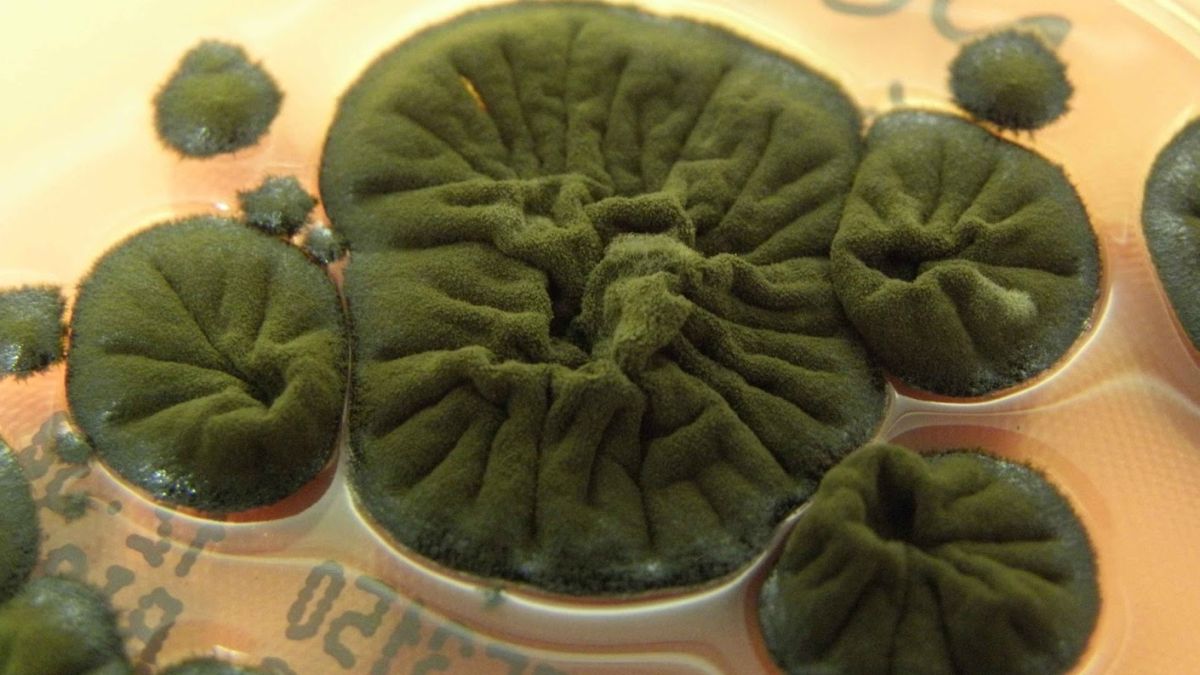
“The processed corn, softened by the cave’s moisture, created the perfect environment to host microbial life and fungi. Crickets, mites, spiders, and cave flies soon organized themselves into a temporary food web, dispersing nutrients throughout the cave and the surrounding formations. The mold spreads across nearby surfaces, fruits, dies, and emits a bad smell. And the cycle continues,” reports the NPS in a publication.
A Much Larger Problem
In the same article, it is highlighted that, “from the human perspective, a spilled snack may seem trivial, but for life in the cave, it can change everything,” they emphasize. “Big or small, we all leave an impact wherever we are. Let’s leave the world a better place than we found it,” adds the center.
It seems that park rangers had to perform arduous monitoring work to carefully remove all traces of trash and mold from the cave’s surface in hopes of avoiding any lasting impact on the cave.
Trash And Natural Environments
One of the major issues in the national parks of the United States is what visitors bring and leave behind. This pollution generates shocking numbers: over 300 million people visit national parks each year, generating nearly 70 million tons of trash.
And of all places, caves are the most affected. The reason? They are more vulnerable because they are isolated from the outside world and home to a rich variety of highly adapted, endemic, and sensitive organisms. If we add new elements like Cheetos or similar snacks, the result can radically alter the balance of biodiversity.
The Example Of The Lascaux Cave
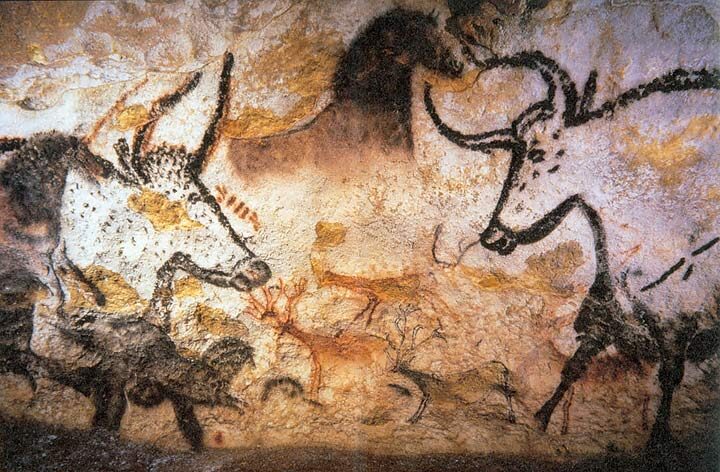
Possibly, this is the most famous case and the clearest example of how we can alter an environment of this type. Discovered in France in 1940, they quickly became famous for their cave paintings, dated at 17,000 years old, one of the best displays of prehistoric art. However, after opening to the public in 1948, mass visits began to negatively affect the delicate microclimate of the cave.
Apparently, the carbon dioxide exhaled by visitors, along with humidity and temperature changes, began to cause visible damage to the paintings, such as the appearance of fungi and algae on the walls. These changes jeopardized the preservation of the paintings, some of the most important in humanity.
Closed Forever
In light of this deterioration, in 1963 French authorities made the decision to close the Lascaux Cave to the public to protect the paintings. Since then, only a very limited number of scientists and conservation experts have access to the cave. In fact, to allow the public to continue appreciating the art of Lascaux, a replica known as Lascaux II was created, which reproduces the main chambers and paintings of the original cave.
This measure, protecting the historical value of the caves with steel doors and security cameras, has allowed the preservation of Lascaux’s artistic heritage while maintaining its educational and cultural value. Perhaps we should do the same with all historically valuable caves. Although, before that, it would be necessary to check if anyone left a snack behind.






Seja o primeiro a reagir!