





 Portuguese
  English
  Spanish
  4 min of reading
  0 comments


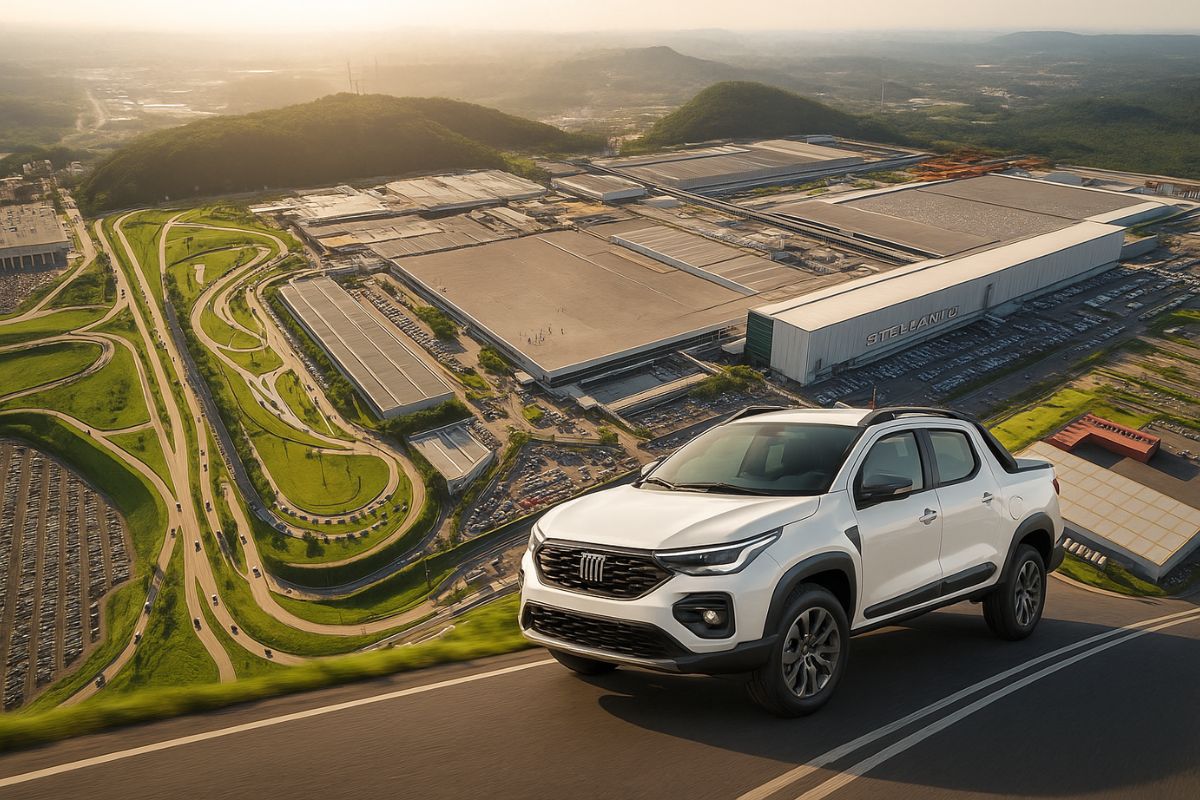


The Largest Industrial Complex of Stellantis in the World Was Born from an Audacious Agreement in the 70s, the Betim (MG) Factory Became the Heart of Fiat, Producing One Car Per Minute and Now Leads Stellantis’ Decarbonization Strategy.
In Betim, Minas Gerais, there is a giant that pulses to the rhythm of the global automotive industry. What started as the Fiat factory is now the Stellantis Automotive Hub, the headquarters of the largest industrial complex of Stellantis in the world. It is from there that Brazil’s best-selling cars come, such as the Strada pickup and the Pulse and Fastback SUVs.
This is the story of how a political and business decision in the 1970s transformed a city and reshaped the industry map in Brazil. A story of explosive growth, record efficiency, and the challenges of being the market leader, now with the mission to lead the transition to hybrid cars.
The 1973 Agreement That Brought Fiat to Minas Gerais
In the early 70s, the car industry in Brazil was completely concentrated in the ABCD Paulista region. Breaking this hegemony was the main goal of then-governor of Minas Gerais, Rondon Pacheco. His negotiations with the legendary Fiat president, Giovanni Agnelli, culminated in the signing of a historic agreement on March 14, 1973.
-
Rigid bags with their days numbered: new trend prioritizes comfort in 2026.

-
YouTuber creates an excavator equipped with a giant 4.5-meter sword to challenge his brother to a rematch, and the invention quickly goes viral on social media.

-
The U.S. Army surprises the world by presenting the UH-60MX Black Hawk helicopter capable of flying without pilots, controlled by a tablet, featuring the MATRIX system, smart sensors, and full autonomy in real combat and rescue missions.

-
Heineken’s factory in Brazil produces 300 million beer cans in just 4 months, reaches 1 million hectoliters, received R$ 2.5 billion, and is already projecting an annual capacity of 5 million with sustainable technology.

The state of Minas Gerais not only offered incentives but also became a partner in the largest industrial complex of Stellantis in the world. The factory was officially inaugurated on July 9, 1976 and its first product was the revolutionary Fiat 147, a compact and economical car that changed the national market and established the new automaker’s strength.
A Car-Making Machine: The Production Scale That Reaches One Car Per Minute
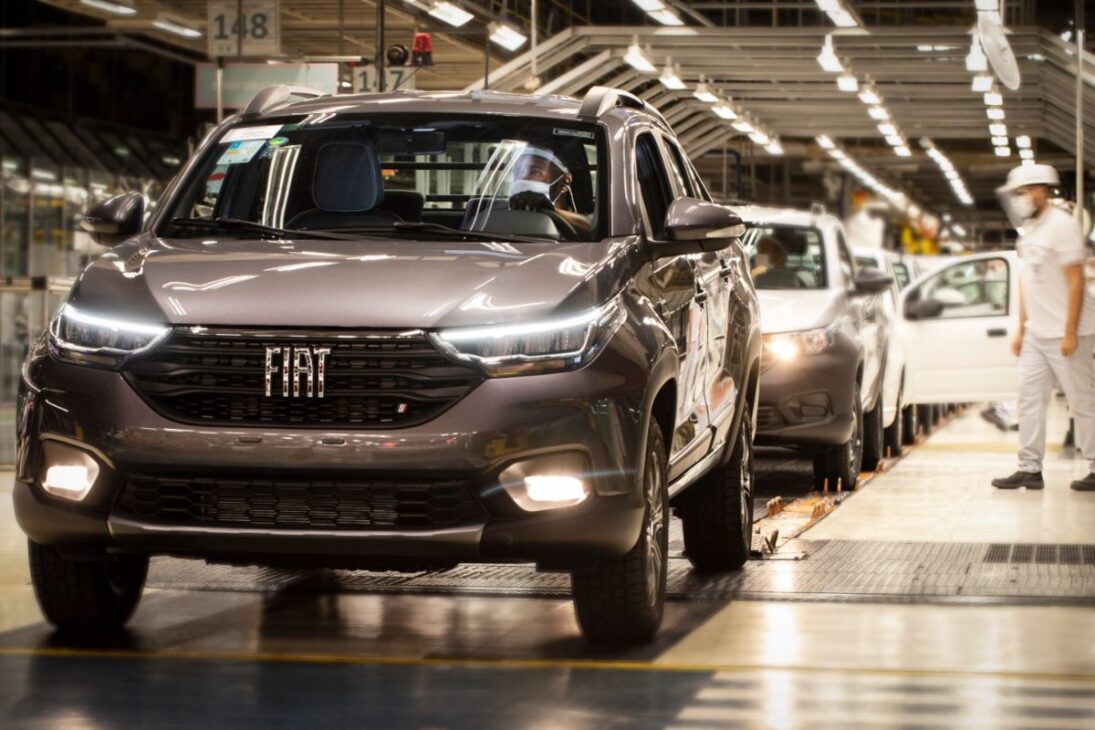
The magnitude of the Betim Hub is impressive. The complex has the capacity to produce 800,000 vehicles per year. In months of high demand, the pace is frantic. A new record was set in July 2024, when more than 43,000 cars were manufactured in a single month, which translates to an average of almost one car per minute.
In addition to vehicles, Betim is also the largest engine production center in Latin America. Its engine factory is being expanded to produce 1.1 million engines per year, including the modern turbo engines that equip much of the Stellantis lineup.
The Impact in Betim: The Creation of the Largest Industrial Complex of Stellantis in the World
The arrival of Fiat transformed Betim. The city, which had rural characteristics, saw its population explode from 35,000 inhabitants in 1970 to over 411,000, according to the 2022 Census. The factory became the backbone of the local economy.
In its surroundings, an ecosystem with over 120 supplier companies developed, creating a true “factory city.” Today, the hub directly employs around 16,000 people and is the main driver of economic development in the region.
The Heart of Fiat Leadership and the Paradox of After-Sales
Being the headquarters of the largest industrial complex of Stellantis in the world means being responsible for producing the cars that lead the Brazilian market. The Strada pickup, the best-selling vehicle in the country, rolls off the lines in Betim, as do the strategic SUVs Pulse and Fastback, which ensure Fiat’s dominance.
However, this market leadership coexists with a paradox. Reports and complaints from consumers on online forums point to a deficient customer service (SAC). This apparent disconnect between excellence in production and difficulty in after-sales is one of the major challenges for the brand’s image.
The Future Is Bio-Hybrid: The Investment of R$ 14 Billion Until 2030


Looking towards the future, the Betim Hub is at the center of one of the largest investments in the history of the automotive industry in Brazil. Stellantis announced an investment of R$ 14 billion in the plant between 2025 and 2030.
The focus of this investment is the Bio-Hybrid technology, which combines flex engines with hybridization systems, taking advantage of the potential of Brazilian ethanol. This strategy not only modernizes the factory but positions Betim as a global center for the development of decarbonization technologies, ensuring its strategic importance for decades.







Meu registro de funcionário ano 1974, foi 111, outros pioneiros como eu. Conheci e participei desta histórica evolução.
Aposentei encerrei minha participação em 2013.