





 Português
  Inglês
  Espanhol
  4 min de leitura
  2 comentários


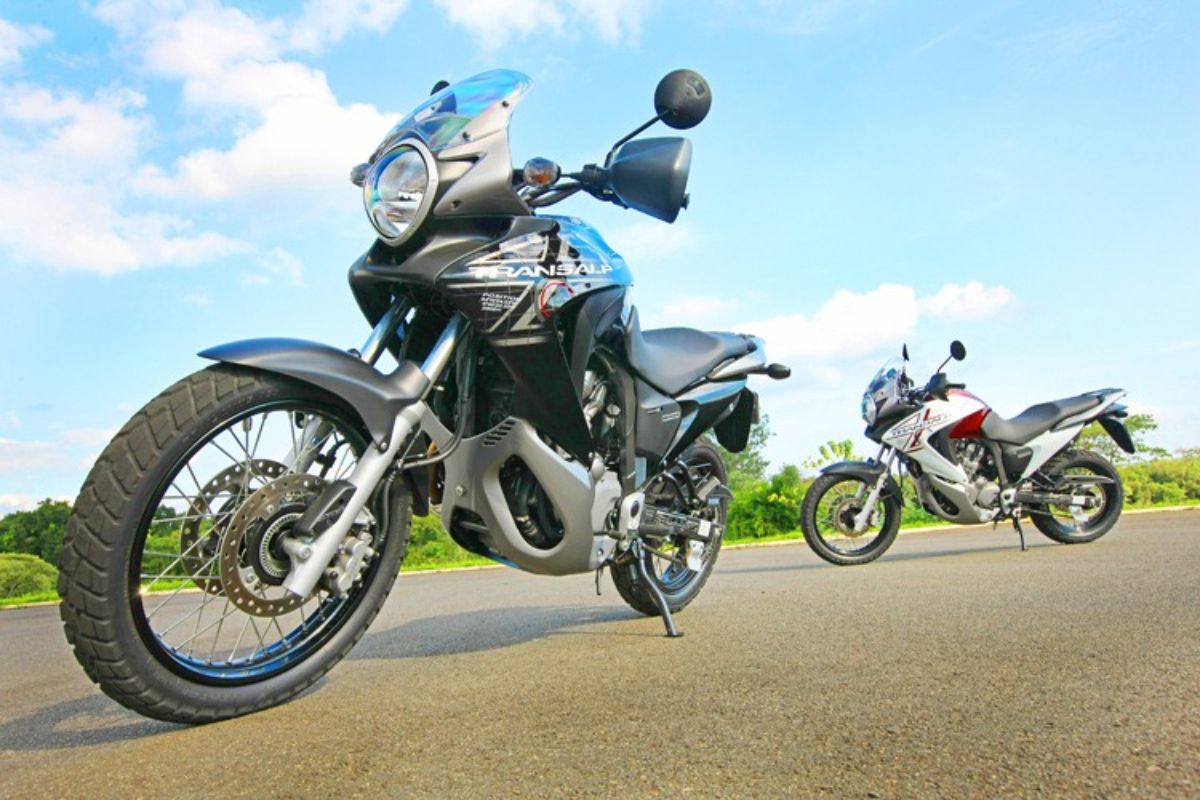


Launched in 2011 with a rare V2 engine, Honda’s big trail was a sales failure, but today it is a cult and rare motorcycle in the used market.
In the Brazilian motorcycle market, few stories are as curious as that of the Honda XL 700V Transalp. Introduced in Brazil in 2011, the motorcycle had a discreet presence and ended its sales in 2014, leaving no nostalgia in the brand’s financial reports. Equipped with a 680cc V-Twin engine full of personality, it arrived as a proposal for balance, but the market at the time did not understand it.
A decade later, the scene has changed completely. The same motorcycle that was ignored in dealerships has transformed into a coveted item, a rarity valued by enthusiasts. The story of the Honda XL 700V Transalp is proof that some machines arrive at the wrong time, and that true recognition sometimes takes a while to come.
The Engine That Was the Soul of the Motorcycle and the Myth of the “Orphan Engine”
What really set the Honda XL 700V Transalp apart from its rivals was its engine. At a time when parallel twin engines were becoming popular, Honda bet on a 52-degree V-Twin, with 680.2 cm³, liquid cooling, and electronic injection. It delivered 60 hp of power and 6.12 kgf.m of torque, focusing on low and mid-range strength, ideal for overtaking and climbs. The pulsating sound and low vibration were praised, creating an emotional connection with the rider.
-
The world’s first octopus farm wants to open in the Canary Islands and is already provoking an international reaction: the plan aims to produce 3,000 tons per year.

-
Drought may be creating stronger superbugs in the soil and helping antibiotic resistance reach hospitals, warns a study highlighting a problem that could grow alongside extreme weather.

-
The biggest scam in history: Napoleon’s France deceived the United States by selling them a territory that was Spanish.

-
Why is the Danakil Desert so dangerous? It has unstable terrain and how extreme temperatures and toxic gases turn the region into one of the most hostile environments on Earth.


In Brazil, this engine was a unique piece in Honda’s portfolio, which created the impression of being an “orphan engine” and caused concerns about maintenance. However, this perception was a misconception. In Europe, this engine was already tested and approved in other successful models, such as the touring Honda NT700V Deauville and the futuristic Honda DN-01. The engine was not an experiment; it was a proven global asset that was applied in a market that was unfamiliar with it.
The Ferocious Competition with the BMW F 800 GS and the Suzuki V-Strom in 2011
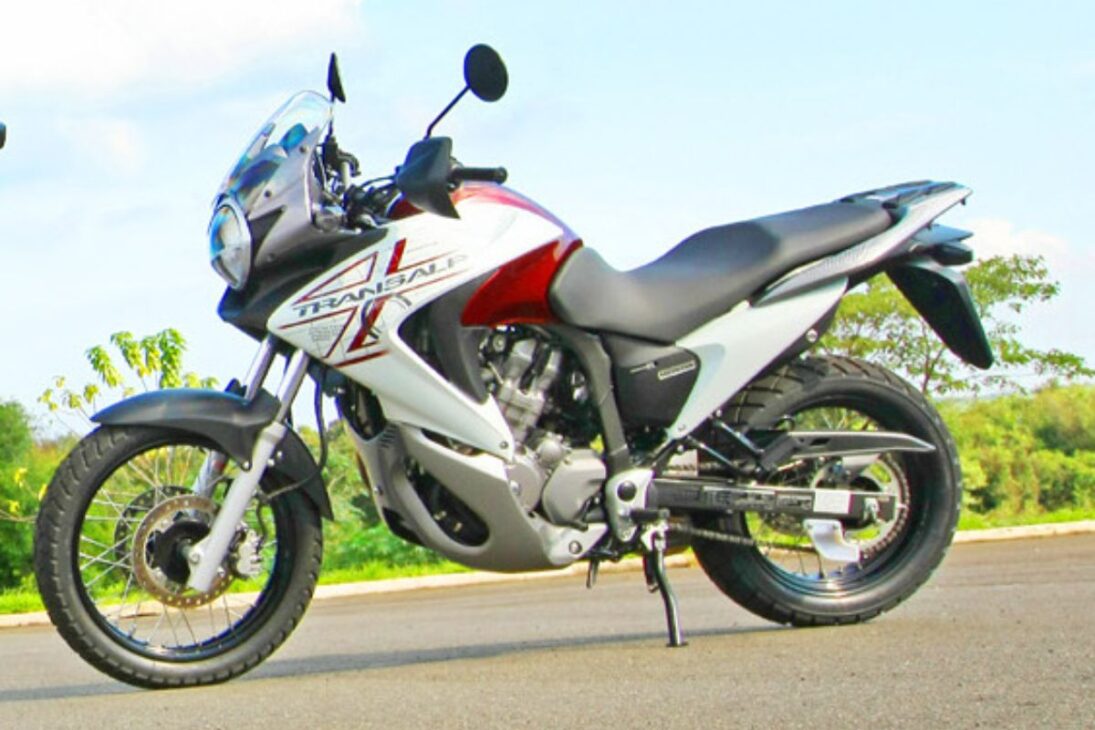
The Transalp did not arrive in Brazil in a calm sea. The big trail segment was in full expansion, dominated by two forces defining what the consumer wanted:
The Off-Road Reference: The BMW F 800 GS. With 85 hp, long travel suspensions, and a 21-inch front wheel, it was the obvious choice for those seeking adventure off-road and status.
The Queen of the Asphalt: The Suzuki DL 650 V-Strom. Also featuring a V-Twin engine, it offered superior performance on the road, a more modern design, and a 6-speed gearbox, being the pragmatic choice for long trips.
Faced with these two giants, the Honda XL 700V Transalp found itself in an uncomfortable position. Its 19-inch wheel made it better off-road than the V-Strom, but far inferior to the F 800 GS. On the asphalt, its engine was less powerful than Suzuki’s. Its great virtue was balance, but the 2011 market was seeking superlatives: the strongest or the best off-road. The subtle proposal of the Transalp did not find its audience.
The Balance Between Comfort and Technical Defects
Riding a Transalp was an experience of contrasts. Ergonomics was a highlight, with an upright riding position and a soft seat that made it excellent for traveling. The chassis stability and the competence of the suspensions made it a “do-it-all” motorcycle, agile in the city and firm on dirt roads.
However, there were technical flaws that weighed against it. The most criticized was undoubtedly the 5-speed gearbox. In a model focused on touring, the absence of a sixth gear to relieve the engine on highways was seen as a design mistake. Additionally, the C-ABS brake system was an expensive optional, and the version without the system had a rear brake that easily locked up, an important safety disadvantage in such a competitive segment.
The Chronic Problems and the Praises for Its Legendary Reliability
The true reputation of the Honda XL 700V Transalp was built by its owners. The love for the model is based on its reliability described as “bulletproof” and comfort for long journeys. Reports from owners who traveled thousands of kilometers without issues are common.
Despite this, owners are also honest about its chronic flaws. The first was the dated aesthetics, especially the round headlight, which made it look “old” since its launch. Another serious problem was the appearance of bubbles in the tank’s paint. Some owners also reported a front-end wobble, the “shimming”, which was solved by replacing the original tires. Lastly, the motorcycle gained the unfortunate reputation of being highly sought after for theft, which raised the cost of insurance and concern.
How the Honda XL 700V Transalp Became a Valued Icon
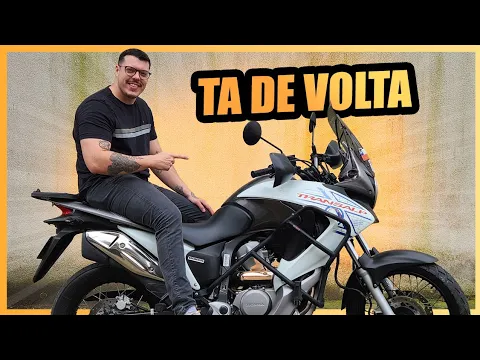

Time proved that the market was wrong. Today, in 2025, the Honda XL 700V Transalp is a coveted motorcycle. The attributes that were once viewed with suspicion are now its greatest assets. Legendary reliability is a decisive factor in the used market. Its V-Twin engine, once “strange”, is now a rare and exclusive differentiator, as most modern big trails, including the new Honda XL 750 Transalp, use parallel-twin engines.
This reversal has caused its prices to soar. In 2025, it is common to find units being sold for values between R$ 28,000 and R$ 35,000, a remarkable feat for a motorcycle whose last model is from 2014. The success of the new Transalp 750 is the final proof that the original concept was right; the market just needed to mature. The 700V was the right bike at the wrong time, and today it finally receives the value it deserves.









Melhor moto q a Honda fabricou
E eu tenho!!!
😎