





 Portuguese
  English
  Spanish
  3 min of reading
  0 comments


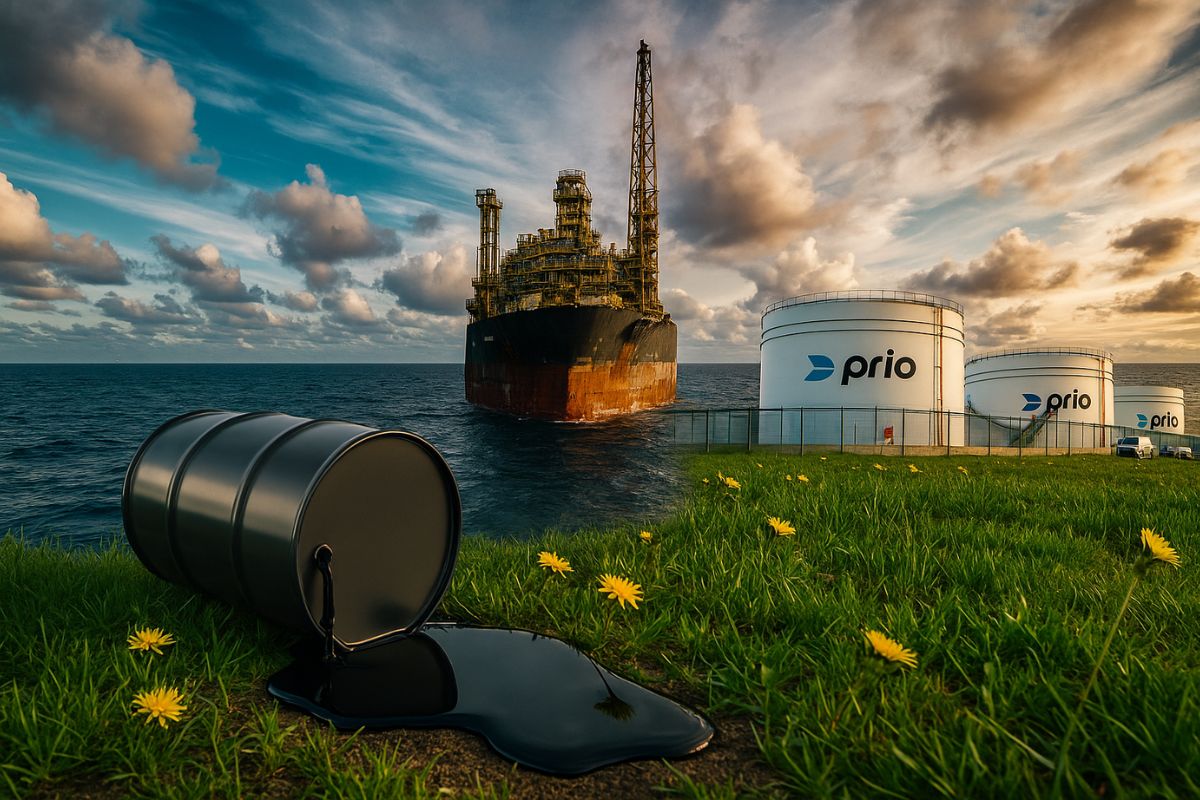
Discovered in 2008 and considered unfeasible for more than a decade, the wahoo oil field was purchased by the Brazilian PRIO, which employed a brilliant engineering solution to transform it into its next big project.
In the Campos Basin, a submerged treasure waited more than a decade to be explored. The wahoo oil field, a pre-salt discovery made in 2008, was considered a “stranded asset,” promising but too expensive to develop. It was not aligned with the strategy of giants like Petrobras, who focused on even larger-scale projects.
It was then that PRIO (formerly PetroRio) entered the scene. The Brazilian independent operator acquired the field and, with a strategic vision and an innovative engineering solution, turned what was a problem into a billion-dollar opportunity, creating a new and important production hub off the coast of Rio de Janeiro.
The 2008 Discovery and the “Stranded Asset” Dilemma
The story of the wahoo oil field began on May 30, 2008, when the American company Anadarko announced the discovery of oil in the pre-salt of the Campos Basin. It was the first time an international company found oil in this layer, validating the region’s potential beyond Petrobras’s domain.
-
Spain surprises the world by erecting 62 artificial dunes, mixing sand with natural remains of posidonia, and causing the structure to lose only 1.4% of its volume in 1 year.

-
With 16 Bulava missiles, improvements in acoustic stealth, and a design focused on silent patrols, Russia’s nuclear submarine was born to ensure Moscow’s invisible retaliation and has become one of the pillars of its maritime strength.

-
‘Populous’ city in Rio among the worst in Brazil in national ranking and exposes silent development crisis.

-
Couple buys house in the South Zone of São Paulo, opens a hidden door in the garage, and finds a secret wine cellar with dozens of old wines forgotten since the 1970s.

Despite the excellent quality of the oil, the project did not move forward. The reason was simple: to produce in Wahoo, it would be necessary to build a dedicated FPSO (a floating platform), a multi-billion-dollar investment. For a field with estimated reserves between 126 and 140 million barrels, the math didn’t add up. Wahoo became a “stranded asset”: rich in oil, but economically unfeasible.
The Entry of PRIO and the Strategy That Changed the Game
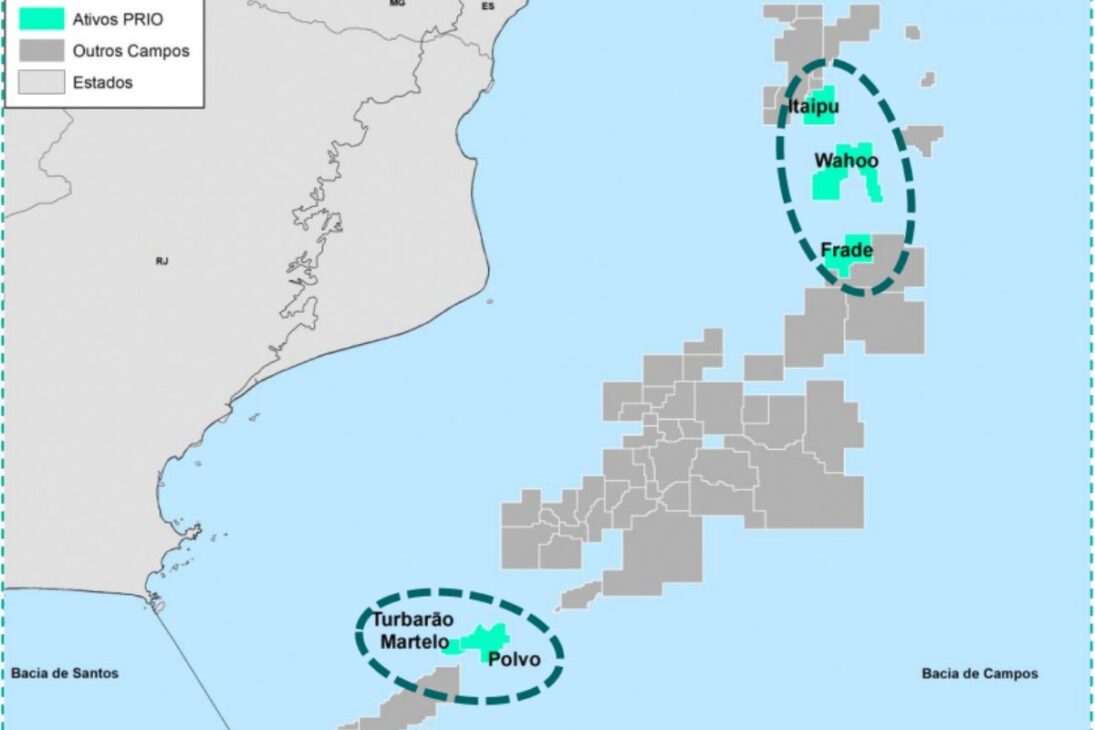
The trajectory of the wahoo oil field changed starting in November 2020, when PRIO began acquiring the stakes belonging to other giants, such as BP and Total, becoming the new operator of the field.
PRIO’s brilliance lay in finding a solution to the cost problem. Instead of building a new FPSO, the company realized that Wahoo was just 35 km from another of its assets, the Frade Field. The strategy was then to connect the two fields via a submarine pipeline, a “tie-back”. This decision eliminated the project’s largest cost and made Wahoo not only feasible but highly profitable.
The $850 Million Plan to Extract Wealth from the Oil Field
With the “tie-back” solution, PRIO implemented a robust development plan, with a total investment of $850 million. The project envisions drilling four initial production wells, each capable of generating more than 10,000 barrels per day, leading to a total production of up to 40,000 barrels daily.
To carry out the drilling, the company is using its own rig, the Hunter Queen, ensuring greater control over costs and timelines. Drilling of the first well officially began in March 2025.
Overcoming Obstacles: The Legal Battle and Licensing in 2025

The path to the start of drilling has not been easy. PRIO had to overcome two major obstacles. The first was a legal dispute with one of its minority partners, IBV Brasil. The battle, which went to international arbitration, ended in early 2025 with a decisive victory for PRIO, securing the right to 100% of the oil production from the field.
The second challenge was environmental licensing. After months of waiting, PRIO obtained the drilling license from IBAMA in February 2025, removing the final major hurdle to starting operations in the oil field.
The Future in 2026: The First Oil and the Consolidation of a Giant
With the wells being drilled, the expectation now is for the “first oil.” Due to delays in licensing, the schedule was adjusted, and the new forecast for the beginning of commercial production at Wahoo is the first half of 2026.
When operational, the wahoo oil field will be a game-changer for PRIO. It is expected to more than double the company’s total production, consolidating it as the largest independent oil producer in Brazil and one of the biggest success stories in asset revitalization in the Campos Basin.







-

-

-

-

-

-

36 pessoas reagiram a isso.