





 Portuguese
  English
  Spanish
  4 min of reading
  18 comments


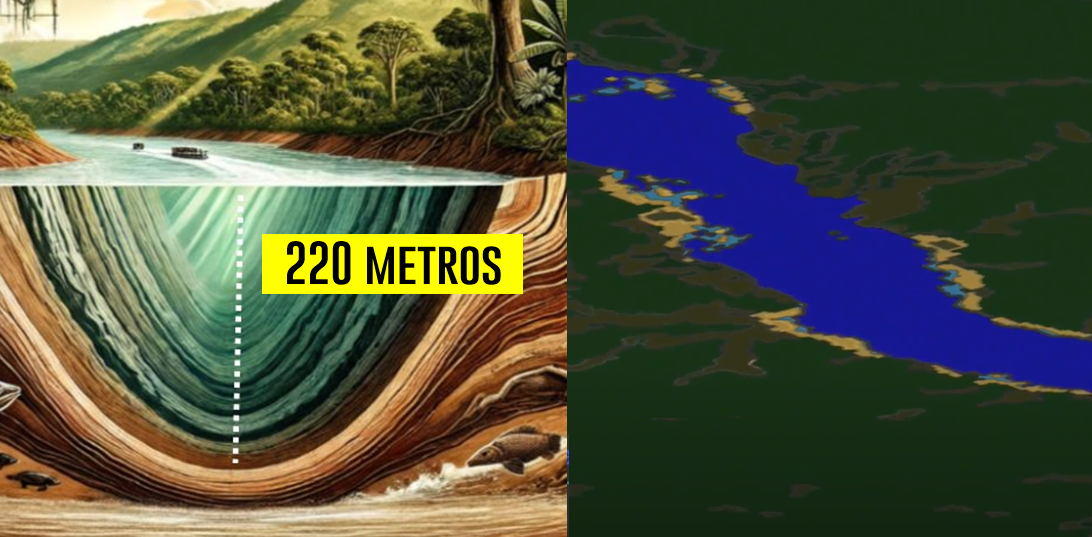


The Deepest River In The World Impresses With Its Depth Of 220 Meters And Length Of 4,374 Kilometers. Discover More!
Imagine a river so deep that its waters could hide the Earth’s oldest secrets. Its powerful currents cut through vast landscapes, sustaining millions of lives and shaping the history of civilizations that depend on it. Let’s talk about the deepest river in the world.
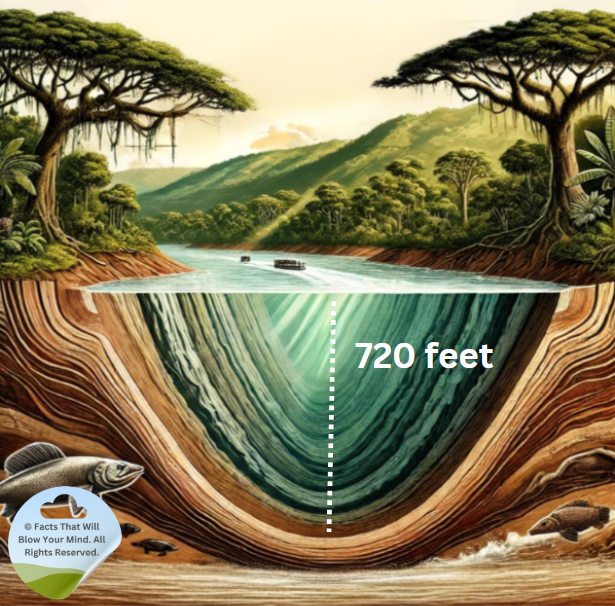
The Congo River, with a maximum depth of approximately 220 meters, stands out as the deepest river in the world.
-
Worlds covered by water, atmospheres filled with hydrogen, and the possibility of life beyond Earth: ocean planets are rewriting the map of cosmic search and forcing scientists to rethink where to look.
-
Argentina achieves the unimaginable after more than 110 years and reintroduces the largest native herbivore of South America to the Chaco to restore a lost link in nature.
-
Returning to the Moon now costs a billion-dollar bill and reignites the competition between the USA and China for science, technology, and rare minerals on lunar soil.

-
While the world looks at oil, the war with Iran is already disrupting helium supply from Qatar, affecting car and iPhone chips, threatening AI expansion, and putting pressure on aluminum packaging at the highest value in four years.

Its vast length, stretching around 4,374 kilometers, crosses several African nations. See all the details about the deepest river in the world.

Geographical And Physical Characteristics
The Congo River, the second longest in the African continent, originates in the plateaus of Zambia and crosses various countries before emptying into the Atlantic Ocean.
Its watershed covers approximately 4 million square kilometers, including territories of the Democratic Republic of the Congo, Republic of the Congo, Angola, among others.

The deepest stretches, located near Kinshasa, present a challenging hydrodynamic scenario due to their intense currents and abrupt depth variations.
Additionally, its waters are fed by a complex network of tributaries, contributing to its average flow rate of 41,000 cubic meters per second, making it the second river with the highest water volume in the world, behind only the Amazon River.
The geography of the Congo River is also marked by its waterfalls and rapids, like the famous Livingstone Falls and Boyoma Falls, which create challenges for navigation but offer significant energy potential.
The geological diversity of the region also influences the river’s depth, with sedimentary and rocky formations shaping its bed and creating striking topographical variations.
Economic And Social Relevance
The socioeconomic importance of the Congo River is undeniable. It serves as a vital transportation route, facilitating the flow of natural resources like timber, minerals, and agricultural products.
The riverside populations directly depend on its waters for their livelihoods, using them for both fishing and agricultural irrigation.
Additionally, the energy matrix of the region is strongly influenced by the presence of the Inga Dam, one of the main hydropower plants on the continent, with the potential for large-scale energy generation.
Expansion projects like Inga III aim to transform the region into an energy export hub for neighboring countries and even for southern Europe.
The Congo River also plays a crucial role in regional connectivity, allowing the transport of people and goods between remote areas where road infrastructure is limited.
Nevertheless, the lack of adequate investment in fluvial infrastructure still limits its full potential as an axis of economic development.
Biodiversity And Ecosystem
The Congo River basin is recognized for its rich biodiversity, featuring a wide range of endemic flora and fauna species.
Among the highlights are primates like the bonobo and the western lowland gorilla, in addition to an impressive fish diversity, including the goliath tigerfish.
The preservation of this ecosystem is crucial to ensure the continuity of the harmonious interaction between biological elements and the hydrological aspects of the river.
The tropical forests of the Congo basin form the second-largest green lung in the world, absorbing large amounts of carbon dioxide and playing an essential role in combating global climate change.
The diversity of habitats includes swamps, flooded savannas, and dense forests, providing shelter for a wide range of species, some of which are still not fully documented by science.
Environmental And Geopolitical Challenges
Environmental degradation resulting from uncontrolled economic exploitation poses a significant threat to the ecological balance of the Congo River.
Deforestation, predatory mining, and water pollution are factors that negatively impact water quality and the survival of native species.
At the same time, geopolitical conflicts and institutional instability in the region hinder the implementation of effective long-term conservation policies.
The high levels of sedimentation resulting from human activity also affect water quality, harming aquatic life and compromising the supply for local communities.
Conservation initiatives led by international organizations have sought to establish reforestation programs and sustainable practices in fishing and agriculture to mitigate these impacts.
International cooperation among the countries of the Congo basin is essential for implementing effective environmental management measures and sustainable development.
The lack of coordination among governments and political instability remain significant challenges for an integrated approach to river conservation.





Lindo Congo….preserve-o !!!
Gostei muito da materia, acredito que todos deveriam aprender mais sobre a natureza existente em todos os continentes e entender a importancia de cada ecossistema, alem disso buscarmos meios de reduçao do ataque a ele com menos degradaçao do solo, menos desmatamentos das matas ciliares, menos abate e captura de aves e outros animais.
Amo esse tipo de assunto