





 Portuguese
  English
  Spanish
  4 min of reading
  0 comments


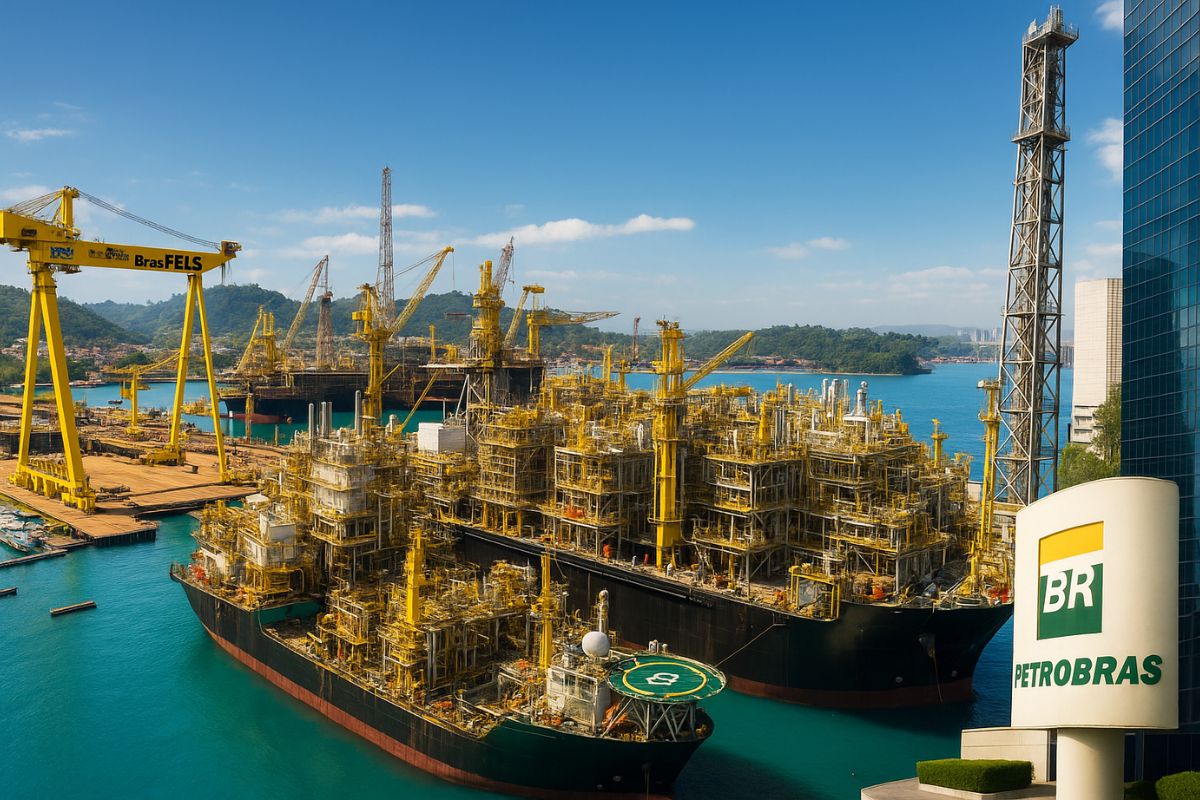
In Angra dos Reis (RJ), The Brasfels Shipyard Experiences A New Peak Driven By Contracts That Exceed US$ 11 Billion To Build The Modules Of The New FPSOs From Petrobras, Generating Thousands Of Jobs In The Region.
On the southern coast of Rio de Janeiro, in Angra dos Reis, a giant of the Brazilian shipbuilding industry has been reborn. The Brasfels Shipyard, which has faced crises and nearly shut down, now enjoys a moment of prosperity and has become the “billion-dollar factory”. The reason is its strategic role as the heart of the construction of the new FPSOs from Petrobras, the gigantic floating platforms that will operate in the pre-salt.
Driven by Petrobras’ investments in the Búzios Field, the shipyard has become a pillar for the local economy, generating thousands of jobs. The story of Brasfels is a portrait of the resilience of the Brazilian shipbuilding industry and its importance for the country’s energy future.
From Closure In The 90s To Rebirth: The Story Of The Shipyard In Angra Dos Reis
The trajectory of the shipyard is marked by ups and downs. Founded in 1959 as Verolme Shipyard, it once was the largest in Brazil, employing 12,000 people. However, with the crisis in the shipbuilding sector, the company closed in 1995, causing trauma to the economy of Angra dos Reis.
-
Spain surprises the world by erecting 62 artificial dunes, mixing sand with natural remains of posidonia, and causing the structure to lose only 1.4% of its volume in 1 year.

-
With 16 Bulava missiles, improvements in acoustic stealth, and a design focused on silent patrols, Russia’s nuclear submarine was born to ensure Moscow’s invisible retaliation and has become one of the pillars of its maritime strength.

-
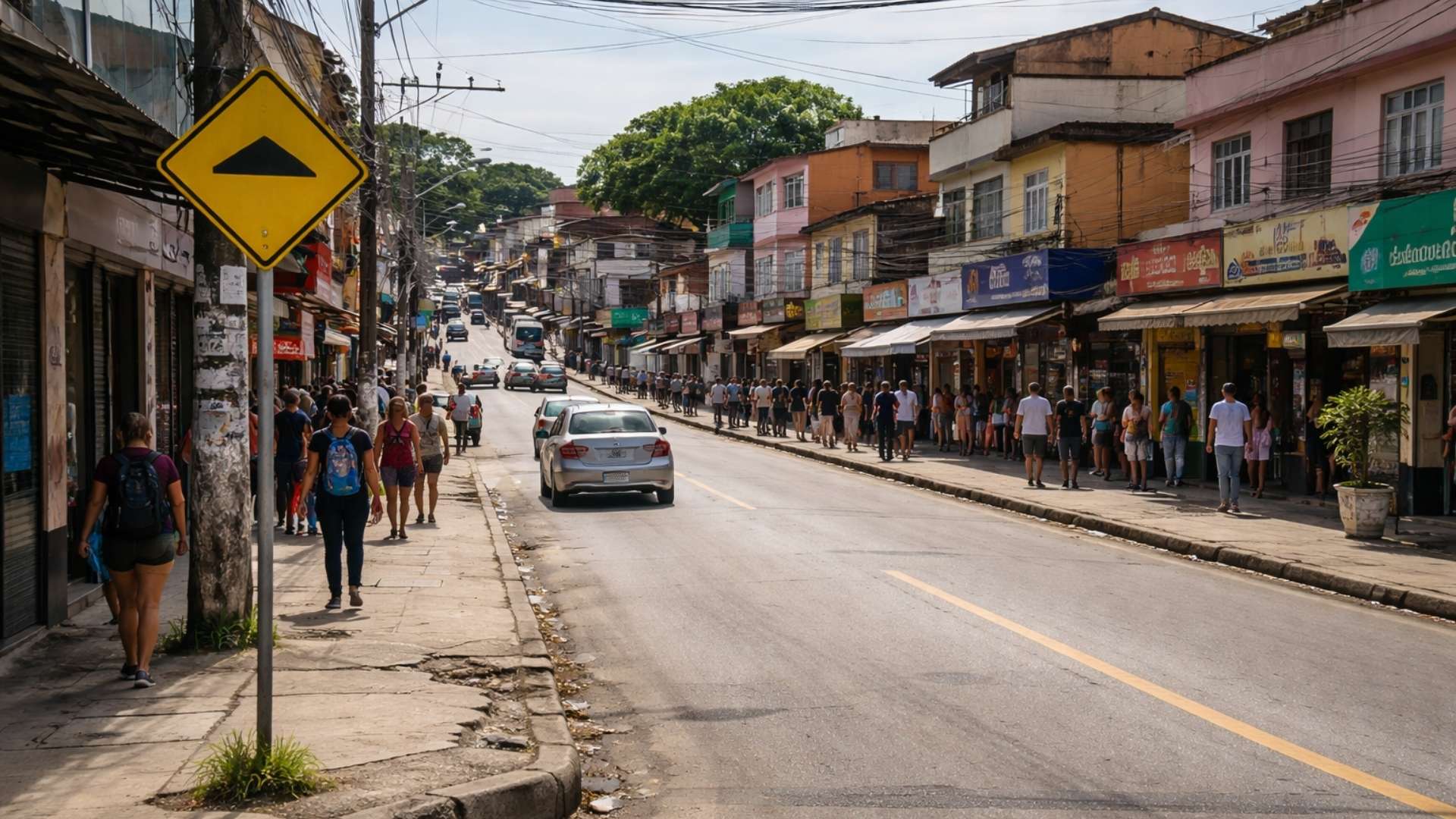
‘Populous’ city in Rio among the worst in Brazil in national ranking and exposes silent development crisis.
-
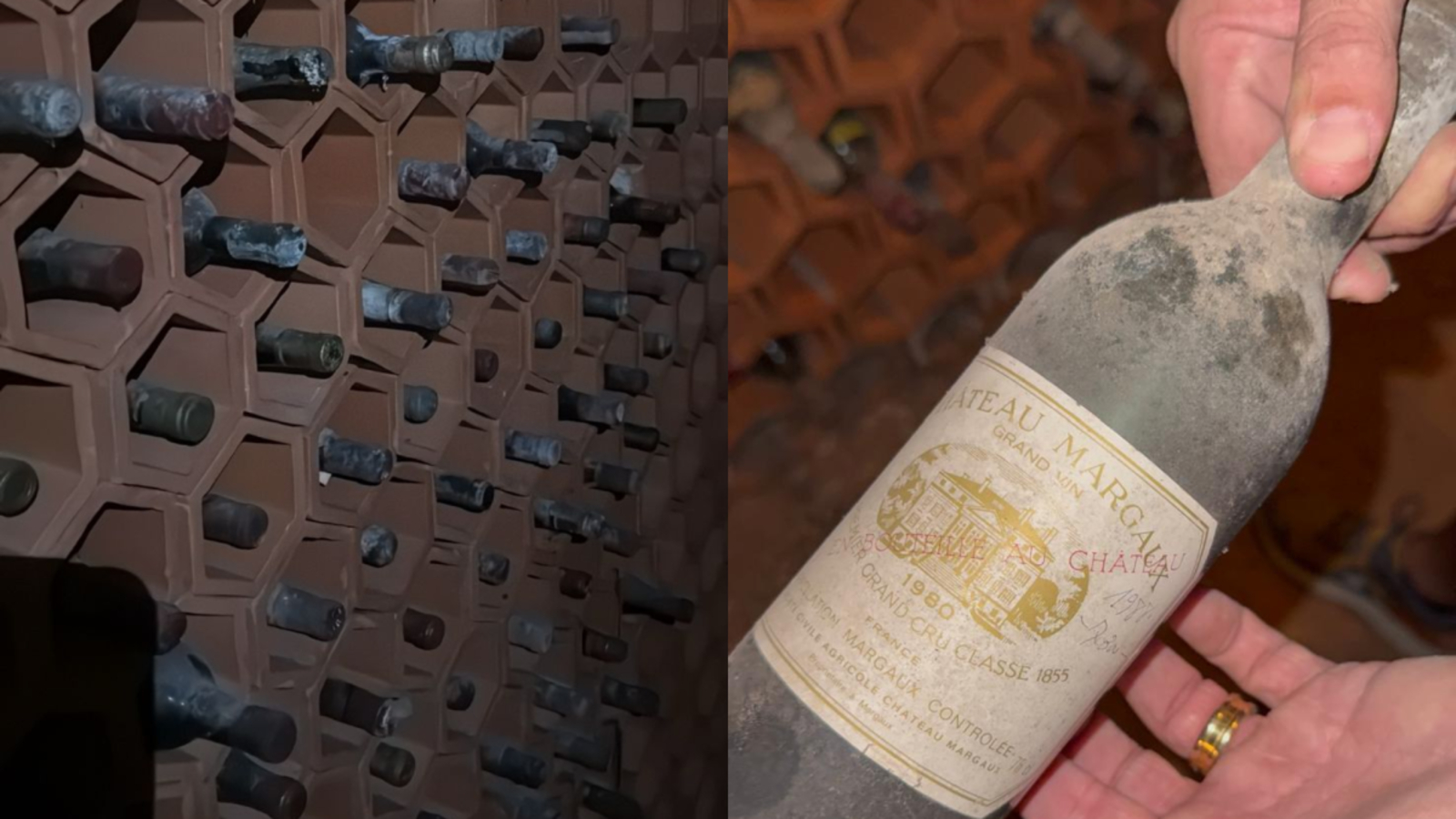
Couple buys house in the South Zone of São Paulo, opens a hidden door in the garage, and finds a secret wine cellar with dozens of old wines forgotten since the 1970s.

The shipyard reopened in the early 2000s, already as Brasfels, to meet the demand from Petrobras. But volatility continued. Between 2015 and 2017, with the crisis of Operation Car Wash and the collapse of Sete Brasil, the shipyard faced mass layoffs. This story of “boom and bust” marks the memory of the local community.
The Engine Of The Pre-Salt: The Búzios Field And The Demand For The New FPSOs From Petrobras

The force behind the current moment of Brasfels comes from the sea. The Búzios Field, in the Santos Basin, is Brazil’s largest oil field and one of the largest in the world. To explore this wealth, Petrobras is executing a monumental investment plan.
Within its Strategic Plan, the state-owned company will invest US$ 73 billion in Exploration and Production by 2028. The pillar of this plan is the commissioning of 14 new FPSOs, most of which are destined for Búzios. It is this unprecedented demand that is keeping Brasfels’ production line running at full steam.
How Brasfels Manufactures The Modules For The New Platforms
It is important to understand the exact role of Brasfels in the construction of the new FPSOs from Petrobras. The company that operates the shipyard, Seatrium, adopts a global delivery model. The hulls of the platforms are typically built in shipyards in China.
Brosfels, on the other hand, specializes in one of the highest value-added and complex parts: the manufacturing of topside modules. It is in these modules that the processing systems, power generation, and gas compression reside, the true “brain” of the platform. Currently, the shipyard has contracts for the modules of the “P” series FPSOs, such as the P-78, P-80, P-82, and P-83, in deals totaling over US$ 11 billion.
The Economy Of Angra Dos Reis: Thousands Of Jobs And The Challenge Of Instability

The reactivation of the shipyard has a direct impact on the life of Angra dos Reis. In May 2025, Brasfels already employed 8,200 people, with plans to hire an additional 1,800 throughout the year. The company, in partnership with SENAI, has invested in training the local workforce to fill these positions.
However, the story of instability creates tensions. In 2024, workers went on strike for salary adjustments after eight years of frozen wages, reflecting the period of low activity. The relationship between the city and its largest industrial employer is, therefore, one of dependence that fluctuates between prosperity and uncertainty.
The Future Beyond Oil: New Horizons For The Shipyard
With a strong order book for the new FPSOs from Petrobras, the immediate future of Brasfels looks secure. But the company is already looking beyond oil. Two major diversification opportunities are on the horizon.
The first is the decommissioning of old platforms from Petrobras, a market estimated at nearly US$ 10 billion that will require the infrastructure of large shipyards. The second is offshore wind energy. Brazil has immense potential for generating energy with sea winds, and Brasfels can leverage its expertise to build the necessary structures for these projects, ensuring its relevance in the new energy era.







-

-

4 pessoas reagiram a isso.