





 Portuguese
  English
  Spanish
  4 min of reading
  0 comments


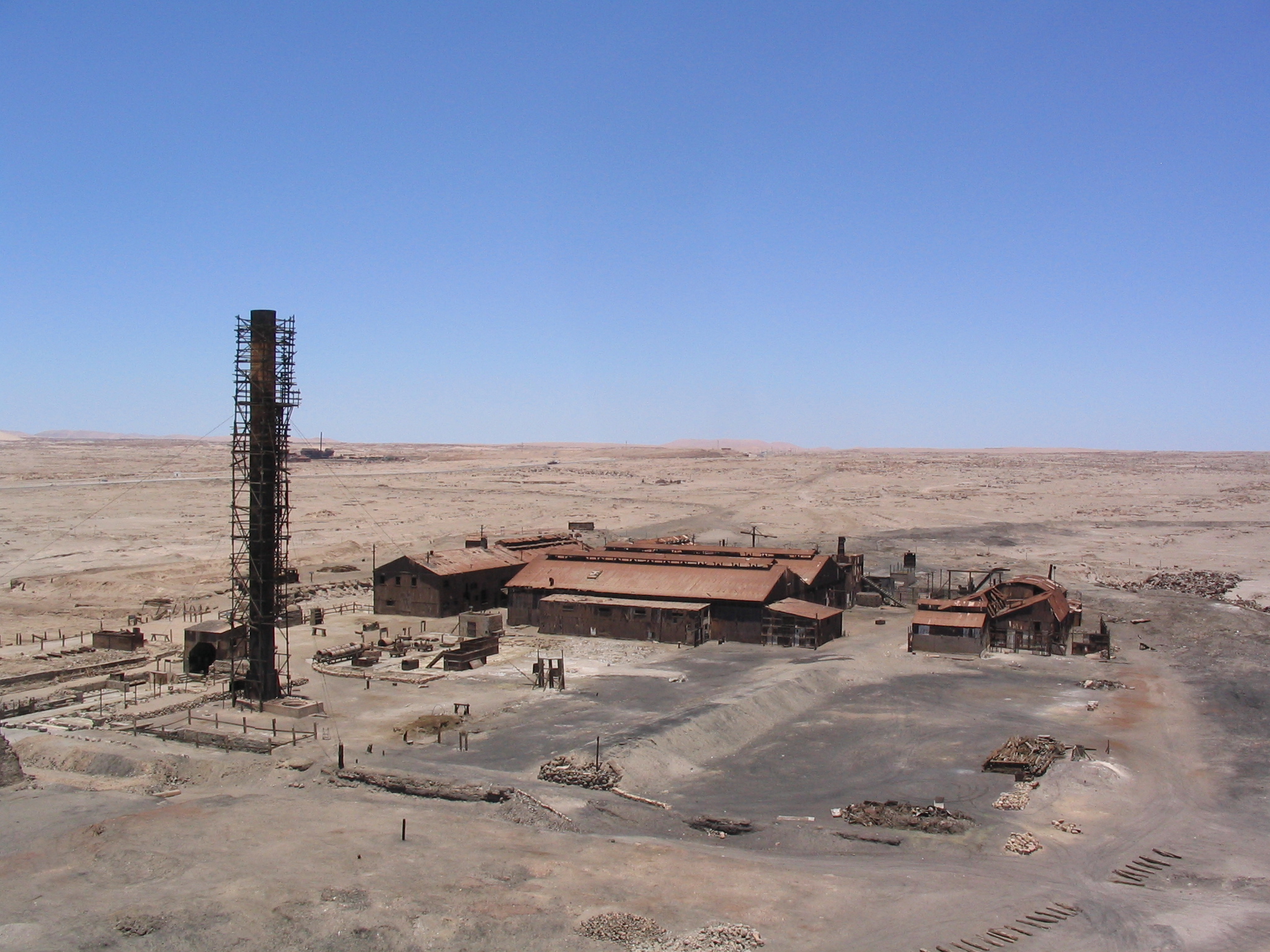
Humberstone Integrated the Nitrate Industry That Dominated Up to 80% of the Global Nitrate, Exported Millions of Tons, and Is Now a Ghost Town in the Atacama.
The Atacama Desert is not just dry — it is considered one of the most arid environments ever recorded on Earth. There are regions where decades go by without measurable rain. Still, it was in this extreme setting that Chile built, between the late 19th century and the early 20th century, a mineral industrial powerhouse of global reach. At the heart of this system emerged a settlement that was not an ordinary town, but a true industrial platform in the middle of nowhere, designed exclusively to extract, process, and ship natural nitrate (sodium nitrate) on a massive scale.
The Name of the Place: Humberstone, the Nitrate Works That Became a Town
The settlement was Humberstone, located in the Tarapacá region of northern Chile. Officially classified as a nitrate works, Humberstone operated as a complete industrial complex, with extraction facilities, chemical processing, storage, rail logistics, and urban infrastructure.
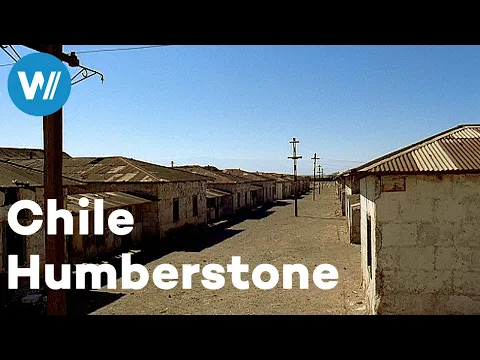

It was not an isolated point but rather a central part of a network that transformed Chile into the largest producer of natural nitrate in the world, managing to supply up to 80% of global demand at the peak of the nitrate cycle.
-
Historic bankruptcy of Centauro shocks the market, and the century-old company puts more than 500,000 products, machines, and complete infrastructure up for online auction.

-
New shoe factory in Ceará is expected to create 400 jobs and strengthen the local economy.

-
No one imagined it, but a mixture of sawdust with a mineral that fights fires surprises scientists with a result that changes the course of fire-resistant construction.

-
From empty land to a high-end house, wooden construction uses a lightweight system, metal structure for the foundation, ventilated ceramic cladding, and special windows to create an efficient and comfortable living space throughout the year.

Millions of Tons That Crossed the Desert to the Pacific
The production in Humberstone was part of a system that moved millions of tons of nitrate over decades. The nitrate extracted in the desert was processed locally and then transported by dedicated railways to the port of Iquique on the Pacific Ocean.
From there, ships took the material to strategic markets in Europe, North America, and other regions. Chilean nitrate was essential both for agricultural fertilizers, which boosted food production, and for explosives, fundamental for the industry and armed conflicts of the time.
The Railway as the Backbone of Urban Survival
Without the railway, Humberstone would never have existed. The rail logistics allowed not only the movement of production but also the supply of the town itself. Food, equipment, industrial parts, and even drinking water depended on this connection.

The town was planned around the tracks. The entire urban logic — the location of factories, warehouses, and residential areas — followed the industrial flow. Humberstone did not grow organically; it was designed to produce.
An Entire Population Sustained by a Single Resource
At its peak, Humberstone housed thousands of workers, along with their families. To maintain this stable population in one of the world’s most extreme deserts, the settlement had a school, hospital, theater, market, sports areas, and complete social infrastructure.
The town functioned as an industrial microcosm, where practically everything revolved around nitrate. Work, the local economy, and social life depended directly on the continuity of production.
The Collapse Did Not Come from the Desert but from Chemistry
The end of the natural nitrate cycle did not occur due to the exhaustion of mines, but due to technological advancements. With the development of the Haber-Bosch process, which allowed the production of synthetic nitrate on a large scale, Chilean product lost competitiveness.
In a few years, an industry that had sustained national economies began to decline rapidly. Production fell, railways were decommissioned, and the population began to abandon the desert.
Humberstone was emptied almost as quickly as it was built.

Unlike many abandoned settlements, Humberstone was not destroyed. The extremely dry climate of the Atacama acted as a natural preservative, preserving buildings, industrial structures, and even everyday objects.
Today, the site is recognized as a UNESCO World Heritage Site, serving as a physical record of one of the largest experiences of industrial occupation in an extreme environment ever undertaken.
A Historic Limit of Human Industrial Occupation
Humberstone represents a classic case of a town created by a single strategic resource and abandoned when that resource ceased to be essential.
In the middle of the world’s driest desert, it shows how far engineering, logistics, and industry can take human occupation… and where it ceases to make sense.
More than a ghost town, Humberstone is a monument to the peak and collapse of a mineral economy that shaped borders, railways, and global history.








Seja o primeiro a reagir!