





 Portuguese
  English
  Spanish
  5 min of reading
  0 comments


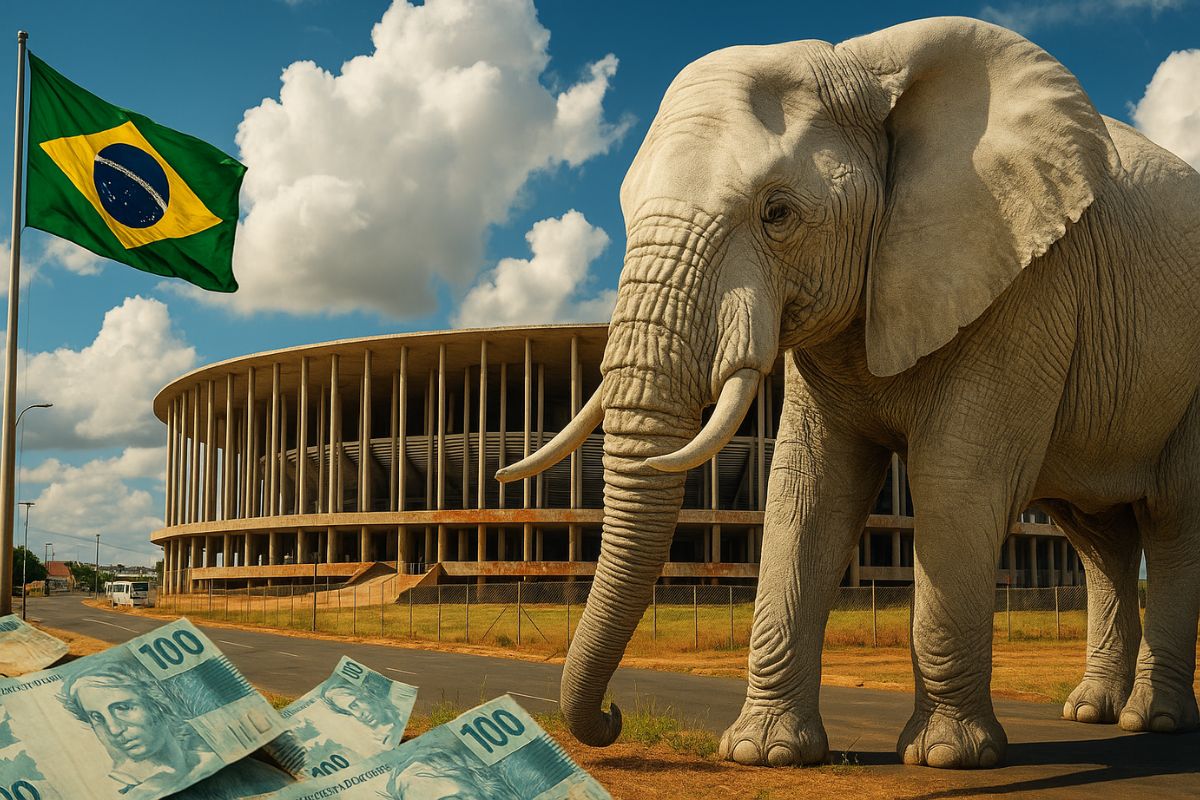
Rebuilt for the 2014 World Cup, the Mané Garrincha Stadium consumed almost R$ 2 billion, accumulated underutilization in football, passed to private management, and today lives between success as a venue for mega-events and accusations of contractual non-compliance.
The Mané Garrincha Stadium, in Brasília, was built as a showcase for the 2014 World Cup and ended up as a case study in public management, cost, and feasibility. The budget skyrocketed from R$ 696 million to a level close to R$ 2 billion, with irregularities highlighted by audits, corruption suspicions, and technical decisions that ignored the realities of local football. The result: a super-sized asset that, for years, drained public resources and became a national symbol of waste.
The post-World Cup phase confirmed the thesis of the white elephant in the original purpose: few games, meager revenues, and high maintenance costs. The government’s response was to grant the complex to the private sector for 35 years, redesigning the business model. The arena, renamed and repositioned, exploded as a hub for entertainment and major shows, while obligations for investment and transfers became targets of controversy and oversight.
The Surge in Costs and Control Failures
The Mané Garrincha Stadium project jumped from R$ 696 million to figures that exceeded R$ 1.9 billion and approached R$ 1.978 billion when considering contracts and surrounding works. This was not a marginal deviation: it was a systemic budget escalation, with successive addendums and items corrected well above the forecast.
-
Brazilian city bets on the business environment to generate jobs and attract investments in the energy sector — secretary reveals strategy at Macaé Energy 2026.

-
50 viaducts, 4 tunnels, 28 bridges, and 40 kilometers of bike paths: BR-262 in Espírito Santo will receive 8.6 billion reais for the largest engineering project in the state’s history, inspired by the Immigrant Highway in São Paulo.

-
Brazil produces too much clean energy and doesn’t know what to do with it: over 20% of solar and wind capacity was wasted in 2025 while investors flee and 509 renewable generation projects were abandoned in the last year.
-
Piauí will produce a new fuel that replaces diesel without needing to change anything in the truck’s engine and reduces pollutant gas emissions by half: truck drivers from all over the Northeast are already celebrating the news that will arrive later this decade.

This trajectory placed Brasília on the map of the most expensive stadiums in the world, without financing from BNDES and with all the burden on local taxpayers.
The opportunity cost also counts: every real allocated to this project left unfinanced health, education, and mobility, deepening the debate on budgetary priorities.
Irregularities and Damage to the Public Treasury
Audits highlighted a pattern of overpricing and poor management. There were services paid but not performed, overestimated quantities, and contracts with overpricing, including emblematic cases related to the pitch and electrical materials.
“Ghost” employees and poor quality control complete the picture.
The sum of the failures resulted in a consolidated loss of hundreds of millions of reais, in addition to a potential damage averted thanks to external control intervention.
Disorganized governance at the origin explains part of the disaster: unrealistic planning, insufficient oversight, and the political-electoral pressures typical of mega-event cycles.
Planning Disconnected from Local Football
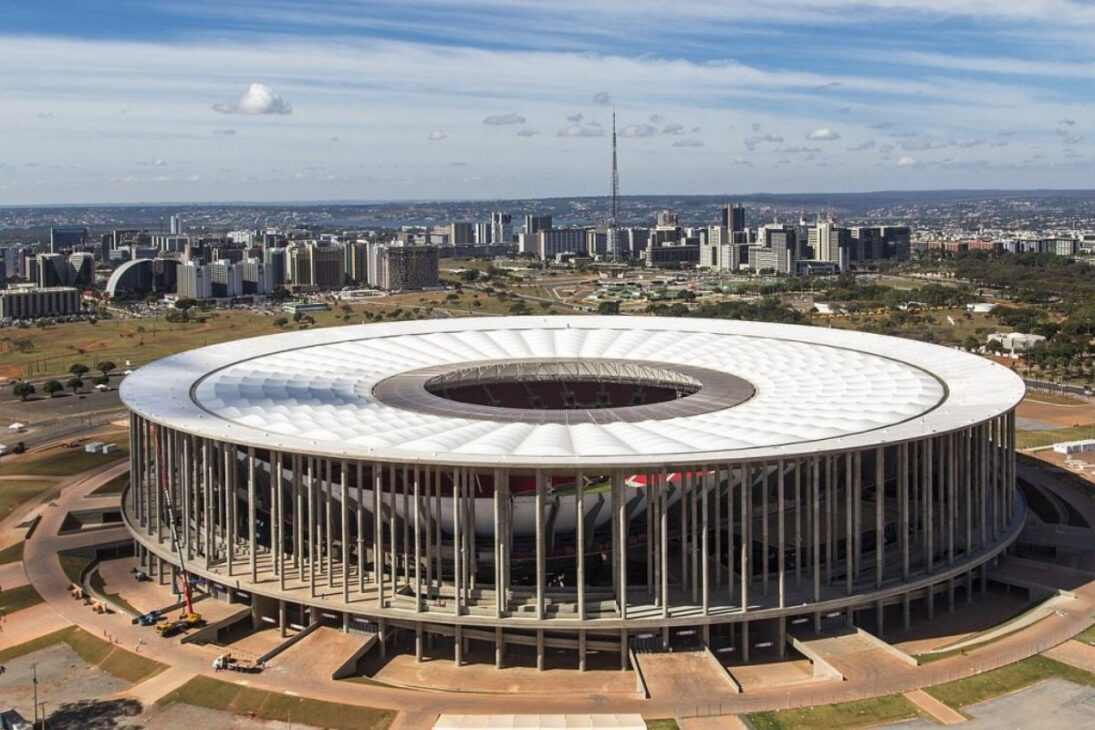
The Mané Garrincha Stadium was designed for over 70,000 seats in a city without elite clubs and with low spectator culture in local championships. The equation did not add up: extremely high fixed costs and structurally limited demand. Capacity does not generate an audience by decree.
Between 2015 and 2020, the arena was the least used for official games among the World Cup stadiums, with only 109 matches during that period. Clubs from the DF avoided playing in the concrete giant, preferring smaller and financially viable stadiums. The product “football Brasília” did not fit the scale of the arena.
High Maintenance Costs and Improvised Public Use
With no box office to compensate, the monthly maintenance of the Mané Garrincha Stadium under public management cost between R$ 600,000 and R$ 800,000. Energy, water, cleaning, security, repairs, and a problematic pitch turned operation into a chronic deficit.
To reduce rental expenses at other locations, government secretariats even occupied internal spaces in the arena. This was an emergency solution, not a strategic one: the stadium became a multifunctional public building, but failed to address the root of the economic problem.
Concession: Redesign of the Model and Promises
The concession for 35 years to the private consortium renamed the complex ArenaPlex and repositioned the business: football is no longer central and events now lead revenues. The contract stipulates an annual fee of R$ 5.05 million (after a grace period), public participation of 5% of net revenue, and an estimated savings from eliminating direct maintenance by the government.
The key point was a large investment in the so-called Boulevard Monumental (leisure and entertainment complex) and a total plan close to R$ 1 billion over the period. The economic logic: stop the bleeding, transfer operational risk, and transform a liability into recurring revenues through shows and occupation of the surrounding area.
Controversies: Delayed Grant and Purpose Deviations
In practice, central obligations did not progress as promised. The Boulevard did not materialize as planned and a commercial venture emerged unrelated to the original concept, generating urban and political backlash and embargoes. Critics viewed it as a distortion, aiming for a quicker return than outlined in the bidding design.
Meanwhile, a contract addendum postponed the start of the fee payments, extending the grace period while the arena was already generating revenues from events. The power asymmetry in the renegotiations raised alarms: the asset is public, but the value capture could concentrate in the private sector if the State does not oversee and demand full compliance with the contract.
On the operational axis, the reconversion was successful. The Mané Garrincha Stadium established itself as a destination for international tours and mass events, breaking attendance records and impacting tourism, hospitality, and services in Brasília. Shows and religious gatherings filled the agenda, with tangible economic effects in the city.
This new vocation confirms that the asset has value but not in football. The correct product model raised revenue and occupancy. The sensitive point remains the return of value to the public: without agreed investments and timely transfers, society finances the structure but receives less than it should.
What Lessons Can Be Learned for Public Policies
First, do not tie urban planning to mega-event schedules. Urgency and grandiosity tend to oversize projects and weaken control.
Projects of this scale require proven demand and post-event use plans anchored in evidence, not in political promises.
Second, strengthen concurrent audits and the contracting capacity of the State. PPPs and concessions work when there are clear goals, technical oversight, financial transparency, and effective sanctions. Without enforcement, the risk is to privatize profits, socialize costs, and perpetuate cycles of low accountability.
The Mané Garrincha Stadium remains a symbol of waste due to its overpriced origin and the irreversible public cost. As a football arena, it remains disproportionate to the local reality.
As a mega-event arena, it found sustainability but the value capture is under dispute. Without fulfilling investments and passing on the fee, the reconversion does not balance the social account.
In light of this history, what is fair for the taxpayer in the current operation of the Mané Garrincha Stadium? Should the fee be charged retroactively? Does the Boulevard Monumental need to be resumed as a condition for maintaining the concession? Does the city benefit more from shows at any cost or from strict urban counterparty rules? Share, with examples from your daily life in Brasília, how these events impact transportation, prices, and employment. Do you agree with this model? Why?







Seja o primeiro a reagir!