





 Portuguese
  English
  Spanish
 10 min of reading
  2 comments


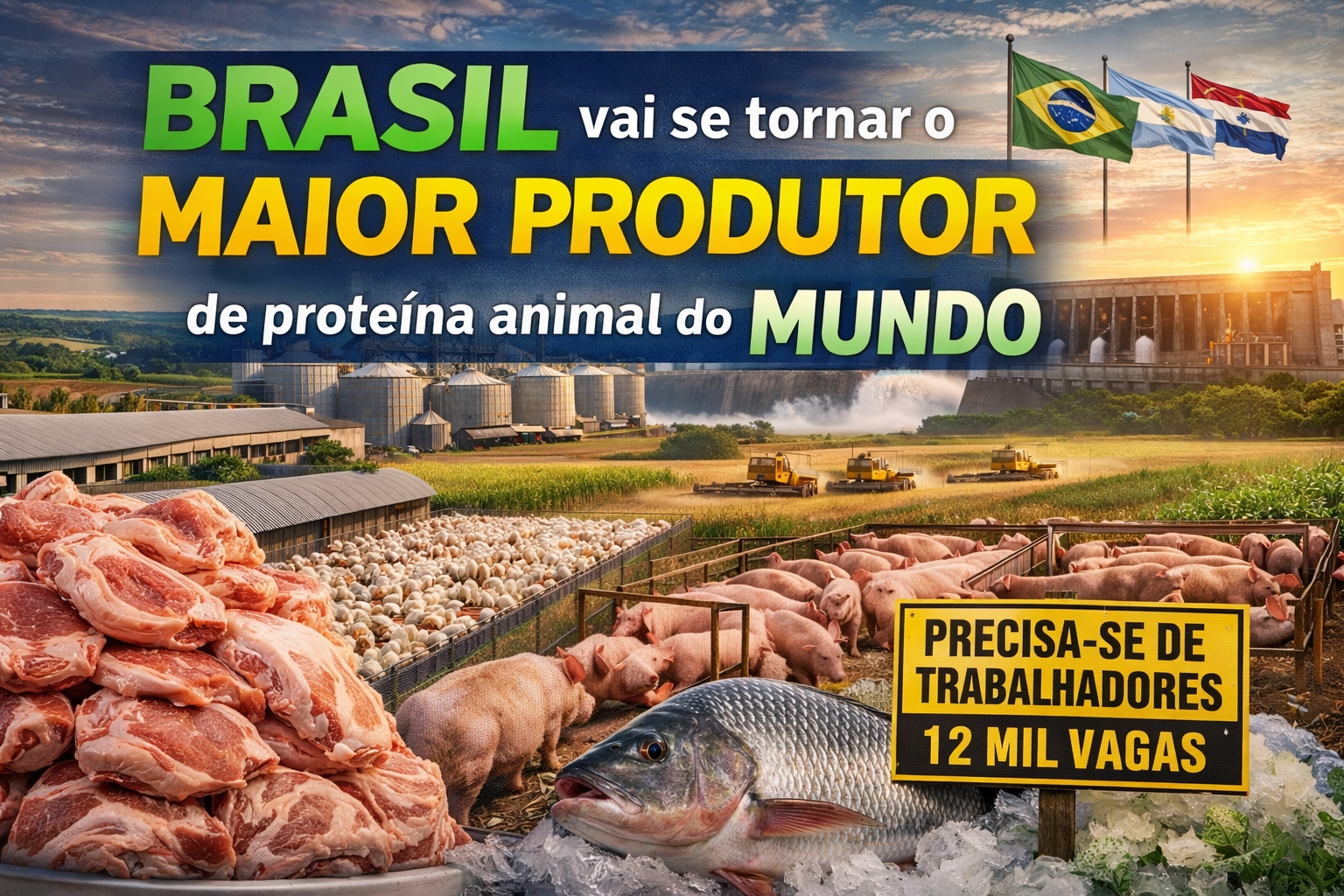


A Piece of Brazil Aiming for the Top of the World! Near the Triple Frontier, Leaders and Cooperatives Set Up a $20 Billion Investment Plan to Transform the Region into the World’s Largest Producer of Animal Protein.
There are regions that grow in silence. And there’s the west of Paraná, right next to the triple frontier between Brazil, Argentina, and Paraguay, that is doing the opposite: it is loudly declaring that it wants to dominate the game. The goal is heavy, within 20 years, to become the largest producer of animal protein in the world. And it’s not just “wishful thinking”: there is organization, numbers, billion-dollar cooperatives, and a clear growth roadmap.
The strategy is being led by business leadership that has organized itself into a regional coordination model.
The idea is to show everything the territory already does well, put it in synergy, and thus place the region at the forefront of the segment in the country.
-
Chocolate prices soar nearly 15% and become a luxury item for Easter 2026, with increases surpassing inflation and changes in Brazilian consumption habits.

-
The Federal Revenue issues a good alert for Brazilian taxpayers: 60.9% are already using the pre-filled tax return, automatic refunds via Pix reach millions, and the government plans for a fully automated income tax in the coming years.

-
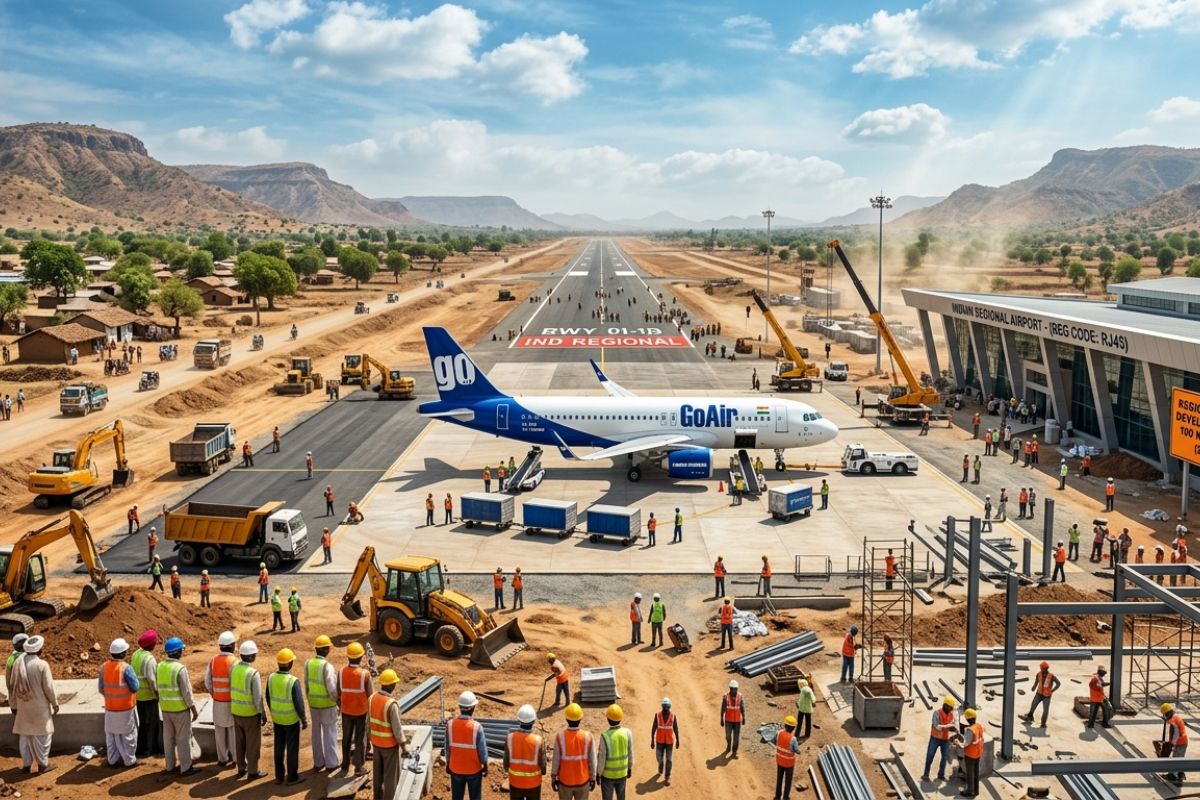
India announces a plan of $3.06 billion to bring aviation to forgotten regions: 100 new airports, $1.07 billion in subsidies, and regional routes guaranteed for 10 years, from 2026 to 2036, away from the centers.
-
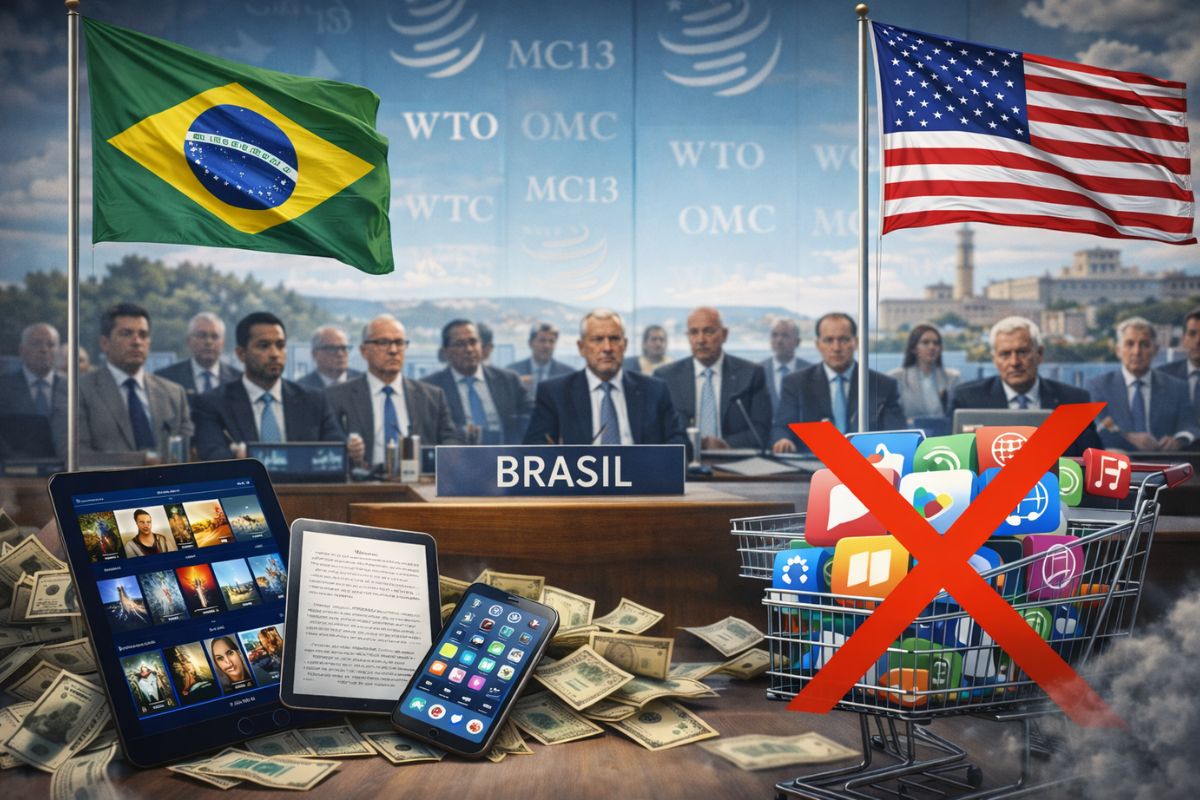
Brazil blocked a proposal from the United States at the WTO that would make the exemption from tariffs on digital products like streaming and ebooks permanent, favoring American tech giants at the expense of developing countries.

Why Are Industries Making Heavy Investments in This Brazilian State?
Today, the western region accounts for more than half of the poultry and pig production in Paraná, driven by agro cooperatives that handle enormous figures.
And there’s more: five of the ten largest cooperatives in the sector in Brazil that also make the list of the 100 largest agricultural cooperatives in the world are located right there. This helps explain why the project is ambitious.
The phrase that became the north of the plan was uttered straightforwardly by the president of the Program West in Development (POD), the industrial Rainer Zielasko:
“Paraná is a powerhouse in animal protein production, which involves the transformation and value-adding of soy and corn. We want to be recognized as the largest producers of animal protein in the world within a maximum of 20 years.”
Here, the logic is direct: soy and corn become feed; feed becomes chicken, pigs, and fish; and this chain generates investment, income, exports, and industrial strength.
The Numbers that Put the “Power Project” on the Map
The Brazilian state in question already has a strong production base. Paraná has:
- Largest poultry flock in Brazil, with 428.5 million heads.
- 3rd place in pig production, with 6.7 million animals.
- In aquaculture, it became a national reference and is the largest producer of tilapia in the country. Fish production reaches 167.3 thousand tons per year, with 400 million fingerlings.
Zielasko sums up the moment like this:
“We have a lot to grow. We have area, sustainable growth capacity, and market space for this advance. And there is planning for it to happen.”
And to not be stuck only with the “inside look,” it’s worth adding current information: tilapia remains the most cultivated species in the country. Data from the PeixeBR Yearbook indicates that, in 2023, Brazilian tilapia production reached 579 thousand tons, reinforcing the size of this market.
In 2024, the sector remained strong, and according to an analysis based on the same yearbook, tilapia saw significant growth — and the executive president of PeixeBR explained the movement like this: “This meant record production in 2024.”
POD: The “Organizational Engine” Celebrating 10 Years and Becoming a Reference
The POD, which just celebrated 10 years, has become one of the main regional coordination models in the country — with a methodology replicated throughout Brazil.
The model’s construction was inspired by successful experiences from abroad, with a simple premise: united regions tend to face crises more easily.
And Zielasko’s own perspective on the effect of this is optimistic and straightforward:
“And it has worked; in the west (of Paraná) this has been happening. We are growing at double-digit rates annually. We are among the fastest-growing regions in Brazil, generating jobs, income, and consolidated development.”
In recent years, the POD has also become part of the Paraná Productive Program, within a state strategy for regional development.
Lack of Workers: 12 Thousand Job Openings to Meet Labor Demand
Growing quickly has a cost, and one of them is hitting hard: labor.
Today, there are about 12 thousand job openings that aren’t being filled. And it’s not just “lack of candidates”: the challenge is attracting professionals without overwhelming the urban infrastructure of smaller municipalities.
In Zielasko’s words:
“In the POD, we work in partnership with educational institutions, the industrial sector, and public authorities, thinking and proposing actions to promote this filling of vacancies without causing social chaos. It’s one of our biggest challenges: attracting professionals without collapsing the municipalities. This need for new workers is expected to increase in the coming years with our growth expectations.”
The region has 50 municipalities, almost all focused on agriculture. And 47 of them have less than 100 thousand inhabitants. Even so, the regional GDP already exceeds R$ 100 billion — and the plan is to go much further.
Together, Demand Comes Off the Page: How Organized Pressure Works
The POD doesn’t decide public policies, but it brings together sectors to build demand with collective weight — and this changes the game when it comes to requesting infrastructure, programs, and priorities.
Zielasko describes it this way:
“The POD gathers various sectors to think together about solutions to problems. They are sectors that organize to demand public policies and investments. We do not have deliberative power, but together we are stronger and go further because a regional demand, when defended by the collective, has better chances of coming off the page and this directly impacts growth.”
Israel as a Mirror: It’s Possible to Do Much More
At the beginning of the year, before the escalation of conflict in the Middle East, a delegation linked to the program visited Israel. And the comparison became an argument of ambition:
“Israel is the same size as the west of Paraná; half of it is desert, and their GDP is 33 times larger than ours. In other words, we can do much more, and for that, we rely on important innovation and technology hubs connected to the POD, with national and international recognition. Coupled with this exchange of experiences with other countries and other models of regional initiatives, we have been growing in an exemplary manner.”
Logistics Stalling Growth: 700 km to the Port and the Pressure for Works
When the conversation turns to global competitiveness, the theme “logistics” appears in the first sentence. The region is located at the opposite end of the Port of Paranaguá, the main export channel of the state and the second largest in the country. There are about 700 kilometers between production and port.
With the new highway concessions in Paraná, the sector aims for the complete duplication of the BR-277, the central axis of outflow.
The Ministry of Transport emphasized that the concession package provides for more than 400 km of duplications, precisely to reinforce the corridor linking the West and the coast.
And it is along these lines that the president of Fiep, Edson Vasconcellos, reinforced the need for works:
“We need important solutions for trafficability. Works, road duplications, railways.”
New Ferroeste: The Big Bet to Unlock Grains, Containers, and Protein
In addition to the roads, the project that could change the scale of regional competitiveness is the New Ferroeste. According to the official project material, the new route plans 1,567 kilometers, connecting Maracaju (MS) to Paranaguá, with branches like Foz do Iguaçu–Cascavel and Chapecó–Cascavel. The promise is to become one of the largest logistics corridors in the country.
The project also connects to another ambition: the bi-oceanic railway corridor, linking Paranaguá to Antofagasta (Chile), shortening routes and reducing costs — a key point to export protein with better margins.
And it’s not just “paper dreams”: products from the west of Paraná (mainly proteins) are already reaching over a hundred countries.
Cooperatives in Command: Who Finances and Leads Growth and Investment
The desired advancement involves direct participation from cooperatives. Only the largest established in the region — Lar, Copacol, C.Vale, Frimesa, and Coopavel — total annual gross revenue of R$ 65 billion and grow above 10% per year.
This agro-industrial block also has the support of the board of Fiep. The proposal from president Edson Vasconcellos is to travel the state to “awaken industrial vocations,” sensitizing municipal managers to think about policies for industry, productive parks, and measures to hold plants in cities.
He summarizes the logic like this:
“And this applies to the west, which has a consolidated agro vocation and a well-developed, structured, and reference work. I’m not from the agro segment, but I want the sector to advance because it boosts the entire economy. We are in a state with an agribusiness vocation.”
And he reinforces the alert to public authorities:
“If a supermarket closes in the city, another will surely come, but if a Frimesa (headquartered in Medianeira, in the west of Paraná) closes its doors, it’s unlikely another will arrive to settle in the place.”
Pigs at the Center of Expansion: Frimesa Aims to Become a Latin American Giant
Among the growth targets, pig farming appears as one of the main drivers.
Frimesa is the fourth largest player in the pig market in Brazil. It employs 9 thousand people, has more than 2 thousand cooperatives, and closed 2022 with a gross revenue of R$ 5.6 billion.
The cooperative inaugurated a new industrial plant in Assis Chateaubriand (PR), aiming to become the largest pig slaughterhouse in Latin America.
In the final stage, the projected capacity is 15 thousand animals per day — and the full operating plan targets the end of this decade.
Currently, the mentioned operation revolves around 3 thousand pigs/day, with an expectation to reach 5 thousand pigs/day by December. And the bottleneck returns to be labor: there’s a shortage of workers.
CEO Elias Zydek explained that Frimesa wants to advance in markets that, until recently, were blocked for Brazilian proteins due to sanitary status. The key point was foot-and-mouth disease.
It was through the POD’s mobilization that resulted, in 2020, in Paraná being recognized as a disease-free area without vaccination. And Zydek summed up the impact like this:
“Previously, we reached 40% of the market; today we reach 100% and are paving the way for important buyers like Japan and South Korea.”
Ocepar: Power, Yes, but Investments with Real Brakes (Water, Sanitation, and Concentration)
Not everyone buys the idea of “largest in the world” without reservations.
The president of Ocepar, José Roberto Ricken, acknowledges the regional strength but reminds that world leadership faces limitations:
“In some municipalities, we have difficulties obtaining authorization for water use. There are pandemics in the livestock sector; it may not be possible to concentrate all (production) in one region, but the west already represents the largest part of animal protein production in Paraná.”
Ricken believes that pig farming has more potential to advance in the coming years, especially with the opening of new markets.
He details the state distribution:
- In pig farming, out of the total state production, 56% are in cooperatives, and from that share, 32% are in the west.
- In poultry farming, 44% of Paraná’s production is in cooperatives, and the west accounts for 40% of the flocks and slaughtering.
- In fish, cooperatives receive 30% of Paraná’s production, and 28% are in the region.
And he leaves a direct observation:
“Saying it will be the largest in the world is a wish; I don’t know how that is being evaluated, but there are many limitations to be overcome.”
Today, of the 140 agro-industrial cooperatives in Paraná, 80 are involved in animal production and 60 in plant production (soy, corn, wheat, and other cereals).
The sector has 11 plants for poultry slaughter (eight in the west) and five focused on pig farming (four in the west).
For Ricken, growth should also spread to the southwest, northwest, and central regions of the state, seeking sustainability and phytosanitary security.
The Problem at the End: Undercapitalized Producer, Short Credit, and High Interest Rates
On the side of those raising animals (who house, feed, and prepare them for slaughter), the stalling has a name: undercapitalization.
According to Faep/Senar’s assessment, Paraná producers have improved technology and productivity, but they face high costs and, more recently, lower prices for commodities and animal-origin products. The lack of credit and high-interest rates hinder the construction of new structures — farms, aviaries, and ponds.
Faep advocates for better macro and micro structuring of the economy to allow advancement. After all, Paraná is the second largest agricultural producer in the country — and much of the state’s strength comes from the transformation of grains into protein.
Heavy Investment: The Brazilian State is Already a Power and Aims to Become a Global Reference
What is underway in the west of Paraná is a rare combination: huge production base, strong cooperatives, clear ambition, and organized pressure for infrastructure and logistics.
At the same time, the challenges are as big as the dream: there’s a labor shortage (and jobs are plentiful), there are environmental and water limitations, sanitary risks, and a real need for ongoing investment to maintain global competitiveness.
Whether the 20-year plan will earn the title of “largest in the world,” no one can guarantee now. But one thing is hard to deny: the region is already playing like it wants to be a giant.
Leave a comment with your opinion, do you think the west of Paraná can become the largest animal protein power in the world? Share this article with someone who wants to see Brazil as a global power!





Que nosso bom Deus ilumine esse projeto já em andamento e que tudo será realizado com forme planejado, Parabéns Sucesso, Coloque tudo nas mãos de Deus e ele vai cuidar de tudo.
Sim, eu acredito que oeste do Paraná pode ser a maior potência de proteína **** do mundo.