





 Portuguese
  English
  Spanish
  6 min of reading
  3 comments


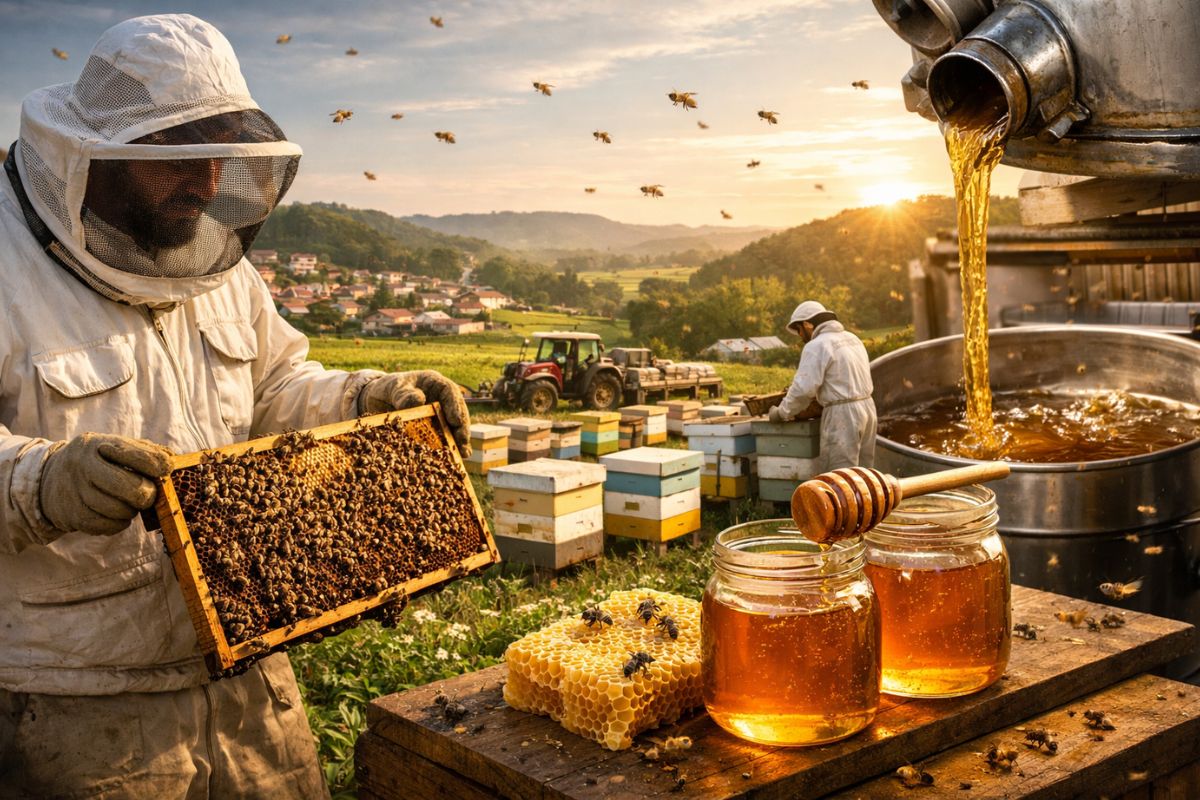


With Favorable Weather and Strong Associations, The Honey Power in Western Santa Catarina Grows With Support from Epagri, Local Factories and Buyers, Queen Genetics, and Leader Municipalities Like Chapecó and São Miguel do Oeste.
The honey power in Santa Catarina has a clear epicenter: the West of the state, an area served by the regional offices of Epagri in São Miguel do Oeste and Palmitos. The region comprises 13,482 beekeepers, a high level of organization, a complete production chain, and a set of municipalities that drive the numbers and show how bees have become income and a strategic activity in the field.
The recent performance has also been boosted by more favorable weather conditions this year, with intense flowering and increased productivity. For technicians who closely monitor beekeeping and meliponiculture, the weather aligned with the plant cycle and local structure, which ranges from inputs and equipment to queen breeders, creates the perfect environment to solidify the region as a honey power and a reference for sustainable rural development.
Where It Happened and Why Western SC Became a Reference
The highlight is in Western Santa Catarina, within the area of action of the regional offices of Epagri in São Miguel do Oeste and Palmitos.
-
They said no to 26 million dollars and would do it all over again: mother and daughter from Kentucky reject a million-dollar offer from a mysterious company that wants to build the largest data center in the state on more than 2,000 acres of rural land.

-
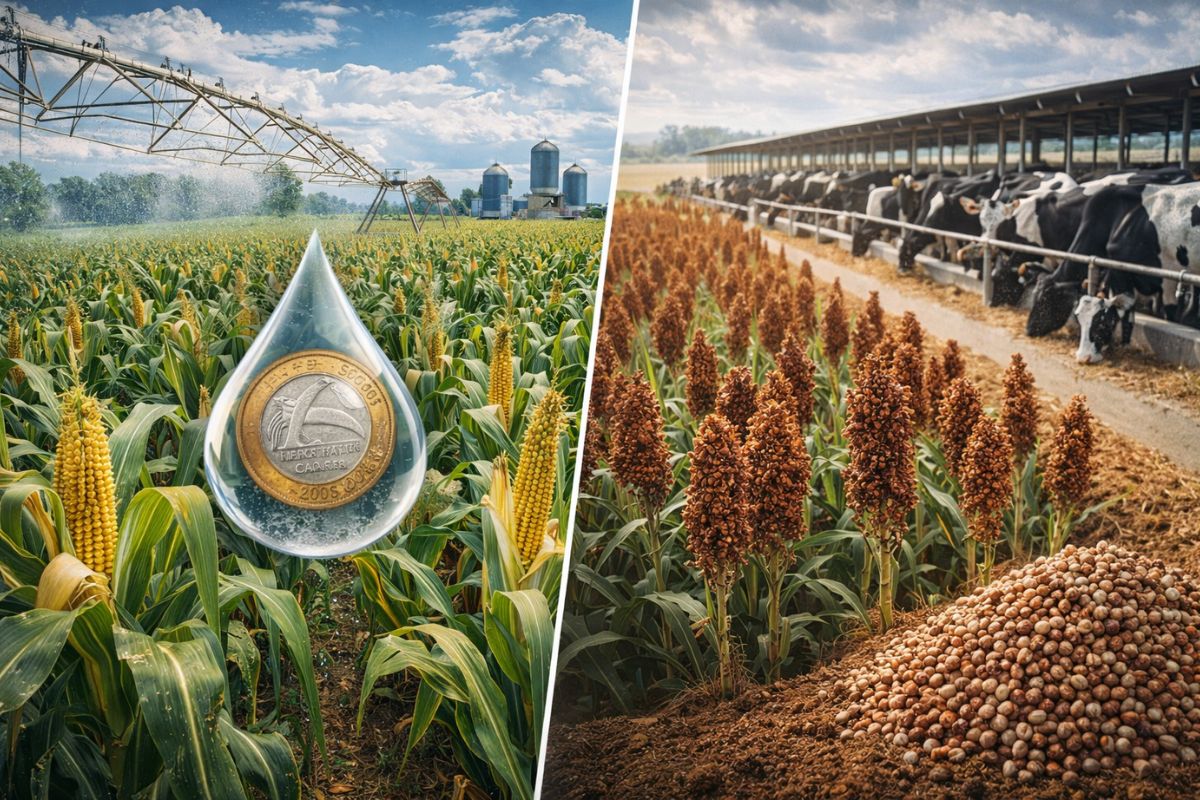
While corn requires rain and is expensive, sorghum produces almost the same volume per hectare at a cost up to 80% lower and uses less water, and it is revolutionizing dairy farming in the Triângulo Mineiro, where producers save hundreds of reais per hectare.
-
A rural producer from Urubici cries as he shows 50 tons of plums thrown on the ground because no one wanted to buy them, and in desperation, he records a video asking anyone to come to the property to pick the fruits before they rot.

-
Unable to pass through Hormuz, Brazil activated a plan B that uses Turkey as a gateway to the Middle East: the route through Gibraltar and the Mediterranean is longer and more expensive but ensures that chicken, beef, and corn continue to reach Arab markets.


This area gathers municipalities with distinct realities, but one common trait: high organization among producers and the presence of a complete production chain.
This level of structure appears both in the number of beekeepers and in the support around them. It is not just about producing honey.
It is about having technical assistance, formalized associations, companies that purchase the production, suppliers of inputs, and even equipment factories installed in the region itself.
The Numbers That Place the Region at the Top: 13,482 Beekeepers

A 2023 survey shows that the region has a total of 13,482 beekeepers.
This volume gives a sense of what it means to be a honey power in practice: thousands of people with active apiaries, production spread across dozens of municipalities, and an activity that integrates into rural daily life.
This number also shows that beekeeping and meliponiculture are not a local curiosity.
They form an organized sector, with economic weight and the ability to generate income and movement throughout the chain, from the field to commerce.
Leading Municipalities and the Map of Productive Strength
Among the total number of beekeepers, some municipalities stand out significantly, driving the activity.
Chapecó leads in the number of producers, with 3,079 registrations, representing 22.84% of the regional total. São Miguel do Oeste follows with 2,643 producers, equivalent to 19.60% of the total.
Next, Joaçaba registers 1,225 beekeepers, representing 9.09%, and Concórdia appears with 1,217, corresponding to 9.03%.
This pattern shows that the honey power is regional, but with strong hubs that concentrate producers and tend to attract services, production purchases, inputs, and training.
Beyond this area, other regions in Santa Catarina also show significant numbers, such as Xanxerê, Campos de Lages, Canoinhas, and Rio do Sul, reinforcing that beekeeping is spreading throughout the state, even though the West concentrates one of the largest forces.
Organization as a Differentiator: Associations and Regional Coordination
One of the most frequently mentioned points by those following the sector is that the organization of beekeepers makes a real difference. In the Extreme West, there are 10 formally established associations of beekeepers and meliponiculturists.
These associations are affiliated with Faasc, the Federation of Beekeepers and Meliponiculturists of Santa Catarina, based in Florianópolis.
This type of network is decisive because it creates standardization, coordination, technical exchange, representation, and the ability to coordinate demands from the productive base.
In an activity where each property has a different reality, having a formal entity and federation behind helps to transform individual effort into organized and sustainable honey power.
Complete Production Chain: From Inputs to Buyers, Everything Nearby
Another pillar of regional progress is the presence of companies specialized in different stages of the chain. There are establishments that buy honey, suppliers of inputs, materials, and equipment, and even equipment factories installed in the region itself.
This detail changes everything for those in the field. The beekeeper needs specific inputs that are not found in just any agricultural supply store.
Having nearby supply reduces costs, increases efficiency, facilitates maintenance, expands access to technology, and prevents the producer from being at the mercy of long distances or limited variety.
This type of structure is typical of regions that cease to be merely producers and become honey powers with a complete ecosystem around them.
The Role of Queen Producers and the Bet on Selected Genetics
The region also has queen producers responsible for supplying selected genetic material.
This is a huge technical differential because genetic quality directly influences productivity and honey quality.
When the producer has access to selected queens, he can better standardize hives, improve colony performance, and reduce losses.
This part of the sector is often invisible to those who only see the jar of honey on the shelf, but it is an essential gear in the honey power, as it connects practical science, management, and productive efficiency.
The Weather as Engine or Brake: Why This Year Was Better
The creation of bees depends directly on the weather.
Climate imbalances affect flowering and compromise production. This year, however, the scenario has been assessed as positive.
The report states that the cold arrived at the right time, the plants sprouted at the appropriate period, and there was a super flowering. This means more nectar available, more useful time for collection, and greater productivity per hive compared to bad years.
The contrast with 2024 is stark. Last year, late frosts in August harmed the sprouting of the main flowering species and significantly reduced honey production.
This fluctuation shows how, even with structure and organization, the honey power is still vulnerable to the climate’s calendar.
Epagri at the Center of the Strategy: Technical Assistance and Planning by Municipality
Epagri’s work with beekeeping and meliponiculture is structured by projects according to production areas.
In the Extreme West, the activity is treated as a priority.
Each municipal unit plans and records annual actions according to the concentration of beekeepers. Where the activity is stronger, the work is more intense.
Where the demand is lower, the planning is adjusted to the local reality.
The actions include technical visits, individual assistance, courses, and continuous guidance throughout the year.
This model helps transform organization into results, as training and technical assistance improve management, reduce losses, and increase productivity.
Growth Potential and Challenges That Still Hinder Progress
Even with a favorable scenario, the sector faces obstacles.
There is room to increase productivity, especially with improvements in management. This indicates there is still a technical margin to produce more with current structures, provided that apiary management evolves.
Another cited barrier is the workforce.
In many properties, beekeeping is not the main economic activity, which limits available time, dedication, and capacity to scale production.
The expansion of apiaries also encounters limits in the availability of suitable areas.
Beekeeping does not require large expanses, but depends on locations with easy access and security, both for the beekeeper and for nearby residents, animals, and productive areas.
In small and diverse properties, finding ideal spots can be a constant challenge.
How Bees Became Income, Jobs, and Sustainable Rural Development
When the region combines thousands of beekeepers, formalized associations, a complete production chain, selected genetics, and structured technical assistance, the result goes beyond honey.
The honey power creates income in rural properties, drives purchases of inputs, stimulates local factories and commerce, generates demand for courses and technical services, and strengthens a sustainable rural development model, especially as it depends on flowering and environmental balance.
This type of activity, when well organized, becomes an example of how the countryside can diversify income without relying on large areas, using technical knowledge, cooperation, and an integrated production chain.
Do you think the honey power in Western Santa Catarina will continue to grow in the coming years, or could the weather and labor shortages hinder this expansion?







Acording to the the climate it will develop
Bah, é o Sul
Perfeito. Um dos estados com mais água acabando com seus recursos utilizando espécies invasoras. SC tá sempre na frente mesmo, na mesma direção.