





 Portuguese
  English
  Spanish
  4 min of reading
  1 comment


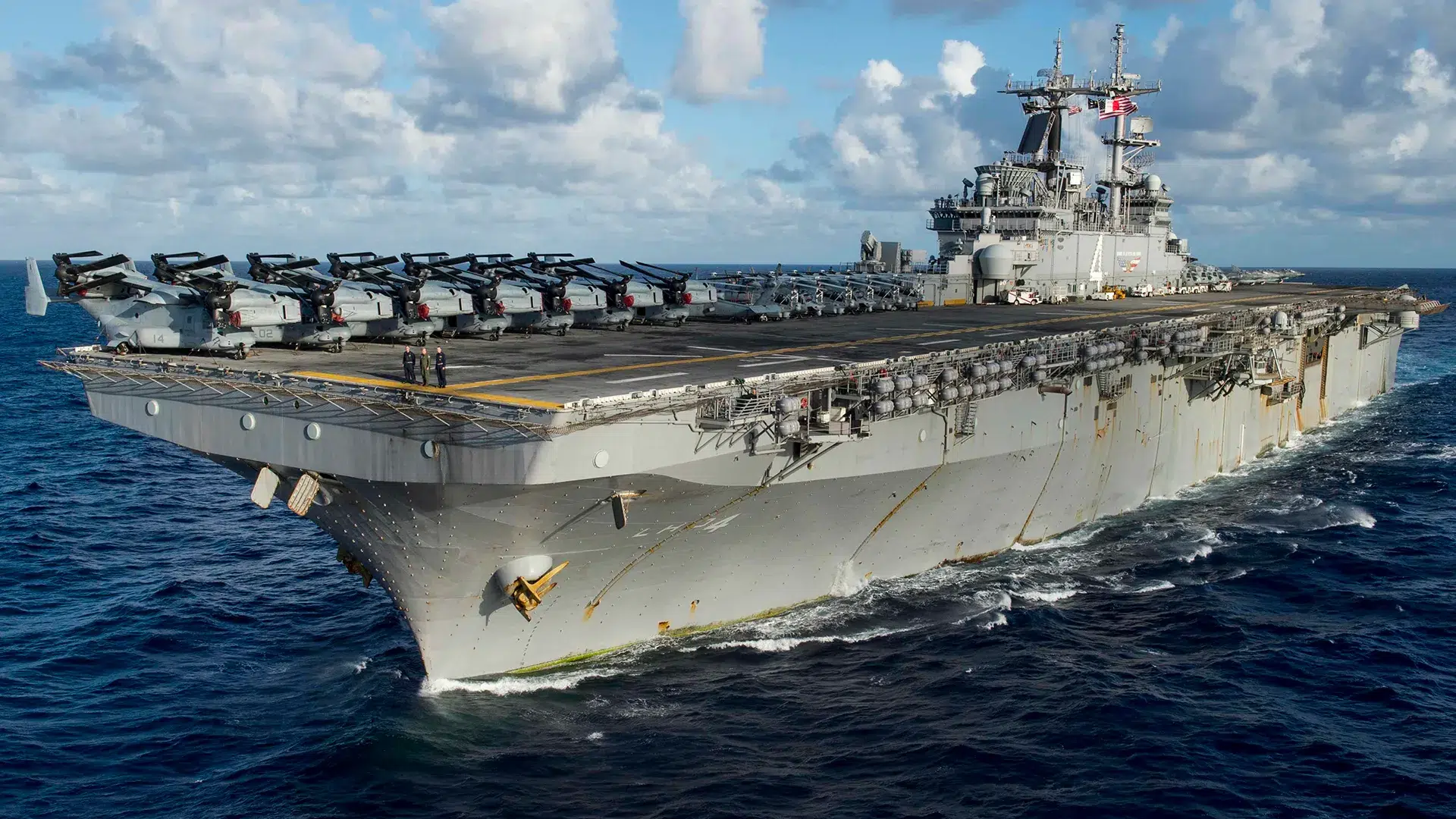


A Report Revealed That Part of the US Navy Military Power Is in Critical Condition, with Ships and Equipment in Alarming Conditions
The United States Armed Forces are widely recognized as the strongest and best-prepared in the world, boasting cutting-edge technology. However, recent reports reveal a concerning vulnerability: the US Navy’s amphibious fleet, essential for landing operations and rapid response, is in poor condition.
A recent report from the Government Accountability Office (GAO) highlighted the precarious situation of the US Navy’s amphibious fleet.
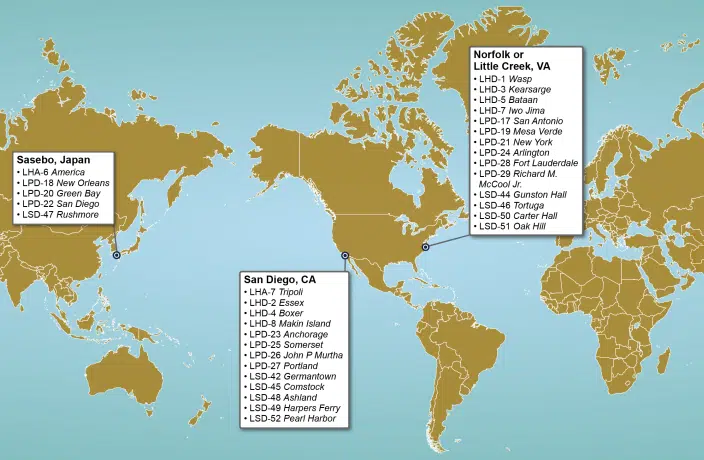
Composed of 32 amphibious assault ships (LHD/LHA), landing ships (LSD), and amphibious transport docks (LPD), the fleet faces issues that compromise its function of transporting Marines, aircraft, and other vehicles in global operations.
-
If the USA were to go to war with Brazil, Washington’s greatest fear would not be the attack itself, but facing a vast territory, prolonged resistance, and a costly, chaotic, and unpredictable occupation.

-
In 2013, Nicaragua sold the concession for a canal to rival Panama to a Chinese billionaire who lost 85% of his fortune, disappeared, and was declared bankrupt. Now the project resurfaces with a new route, a new Chinese partner, and a cost of $64.5 billion.
-
The USA announces a mysterious billion-dollar vault project to store critical minerals, but what intrigues experts is not just the plan itself, but why Latin America, including Brazil, has entered the center of this global dispute against China.

-
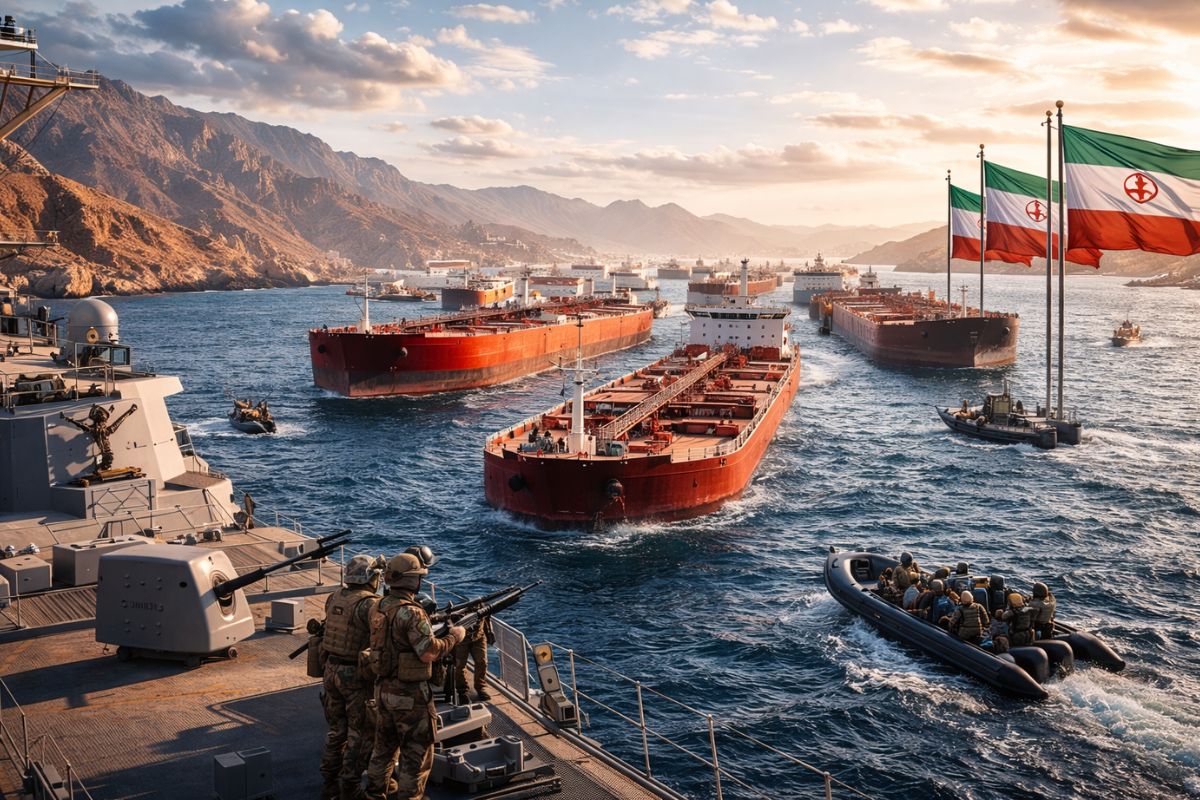
Trump Announces Bombing of U.S. Military Targets on Iranian Island Responsible for About 90% of Iran’s Oil Exports, Warns of Further Attacks if Navigation in Strategic Strait of Hormuz Is Threatened

According to the report, half of these ships are in “poor conditions,” raising doubts about their ability to meet the planned lifespan.
The crisis is not limited to the state of the ships. The Navy also faces difficulties in maintaining the legally mandated minimum of 31 vessels until 2030.
The impact of these deficiencies goes well beyond material: it undermines the training and readiness of the Marines, as well as hindering operations in strategic areas such as the Pacific.
Maintenance and Planning Problems in the US Navy
The problems pointed out by the GAO are numerous and encompass the entire fleet. Among them, the following stand out:
- Chronic Maintenance Delays: About 71% of maintenance periods from 2010 to 2021 were extended, resulting in nearly 29 years of lost training.
- Lack of Oversight: Contractors performed low-quality work, such as on the USS Essex (LHD-2), where welds had to be redone, causing delays and additional costs.
- Scarce Replacement Parts: Ships like the USS Wasp (LHD-1), with 35 years of service, suffer from unavailability of components for steam propulsion systems.
- Inadequate Planning: Attempts at prematurely retiring ships were made without Congressional approval, exacerbating the situation of ships maintained in operation.
Recent Incidents
Two incidents that occurred in 2023 illustrate the practical effects of the fleet’s problems:
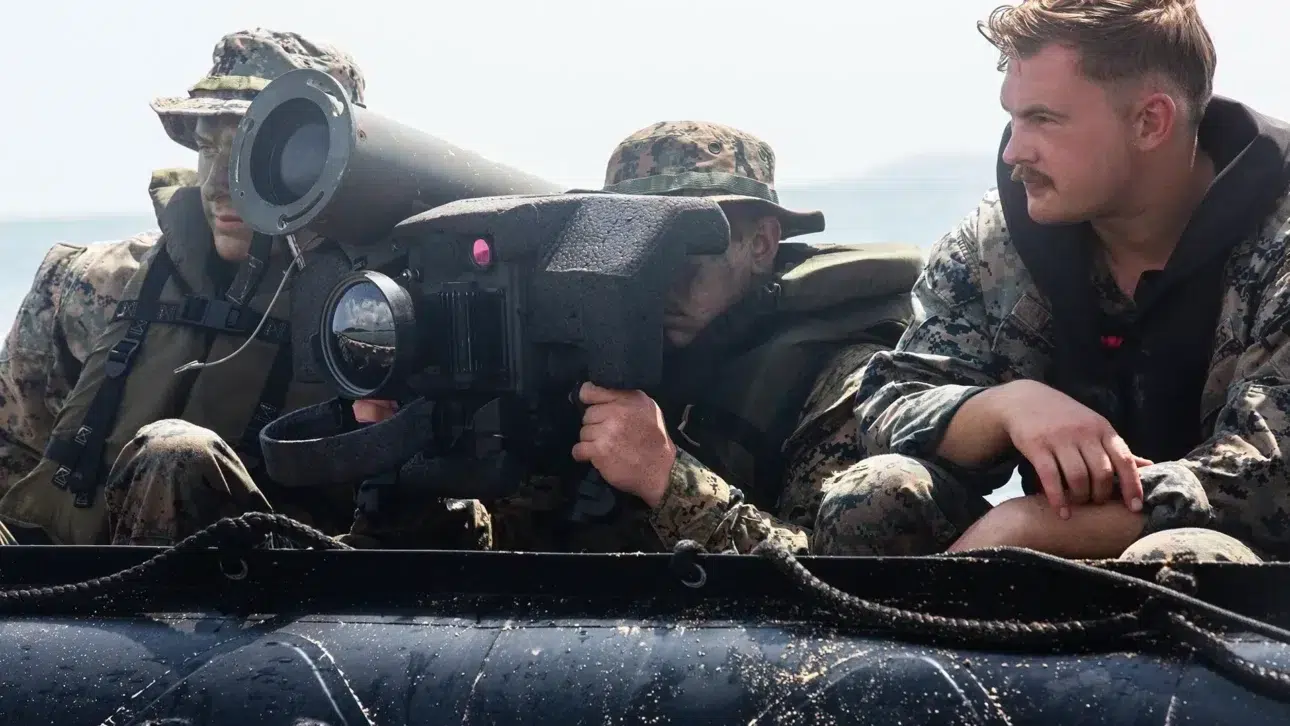
- Boxer ARG: The group, composed of the USS Boxer (LHD-4), USS Somerset (LPD-25), and USS Harpers Ferry (LSD-49), faced maintenance delays and deployment difficulties. The USS Boxer, for instance, suffered a starboard rudder issue and had to return to San Diego after just a few days on mission.
- USS America ARG: This group was unable to operate as a complete unit due to the unavailability of the three necessary ships, compromising training exercises and naval presence in critical areas.
The fleet also lost an additional amphibious ship, the USS Bonhomme Richard (LHD-6), destroyed in a port fire in 2020. The inadequate response to the fire exposes gaps in crisis management.
The Impact of Force Design 2030
The Marine Corps’ Force Design 2030 proposes a doctrinal shift, with greater focus on smaller, distributed units, reducing the emphasis on large-scale landings.
Despite this vision, competing interests, including Congressional demands, have kept amphibious ships as a priority.
However, the future of these vessels remains uncertain, especially considering their high cost and maintenance challenges.
Rising Costs and Modernization Challenges
The Navy plans life extensions to maintain a fleet of 31 ships, but this implies costs of up to US$ 1 billion per vessel.
Moreover, new ships are not immune to problems. The USS Fort Lauderdale (LPD-28), with less than three years of service, faces design flaws and high maintenance costs.
Issues like these show that modernizing the fleet will be a long and costly process.
Additionally, chronic delays in maintenance periods resulted in additional costs of US$ 400 million between 2020 and 2022, further straining the budget.
Reactions and Paths Forward
Leaders of the Marine Corps and the Navy recognize the seriousness of the situation and are working to mitigate the challenges.
Admiral Lisa Franchetti stated that the services are committed to overcoming maintenance issues without jeopardizing training. She also emphasized the acquisition of new amphibious ships as a priority.
Two Navy reviews initiated in 2023 seek to understand the problems affecting the fleet’s readiness, but progress has been limited.
Meanwhile, the GAO emphasizes that having 31 amphibious ships does not mean all are operational. Many have been out of service for years, compromising training and mobilization capabilities.
Some analysts question the need for such a large amphibious fleet, especially in peer combat scenarios like that against China.
Advanced defense systems would complicate large-scale landings in the Pacific. Nevertheless, the vessels still play a critical role in other missions, such as non-combatant evacuation and support for lower-intensity conflicts.
The GAO report revealed the depth of the challenges faced by the amphibious fleet of the United States Navy.
Resolving these issues requires a coordinated effort between the Navy, the Marine Corps, Congress, and the Pentagon. Although some progress has been made, the road to restoring fleet readiness is long and fraught with obstacles.
The lingering question is whether the Navy will be able to overcome these difficulties in time to ensure the safety and efficiency of its amphibious operations in an increasingly volatile world.








Mais da metade dos porta aviões dos EUA tem mais de trinta anos e tem gente ridicularizando a marinha chinesa.