





 Português
  Inglês
  Espanhol
  3 min de leitura
  0 comentários


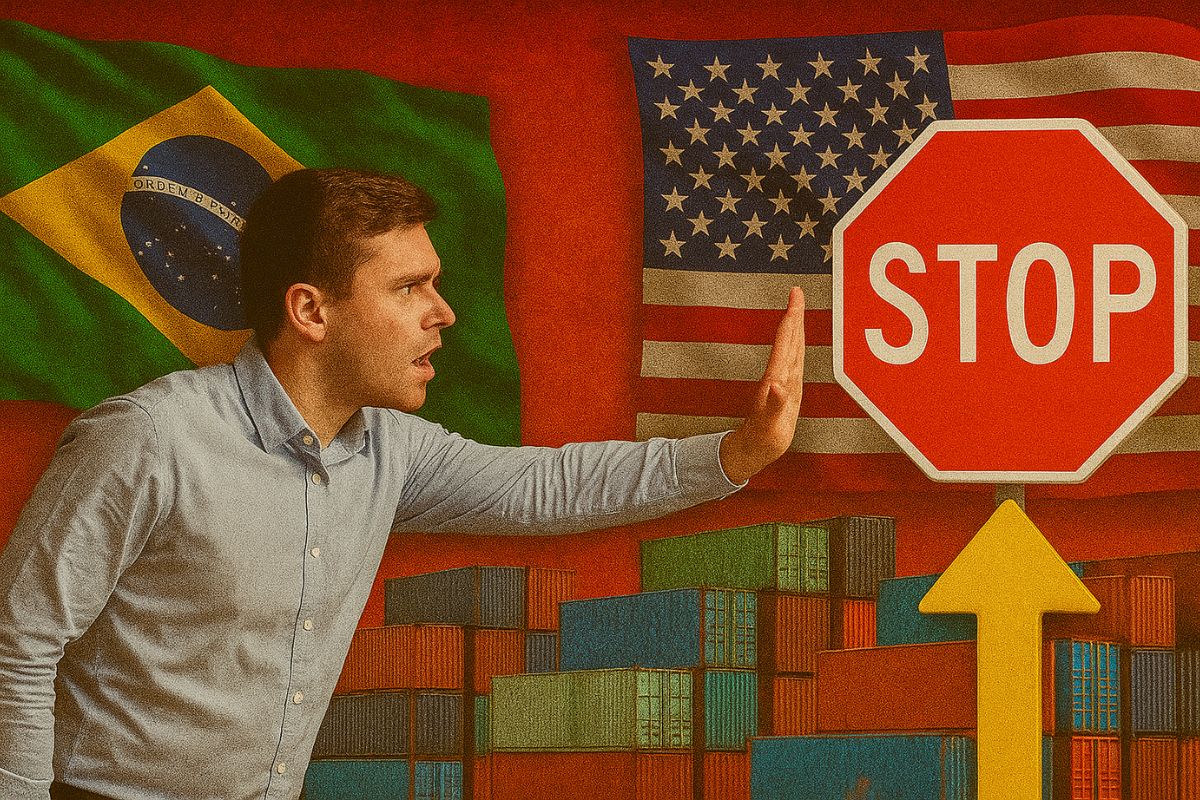
Governors Release Credit, Refund ICMS, and Pressure Alckmin for Federal Plan to Avoid Layoffs and Collapse in Exports
Brazilian states are creating emergency actions to support companies affected by the 50% tariffs imposed by the United States. The measure takes effect on August 1 and threatens strategic sectors such as orange juice, steel, fish, timber, and aircraft. Governors decided to take action on their own due to the federal government’s delay in announcing concrete measures.
São Paulo, Ceará, Paraná, Rio Grande do Sul, Espírito Santo, and Rio de Janeiro have already announced initiatives that include credit lines, refunding ICMS credits, and creating task forces. The actions aim to prevent shutdowns, mass layoffs, and loss of competitiveness for the affected companies affected.
São Paulo Leads Aid to Affected Companies with Credit and ICMS Refund
Governor Tarcísio de Freitas launched the Exporting Cycle program, with R$ 200 million in credit at subsidized interest rates for companies affected by the tariffs. The minimum rate will be 0.27% per month, with a term of up to 60 months. In addition, the State will refund up to R$ 1 billion in ICMS credits accumulated by exporters.
-
In a silent race, Shopee signs a mega contract in Guarulhos and accelerates the e-commerce war with faster deliveries, pressured shipping, and a new threat to rivals in Brazil.

-
Oil surged to $115 a barrel due to the war in the Middle East, and diesel in Brazil has already risen to R$ 7.45 per liter, while the United States…

-
Brazilian city bets on the business environment to generate jobs and attract investments in the energy sector — secretary reveals strategy at Macaé Energy 2026.

-
50 viaducts, 4 tunnels, 28 bridges, and 40 kilometers of bike paths: BR-262 in Espírito Santo will receive 8.6 billion reais for the largest engineering project in the state’s history, inspired by the Immigrant Highway in São Paulo.


Embraer, one of the most impacted, estimates a loss of R$ 50 million per exported aircraft. Another affected sector is orange juice, predominantly produced in São Paulo. Tarcísio also promised to expand the state guarantee fund to facilitate access to credit.
Ceará Seeks Federal Support and Warns of Devastating Impact
Ceará is proportionally the most exposed to the US: 44.9% of its exports went to the country in 2023. Governor Elmano de Freitas stated that the impacts involve products such as fish, cashew nuts, and carnauba wax. He will meet with Vice President Geraldo Alckmin to demand federal actions.
ArcelorMittal, responsible for half of the loads at the Port of Pecém, could also be affected. Although there are no concrete measures yet, the State is considering releasing ICMS credits and demanding compensations from the Union based on the Kandir Law.
Paraná Announces Credit Package and Studies Debt Renegotiation

Governor Ratinho Júnior launched measures to support affected companies in the wood, ceramics, and machinery sectors. The State intends to release R$ 80 million for financing, potentially reaching R$ 400 million. There will also be renegotiation of loans through BRDE and Fomento Paraná.
The government will allow exporters to use ICMS credits as collateral and intends to eliminate requirements for companies benefiting from tax incentives. According to the Secretary of Finance, “there are cities that depend almost entirely on exports to the US.”
Rio Grande do Sul Releases R$ 100 Million with Subsidized Interest
Governor Eduardo Leite announced a special line of credit through BRDE with interest rates between 8% and 9% per year and a 12-month grace period. Fiergs estimates a loss of R$ 1.92 billion in the state GDP. The most affected sectors include arms and ammunition, with 85.9% of production directed to the American market.
Rio de Janeiro and Espírito Santo Still Designing Responses to Tariffs
Rio de Janeiro created a task force to assess the impact on exports, mainly of oil and steel. Governor Cláudio Castro stated that actions will be technical, without political bias, to ensure a pragmatic response.
In Espírito Santo, Vice Governor Ricardo Ferraço coordinates meetings with exporting sectors. The State sends 30% of its products to the US, including coffee, ginger, papaya, cellulose, and steel. According to Ferraço, the initial focus will be to mitigate immediate impacts for affected companies, with special attention to micro and small businesses.
Do you think the state measures are enough to protect the affected companies, or should the federal government act more urgently?









-

-

-

3 pessoas reagiram a isso.