





 Portuguese
  English
  Spanish
  6 min of reading
  5 comments


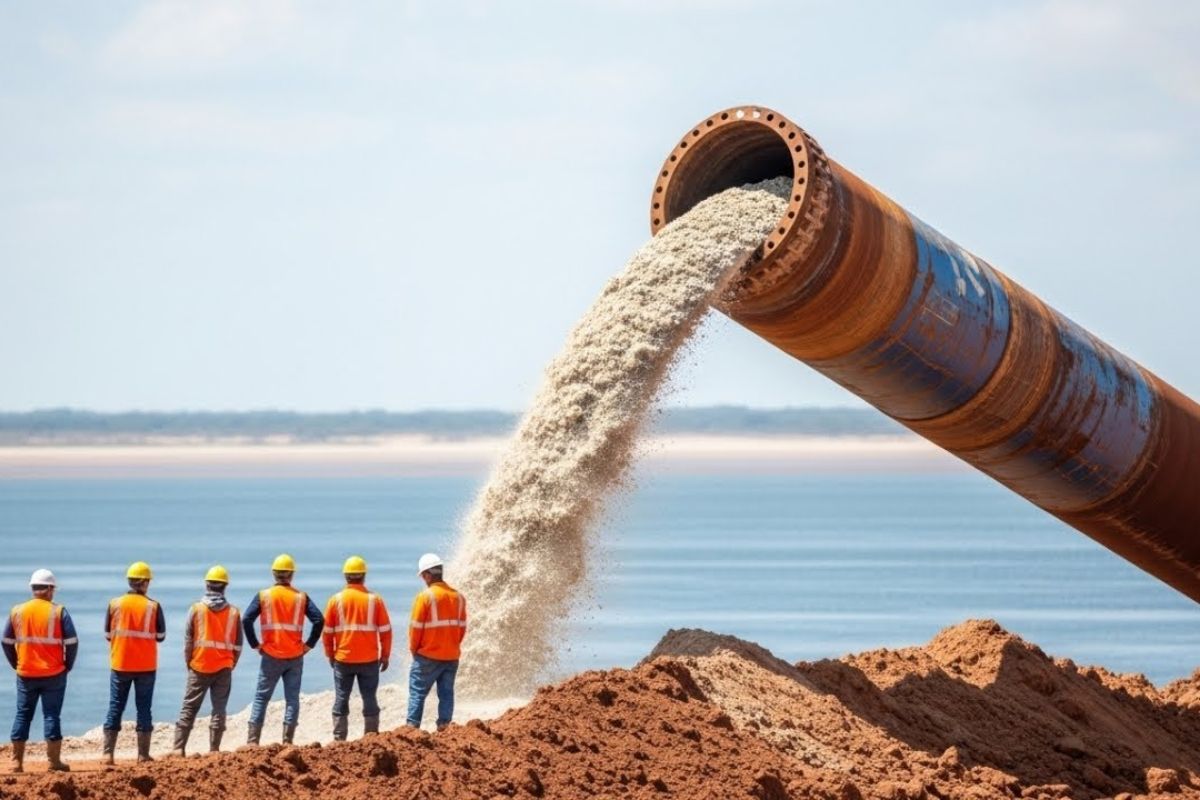


While millions of tons of sand and rock are pumped from the bottom of the Hudson River every day, machines, sensors, and thousands of workers are digging a giant tunnel that promises to double rail capacity, reduce congestion in Manhattan, and shield the billion-dollar economy of the entire metropolitan area of New York.
In 2013, after decades of delays, the United States decided to move forward with the plan to open a giant tunnel under the Hudson River, between New York and New Jersey, to reinforce the rail backbone of the East Coast. In 2024 and 2025, construction ramped up, with drillers working dozens of meters deep and millions of tons of sand and sediment being removed from the riverbed to make way for the new rail tunnels that will support transportation for the coming decades.
Behind this mega project, valued at 16 billion dollars, is the attempt to save a system on the brink of collapse, relying on century-old tunnels that were completely inundated by Hurricane Sandy in 2012 and have accumulated thousands of hours of delays. The project is presented as a structural surgery to prevent a prolonged failure in this connection from disrupting the flow of passengers and wealth that passes through New York daily.
Collapsed Traffic And Risk To Manhattan’s Economic Heart

Below the surface of one of the most expensive areas in the world, the giant tunnel under the Hudson targets a problem that starts on the streets.
-
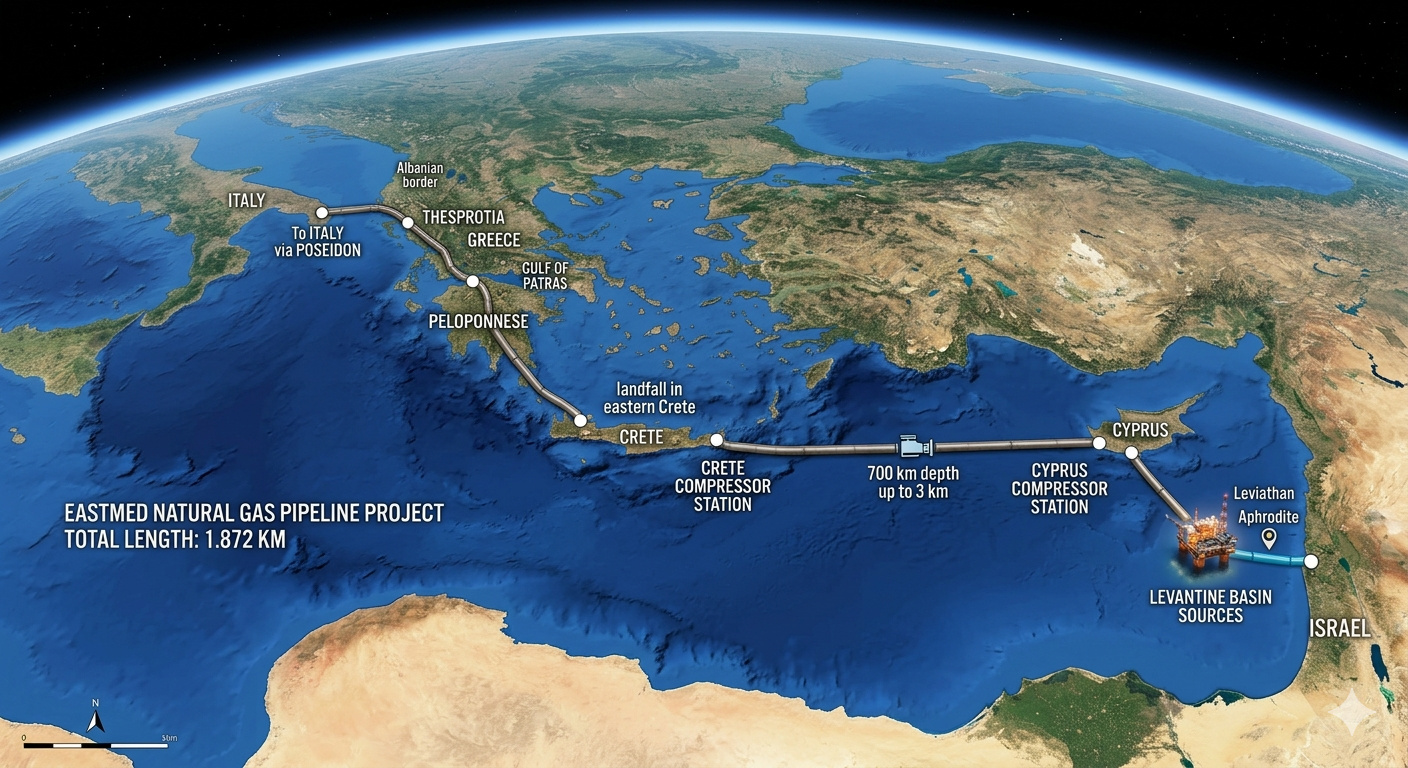
Israel, Greece, and Cyprus signed an agreement in 2020 to transport gas from the Mediterranean to Europe via a 1,872 km pipeline, but Turkey claimed sovereignty over part of the maritime route, and the project never materialized.
-
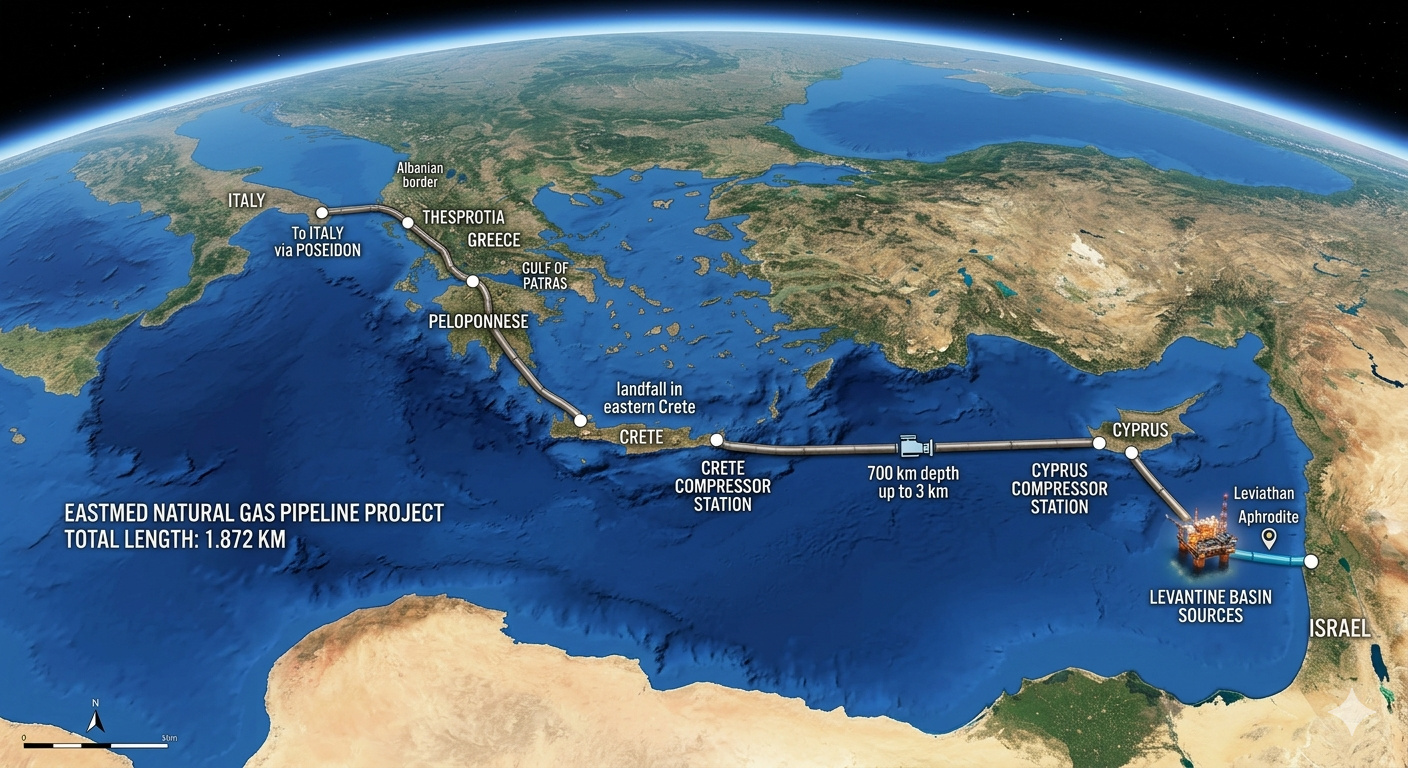
Israel, Greece, and Cyprus signed an agreement in 2020 to transport gas from the Mediterranean to Europe via a 1,872 km pipeline, but Turkey claimed sovereignty over part of the maritime route, and the project never materialized.
-
Abandoned house for 15 years disappears in the woods, shocks owner with unrecognizable scenery and is reborn in an intense transformation after almost 90 hours of work in just 10 days.

-
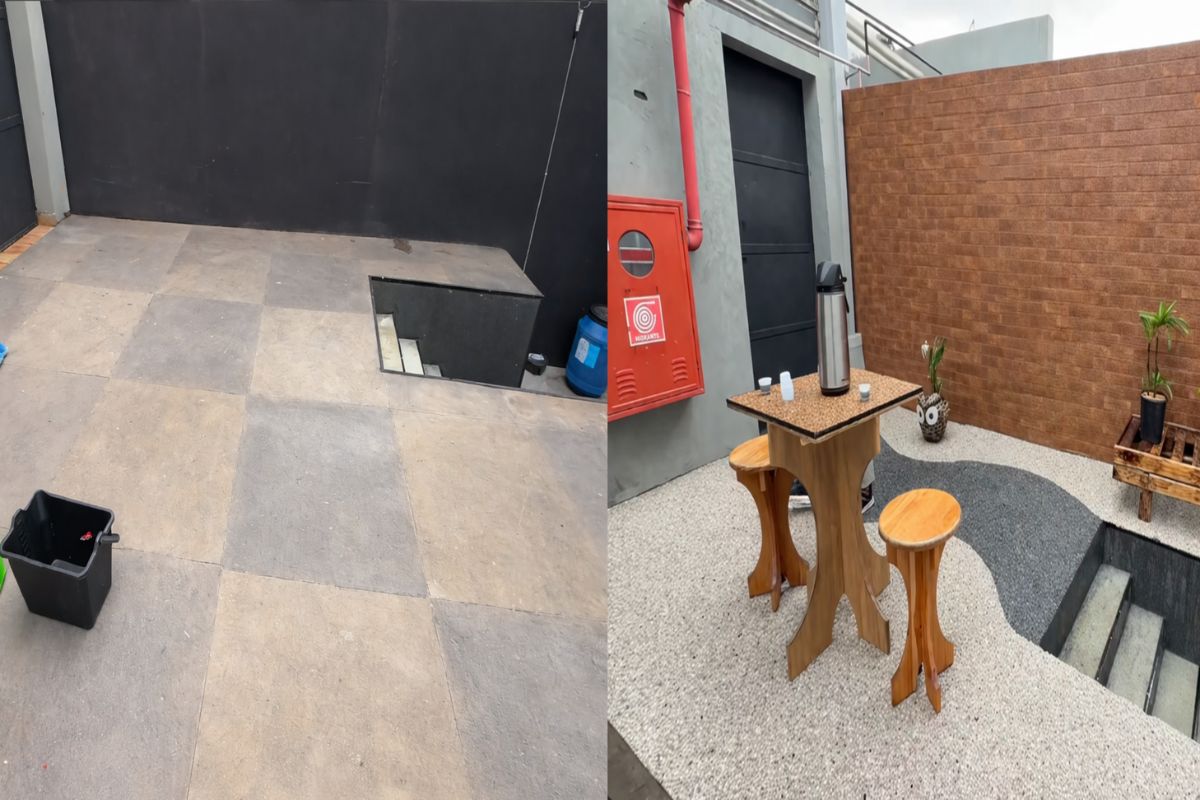
In just three hours, a natural stone floor transforms the entrance of the house with an organic effect, immediate drainage, and a sophisticated non-slip finish that doesn’t puddle water, dries quickly, and impresses with the final result.

Manhattan, with just over a few dozen square kilometers, accounts for a significant slice of the U.S. GDP and serves as one of the world’s main financial centers.
Every day, hundreds of thousands of people and hundreds of thousands of vehicles cross bridges and tunnels to enter and exit the island.
The average speed of traffic has dropped to levels typical of chronic global congestion, causing residents to lose dozens of hours a year stuck in traffic, while rail transport tries to absorb a demand higher than its capacity projected over a hundred years ago.
In this scenario, a prolonged collapse in any current tunnel would not just mean some delays, but the partial interruption of a corridor that links Boston, New York, Philadelphia, and Washington, a hub that concentrates financial, political, and industrial strategic decisions for the country.
The new tunnel aims to create redundancy and slack in this historic bottleneck.
Century-Old Tunnels At The Limit After Hurricane Sandy

The North River Tunnels, which currently provide the main rail link under the Hudson, were opened in 1910, excavated under extreme conditions and with technology far from today’s.
Immigrants and low-income workers spent years under high pressure and constant risk to open the corridors that sustain the daily flow between New York and New Jersey.
More than a century later, these structures have accumulated corrosion, seepage, and damage that worsened with the flooding caused by Hurricane Sandy in 2012.
Tracks and cables were attacked by saltwater, the ventilation system was overloaded, and the number of failures has consistently increased, leading to recurring delays and a growing perception of risk among technicians and transportation managers.
From an engineering perspective, the solution ceased to be just reinforcing the old structure.
The strategy has become to build new tunnels alongside the old ones, transfer the rail flow, and only then, calmly modernize the historic tunnels, reducing the chance of a sudden rupture that would disrupt service for long periods.
How The Giant Tunnel Is Being Dug Under The Hudson River
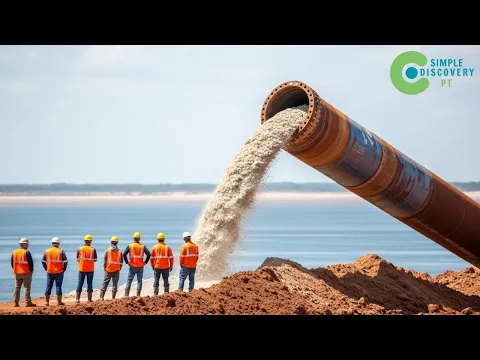

The Hudson Tunnel Project is part of the Gateway program, designed to create two new rail tunnels under the Hudson River.
At the center of the project are large tunneling machines, with diameters close to the height of a multi-story building, that advance beneath the riverbed cutting through rock and sediment and installing concrete rings that form the final structure of the tunnel.
These machines are guided by sensors, underground radar, and real-time monitoring systems, which adjust the trajectory with centimeter accuracy to avoid settlement in the soil above and impacts on existing structures.
Behind the cutting head, teams install concrete segments that can weigh about ten tons each, closing the structural arch that will support the tunnel for decades.
In New Jersey, bridges and infrastructure networks had to be relocated to make way for the excavation fronts.
In Manhattan, the most sensitive section lies beneath the area of large real estate developments, where engineers work practically centimeter by centimeter, combining controlled excavation, high-pressure concrete injection, and soil monitoring to avoid affecting buildings and streets on the surface.
Billion-Dollar Costs, Jobs, And Economic Impact Of The Project
Opening a giant tunnel under one of the most strategic rivers in the American economy comes with a cost proportional to the risk.
The estimated value of 16 billion dollars includes everything from stabilizing the riverbed to complementary works in accesses, signaling systems, power, and ventilation.
Just the phase of treating the substrate consumed hundreds of millions of dollars, with cement injection, retaining walls, and environmental adjustments.
In everyday operations, over 70 thousand direct and indirect jobs are associated with the project, in a chain that involves concrete factories, steel mills, cable companies, engineering firms, and environmental consultancies in several U.S. states.
The tunnel functions as a major demand driver for industry and services, while trying to solve a mobility bottleneck that costs billions per year in delays and loss of productivity.
For supporters of the project, the Hudson Tunnel Project should be seen as a long-term investment, not as an isolated expense.
The expectation is that the expansion of rail capacity will reduce reliance on cars, decrease emissions of pollutants, cut travel time, and make the eastern corridor more competitive against other global hubs.
Green Corridor And New Steel Heart Of The East Coast
The completion of the set of works is planned in stages, with the commissioning of the new tunnels followed by the deep rehabilitation of the old tunnels.
When the system is complete, rail capacity under the Hudson is expected to nearly double, increasing from about 24 to approximately 48 trains per hour, with direct impacts on delays and overcrowding.
At the same time, the new tunnels have been designed for fully electric trains and more efficient energy systems, paving the way for a cleaner rail corridor between the major cities of the East Coast.
The idea is that, with more reliable and faster trips, fewer people will depend on cars for their daily commutes, easing surface traffic and reducing greenhouse gas emissions.
In this design, the giant tunnel under the Hudson River transforms into the new steel heart of the American economy, responsible for keeping the flow of workers, executives, students, and cargo that depends on the metropolitan area of New York pulsating.
The redundancy created by the new system is also seen as a safeguard against extreme weather events and structural failures.
By the end of 2025, the Hudson Tunnel Project will still be under construction, but the volume of earth removed, concrete installed, and the number of jobs mobilized indicate the scale of the ongoing underground transformation.
Every meter advanced of the tunnel brings New York closer to a more resilient, less polluting transportation network and less vulnerable to the chaos of daily traffic.
In your opinion, does this giant tunnel under the Hudson River justify the billion-dollar cost to transform transportation between New York and New Jersey, or should the money be invested in other mobility solutions?









Essa pergunta na minha opinião é muito ****!
Nos Estados Unidos não tem essa de não funcionar.
Só fazem projetos, projetinhos, mega projetos na certeza.
À começar por não ter Republicanos boicotando projetos de Democratas e nem Democratas Boicotando projetos de republicanos.
Como acontece em um certo país de dimensões continentais da América do Sul !
E o de Santos a Guarujá em 50.anos. que falta de vontade política
Qual empresa está implantando como incorporadora?
É por acaso a New York & New Jersey Authority?