





 English
  Francês
  Alemão
  Italiano
  Japonês
  Norueguês
  Portuguese
  Spanish
  6 min of reading
  2 comments


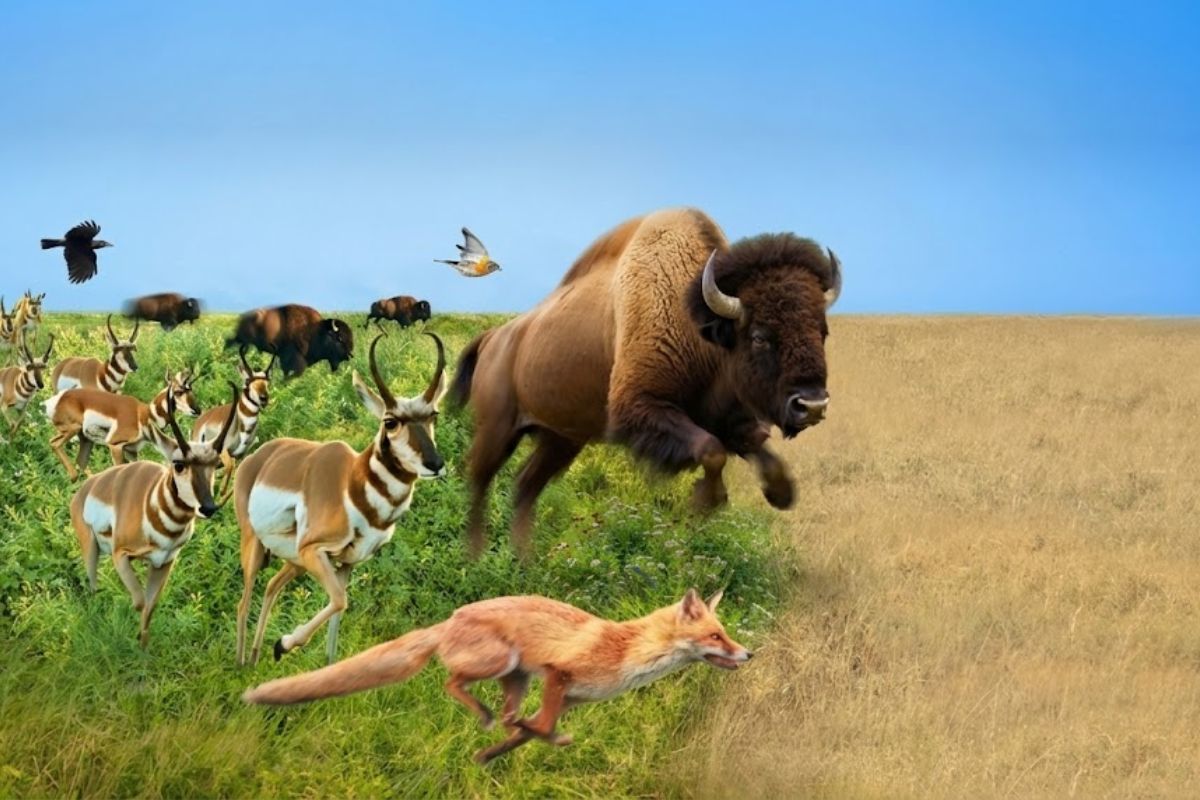


In The United States, American Prairie Wants To Reconstruct The Old West In The Great Plains Of Montana, Connecting Pastures Through The Purchase Of Old Cattle Ranches. The Plan Aims At 3.2 Million Continuous Acres, Removed 160 Km Of Fences And Reintroduced Bison, While Protecting Pronghorns And Prairie Dog Towns.
At The Heart Of Montana, The Attempt To Restore The Old West Is Based On A Concrete Change In Land Use: Buying Old Cattle Ranches And Converting Them Into Wild Habitat, Creating A Block Of Continuous Pastures On A Continental Scale. The Declared Goal Is To Exceed 3 Million Acres And Advance To 3.2 Million Acres To Support A Biome Of Prairie Considered Healthy.
The Strategy Combines Physical And Biological Actions: Taking Down Fences That Fragment Migrations, Protecting Key Species And Reintroducing Large Herbivores. The Project Also Anchors Itself In Private And Community Support, With A Cited Contribution Of US$ 45,000 To Accelerate Tasks Such As Fence Removal And Protection Of Pronghorns, Bison And Prairie Dogs, In A Proposal Described As One Of The Most Ambitious In The History Of American Conservation.
Prairies As “American Serengeti” And The Scale Of What Has Been Lost

The Great Plains Have Been Described As An “American Serengeti,” With Wild Pastures As Far As The Eye Can See And Large Animals Roaming The Landscape. About 200 Years Ago, This Mosaic Of Prairies Could Be Summed Up In One Number: More Than 240 Million Acres In Extent.
-
350-year mystery may have been solved: remains of a soldier who inspired the hero of The Three Musketeers found beneath a church in the Netherlands.

-
NASA photographed a nearly perfect square with 3 km sides on Mars, 13 times larger than the Great Pyramid of Giza, but the official explanation is natural erosion; still, no one has explained why the four sides have almost identical lengths.

-
Starlink breaks the barrier of 10,000 satellites in orbit and takes its expansion to an unprecedented level, with a direct impact on global internet, technological competition, and the race for space.

-
Japan finds an alternative to oil amid rising prices by transforming ocean balance into electricity with a new technology that maintains efficiency even when the sea changes.


The Break Came With Colonial Occupation, Expulsion Of Indigenous Peoples And Intense Hunting Of Animals To The Brink Of Extinction. In Parallel, Territorial Division By Ownership Transformed The Prairie Into A Fenced Game Board. Fences To Contain Cattle Became Barriers To Wildlife, Interrupting Migrations And Degrading The Biome.
The Result Presented Is Harsh: More Than 70% Of American Prairies Have Been Destroyed, And Pastures Have Come To Be Described As The Most Threatened Biome And, At The Same Time, The Least Protected In The World.
The “Superpower” Of Grass And Why Carbon Is Safer Below Ground

The Project Relies On A Direct Ecological Argument: Native Grass Is Not Just Ground Cover, It Is The Structure Of Life. In Montana’s Wild Pastures, There Are About 60 Native Species Of Grass, Creating Microhabitats Because Animals Graze Unequally, Creating Areas Of Tall Grass And Short Grass For Different Species.
The Decisive Technical Point Lies Below The Ground. The Root System Of Grass Is Described As Capable Of Extending Up To 15 Feet, About Five Meters. These Roots Store Carbon Below Ground, And The Key Fact Is That They Hold More Than One-Third Of Earth’s Carbon, With A Practical Advantage: This Subterranean Carbon Is Safe From Wildfires And Tends Not To Easily Return To The Atmosphere.
The Comparison Used To Size The Difference Is Visual And Functional: The Natural Root System Of The Pasture Contrasts With The Shallow Roots Of A Plowed Field. Where There Has Been No Plowing, Soil And Roots Remain Intact, And This Is Seen As A Window Of Opportunity For Large-Scale Restoration.
Purchase Of Ranches And Creation Of A Continuous Reserve Of Pastures

American Prairie Works By Buying Old Cattle Ranches And “Blocking” Lands For Conservation, Aiming To Connect Separate Parts Of The Landscape. The Logic Is Simple: Connecting Fragments Creates Ecological Continuity, And Continuity Is What Allows Migration, Genetic Flow And Biome Stability.
The Organization Is Described As Having Been Founded Over 20 Years Ago, And The Plan Has Already Built A Protected Area Of 1.5 Million Acres, With The Intention Of Expanding To 3.2 Million Acres. The Ambition Is To Form A Reserve Of Sufficient Scale To Sustain The Prairie As A Complete System, Not As Isolated Islands.
Removed Fences And The Bottleneck Of Pronghorns In Migrations

The Pronghorn Is Presented As A Symbol Of The Fragmentation Problem. It Is Described As The Second Fastest Terrestrial Mammal After The Cheetah And With A Striking Biological Detail: It Was Built To Outpace Predators That No Longer Exist, Such As An “American Cheetah” And A Short-Faced Bear.
Despite An Almost Historical Collapse, The Cited Number Is Extreme: 99.97% Of Pronghorns Were Exterminated In The 19th Century, But The Species Is Still Alive. The Current Obstacle Is Not Just Hunting, It Is Infrastructure: Fences. The Pronghorn Tries To Go Under And Repeatedly Loses Fur On Its Back; Over Time, This Can Wear Down Its Natural Protection And Increase Susceptibility To Hypothermia In The Winter.
The Removal Of Fences Appears As A Central Action. The Team Reportedly Removed More Than 160 Kilometers Of Fences, And The Project’s Effort Includes Removing Old And Unnecessary Fences To Reopen Routes And Reduce Migration Collapse. Without Continuity, There Is No Functional Migration, And Without Migration, The Landscape Loses Part Of Its Ecological Design.
Prairie Dogs As Ecosystem Engineers And The Shock Of The Numbers
The Prairie Dog Is Defined As An “Anonymous Hero” And A “Little Engineer” Of The System. It Builds Complex Networks Of Burrows Underground, Creating “Cities” That Provide Habitat For More Than A Hundred Other Animals. For This Reason, It Is Classified As A Keystone Species.
The Numbers Show A Drop Of Another Order. Today, It Is Estimated That There Are About 10 To 20 Million Prairie Dogs, But Historically The Total Would Have Been More Than 5 Billion, A Reduction Of 99%. The Loss Is Described As Catastrophic For The Entire Ecosystem, Not Just For The Species.
In Addition To Hunting, There Is The Sanitary Risk: Sylvatic Plague, Which Is Said To Have Arrived About 100 Years Ago Through Global Trade Routes. The Disease Can Decimate An Entire Town, Killing Thousands In A Few Weeks. In Response, An Operational Strategy In The Field Is Cited: Grain Bait With Insecticide That Does Not Affect The Prairie Dog But Makes The Animal Toxic To Fleas, Which Are Vectors Of The Plague. The Idea Is To Reduce The Impact Of Fleas And Allow For Gradual Recovery Of Populations.
Bison As A Central Piece: From 60 Million To 325, Then Almost A Thousand
The American Bison Is Presented As The Ultimate Icon Of The Prairies, Called The National Mammal Of The U.S. And Treated As An Indispensable Piece Of Restoration. The Argument Is Clear: There Is No Prairie Without Bison, Because They Act As The Builder And Architect Of The System.
The Cited Population Trajectory Has Two Extreme Milestones. There Was A Time With About 60 Million Bison Roaming The Great Plains, And Then Only 325 Individuals Remained. The Reintroduction Led By The Organization Is Said To Have Started Almost 20 Years Ago With 16 Bison Released Into The Prairie. The Management Includes An Explicit Objective Of Genetic Diversity, Bringing New Members Into The Herd Over Time.
The Current State Described Is Of A Herd With Almost A Thousand Bison, Noting The Behavior Of Rutting, A Period When Males Compete For Mating. The Record Of This Behavior Is Treated As An Indicator Of Success: The Bison Behave Like Bison When They Feel At Home, And This Is Used As A Sign That Restoration Is Creating Real Habitat Conditions.
Community Funding And The Goal Of 3.2 Million Acres
The Project Combines Field Work With Community Support. A Cited Contribution Of US$ 45,000 Was Directed To Maximize The Potential Of The Work, Covering Everything From Fence Removal To Protection Of Pronghorns, Bison And Prairie Dogs.
The Final Ambition Is Presented As A Territorial Engineering: Advancing From 1.5 Million Protected Acres To 3.2 Million Acres, The Size Considered Necessary To Sustain A Functional Prairie On A Large Scale. The Project Is Described As An Attempt To Rebuild The “American Serengeti” Through Connectivity, Key Species, And Maintenance Of Carbon In The Soil, With Grass As The Structural Base.
If You Want To Follow Initiatives Of This Kind, It Is Worth Mapping Grassland Restoration Projects, Supporting Verifiable Community Actions, And Monitoring Long-Term Results In Biodiversity And Connectivity.
In Your View, What Most Defines The Return Of The Old West: Releasing Bison, Taking Down Fences, Or Recovering Carbon In The Soil Through Native Grass?







Para ter sucesso são necessários os 3 fatores: soltar bisões, derrubar cercas e recuperar o carbono no solo por meio da grama nativa.
O modelo vale para o Pampa, respeitadas as características locais.
E deveriam introduzir a chita asiática ela tá em extinção só existem menos de 100 no mundo,pois o antílope americano não têm predador e a chita americana foi extinta,ele poderia substituir o nicho ecológico que foi deixado pelo seu primo extinto,aí sim se tornaria um “Seringueti Americano”,pois sem predador próprio,dependendo do homem para fazer controle,os antilopes vão comer tudo e um ecossistema precisa de presa e predador para,tanto a presa quanto o predador evoluir,e o antilocapra e o herbívoro mais rápido da terra,ele ainda e mais rápido quê a gazela de Thompson.