





 Português
  Inglês
  Espanhol
  5 min de leitura
  0 comentários


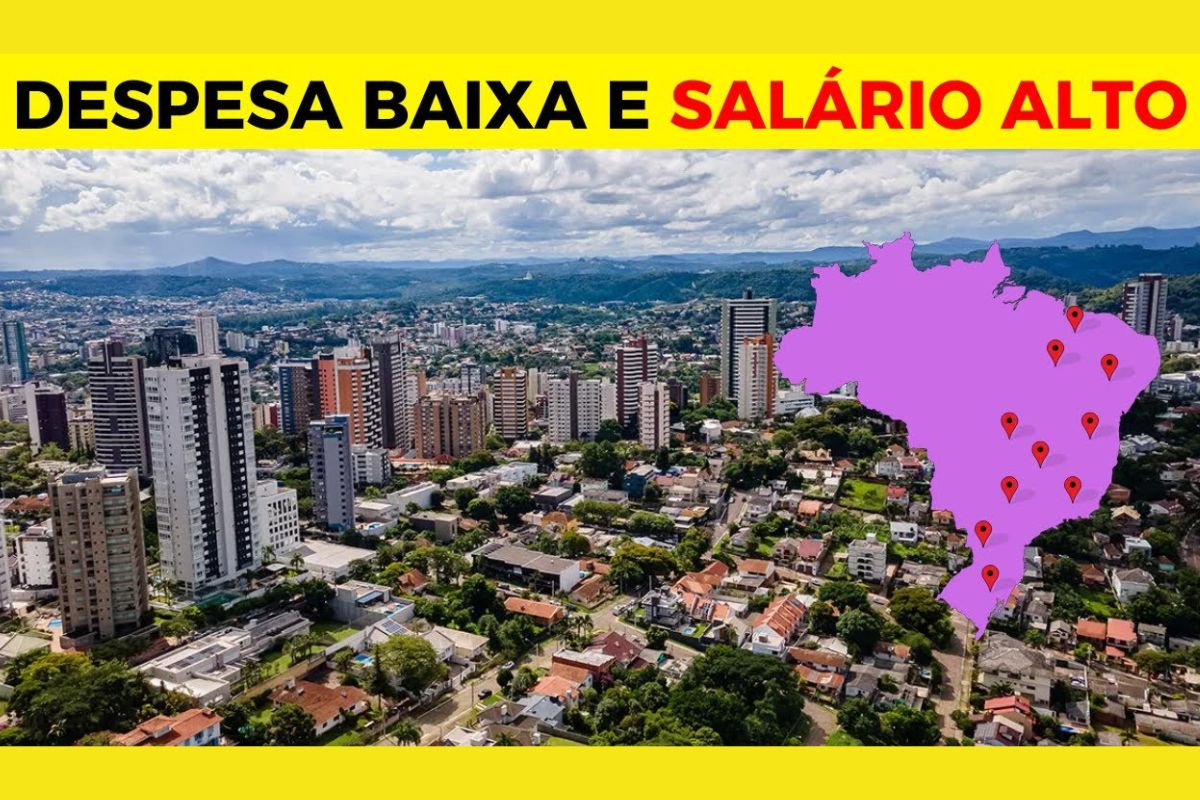
With Balanced Cost of Living and Growing Opportunities, These Brazilian Cities Show That Quality of Life Doesn’t Have to Be Expensive.
Earning well and spending little seems like a utopia, but there are Brazilian cities that challenge this logic. They are municipalities that combine per capita GDP above average, expanding infrastructure, and affordable cost of living, attracting professionals and families looking for a more stable and comfortable life.
From Sobral to Guaratinguetá, these locations show that it is possible to live better with less, reconciling economic growth, safety, and access to quality public services. The map of the good relationship between income and cost of living is being redrawn outside major centers.
Sobral (CE): Educational and Technological Hub in the Interior of the Northeast
Sobral, in the interior of Ceará, leads the advancement of the northeastern interior. With a per capita GDP of about R$ 26,6 thousand and over 200 thousand inhabitants, the city combines efficient urban mobility and robust educational infrastructure. Universities and research centers drive the economy and attract talents from various regions.
-
The world’s first octopus farm wants to open in the Canary Islands and is already provoking an international reaction: the plan aims to produce 3,000 tons per year.

-
Drought may be creating stronger superbugs in the soil and helping antibiotic resistance reach hospitals, warns a study highlighting a problem that could grow alongside extreme weather.

-
The biggest scam in history: Napoleon’s France deceived the United States by selling them a territory that was Spanish.

-
Why is the Danakil Desert so dangerous? It has unstable terrain and how extreme temperatures and toxic gases turn the region into one of the most hostile environments on Earth.


The preserved historical center and balanced cost of living complete the picture of a city that grows with planning. Sobral is an example of development without haste, but with direction.
Ji-Paraná (RO): Expanding Economy and Affordable Life
The second most populous city in Rondônia, Ji-Paraná has a per capita GDP around R$ 14,9 thousand and a slightly congested urban environment.
The balance between urban and rural areas favors quality of life and low housing costs.
With a highlight on the agricultural and forestry sectors, the city has become a strategic point in the inland of the Northern Region. Established infrastructure and access via highways help sustain the growth pace.
Imperatriz (MA): The Second Engine of Maranhão
On the banks of the Tocantins River, Imperatriz is the second largest municipality in Maranhão and has a per capita GDP of R$ 28,2 thousand. The local economy revolves around commerce and services, which are growing rapidly.
The city influences neighboring municipalities in health, education, and supply. With a cost of living lower than that of northeastern capitals, Imperatriz has been attracting migrants seeking structure without losing tranquility.
Viçosa (MG): When Knowledge Moves the City
In Minas Gerais, Viçosa is synonymous with academic excellence and urban balance. With a per capita GDP of R$ 23,2 thousand and HDI of 0.775, the municipality relies on the strength of the Federal University of Viçosa, a reference in agricultural sciences and engineering.
The university environment boosts commerce and the real estate sector, but without inflating the cost of living. Viçosa is a portrait of the inland of Minas Gerais that combines education, research, and quality of life.
Teixeira de Freitas (BA): The Commercial Heart of Extreme Southern Bahia
With 145 thousand inhabitants and a per capita GDP of R$ 9,3 thousand, Teixeira de Freitas has established itself as the main commercial hub of the region. The municipality supplies dozens of neighboring cities and attracts students, entrepreneurs, and professionals.
The strategic position between the Northeast and Southeast favours the flow of goods and business tourism, making the city an essential logistical hub for southern Bahia.
Novo Hamburgo (RS): Industrial Tradition and High Income
In the Vale dos Sinos, Novo Hamburgo maintains one of the highest average incomes on the list, with a per capita GDP above R$ 40 thousand.
Recognized as the national capital of footwear, the city is one of the largest exporting hubs in the country.
The strong heritage of German immigration is reflected in the architecture and cultural events.
High level of urbanization and balanced cost of living make the municipality an example of productivity without loss of well-being.
Uberaba (MG): The Agribusiness that Generates Prosperity
In the Triângulo Mineiro, Uberaba combines per capita GDP of R$ 24,6 thousand and HDI of 0,772 with an economy based on agribusiness, industry, and biotechnology.
It is one of the largest centers for zebu cattle breeding in the world and the venue for events that generate millions.
With industrial parks and educational hubs, the city blends rural vocation and urban innovation. Uberaba shows that productivity and quality of life can coexist.
Mossoró (RN): Oil, Salt, and History
With a per capita GDP of R$ 26,5 thousand and a population of about 260 thousand inhabitants, Mossoró is one of the economic engines of Rio Grande do Norte.
The municipality combines extractive industry, higher education, and cultural tourism in one territory.
Beyond its productive capacity, Mossoró has historical tradition: it was the only northeastern city to repel the gang of Lampião in 1927.
Today, the blend of modernity and memory keeps the city in constant growth.
Anápolis (GO): Logistics and Industry in the Heart of the Country
The modern Anápolis features a per capita GDP of R$ 44,8 thousand and a privileged geographic position between Goiânia and Brasília.
The municipality is a national reference in pharmaceuticals and logistics, with one of the largest agro-industrial districts in the country.
The strategic location ensures competitiveness and access to consumer markets. Solid infrastructure and balanced cost of living make Anápolis one of the most attractive cities to live and invest in the Midwest.
Guaratinguetá (SP): Paulista Balance Between Income and Well-Being


At the top of the list is Guaratinguetá, in the Vale do Paraíba. With a per capita GDP of R$ 63,9 thousand and HDI of 0,798, the city combines industrial strength, historical tourism, and quality services.
The preserved colonial heritage, educational offerings, and the balance between urbanization and nature make Guaratinguetá one of the best examples of a medium-sized city with a high standard of living and moderate cost.
These ten Brazilian cities show that prosperity is not restricted to capitals.
With infrastructure, competitive salaries, and balanced costs, they offer new pathways for those seeking income and well-being without giving up safety and stability.
What about you? Have you ever thought about trading the big city for one of these cities? Which one seems to offer the best cost-benefit for your lifestyle? Share in the comments, we want to hear real experiences from those who decided to live better with less.









Seja o primeiro a reagir!