





 English
  Francês
  Alemão
  Italiano
  Japonês
  Norueguês
  Portuguese
  Spanish
 4 min of reading
  0 comments



The room is silent. The window remains closed to contain the noise from the street and the afternoon heat. Still, something circulates within. Invisible, constant, everyday. It is in this setting that the discussion about reducing pollutants stops feeling distant and begins to touch the space where one lives.
Cleaning products rest under the sink. The new sofa still emits a faint smell of freshly manufactured material. The computer, which has been on for hours, warms up the enclosed space. Nothing seems out of the ordinary. However, compounds released by furniture, paints, and electronics remain suspended, often for extended periods.
The Study That Came From Space and Entered the Room
In the 1980s, NASA conducted an experiment known as NASA Clean Air Study. The initial goal of the study was clear: to understand how to purify air in hermetically sealed space stations. However, the results went beyond the aerospace environment.
-
Seen from space, a colossal ‘Y’ cuts through the largest desert in China, blending a jade-filled river, red and white mountains, and revealing the absurd scale of the transformation of the Taklamakan surrounded by a green wall with billions of trees.

-
The Pacific Ocean reveals what the cliffs of Big Sur have hidden for millennia: Pfeiffer Beach, in California, features swirling purple sand formed by garnet crystals and displays a stone arch that is illuminated by the sun in winter for just a few days each year.

-
Aursjøvegen in Norway is a 100-kilometer gravel road that crosses chasms and dark tunnels carved into the rock at an altitude of 947 meters in the fjords and is only open for four months a year.

-
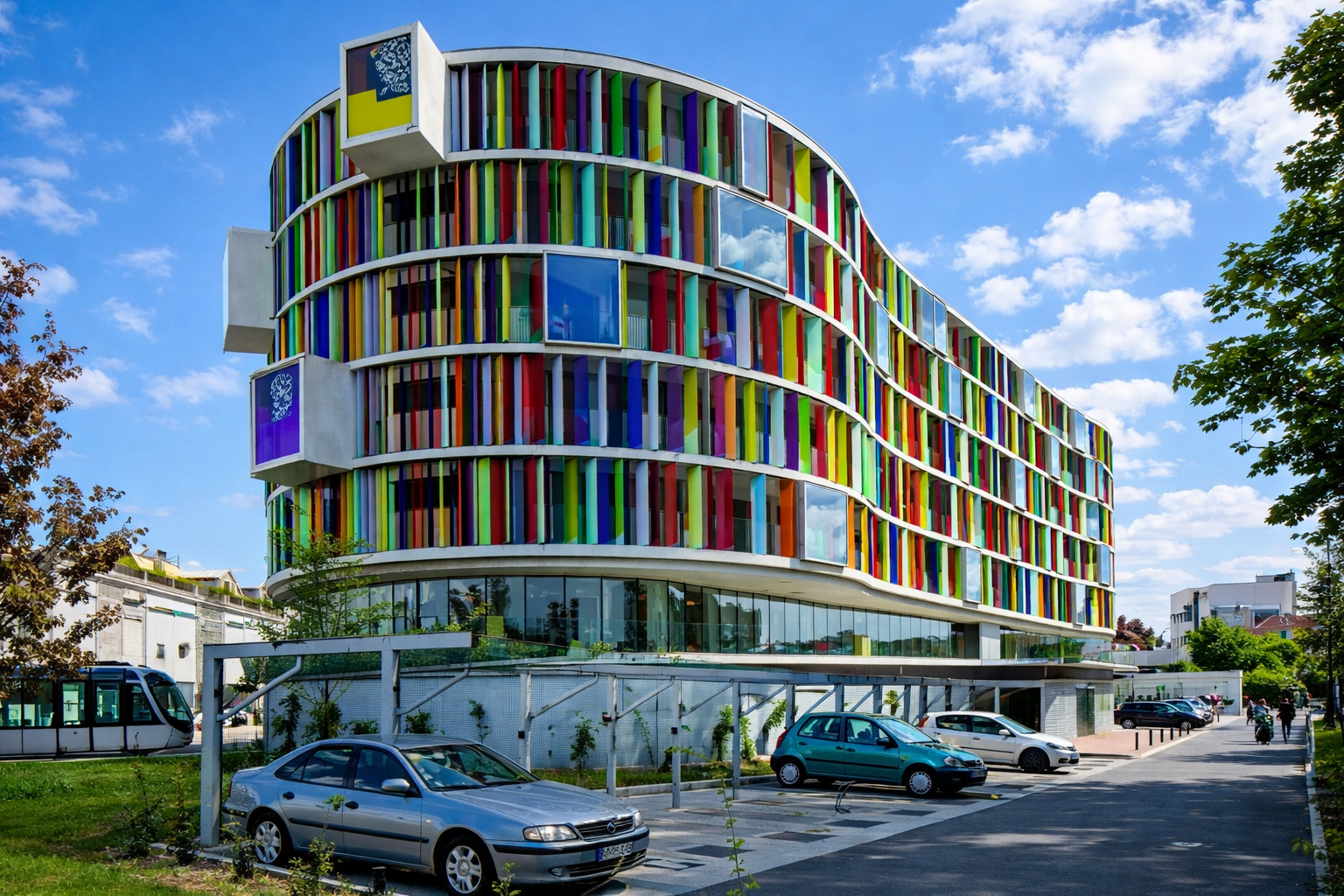
With about 4,000 m², the building constructed in a traditional neighborhood in France looks like a rainbow, has a colorful facade, mixes vibrant glass, and creates one of the most unusual visuals in Bordeaux.

In sealed chambers, researchers tested common ornamental plants to observe their ability to absorb volatile organic compounds. Substances such as benzene, formaldehyde, and trichloroethylene were monitored throughout the process.
The results indicated that certain species were able to reduce concentrations of these compounds in controlled environments. However, the experiment took place under specific laboratory conditions, with a restricted volume of air and the absence of natural ventilation.
Still, the study has crossed decades and continues to be cited whenever the topic of indoor air quality arises.
Snake Plant: Resilience Beyond Aesthetics
The Snake Plant (Sansevieria trifasciata) appears among the analyzed species. Popular in Brazilian apartments, it withstands low light and irregular watering. For this reason, it has become a constant presence in living rooms and hallways.
In the study, it demonstrated the capacity to absorb certain compounds present in the air of the test chambers. Moreover, it carries out photosynthesis with particular features that allow gas exchange even during nighttime, a characteristic often highlighted.
However, its symbolic strength also contributed to its popularity. Associated with spiritual protection in various cultures, it came to represent not just decoration, but a silent defense against invisible threats.
Pothos: The Plant That Spreads Along With the Narrative
The Pothos (Epipremnum aureum) may be one of the most versatile plants in indoor environments. It grows in hanging pots, leans on shelves, and accompanies furniture, almost as if it wants to occupy every available corner.
In the NASA Clean Air Study, it showed relevant performance in absorbing some of the analyzed compounds. Consequently, its use has been widely recommended in popular lists on air quality.
On the other hand, its fame has also expanded on social media, where images of rooms filled with foliage reinforce the idea that nature and purity go hand in hand. The visual narrative helped to consolidate the belief.
Peace Lily: Delicacy Under Scientific Observation
The Peace Lily (Spathiphyllum spp.) emerges as one of the most cited species when the topic is air purification. Its broad leaves and white flowers immediately convey serenity to the environment.
In NASA’s experiments, it showed the ability to reduce levels of certain compounds in controlled environments. Therefore, it gained a reputation as a silent ally in enclosed spaces.
However, it requires more specific care regarding watering and indirect light. When well-maintained, it signals health through the shine of its leaves. When neglected, it wilts quickly, almost as a visual alert of imbalance.
Between the Laboratory and Real Life
Despite the fallout, subsequent researchers observed that practical effectiveness in ordinary homes depends on multiple factors. Air volume, cross-ventilation, and the number of plants significantly alter the results.
Still, the cultural impact of the NASA Clean Air Study remains. It transformed ornamental plants into protagonists of a debate about domestic environmental health.
As apartments become more compact and daily routines concentrate work, leisure, and rest in the same space, indoor air quality gains silent relevance.
What Remains Suspended
At the end of the afternoon, the light reveals particles dancing in the beam that passes through the curtain. The snake plant stands erect in the corner. The pothos extends across the shelf. The peace lily rests near the window.
None of them alone resolves the complexity of urban air. However, they are not innocent bystanders either. They participate in a larger narrative where science, market, and behavior intersect.
Perhaps the true conflict is not just in the invisible molecules but in the expectation of simple solutions for complex systems. Between opening windows, reviewing habits, and cultivating plants, there lies a space of everyday choice.
And it is precisely in this space that the conversation about reducing pollutants continues, even when everything seems perfectly tranquil.









Seja o primeiro a reagir!