





 Portuguese
  English
  Spanish
  6 min of reading
  0 comments



The Toyota Soarer, Japanese Car from the 90s, Was One of the First Vehicles in the World to Have a Satellite-Based GPS Navigation System — Long Before Cell Phones Became Popular. Discover This Technological Rarity from Toyota.
In 1991, while most Brazilians could barely dream of a mobile phone and Google didn’t even exist, a Japanese car from Toyota was already equipped with something revolutionary: a satellite navigation system (GPS). The model in question was not as famous as the Corolla or the Supra — but rather the Toyota Soarer, a luxury coupe that combined refined performance with extremely advanced technologies for its time. This Japanese car from the 90s had satellite GPS before cell phones became popular and was one of the first in the world to introduce this type of embedded technology. Even today, few people know its history.
Today we will explore the journey of the Toyota Soarer, the technical details of its 1991 GPS navigation system, the historical context of this innovation, and the impact that this Japanese car from the 90s had on the global automotive and technological sectors.
What Was the Toyota Soarer?
The Toyota Soarer was a luxury sports coupe produced by Toyota between 1981 and 2005, initially intended for the Japanese market. It stood out for uniting sports performance, sophistication, and cutting-edge technology.
-
With more than 635,000 doctors, Brazil sees competition increasing in large cities, and recent graduates are competing for shifts at an accelerated pace while the countryside still faces shortages.

-
The world’s first octopus farm wants to open in the Canary Islands and is already provoking an international reaction: the plan aims to produce 3,000 tons per year.

-
Drought may be creating stronger superbugs in the soil and helping antibiotic resistance reach hospitals, warns a study highlighting a problem that could grow alongside extreme weather.

-
The biggest scam in history: Napoleon’s France deceived the United States by selling them a territory that was Spanish.


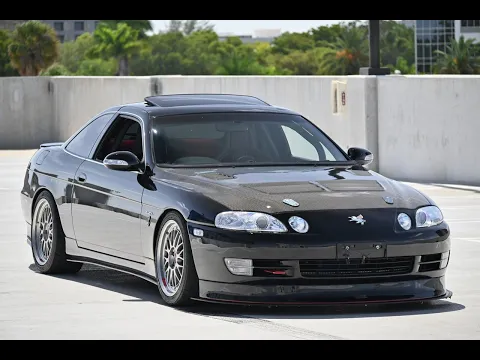

The most notable version for the history of technological innovation was the third generation, launched in 1991, known by the code Z30.
Main Features of the Toyota Soarer (Z30 – 1991)
- 2-door coupe with a refined look
- 3.0 turbo or naturally aspirated V8 engine
- Rear-wheel drive
- 4-speed automatic transmission
- Digital dashboard
- Premium sound system
- And, surprisingly: Integrated satellite GPS
While many cars of the time still had cassette tape radios and analog speedometers, the Soarer offered satellite-based navigation, an unprecedented achievement even by Western standards.
The First Car with GPS? Yes, the Soarer Came Before Modern Cell Phones
The 1991 Toyota Soarer entered history as one of the first vehicles in the world to offer factory-integrated GPS. Toyota, in partnership with the Japanese company Alpine, developed the system known as CD-ROM-based Navigation System, which used satellite signals and CD-ROM maps to guide the driver through the streets of Japan.
Technical Details of the Navigation System:
- Used data from U.S. military satellites of the Global Positioning System (GPS)
- The accuracy was about 100 meters, due to signal limitations imposed at the time
- The display was located in the center panel and showed routes, street names, and points of interest
- The interface was rudimentary, but interactive by 1991 standards
- The system was based on regional CD-ROMs with maps of Japan
According to the official site of Toyota Global, the system in the Soarer was a landmark for the introduction of automotive navigation, serving as the basis for subsequent models, such as the Toyota Celsior and the Lexus LS in the United States.
Why Was This Revolutionary?
When the Soarer launched its GPS system in 1991, cell phones were still analog bricks used by wealthy executives. There was no Waze, Google Maps, or smartphones.
What the Soarer represented at that time was a technological leap of 20 years ahead of its time. Having a car that could “see” its location on the map, even in a basic way, was something almost futuristic — more associated with science fiction than reality.
Comparison with Technology of the Time:
| Item | Situation in 1991 |
|---|---|
| Cell Phones | Limited, expensive, and without internet |
| GPS in Cell Phones | Nonexistent |
| Internet | Out of reach for most |
| Automotive Maps | Paper manuals or printed guides |
| Toyota Soarer (Z30) | With integrated satellite GPS system |
The Soarer and the Birth of Lexus
Although the Soarer was an exclusive model for the Japanese market, its mechanical and design base was reused to launch, in the United States, the Lexus SC300 and SC400 — the luxurious coupes of Toyota’s new premium brand.
These models also received GPS navigation systems in later versions, solidifying the Soarer as a technological precursor of the Lexus line.
Sophisticated Design and Powerful Engine
The Toyota Soarer Z30 was not only notable for its technology. It was also a car with a refined look, featuring aerodynamic lines and elegant proportions. Its size was comparable to that of a Mercedes-Benz coupe of the time.
Available Engine Options:
- 3.0L 7M-GTE Turbo (early versions)
- 4.0L V8 1UZ-FE (same engine as the Lexus LS400)
- Power between 230 and 280 hp
- Automatic transmission with sport mode
- Independent suspension on all four wheels
The Soarer GT Limited version was equipped with everything that was most advanced in Japanese engineering at the time, including electronic suspension control (TEMS), digital dashboard, power seats with memory, and of course, the famous satellite GPS.
Other Futuristic Technologies of the Soarer
Besides GPS, the 1991 Toyota Soarer impressed with features considered highly advanced, even by 2000s standards:
- LCD Digital Dashboard
- Dual Zone Automatic Climate Control
- Nakamichi Premium Sound System
- Active Suspension with Electronic Control
- Diagnostic System on the Dashboard
- Traction Control (TRC) in some versions
It is safe to say that the Soarer was a rolling laboratory, and Toyota used it as a technological showcase for the future of the automotive industry.
Why Did the Soarer Never Become Famous in Brazil?
The Toyota Soarer was never officially sold in Brazil, not even in its Lexus version. In the 1990s, the Brazilian market was still reopening to imports, and few consumers had access to Japanese luxury cars.
Even today, the model remains unknown outside of collector circles and brand enthusiasts. Independent imports exist but are rare.
However, among experts and enthusiasts of Japanese cars, the Soarer is considered a cult icon, often referred to as “the car of the future that arrived too soon.”
The Legacy of the Toyota Soarer in the Car World
The GPS system of the Soarer was just the beginning. Toyota continued investing in embedded technologies, creating systems such as:
- G-Book (connected navigation and services platform)
- Integration with QZSS (Quasi-Zenith Satellite System) satellites in Japan
- Development of Lexus Enform and Toyota Connected
The pioneering nature of the Soarer paved the way for the popularization of GPS in cars. Today, every basic car with a multimedia center has some kind of navigation — but the origin of this feature can be traced back to the Soarer.
Where to Find a Toyota Soarer Today?
Although it was not officially sold outside of Japan, it is possible to find examples of Toyota Soarer for sale in markets such as:
- United States, via JDM (Japanese Domestic Market) imports
- New Zealand, with regular registrations
- Europe, mainly in the United Kingdom
In Brazil, there are a few imported models available on demand, usually priced between R$ 120,000 and R$ 180,000, depending on the condition and rarity of the version.
Curiosities About the Toyota Soarer
- The acronym “Soarer” means “one who flies,” reinforcing the concept of lightness and innovation.
- The model was the basis for race cars in the Super GT series in Japan.
- The 1UZ-FE V8 engine is considered one of the most reliable in Toyota’s history.
- The GPS in the Soarer was recognized in technical publications as the world’s first in a production car.
The Toyota Soarer is not just a Japanese car from the 90s — it is a historical milestone in automotive technology, being the first car in the world to have an integrated satellite GPS navigation system long before popular cell phones or mobile internet.
With its elegant look, powerful engine, and a feature list worthy of a 21st-century car, the Soarer remains a rare gem of the Japanese industry. Today, it is a symbol of a time when innovation and boldness defined the path for the future.
If you love technology, automotive history, and real curiosities, it’s worth learning more about this Toyota car that had GPS before even cell phones.








Seja o primeiro a reagir!