





 Portuguese
  English
  Spanish
  5 min of reading
  0 comments


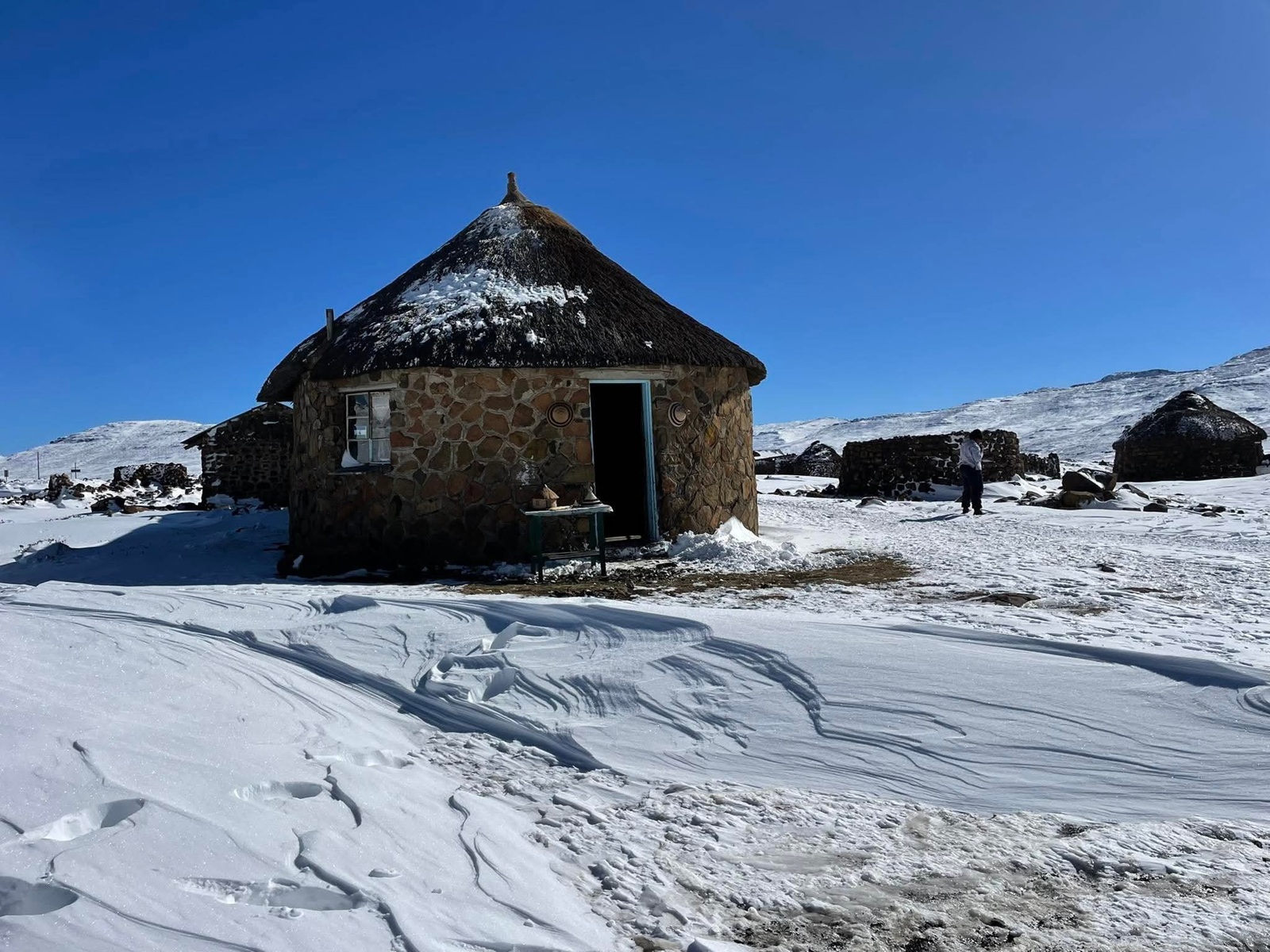
In The Heart Of Southern Africa, There Is A Country Where Altitude Transforms The Climate, Snow Falls Every Year And The Mountainous Landscape Redefines Everything That Is Imagined About The Continent, Creating A Totally Unexpected Scenario
Lesotho, the coldest country in Africa, defies expectations from the very first glance. Located in the heart of Southern Africa, the country breaks stereotypes by combining extreme altitude, harsh climate, and landscapes that distance themselves from the common image of the continent.
The cold air of the coldest country in Africa, the annual snowfall, and life in high areas shape the routine of a territory that functions as a large mountainous plateau.
Its lowest point reaches about 1,400 meters in altitude, creating a unique environment that is completely distinct from the popular imagination about the region.
-
Friends have been building a small “town” for 30 years to grow old together, with compact houses, a common area, nature surrounding it, and a collective life project designed for friendship, coexistence, and simplicity.

-
This small town in Germany created its own currency 24 years ago, today it circulates millions per year, is accepted in over 300 stores, and the German government allowed all of this to happen under one condition.

-
Curitiba is shrinking and is expected to lose 97,000 residents by 2050, while inland cities in Paraná such as Sarandi, Araucária, and Toledo are experiencing accelerated growth that is changing the entire state’s map.

-
Tourists were poisoned on Everest in a million-dollar fraud scheme involving helicopters that diverted over $19 million and shocked international authorities.


This unusual geography defines the country. The freezing climate results directly from the altitude, and winter transforms humidity into snow, forming a rare setting in Africa.
The temperatures in the Maloti mountains drop below zero between June and August, a time when white landscapes become part of local routine.
It is in this setting that Afriski emerges, one of the two ski resorts in Southern Africa, considered an accessible alternative for those looking to experience an intense winter without leaving the continent.
Roads And Isolation
Living at high altitudes has its price. Getting to and moving around the territory requires skill, preparation, and suitable vehicles.
The winding and steep roads, often surrounded by chasms, reflect the difficulty imposed by nature.
The most well-known example is the Sani Pass, which connects Lesotho to South Africa. With ramps of up to 33% incline, it can only be traversed by 4×4 vehicles, reinforcing the complexity of these routes.
Despite this harshness, the country is home to just over 2 million inhabitants, primarily distributed in rural areas. The capital, Maseru, concentrates urban life, while the rest of the territory reveals communities scattered throughout the mountains.
The population is young, with nearly half of the inhabitants under 25 years old and a female predominance over males.
Culture Shaped By The Mountains
The Basotho people preserve traditions deeply connected to the environment. In the higher regions, the car loses its utility, giving way to the Basotho pony, a robust animal adapted to steep trails. Riding is not a leisure activity, but a necessity to face the rugged terrain.
The Basotho blanket is another striking symbol. Introduced in the 19th century by European traders, it was incorporated into local culture and came to represent identity, history, and protection against the intense cold. Each pattern conveys specific meanings, functioning as a visual mark of the people.
The mokorotlo, a woven straw hat, completes the set of national symbols. Inspired by the conical shape of Mount Qiloane, it appears on the flag, on license plates, and even influenced the design of the parliament building. Its presence reinforces the connection between landscape, culture, and collective memory.
The Origin Of The Kingdom
The history of Lesotho has been shaped by survival strategies. In the early 19th century, amid wars in the region, Moshoeshoe I adopted a geography-based tactic to protect his people. He gathered different refugee clans at the top of Thaba Bosiu mountain, transforming it into a fortress and symbol of Basotho unification.
The pressure from Boer settlers and the British Empire demanded difficult decisions. To ensure the kingdom’s survival, Moshoeshoe requested that the country become a British protectorate.
This decision cost fertile lands and part of autonomy but preserved the territory and prevented its absorption by South Africa. This choice paved the way for definitive independence on October 4, 1966.
Water And Energy
The impact of these territorial losses resonates in the current economy. With reduced fertile lands, Lesotho has come to depend on a resource abundant in the mountains: water. The Katse Dam has become a centerpiece of the Lesotho Highlands Water Project, considered one of the largest engineering feats in Africa. The snow that blankets the peaks in winter feeds rivers whose flow is directed through 82 kilometers of tunnels to South Africa.
This export generates around $70 million per year and produces energy to supply the nation itself. However, the combination of overgrazing and climate change is accelerating erosion. Sediment carried by rain threatens to reduce the lifespan of reservoirs, putting the main source of national income at risk.
Subterranean Wealth
The country also hosts the Letseng mine, known for producing diamonds of exceptional size and purity.
Among its most famous discoveries are the Lesotho Promise, weighing 603 carats, found in 2006, and the Letseng Star, weighing 550 carats, revealed in 2011. In 2018, the Lesotho Legend, weighing 910 carats, gained global attention after being sold for $40 million.
Even so, mining generates disputes over income distribution, with criticism that the profits do not significantly reach local communities.
Silent Crises
Behind the beauty of the mountains, the country faces serious social and health challenges. Life expectancy hovers around 55 years. The HIV/AIDS epidemic affects almost one in four people between 15 and 49 years old, exacerbated by tuberculosis. The advancement of antiretroviral treatment and the reduction of new infections indicate progress, but the struggle persists.
Political instability has also marked the country’s trajectory since 1970, with episodes including the suspension of the constitution, military coups, uprisings, and the assassination of authorities. These successive cycles hinder institutional strengthening and affect the economy.
Furthermore, gender-based violence constitutes one of the most severe crises. One in three women has experienced physical or sexual violence. Cultural barriers, lack of public services, and difficulties accessing justice make combating this issue more complex, especially in remote areas.










Seja o primeiro a reagir!