





 Portuguese
  English
  Spanish
  5 min of reading
  0 comments


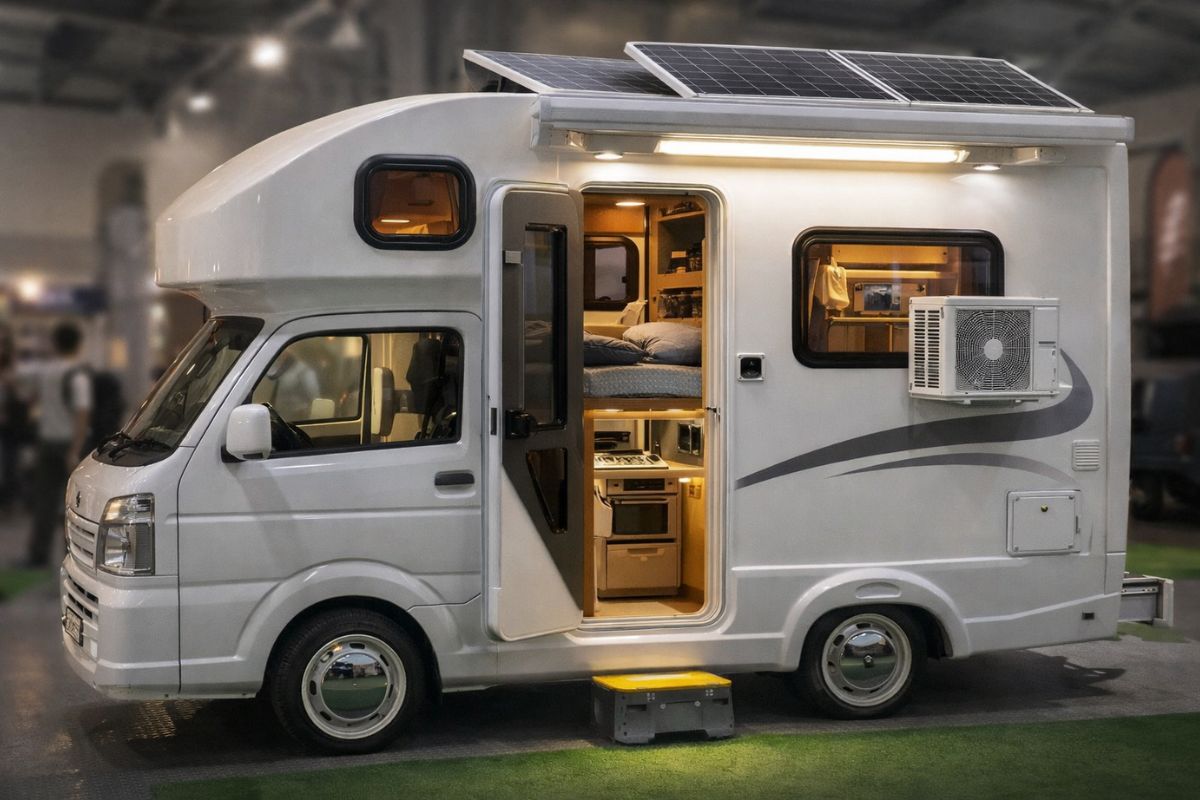
The Japanese Micro Motorhome Coastline Fabola Brings Compact Housing Solutions in a Vehicle Smaller than Many SUVs, Combining Beds for Four People, Functional Kitchen, Auxiliary Batteries, Autonomous Electric System, Optional Solar Energy, and 12V Air Conditioning in a Project Thought Out for Mobility and Comfort.
The concept of Japanese micro motorhome has gained attention for demonstrating that it is possible to transform extremely compact vehicles into complete living environments. Among the most curious examples is the Coastline Fabola, a model that encompasses basic residential structure within dimensions close to those of an SUV.
Despite its reduced size, the vehicle is designed to comfortably accommodate up to four people, combining sleeping areas, compact kitchen, storage, and independent electrical systems. The proposal is to offer total mobility without sacrificing essential elements of a home.
A Compact Project Thought Out for the Roads of Japan
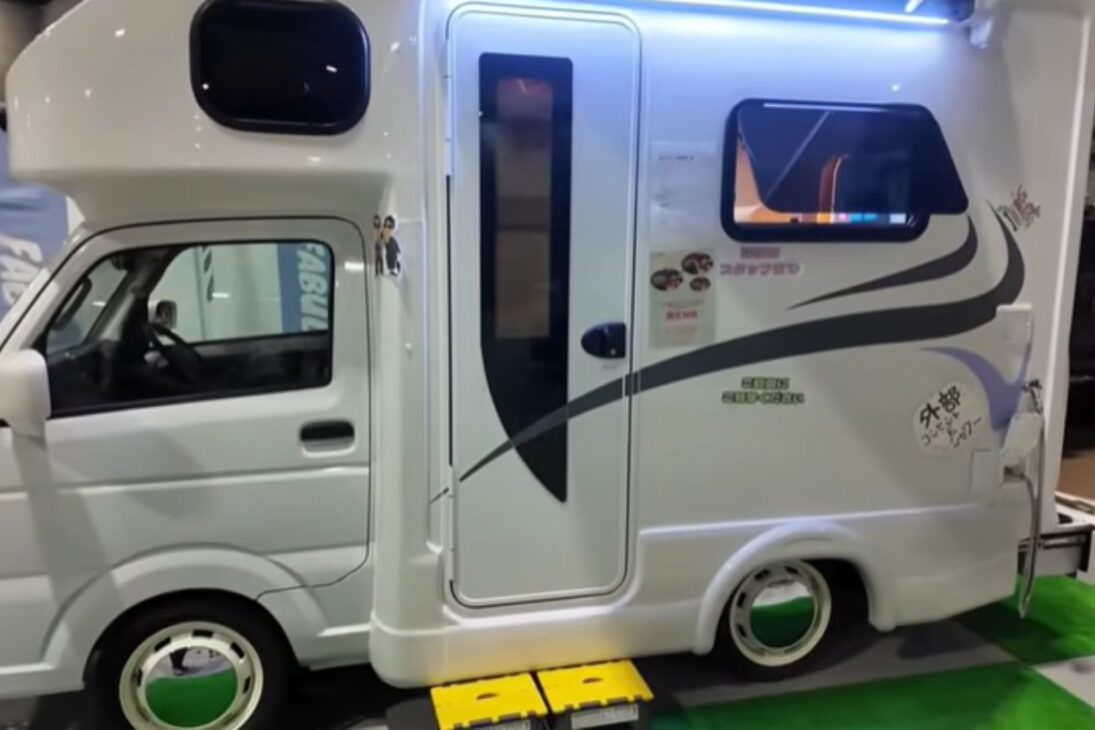
The channel Camper Space Secrets presents the Japanese micro motorhome Coastline Fabola which was born within a very specific context: that of narrow roads, limited parking, and winding routes in Japan.
-
The water that may have gone to the Moon with NASA during the Apollo 11 mission and been consumed by the astronauts springs in a Brazilian city at an altitude of 945 meters, famous for its thermal springs, above-average quality of life, and a natural radioactivity so unusual that it attracted Marie Curie.

-
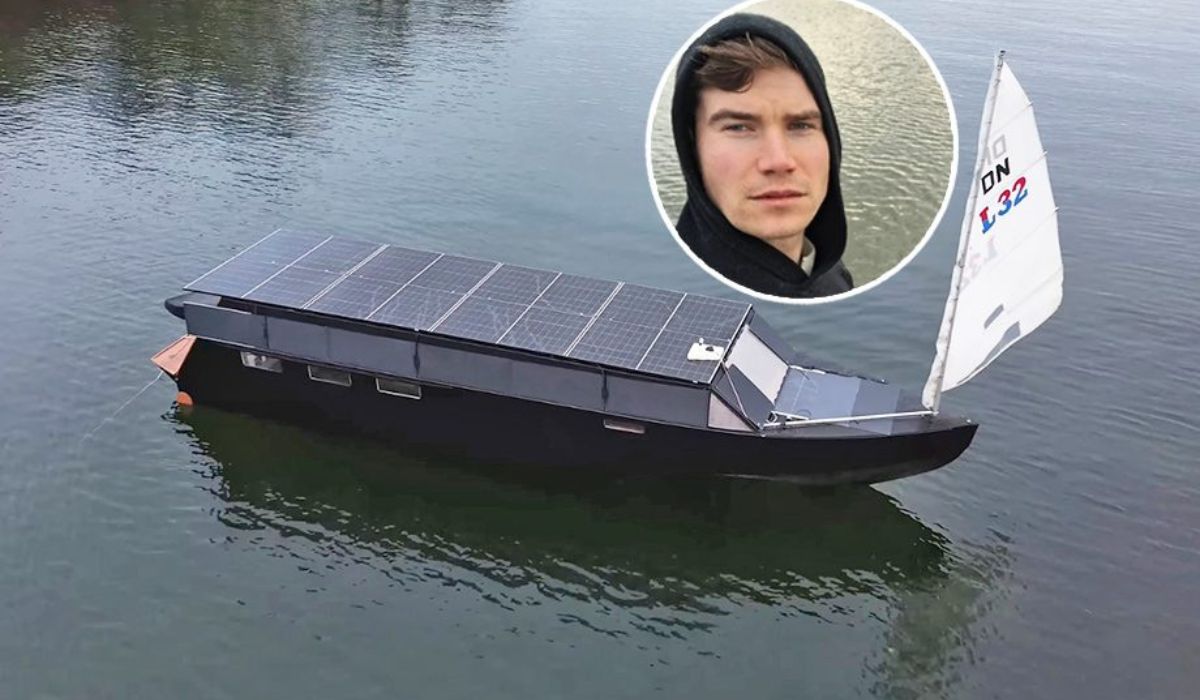
In 200 days, a Finnish man builds with his own hands an 11-meter boat powered by solar energy with “infinite autonomy,” capable of dispensing with refueling and already used as a floating house.
-
Neurologist Richard Restak issues a severe warning to all people over 65: there is a daily habit he recommends completely eliminating from your life because it is destroying your neurons and accelerating memory loss.

-
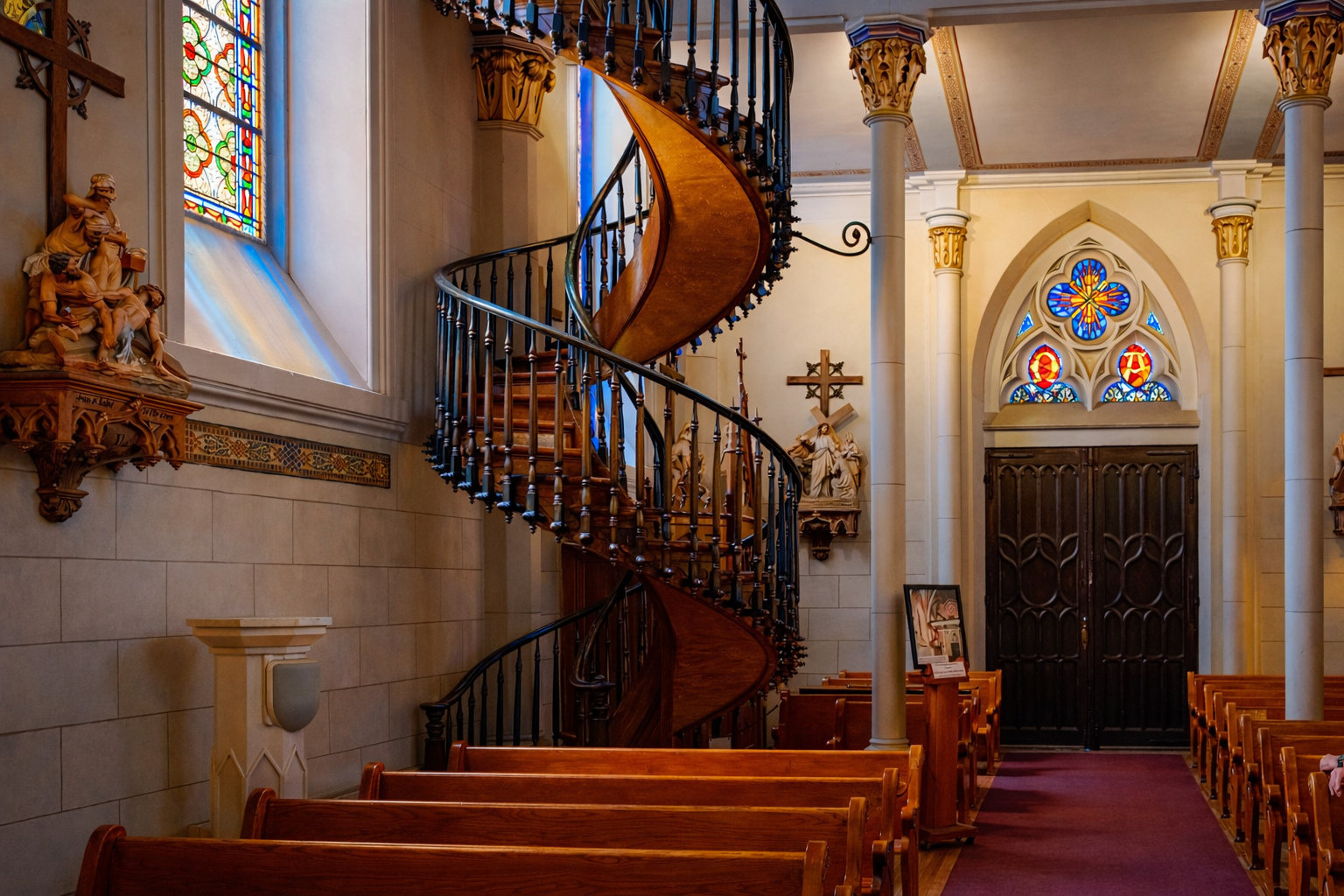
With 6.1 meters and 33 steps, the spiral staircase of the Loretto Chapel in the United States gained fame worldwide for making two complete 360-degree turns without a central support.

Instead of following the trend of large motorhomes common in Europe or North America, the model adopts a compact and functional shape.
With approximately three meters in length and less than two meters in height, the vehicle maintains proportions that facilitate circulation in urban areas, coastal villages, and mountain roads. The central proposal is simple: the vehicle adapts to the path, not the other way around.
The body uses fiberglass reinforced plastic (FRP), a material that reduces weight and improves thermal insulation. This detail is especially important in a country with humid summers and cold mornings in mountainous regions.
External Design That Takes Advantage of Every Centimeter
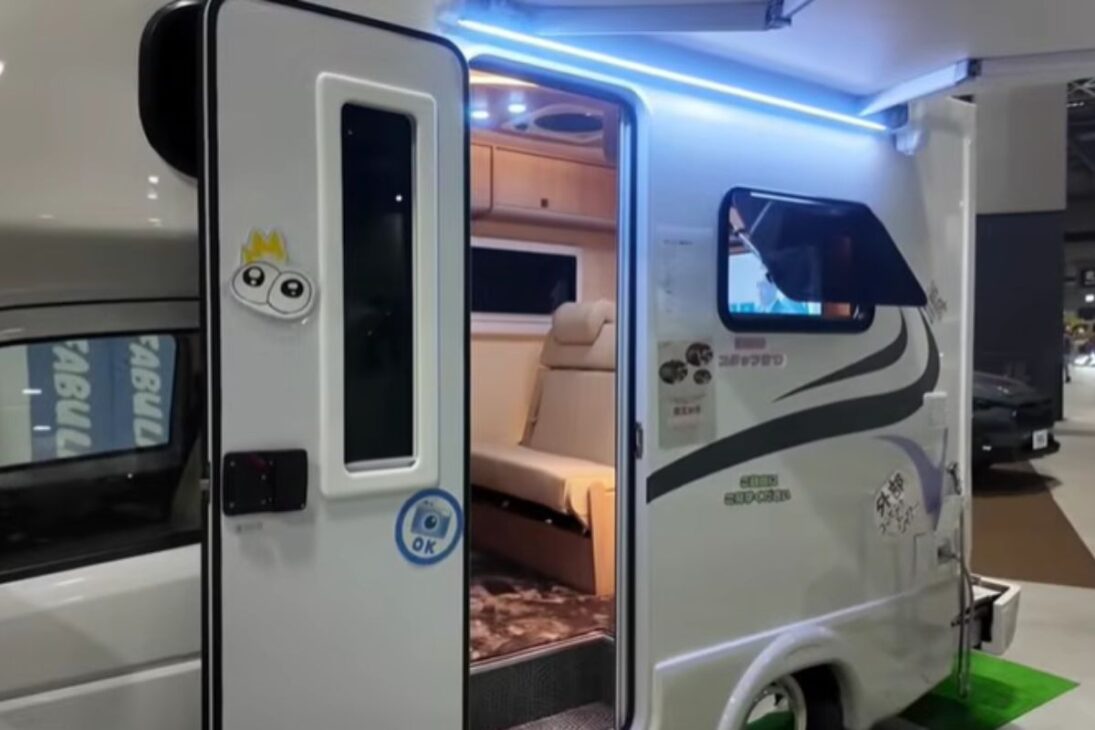
One of the most striking elements of the Japanese micro motorhome is the advanced cabin that projects over the driver’s area. This extension is not just aesthetic: it houses a permanent sleeping area, freeing up space elsewhere in the interior.
The side entrance includes an integrated step, external lighting, and a mosquito screen for ventilation without the entry of insects. The acrylic windows with double glazing help reduce condensation and improve thermal insulation.
Another highlight is the rear storage compartment, often called a “garage.” This space allows for storing folding chairs, camping tables, sports equipment, or even compact bicycles, preventing objects from taking up the living area.
Additionally, the vehicle includes external connections for water, electrical power for camping, and dedicated compartments for batteries and gas cylinders.
Modular Interior Inspired by Minimalist Apartments
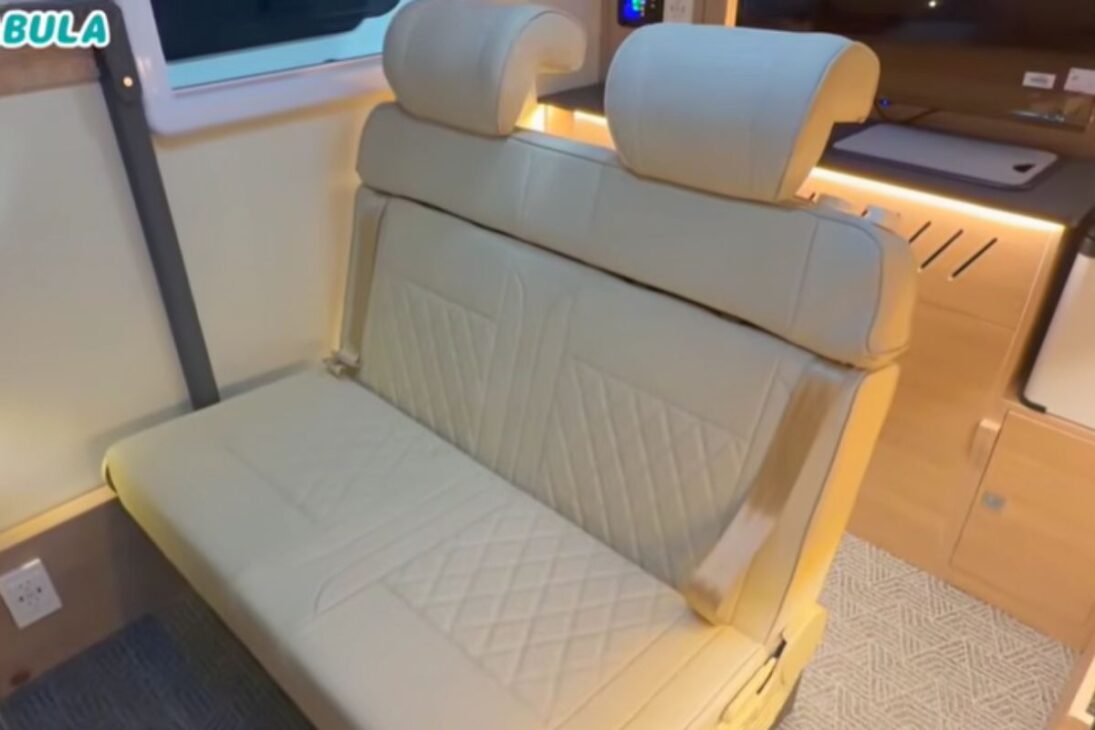
Upon entering the Japanese micro motorhome Coastline Fabola, the interior aesthetic resembles more a small beach apartment than a utility vehicle. The environment uses light wood, cream tones, and soft blue details.
The central area functions as a living room during the day. The seats opposite to each other create a small area for socializing and working, allowing one to use a laptop or have meals.
When it’s time to sleep, the space transforms quickly. The seating arrangement can be converted into a bed, creating a second resting area, while the upper bed above the cabin provides another sleeping zone.
Depending on the configuration, the vehicle can accommodate up to four adults, something uncommon in such compact vehicles.
Compact Kitchen, but Totally Functional
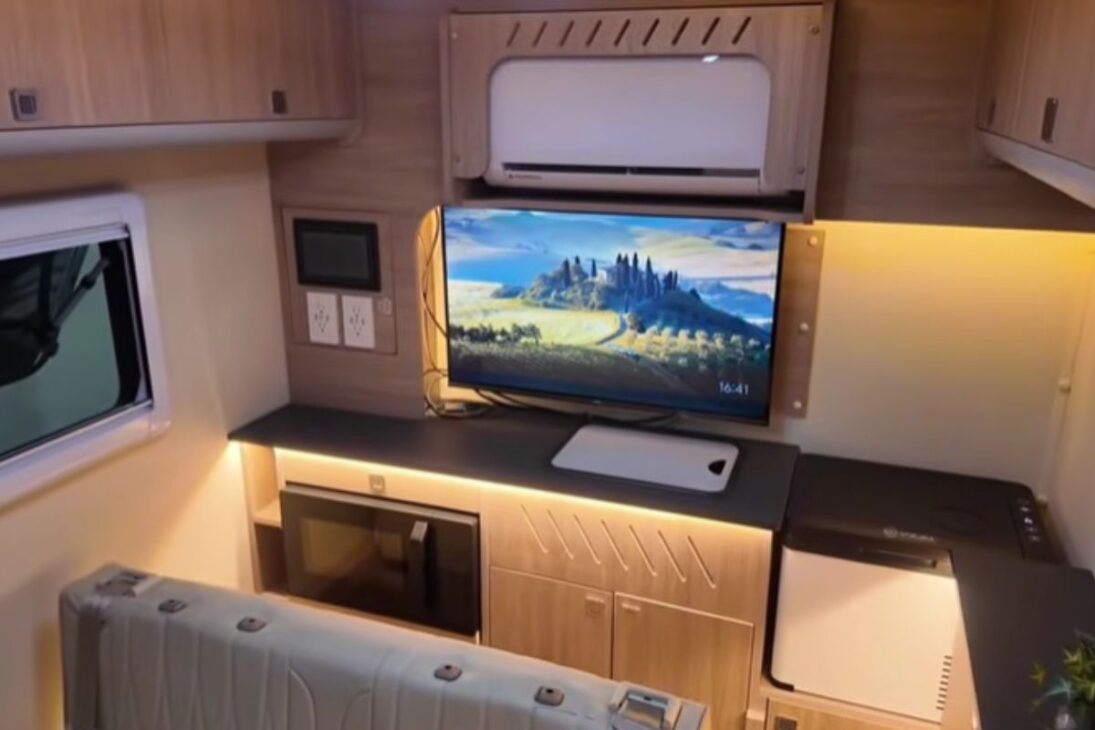
Even in a reduced space, the Japanese micro motorhome includes a complete kitchen. The module is usually installed along the side wall to keep the internal circulation free.
Included among the appliances are:
- stainless steel sink with a folding faucet
- drawer-style refrigerator
- portable gas stove or induction system
- cabinets and drawers for utensils
The drawer-style refrigerator is a common solution in compact Japanese motorhomes, as it facilitates access to food in tight spaces.
Each internal compartment has been designed to make the most of the available space, including upper cabinets with specific locks to prevent them from opening while driving.
Independent Electric System and Air Conditioning
One of the most practical features of the Japanese micro motorhome Coastline Fabola is the electric system designed for autonomy.
The vehicle uses a dual battery system: one dedicated to the operation of the vehicle and another exclusively for the house’s equipment.
The configurations may include:
- deep cycle batteries of about 100 Ah
- lithium battery options with higher capacity
- independent charging system
- optional solar energy
This set allows powering lighting, refrigerator, and other equipment without relying on external connection.
Another highlight is the integrated 12V air conditioning. This allows for cooling the interior even outside of campgrounds or external outlets, something rare in compact motorhomes.
A Compact Motorhome That Costs About US$ 30 Thousand
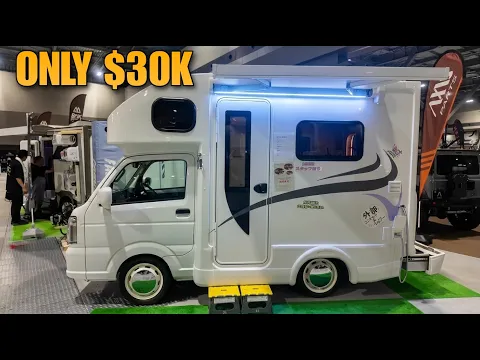

The Japanese micro motorhome Coastline Fabola has a starting price close to 4.6 million yen, an amount that is around US$ 30 thousand depending on the exchange rate.
Within the Japanese motorhome market, the price is considered competitive, especially because the model is not a handmade conversion. It is a vehicle produced with factory finish and integrated systems.
The popularity of the Fabola comes precisely from the feeling of intentional design. Nothing seems improvised: from the color palette to the organization of the cabinets follows a cohesive design language.
Furthermore, the drivability approaches that of light commercial vehicles, which makes maneuvers and parking in urban environments easier.
The Japanese micro motorhome Coastline Fabola shows how compact engineering and modular design can transform a small vehicle into a functional house on wheels.
By bringing together beds for four people, kitchen, storage, independent electrical systems, and even air conditioning in a reduced space, the model represents a practical solution for those seeking mobility and autonomy without resorting to giant motorhomes.
Would you reside or travel for extended periods in a micro Japanese motorhome of this size, or do you still prefer larger and more traditional vehicles? Share your opinion.






-

-

3 pessoas reagiram a isso.