





 Portuguese
  English
  Spanish
  6 min of reading
  0 comments


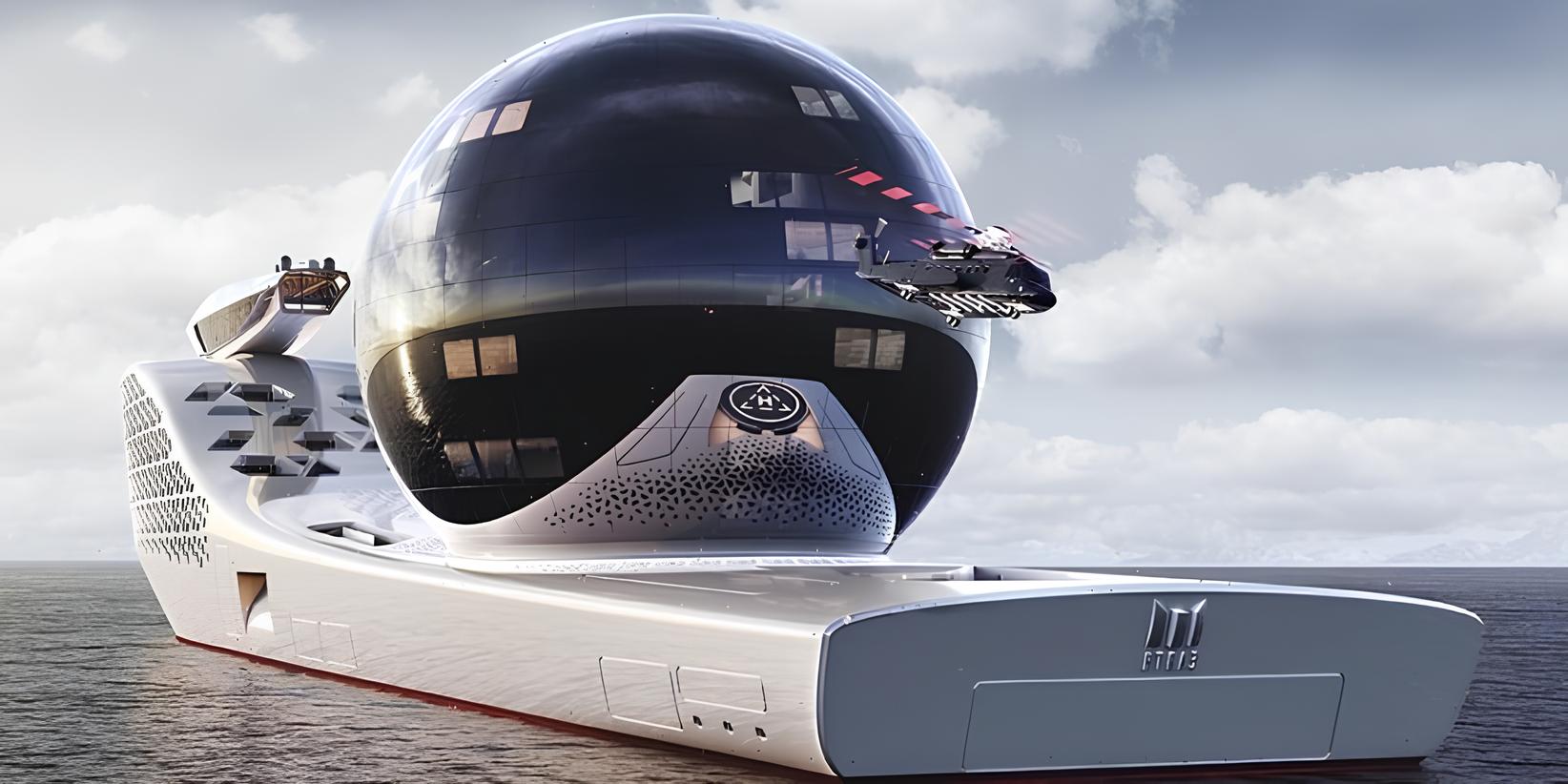
With Futuristic Design and Clean Propulsion, the Earth 300 is the Most Ambitious Laboratory Ship Ever Designed. Powered by Solar Energy and Nuclear Reactors, It Promises to Revolutionize Science at Sea with Technology and Sustainability.
In a global landscape marked by unprecedented environmental challenges, one vessel stands out for combining technological innovation, cutting-edge scientific research, and environmental awareness. This is the Earth 300, the project for a massive laboratory ship with an estimated budget of US$ 600 million, which promises to be the most advanced floating laboratory in the world. Powered by solar energy at sea, with next-generation nuclear reactors, and equipped with a helipad, quantum sensors, supercomputers, and artificial intelligence, the Earth 300 has been conceived to explore the oceans like never before. Its aim goes beyond conventional science: it seeks to accelerate discoveries that help humanity combat climate change and the environmental crisis.
What Is the Earth 300?
The Earth 300 is a futuristic project that proposes a new way of doing science in the ocean. Its name is not random: “Earth” refers to the planet and its protection; “300” symbolizes the meters in length of the vessel and the scientists and crew members it intends to accommodate.

The ship will be a floating scientific platform with capacity for 160 scientists, 165 crew members, 20 research specialists, and 40 VIP guests.
-
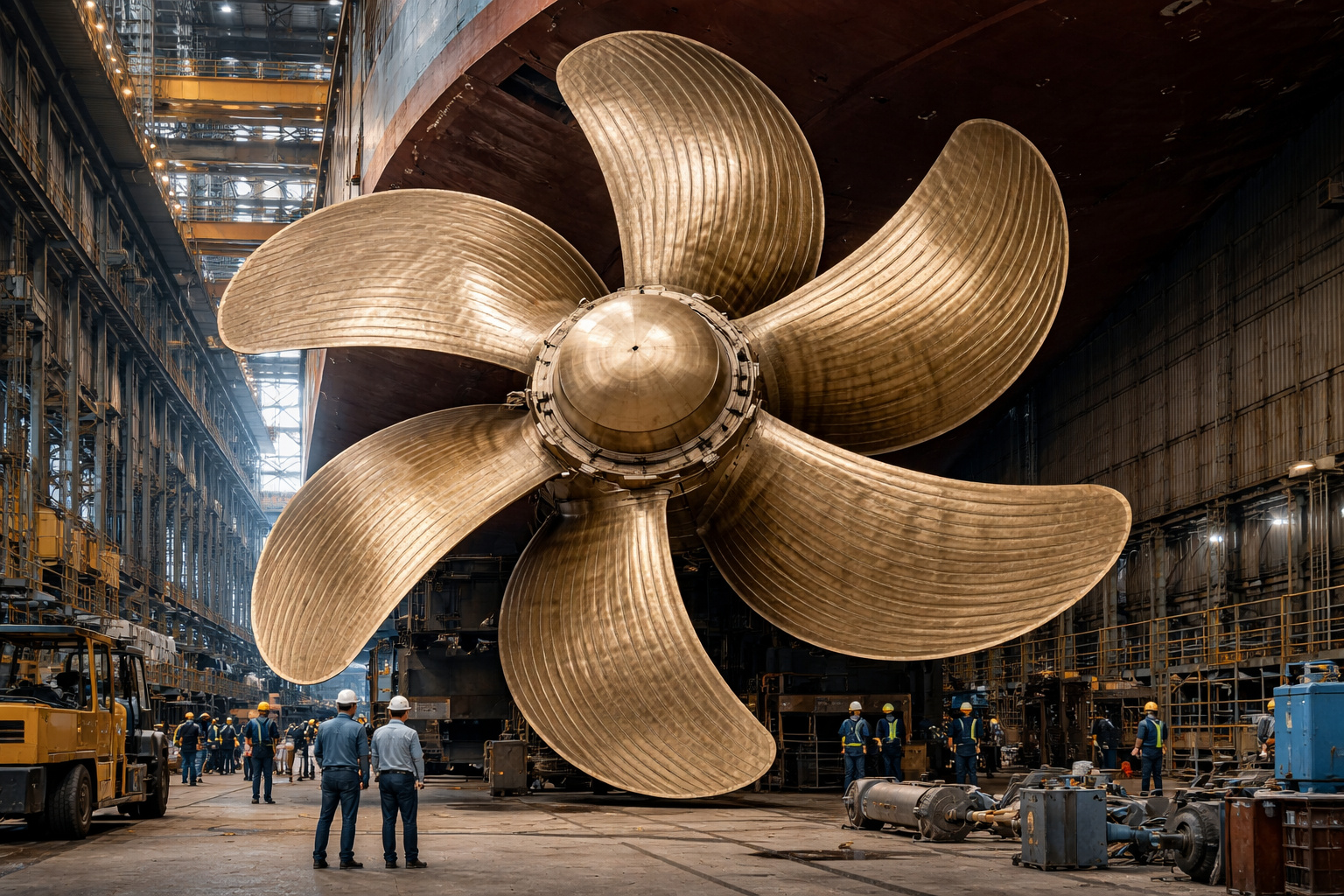
How a 131-ton, 11-meter propeller supports 90% of global trade and transforms the largest container ships on the planet.
-
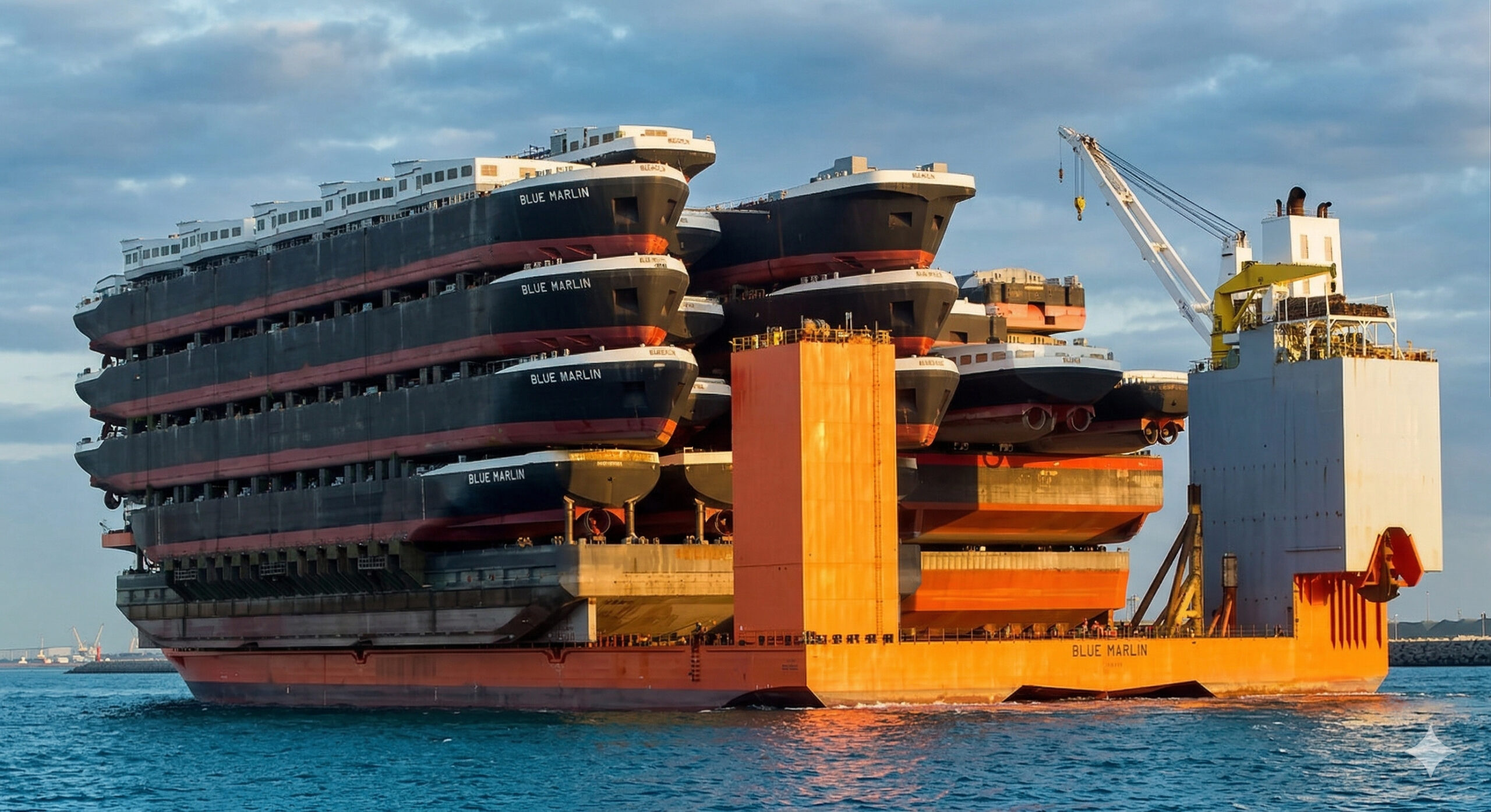
With a length of 225 meters and a capacity of 76 thousand tons, this ship “sinks” its own deck down to 28 meters deep to accommodate war destroyers, oil platforms, and giant radars floating above, and then emerges with everything intact on top like a colossal tray crossing oceans.
-
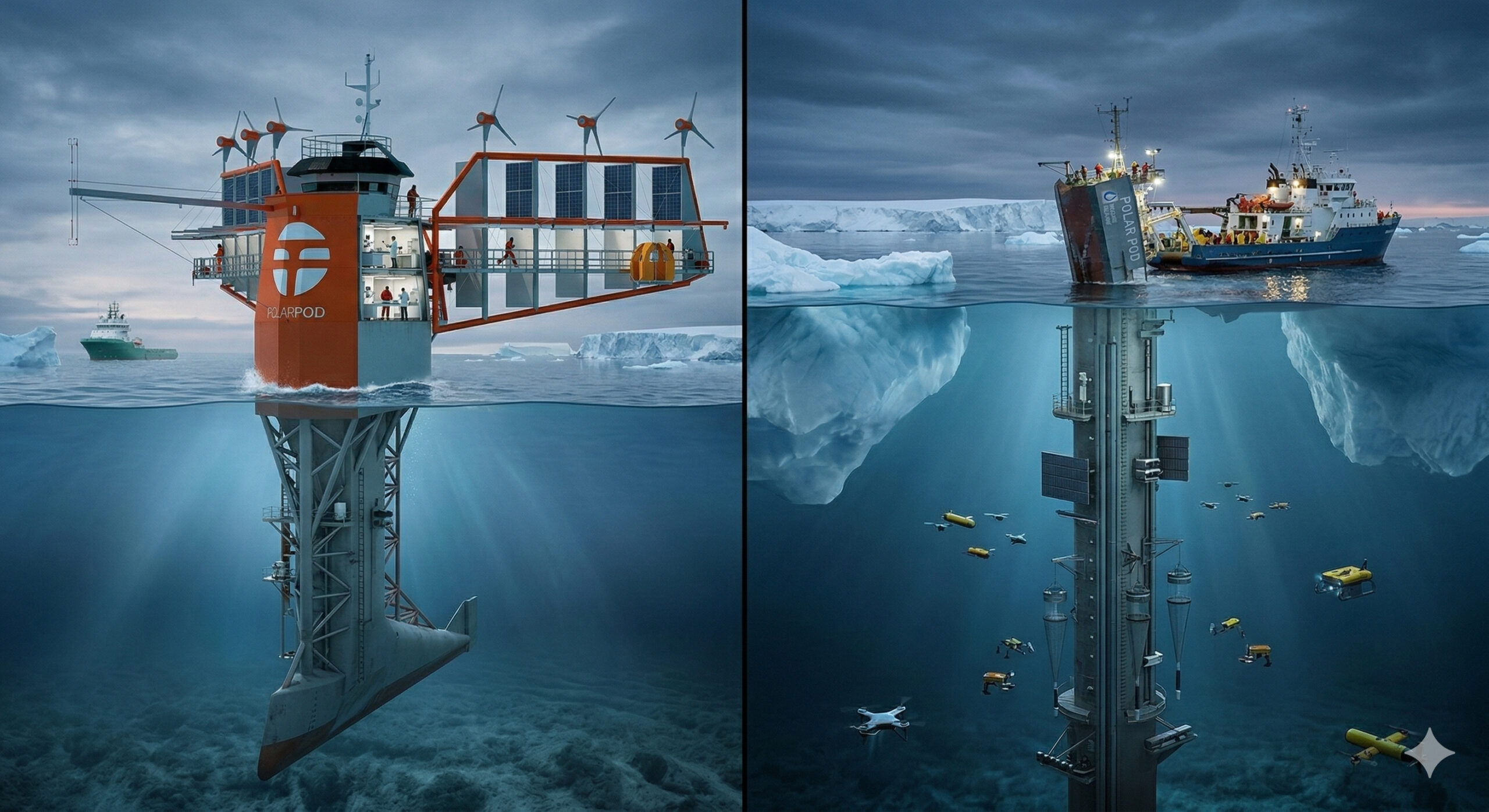
A 100-meter platform without a motor, without a keel, and operating upside down rotates 90 degrees in the ocean, sinks 75 meters, and drifts around Antarctica for two years driven by the planet’s most powerful current to study the largest carbon sink on Earth, still poorly understood by science for accurate climate modeling.
-
With a length of 108 meters and a giant spoon shape, the FLIP was the only ship in the world capable of rotating 90 degrees in the ocean and remaining vertical, with 91 meters submerged, operating for 60 years until it was retired and sent to the scrapyard in 2023.


All on board will have access to state-of-the-art research facilities, including climate-controlled laboratories, quantum sensors, underwater drones, atmospheric and marine data collection systems, and real-time monitoring tools.
Conceived by entrepreneur and futurist Aaron Olivera, CEO of Earth 300 Ltd., the project aims to create a global scientific infrastructure capable of bringing together the greatest talents and available technologies to solve humanity’s biggest problems.
Clean Energy: Sustainable Propulsion at Sea
One of the most revolutionary aspects of the Earth 300 is its propulsion system. The ship has been designed to operate with zero emissions, using solar energy at sea, wind turbines, hydroelectric technology, and in the future, a molten salt nuclear reactor (MSR).
This last technology is under development with the collaboration of companies like TerraPower — founded by Bill Gates — and promises to be safer, more stable, and cleaner than traditional nuclear reactors. Unlike current systems, the molten salt reactor does not generate high internal pressure and can be shut down quickly in case of failure.
Additionally, the hull of the Earth 300 will feature solar panels and integrated energy recovery systems, making it a real example of a floating green infrastructure. The goal is to operate with 100% renewable energy, minimizing the environmental impact of scientific operations at sea.
Futuristic Design and Cutting-Edge Naval Engineering
With an expected length of 300 meters and a height of 60 meters, the Earth 300 will be larger than most conventional cruise ships. Its futuristic silhouette stands out with a massive black geodesic sphere installed at the stern, which will house the main data control centers, laboratories, and the ship’s computational brain.
The design was crafted by renowned naval architect Ivan Salas Jefferson, founder of Iddes Yachts, who described the aesthetics as “radical and functional.” The choice of a spherical structure was made to optimize structural resistance and isolate scientific systems from external vibrations.
Furthermore, the ship will feature:
- Helipad
- Autonomous submarine
- Hangar for aquatic and aerial drones
- Panoramic decks
- Collaborative workspaces
- Luxury cabins for guest researchers and investors
The Earth 300 has not been designed merely as a ship but as a global platform for scientific and environmental collaboration.
World’s Most Advanced Floating Laboratory: What Will Be Researched?
Aboard the Earth 300, scientists will work in areas encompassing climate change, marine biodiversity, plastic pollution, ocean acidification, climate modeling, emerging diseases, AI applied to science, and quantum physics applied to the environment.
The ship will be equipped with real-time data collection and analysis technology, connected to satellite networks and distributed processing systems. This will allow any discoveries made on board to be immediately shared with scientific centers around the world.
Among the central objectives of the mission are:
- Monitoring greenhouse gas emissions in the oceans
- Mapping dead zones and declining coral reefs
- Developing models for predicting extreme climate events
- Creating collaborative research networks with universities and NGOs
The Earth 300 will also provide space for environmental startups and independent researchers to carry out their projects with cutting-edge infrastructure, expanding the ship’s impact beyond the traditional scientific community.
On Board: Understand Who Will Have Access to the Earth 300
According to the project’s creators, the vessel will have four main types of occupants:
- Scientists – selected globally, focusing on interdisciplinarity.
- Crew – experienced professionals in navigation, logistics, and naval engineering.
- Mission specialists – innovators, entrepreneurs, and leaders invited to collaborate with scientists.
- Paying guests (VIPs) – individuals who will contribute financially to support the ship’s operation.
The latter will be accommodated in high-standard cabins, with limited access to technical areas, but allowed to participate in workshops, conferences, and scientific observations. This strategy ensures financial sustainability for the project without compromising the integrity of the scientific mission.
Earth 300 Laboratory Ship as a Symbol of Environmental Diplomacy
More than a scientific facility, the Earth 300 seeks to be a global symbol of climate action. Its founders call it the “floating embassy of the Earth,” a kind of UN for the oceans, where scientists, governments, private institutions, and NGOs can come together to make data-driven decisions.
Aaron Olivera, the project’s creator, argues that the ship will be “a catalyst for humanity” and believes that the Earth 300 can inspire a new generation of scientists, environmentalists, and conscious citizens.
Moreover, there are plans to transform the content produced on board into documentaries, live broadcasts, and interactive educational experiences, broadening the project’s reach to schools and universities around the planet.
How Much Does This Laboratory Ship Cost?
The estimated total cost of the Earth 300 is around US$ 600 million. This amount will be obtained through:
- Public-private partnerships
- Institutional sponsorships
- Venture capital investment
- Contributions from VIP guests
- Collaboration with international foundations
The laboratory ship has already attracted attention from important names in the naval, environmental, and technological industries. The commitment to carbon neutrality and the disruptive scientific proposal make the Earth 300 a highly attractive initiative for philanthropists, green funds, and companies committed to the UN’s Sustainable Development Goals (SDGs).
When Will the Earth 300 Be Ready?
Despite the complexity, Earth 300 Ltd.’s plans point to the inauguration of the ship in mid-2027. The current phase involves:
- Finalizing the executive project
- Partnerships with specialized shipyards
- Agreements with international navigation bodies
- Environmental and regulatory certifications
The construction will be done in stages, focusing on sustainability from materials to the final assembly. The goal is for the Earth 300 to also be carbon negative, using environmental offsets and clean energy from the outset of operations.
A Milestone in Maritime Scientific Infrastructure
Combining the most advanced in naval engineering, renewable energy, and scientific collaboration, the Earth 300 aims to set a new standard for floating energy and scientific infrastructure with the laboratory ship.
While other research ships are limited to specific areas, the Earth 300 emerges as a multidisciplinary, global, and connected project, ready to navigate any point on the planet, whether in the Pacific, the Arctic, or the Indian Ocean.
The Earth 300 laboratory ship is not just a ship — it is a vision of the future we want to build. In times of climate urgency, initiatives like this demonstrate that it is possible to unite science, sustainability, and cutting-edge technology in search of real solutions to humanity’s challenges.
With its science fiction appearance, ambitious scientific proposal, and reliance on solar energy at sea and other clean sources, the Earth 300 promises not only to sail the oceans but to mark a new era for environmental science.









Seja o primeiro a reagir!