





 Português
  Inglês
  Espanhol
  3 min de leitura


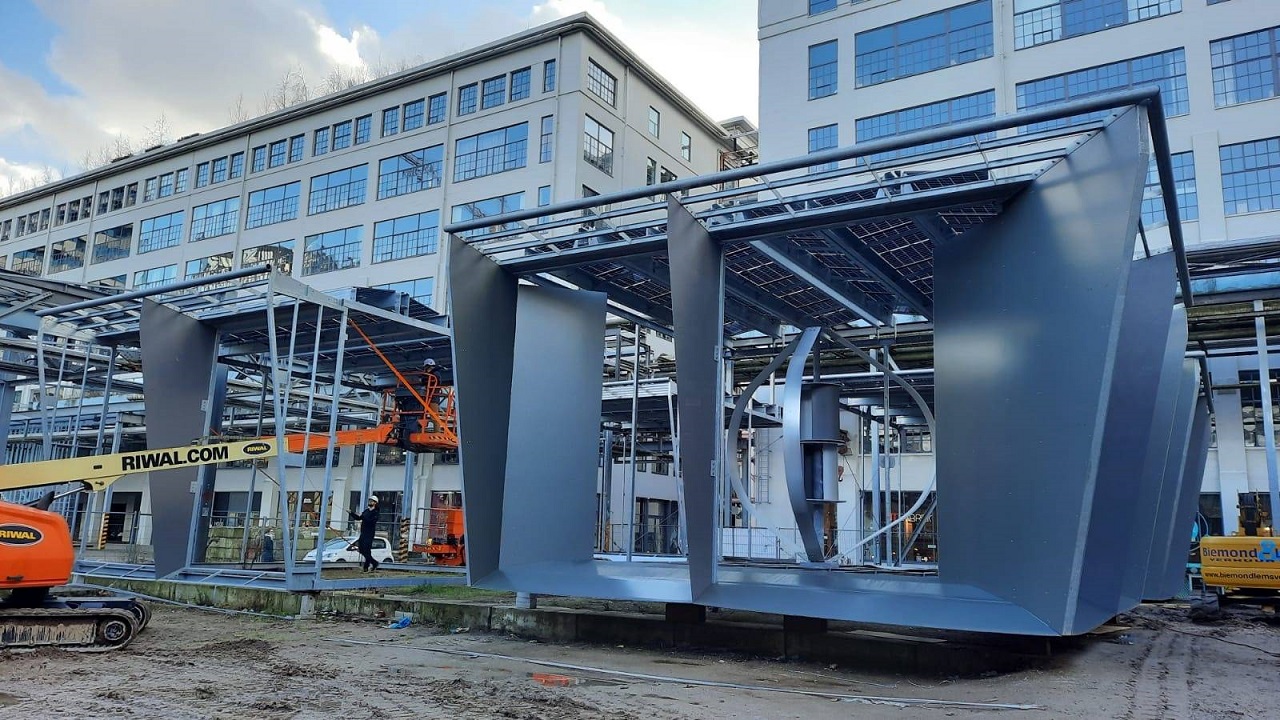
IBIS Power Developed A New Hybrid Solar Energy System Capable Of Generating Energy At Night And On Rainy Days For 15-Story Commercial Buildings.
Focusing on generating renewable energy for large buildings, the company developed the only PowerNest solar and wind energy system on rooftops that can fully supply a tall or medium building. The system uses hybrid energy sources to generate electricity at night and on rainy days. According to CEO Dr. Alexander Suma, it all started while he was studying for his PhD at the University of Miami, and he was surprised by the number of air conditioning units running all day in his neighborhood.
Hybrid Solar Energy System Generates Six Times More Energy Than Solar Panels Alone
With six million people living in sunny Miami-Dade, all constantly using their air conditioners, the executive knew it was time to develop a better way to consume energy, thus the Power Nest system was born.
It is a fluid kinetic sculpture of wind and solar technology, an impressive crown that provides local energy for five-story buildings or higher. The PowerNest system is a competitive solution for the market and ready to meet new legislation, such as Local Law 97 and the European Commission’s “Fit for 55” emissions standards before 2030.
-
A bright yellow mushroom imported from Asia escaped from a cultivation farm in the United States in 2010 and is now aggressively spreading across 25 states, destroying entire communities of native fungi in American forests.

-
Buried under China, a colossal machine weighing 20,000 tons began operating as the largest neutrino detector on the planet and, in just 59 days, surpassed results that science took half a century to achieve.

-
Iran enters the center of a climate alert after the war emitted 5.6 million tons of CO2 in two weeks, surpassing the annual pollution of entire countries.

-
Lunar exploration may change after a Chinese probe finds a “cavity” of radiation that reduces the impact on astronauts by up to 20% at certain times on the Moon.

The hybrid solar energy system features an award-winning architecture capable of generating up to six times more energy than solar panels alone. It harnesses the Venturi effect to add 40-60% more airflow.
In this way, it can generate electricity with a light breeze. Moreover, a bifacial solar canopy captures more sunlight from more angles than a conventional solar installation. The entire solar energy system can be adapted to optimize energy capture under local weather conditions.
The Structure Of The Technology Capable Of Generating Hybrid Energy Is Completely Silent
The PowerNest can silently generate enough energy to fully power a 15-story residential building. Top-of-the-line solar panels are arranged bifacially to generate electricity from above and below while being cooled by air.
The smart combination of solar and wind energy in the structure captures more energy in more weather conditions than other on-site systems. Noise levels of the energy systems align with all building codes, without any annoying vibration or acoustics.
Finally, the wind turbines can withstand winds of up to 60 meters per second. The hybrid solar energy system not only reduces electricity bills but is also a very eco-friendly method for powering homes. During the Paris Agreement, a large part of the nations agreed that humanity affects the climate irreversibly.
In this way, each country introduced its regulations and means to transition to sustainable energy and reduce emissions. The system helps buildings comply with new local emission standards.
In Which Buildings Can The PowerNest System Be Installed?
Any residential, public, or commercial building with a flat roof of five stories or taller can install a PowerNest. A minimum of 50 square meters is required for one unit, but more roof space dedicated to a PowerNest system equates to more solar energy generation.
The PowerNest is a perfect solution for urban and non-coastal buildings. And in coastal or island areas, the system can work on roofs below five stories.
The structure is an innovative solution that can enable buildings to provide electricity for all their activities in a genuinely eco-friendly and sustainable way.







Seja o primeiro a reagir!