





 Portuguese
  English
  Spanish
  6 min of reading
  0 comments


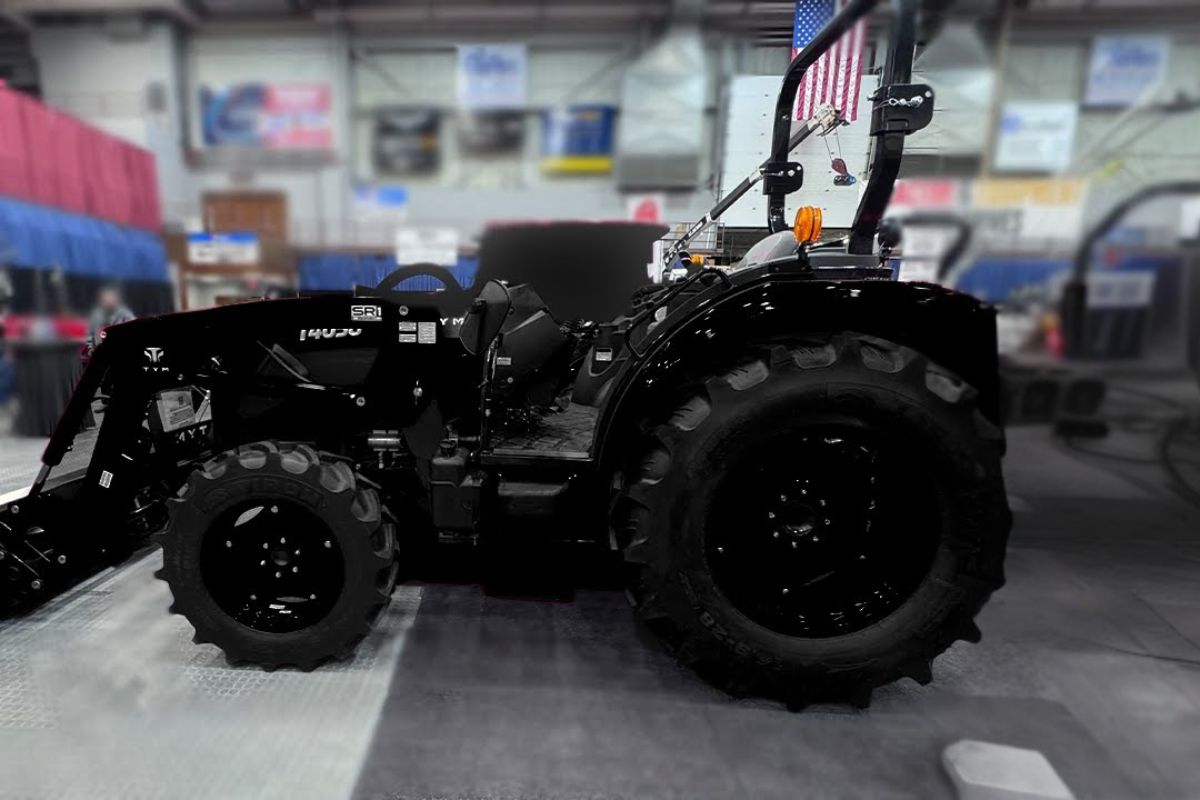
TYM 4058 Tractor Arrives for Less Money, Delivers 58 Horsepower, Lifts 4,400 Pounds in the 3-Point Hitch, and Has a Loader with Capacity Well Above the Comparable, While John Deere 4066 Costs More, Brings Fewer Items, and Becomes a Symbol of Pressure.
The TYM 4058 tractor has entered the conversation as a direct attack on cost per capacity in the compact and light utility tractor segment, just as John Deere appears in corporate news for layoffs after the holidays and for a net profit of US$ 7 billion in the previous year, cited as 16% lower than in the prior period.
The point that becomes friction is not just brand, it’s cost: when a package arrives with a loader, telematics, and hitch features for less money, and the equivalent requires thousands more just to start, the purchase decision shifts from emotion to a cold comparison of specification, availability, and maintenance.
What the TYM 4058 Tractor Delivers in Gross Capacity

The TYM 4058 tractor is presented as Series 4 with 58 horsepower, targeting the same “service tractor weight” as the John Deere 4066, with a small mass difference between the two in reports.
-
The sugar-energy sector advances with agricultural technology, but agricultural productivity still raises concerns.

-
The eggshell that almost everyone throws away is made up of about 95% calcium carbonate and can help enrich the soil when crushed, slowly releasing nutrients and being reused in home gardens and vegetable patches.

-
This farm in the United States does not use sunlight, does not use soil, and produces 500 times more food per square meter than traditional agriculture: the secret lies in 42,000 LEDs, hydroponics, and a system that recycles even the heat from the lamps.

-
The water that almost everyone throws away after cooking potatoes carries nutrients released during the preparation and can be reused to help in the development of plants when used correctly at the base of gardens and pots, at no additional cost and without changing the routine.


The divergence appears in the capacities, especially in the lifting set and when using implements.
At the rear, the dominating number is the 3-point hitch with 4,400 pounds, described as “two tons”, and with capacity that practically broadens the type of implement the operator feels comfortable attaching.
In the loader, the comparison arises that the capacity of the 4058 would be almost double, and that the front exceeds 3,000 pounds, contrasting with a John Deere cited at around 2,500 pounds in the same discussion.
Price, Package, and the Problem of “A Lot More for Less”

The TYM 4058 tractor enters with a quoted price of US$ 38,999 for an open station with a loader, accompanied by items that the discourse portrays as “premium” for the category, including telematics and a hitch system with position repeat features.
Meanwhile, the John Deere 4066 appears as 45 thousand plus in the basic model without a loader, opening a delta of 7 to 8 thousand even before introducing a front implement into the equation.
This type of difference is what changes the psychology of the buyer. When the cheaper package arrives more complete, the classic argument of “reselling better” loses strength in the short term because the cost is paid upfront.
The reasoning presented is straightforward: if the absolute loss when selling tends to be similar, paying less to start reduces the financial risk of the whole cycle.
Operation and Ergonomics as a Productivity Tool
The discussion about the TYM 4058 tractor insists on something that often gets overlooked in technical specifications: the operator’s station.
The cabin was not present in the observed unit, but the platform is described as spacious, with a premium seat and “captain” ergonomics, along with adjustments that accommodate various heights, from tall operators to much shorter ones.
The argument here is not luxury, it’s productivity. Those who spend 100% of their time in the operator’s seat buy comfort along with capacity, because fatigue leads to errors, and errors lead to costs.
This type of detail enters the decision mainly in small properties, horticulture, light hay, and maintenance services where the tractor runs many hours and performs repetitive cycles.
3-Point Hitch with Position Return and Sensors


A central piece of the TYM 4058 tractor, in the report, is the three-point hitch system associated with position repeat features and sensors.
The operational idea is to reduce variation between passes: it lifts at the end of the line, makes the turn, and returns to the same working point, maintaining depth and pressure more consistently with implements like plows, seeders, and cutting equipment.
Additionally, it appears that calibration could be done by the operator themselves, without depending on the dealer, which directly impacts service costs and downtime.
In a segment where lost hours have real impact, the ease of adjustment ceases to be an “option” and becomes part of the ownership calculation.
Transmission, Sensitivity, and Using with Loader
The TYM 4058 tractor is described with a Power Shuttle and a sensitivity selector that adjusts the “jolt” of the hitch.
At one extreme, it’s more aggressive for breaking soil; at the other, it’s smoother to protect expensive implements and provide fine control with the loader, approaching the feel of a more gradual behavior.
There is also a traction feature with automatic mode, where sensors would detect slippage and engage the front traction when necessary.
In practice, this targets the exact scenario of constant transitions between asphalt, gravel, dirt, and forest, with direct impact on traction, wear, and stability.
Hydraulics and Rear Remotes as an Invisible Cost
Even without specifying exact flows, the conversation maintains that the hydraulic flow of the TYM 4058 tractor would be “considerably superior” to the comparable, and this matters because loaders and hydraulic implements depend on flow and response.
It’s the type of difference that doesn’t show on the first glance but becomes evident in daily operations, when the implement needs a quick cycle and the operator wants predictability.
On the rear remotes, the TYM 4058 tractor is noted as coming from the factory with two remote controls, while the John Deere is described as coming with one and charging extra for options.
This is the type of item that transforms a “base” price into a real price, because those who use hydraulic implements rarely stick to just the basics.
John Deere 4066 as a Price Reference and Symbol of Friction
The John Deere 4066 enters here less as a villain and more as a thermometer: the more expensive comparable, without a loader in the basic model and with extras that push up the cost.
In the background, two elements inflate public perception: workers being informed about layoffs after the holiday season and the cited net profit of US$ 7 billion, but with a drop of 16%.
This contrast raises the question that keeps ringing in the market: if the company tightens costs and still loses margin, why does the price to the consumer continue to rise to the point of opening up space for rivals?
In the report, there are also criticisms regarding maintenance restrictions “won’t let you work on this”, outsourcing and consumer irritation. Even without detailing policies, the described effect is reputational: part of the traditional base feels pushed toward other brands.
Where This Happens and Why the Impact Is Not Local
The debate is presented in the context of the compact and light utility tractor market, with dollar values and direct comparisons of models.
It’s not an abstract discussion, because the effect shows at the counter: price, package, implements, assistance, downtime, and the feeling that some “John Deere forever” buyers are migrating.
In the end, the TYM 4058 tractor functions as a technical object that exposes a commercial weakness: when lifting capacity, standard items, and ergonomics come for less, the premium brand needs to explain the differential with more than tradition.
And when the public conversation includes layoffs and lower profits, customer tolerance for the “brand premium” decreases.
The TYM 4058 tractor does not “take” anyone out of the market alone, but it forces comparison and constrains price.
The question that remains is not whether a brand will end, but whether the buyer will continue accepting to pay thousands more for a smaller package when there are alternatives that deliver capacity of hitch, loader, and operational resources for less money.
If you had to choose today, what weighs more in your decision: paying less now for capacity and standard items, or paying more for brand and future resale, even with a leaner initial package? And what was the biggest surprise you ever had when comparing “base price” with the real price after options?










-

Uma pessoa reagiu a isso.