





 Portuguese
  English
  Spanish
  6 min of reading
  0 comments


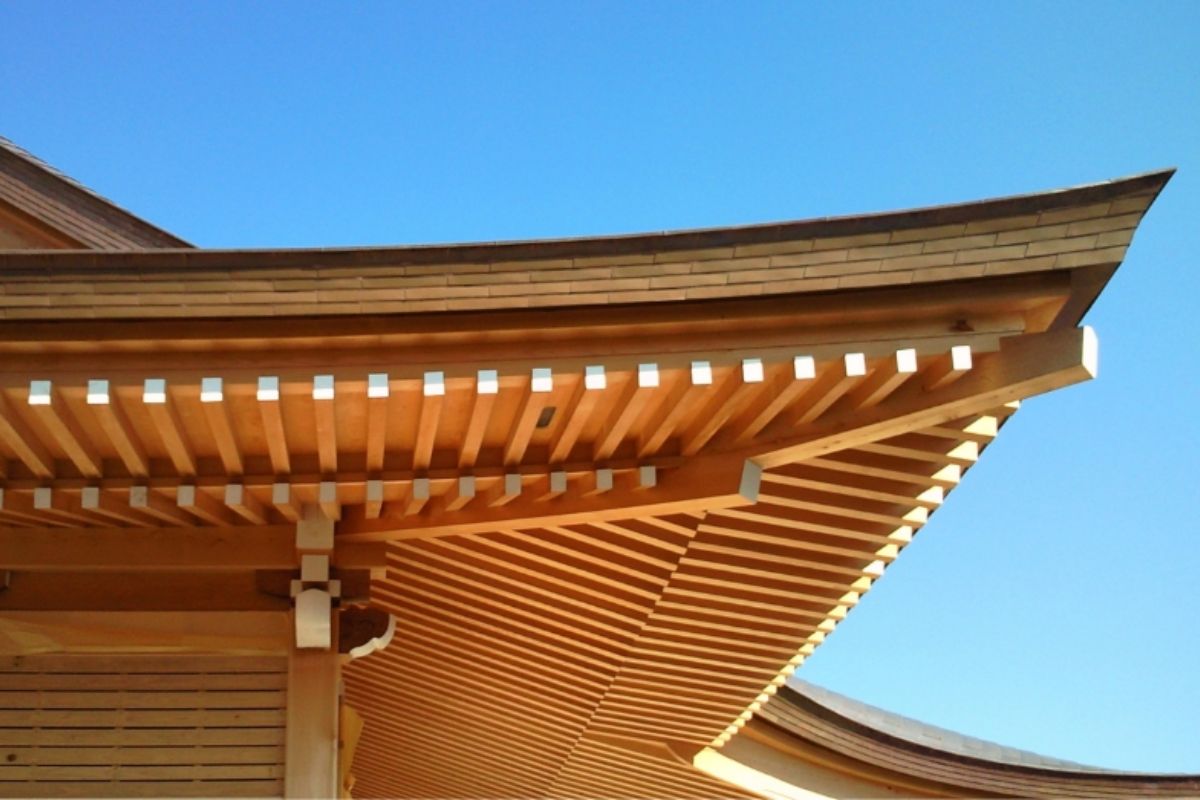
Based on the Work of Miyadaiku, Nail-Free Construction Combines Intricate Cuts, Joints Like Tsugite and Shiguchi, and Precise Reading of Wood to Create Structures Adapted to the Japanese Climate, Absorb Earthquake and Typhoon Vibrations, and Keep Wooden Buildings Functional for Hundreds or Even Thousands of Years with Lasting Stability.
Nail-free construction occupies a unique place in Japanese architecture because it combines carpentry, engineering, and environmental reading in a single technical gesture. Instead of relying on visible hardware, the system uses carved joints to connect beams and pillars with precision, forming a structure capable of withstanding prolonged use and responding better to ground vibrations.
This method is at the heart of kigumi, a tradition practiced by miyadaiku in the maintenance and restoration of temples and shrines across Japan, including buildings associated with world heritage and national treasures. What stands out is not only the clean appearance of the structure, but the logic behind it: a work designed to be dismantled, repaired, and even relocated without losing construction coherence.
Where This Technique Gained Scale and Why It Has Persisted

With more than 150,000 temples and shrines in Japan, the preservation of wooden architecture has required, over time, a highly specialized technical body. It is in this context that miyadaiku emerge, craftsmen dedicated to the construction and restoration of these religious buildings.
-
New CCR concrete paving technology promises roads up to 3x more durable, less maintenance, and cost reduction in Brazil.

-
Made from recycled plastic, plastic wood is gaining space in the construction industry because it does not rot, resists moisture, and reduces maintenance costs over the years.

-
Florianópolis will receive a million-dollar BRT that will begin construction in 2026 with nearly 400 million in funding from the federal government and the Inter-American Development Bank, and the map already shows the routes for the exclusive bus corridors.

-
Without a blueprint, without an engineer, and using scrap from the dump, a father spends 15 years building an 18-room castle for his daughter, featuring tram tracks, 13 fireplaces, and over 700 m², which may now be demolished.


Nail-free construction does not appear as decorative eccentricity, but as a consolidated response to a continuous structural demand in a country filled with wooden works that need to last.
The tradition has ancient and institutionalized roots. Kongo Gumi Co., Ltd., in Osaka, is pointed out as the oldest organization formed by these carpenters and is said to have origins linked to the construction of Shitennoji Temple in 593, considered the first official Buddhist temple in Japan.
Since then, the method has spread across different regions, supporting works that would later be recognized as national treasures and world heritage.
This persistence helps explain why kigumi continues to be seen as a relevant technical knowledge. It is not just about reproducing a historical visual.
What has been preserved for centuries is a way of building that has demonstrated practical utility in very specific climatic, religious, and structural contexts. The longevity of the technique lies less in symbolism and more in accumulated efficiency.
How Kigumi Assembles a Structure Without Visible Hardware

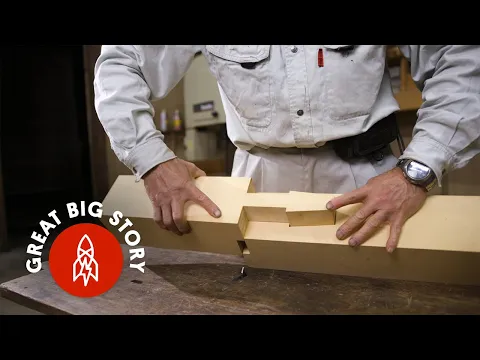
In kigumi, the wood is joined without nails or metal accessories, forming a robust three-dimensional framework. The basis of this system lies in joints carved with extreme precision, capable of keeping the pieces firm while maintaining minimal slack.
This small margin is neither a defect nor an improvisation. It allows the structure to absorb and disperse vibrations, a decisive factor in a territory marked by earthquakes and typhoons.
Two main techniques organize this logic. The first is tsugite, used to join two pieces of wood and form a pillar or a long beam. The second is shiguchi, focused on the connection of pillars and beams at angles.
From these bases, there are over 200 kigumi techniques, each adapted to the shape of the wood, the required resistance, and the final design of the project. Nail-free construction, therefore, depends on a vast and extremely specific repertoire, not a single solution repeated mechanically.
This structural design also reduces a classic problem of hardware: corrosion. As metal inevitably rusts, the absence of visible pieces of this type avoids an important agent of deterioration.
Instead, the wood interacts with the moisture of the environment, absorbing when the climate is humid and releasing when it is dry. This ability makes the structure more compatible with the Japanese climate’s fluctuations, characterized by humid summers and dry winters.
Climate, Earthquake, and Maintenance Explain the Logic of the System

Adaptation to the environment is one of the strongest reasons for the persistence of this technique. Japan experiences high humidity for part of the year, dry periods during another phase, and constant coexistence with seismic instabilities.
In this scenario, nail-free construction is not limited to supporting the weight of the roof or walls. It needs to accompany the natural movement of the building without losing structural integrity.
The wood, in this case, is not just an abundant raw material but an active component of the performance of the work. As this material is available in large quantities in the country, the system also favors disassembly, repair, replacement of rotting parts, and even relocation of buildings.
This helps explain why certain constructions have been able to withstand centuries and, in some cases, be associated with a duration of hundreds or thousands of years. The resilience comes from both the initial assembly and the continuous possibility of intervention and care.
This relationship between technique and maintenance is decisive. A structure made with precise joints can be opened, reviewed, and reassembled with more coherence than a work reliant on rigid and irreversible solutions.
The value of kigumi, therefore, lies not only in the moment of construction. It is also in how it anticipates the need to repair the time, climate, and natural wear of wood over generations.
What a Miyadaiku Needs to Master to Execute This Carpentry
The sophistication of the method explains why the training of miyadaiku requires years of preparation. Learning occurs through direct observation of a veteran, repetition of gestures, and mastery of the characteristics of each type of wood.
It is not enough to know how to cut. One must understand density, resistance, behavior of the piece, and suitability for the place it will occupy in the structure. The precision of the joint begins long before assembly, in the correct reading of the material.
Aside from manual technique, these carpenters need to understand the cultural and religious universe of the buildings they work on.
As many of these works house images of Buddha and other deities, the necessary knowledge surpasses carpentry in the strict sense. The work also involves respect for the significance of the building, architectural tradition, and the symbolic role of each space within the whole.
This demand helps differentiate miyadaiku from an ordinary carpenter. Nail-free construction applied to temples and shrines depends on a professional capable of merging artisan skill, structural reading, and understanding of the cultural context.
The prestige of this craft comes precisely from the sum of these layers, and not just from the final beauty of the fitted wood.
Why the Technique Left Temples and Entered Current Architecture
For a long time, there were concerns about fire in wooden constructions, but recent advancements in technology and engineering have allowed for the development of fire-resistant materials.
This opened up space for the logic of kigumi to be repurposed in contemporary projects, without being restricted to the restoration of historic buildings. The ancient technique has not been frozen in the past; it has gained new applications.
This movement is seen in works associated with Japanese architect Kengo Kuma, who employed solutions inspired by these joints in the Sunny Hills store in Aomaya, Tokyo, at the Yusuhara Wooden Bridge Museum in Kochi, and at the GC Prostho Museum Research Center in Aichi. Similar influences can also be seen in the new National Stadium used in the Tokyo 2020 Olympics and Paralympics.
What changes is the scale and architectural language, not the admiration for the constructive principle.
Institutional recognition reinforces this continuity. In 2020, UNESCO designated several skills, techniques, and traditional knowledge of Japanese wooden architecture as Intangible Cultural Heritage, including carpentry.
This gesture confirms that nail-free construction survives not only for its historical value. It continues to be seen as a technical and cultural heritage capable of transcending generations without losing relevance.
Kigumi impresses because it shows that a complex structure can arise from precise cuts, calculated joints, and a deep understanding of wood behavior.
Instead of hiding its logic, this method transforms the very assembly into the center of resistance, durability, and maintenance.
That’s why temples, shrines, and newer works can keep alive a tradition that combines carpentry, climate, religion, and engineering in a single constructive language.
If you had to choose between a faster work and a structure designed to last centuries, would you bet on immediate practicality or on a system like nail-free construction that prioritizes repair, precision, and adaptation to the environment? And, looking at kigumi, do you think current architecture has lost some of the constructive intelligence that was once visible in the very fitting of the pieces?








-

-

3 pessoas reagiram a isso.