





 Portuguese
  English
  Spanish
  4 min of reading
  0 comments


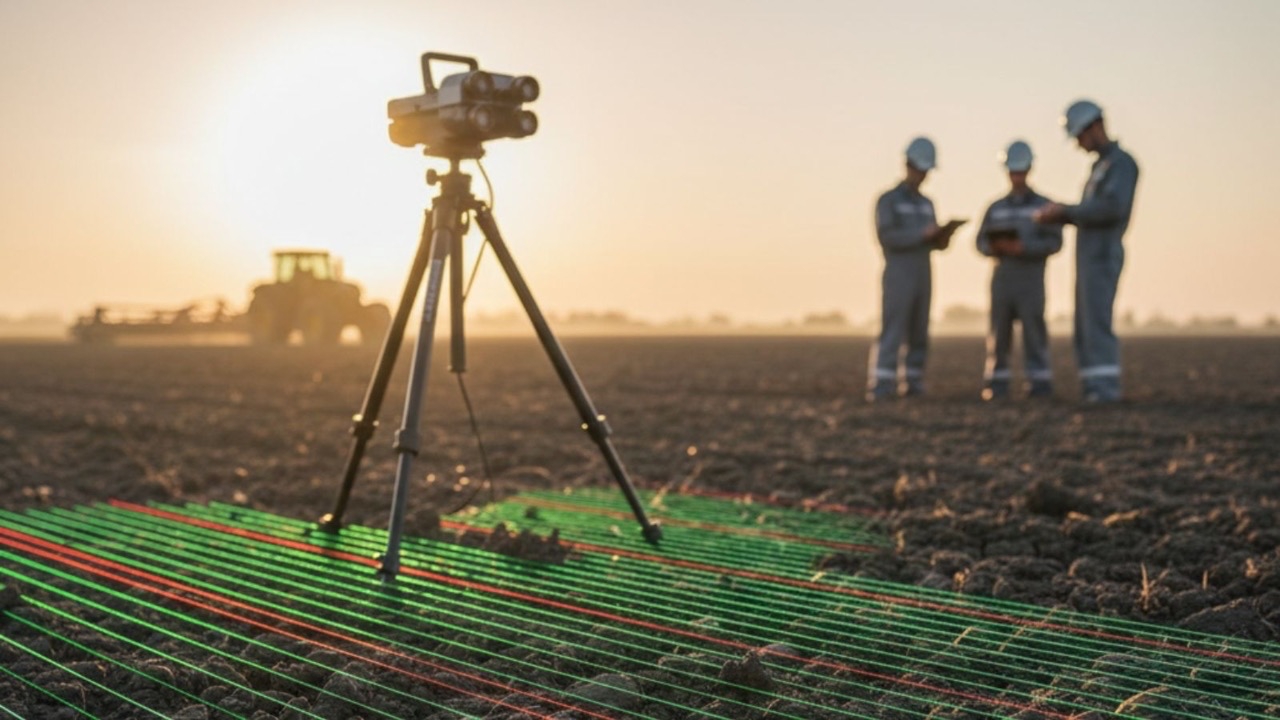
New Technique Allows Estimating Soil Density and Carbon Content at the Same Time, with Less Collection, Lower Cost and Direct Application at Large Scale
The carbon stock in the soil has become easier to estimate when Brazilian researchers developed a method that uses laser and artificial intelligence to measure, in a single analysis, the soil density and the amount of organic carbon. The technique was recently created in São Carlos, São Paulo, uses laser spectroscopy combined with machine learning, and arose to solve an old problem in soil science: expensive, slow, and difficult measurements to apply over large areas, precisely where carbon control is most needed.
The new method changes the way the carbon stock in the soil is calculated because it eliminates complex stages of collection and laboratory work. This opens the door for faster measurements in agricultural, forestry, and environmental areas, something essential for precision agriculture, environmental monitoring, and carbon credit programs.
Why Measuring Carbon Stock in Soil Is So Important
The carbon stock in the soil indicates how much carbon is stored below the earth’s surface. This data is crucial for understanding the role of soil in combating climate change. The more carbon is retained in the soil, the lower the amount released into the atmosphere in the form of gases that intensify global warming.
-
While Brazil wants to end the 6×1 work shift, the president of Argentina wants 12 hours for his workers, increasing political tension in the country.

-
The village where two rivers run side by side without mixing in Santarém and Alter do Chão reveals some of the most beautiful freshwater beaches on the planet.
-
Mars is accelerating, and scientists have discovered that the planet’s day is getting shorter, revealing surprising signs of internal activity.

-
Artemis 2 is set to launch on April 1 at 7:24 PM to orbit the Moon with four astronauts, but a class X solar flare and coronal mass ejection could interfere with communications and threaten the launch.


This calculation depends on two factors at the same time. One is the concentration of organic carbon. The other is the soil density, which shows how much material exists in a given volume. The challenge is that soil density is difficult to measure accurately, especially in the field, and any error compromises the entire calculation of the carbon stock in the soil.
How the Method Using Laser and Artificial Intelligence Works

The new technique combines a tool called laser-induced breakdown spectroscopy, known as LIBS, with artificial intelligence models. The laser is fired over the soil sample and generates an extremely hot microplasma. This plasma emits its own light, which serves as a fingerprint of the analyzed material.
Each chemical element present in the soil emits light at specific wavelengths. Carbon, iron, calcium, silicon, and other elements appear in this spectrum. These signals are analyzed by machine learning algorithms trained to recognize patterns related to soil density and carbon concentration.
The significant advancement is that all of this occurs in a single reading, without the need for intact samples or lengthy drying and weighing processes.
Deformed Samples and Large-Scale Application
One of the most relevant points of the method is that it allows the use of deformed samples. This means that the soil can undergo changes during collection without compromising the final result. In practice, this drastically reduces the time in the field and the cost of the analyses.
The model was trained with 880 soil samples collected from Brazilian agricultural areas, native forests, and long-term experiments, focusing on the Cerrado and Atlantic Forest. The samples reached up to 100 centimeters deep, capturing differences between surface and subsurface, which is essential for accurately estimating the carbon stock in the soil.
The main source of this advancement is Embrapa Instrumentação, which developed the research with the support of the São Paulo Research Foundation, FAPESP, and published the results in the European Journal of Soil Science. The method also has a patent application filed with the National Institute of Industrial Property, INPI.
Why the Traditional Method Limits Carbon Calculation
Traditional methods require digging deep trenches, often using heavy machinery. Additionally, it is necessary to drive volumetric rings into the soil, remove the sample without losses, dry the material in an oven, and weigh it on an analytical balance.
This process is slow, expensive, and prone to errors, especially in sandy or very dry soils. This makes frequent monitoring over large areas unfeasible, precisely where controlling the carbon stock in the soil would be most strategic.
With the new approach, the calculation becomes more accessible for farmers, soil laboratories, researchers, and carbon credit certifiers, creating real conditions to expand the use of this data in daily life.
Direct Impact on Carbon Credit and Agriculture
By simplifying the measurement of carbon stock in the soil, technology can accelerate carbon sequestration projects, environmental certifications, and public policies aimed at sustainability. The faster and more reliable the data, the greater the security for investors, producers, and governments.
This transforms the soil into a concrete tool for climate mitigation and not just a technical concept limited to laboratories.
carbon, agriculture, artificial intelligence, environment, carbon stock









Seja o primeiro a reagir!