





 Portuguese
  English
  Spanish
  4 min of reading
  0 comments


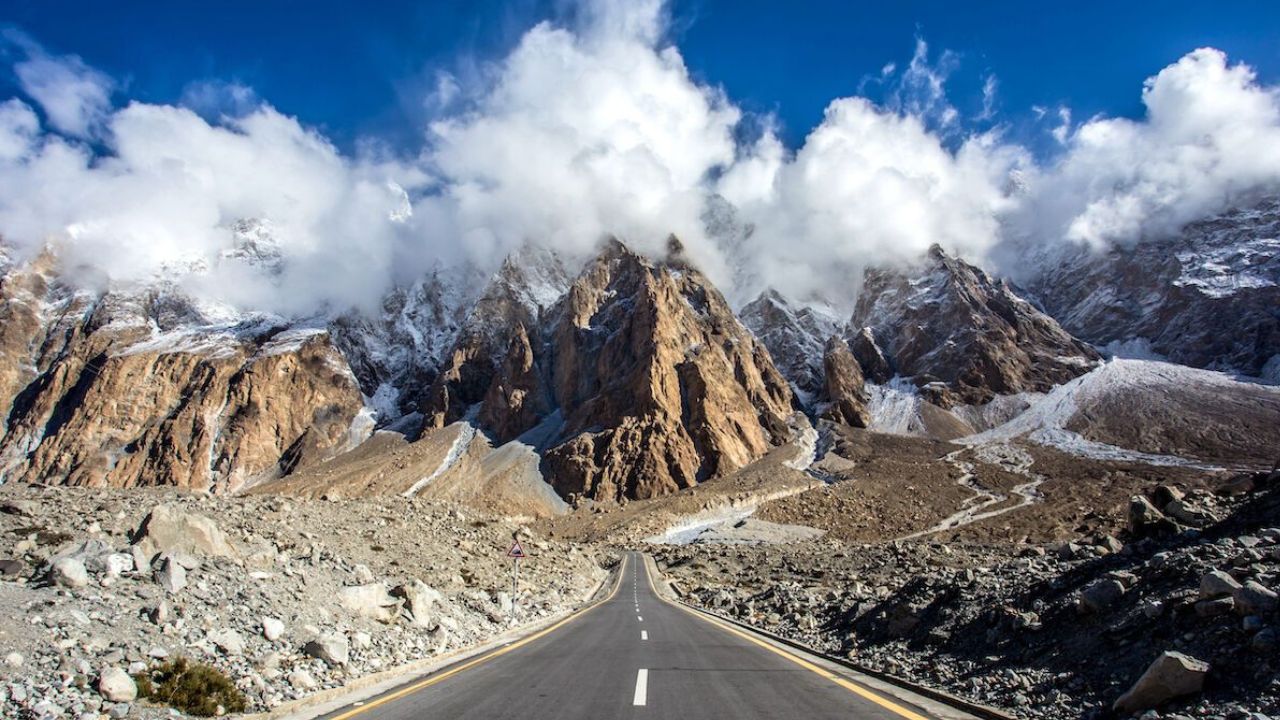
With 1,300 km and 4,714 m in Altitude, The Highest Road in The World Crosses Avalanches and Glacial Valleys and Has Become One of The Most Extreme Routes Ever Built.
Between mountains that exceed 7,000 meters in height, glacial valleys, and a climate so unpredictable that it can turn a sunny morning into a snowstorm in minutes, there is a road that has become legendary among travelers, engineers, and drivers from all over the world. It is the Karakoram Highway (KKH) — an international highway that connects Pakistan to China, crossing some of the most extreme geological formations on the planet.
Built in partnership by the two countries between the 1960s and 1970s, the road has 1,300 kilometers in length and reaches its highest point at Khunjerab Pass, 4,714 meters above sea level. This mark makes it the highest paved international highway in the world, a title recognized by scientific publications and infrastructure entities.
The numbers are impressive, but the real experience goes far beyond. The KKH crosses hostile environments, areas with a permanent risk of avalanches, unstable slopes, sections prone to landslides, and glacial valleys where the cold reaches extreme levels.
-
Hidden marks on the walls of the site associated with the Last Supper of Jesus for centuries have been deciphered in Jerusalem, revealing medieval inscriptions left by pilgrims, European nobles, and travelers from the Middle East.

-
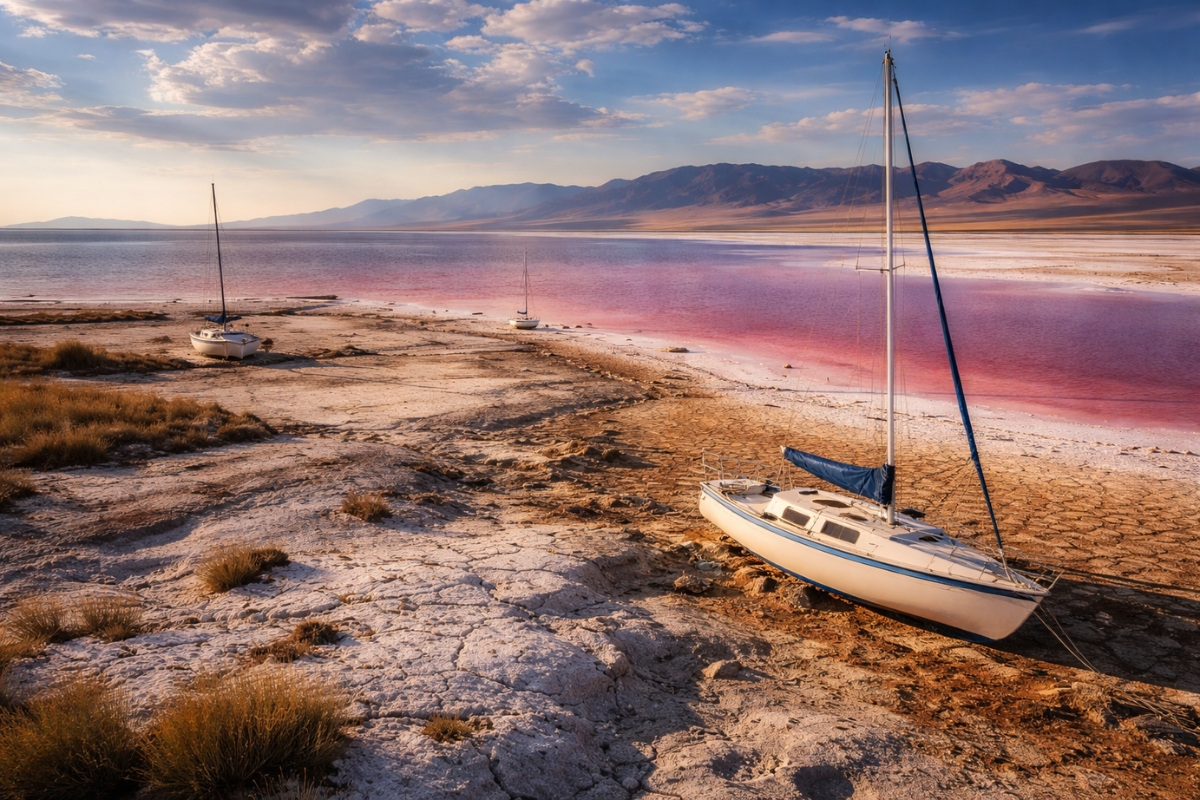
One of the most important lakes in the United States for birds, the balance of nature, and the climate has dried to historic levels, leaving boats stranded, revealing salt flats, and showing how the lack of water can transform an entire landscape.
-
It’s not Cristiano Ronaldo or Messi: the richest football player in the world is only 27 years old, has a fortune of 100 billion reais, and is the nephew of a sultan from an Asian country that few people know about.

-
At 77, the king of one of the most famous and powerful crowns on the planet is said to be under pressure to leave the throne, while behind the scenes there are already talks of a new coronation that could cost R$ 260 million.


One of The Greatest Engineering Works of The 20th Century
The construction of the Karakoram Highway was a historic episode. The project required:
- removal of tons of rock on nearly vertical slopes;
- opening roads in regions with no previous access;
- facing snowstorms, icy winds, and landslides;
- working at altitudes where oxygen is scarce for humans and machines.
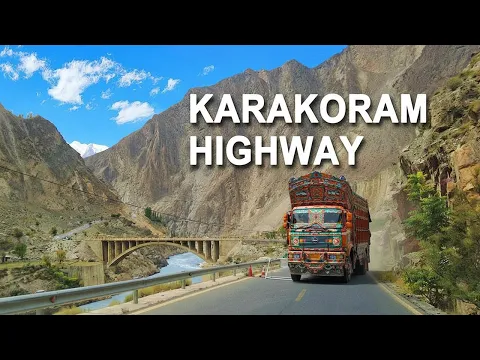

Official records from Pakistan and China indicate that thousands of workers were involved in the construction, many of them directly exposed to avalanches and landslides. Therefore, the KKH is also known as “The Eighth Wonder of The World,” not only for its geographical ascent but for the human scale of sacrifice required to open it.
4,714 Meters: The Point Where Drivers Feel The Effects of Altitude
Upon reaching Khunjerab Pass, the highway approaches the physiological limit for vehicles and drivers. The altitude causes:
- reduction in engine power;
- acceleration difficulties;
- increased fuel consumption;
- accelerated fatigue;
- shorter breathing;
- dizziness in unacclimated individuals.
The landscape changes dramatically: trees disappear, the terrain becomes drier, and the cold is so intense that even in summer, fine snow can fall.
Avalanches, Landslides, and Glacial Rivers: Why The Road Is So Dangerous
The KKH crosses areas of intense geological activity, including regions near Rakaposhi Massif, Nanga Parbat, and the Karakoram Range. This causes the ground to be in constant motion, creating risks such as:
- giant avalanches that block the road for days;
- mud and rock slides after heavy rains;
- crevasses opened by melting;
- glacial rivers that change course;
- dense fog that reduces visibility to a few meters.
Pakistani and Chinese authorities conduct ongoing maintenance work, but the force of nature makes any solution only temporary.
A Vital Highway for Trade, Tourism, and International Relations
Despite the risks, the KKH is a strategic artery for both countries. It facilitates:
- the flow of goods between Pakistan and China;
- the transportation of agricultural and industrial products;
- tourism in regions of extreme beauty;
- connections between isolated communities;
- military and logistical access in border areas.
The section close to China is fully paved and modern, while some Pakistani areas alternate between asphalt, gravel, and zones partially destroyed by natural events.
A Route That Offers Some of The Most Stunning Landscapes on Earth
The highway crosses:
- valleys sculpted by millennia of glaciers;
- turquoise-colored melting rivers;
- rocky slopes over 1,000 meters high;
- villages suspended in mountains;
- cold deserts covered in snow;
- sections where three mountain ranges meet: Himalayas, Karakoram, and Hindu Kush.
It is one of the rare regions in the world where three of the largest mountains on the planet seem to touch the road at the same time.

Why The Karakoram Highway Is Considered One of The Most Extreme Routes on The Planet
Even with technological advancements, the combination of extreme altitude, natural hazards, and unpredictable weather makes the KKH one of the most challenging routes for drivers and motorcyclists.
- Permanent risk of avalanches: Blockages can last hours or days;
- Altitude above 4,700 m: Affects vehicles and human physiology;
- Unstable terrain: Landslides can change the route from one week to the next;
- Long distances without support: There are almost no gas stations, workshops, or shelters;
- Unpredictable weather: Summer snow, fog, and winds can appear in minutes.
The Karakoram Highway is not just a road. It is a living monument to engineering, extreme geography, and the human capacity to challenge environments deemed impossible.
Its 1,300 km cross some of the most inhospitable yet beautiful landscapes on the planet — at the cost of a real, intense, and permanent risk for those who dare to venture there. A delicate balance between absolute beauty and constant danger, reaffirming its position as one of the most extraordinary routes on Earth.





-

Uma pessoa reagiu a isso.