





 Portuguese
  English
  Spanish
  3 min of reading
  0 comments


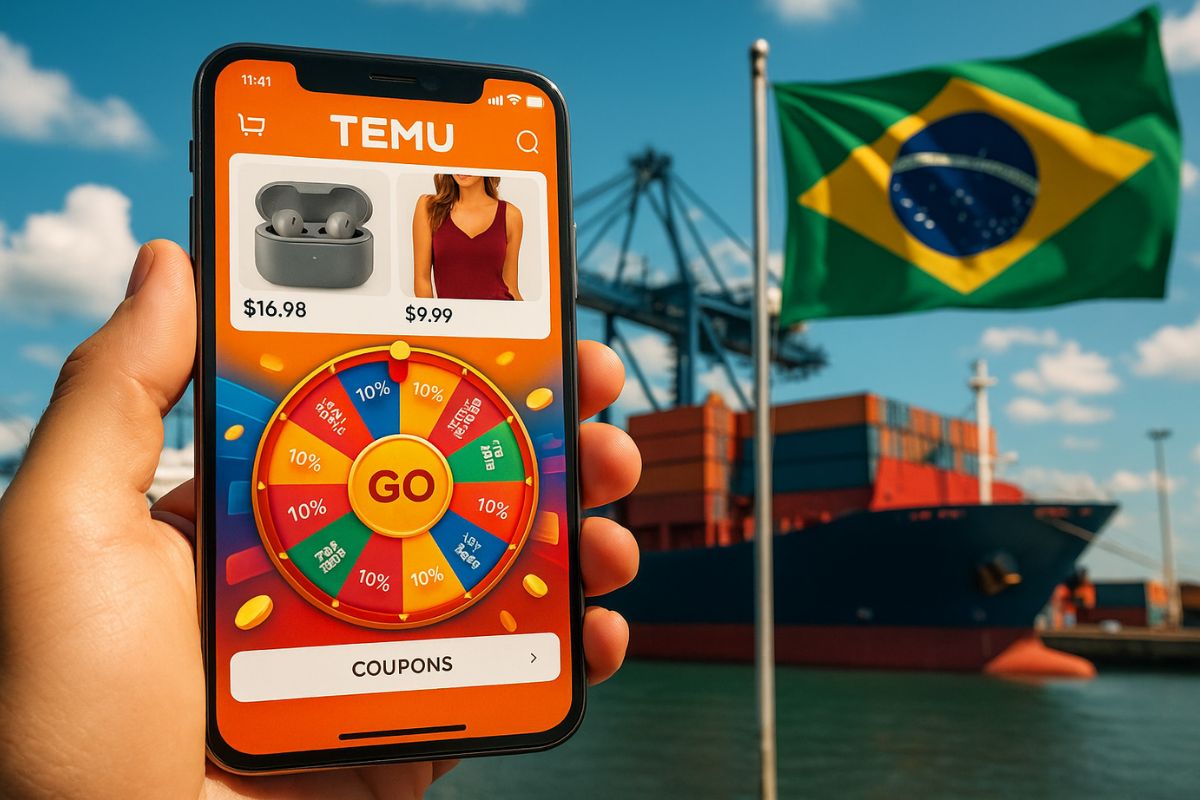
Temu’s Strategy: How Low Prices, Monitoring, and Gamification Are Changing E-Commerce. Chinese Platform Bets on Aggressive Marketing, Data Collection, and Gamified Experience to Conquer Markets, Including Brazil.
The strategy of Temu has been attracting attention in global retail. In just over two years, the platform has gone from unknown to a direct competitor to giants like Amazon, Mercado Livre, and Shopee. The secret? A combination of extremely low prices, intensive use of algorithms to forecast demand, and a gamified shopping experience that turns consumption into something resembling a game.
This formula has already worked in the United States and is now advancing in Brazil, where Temu reached 250 million visits in May, surpassing historical traffic leaders. Behind the phenomenon is PDD Holdings, a group formally based in Ireland but run by executives in China, that maintains operations in over 90 countries.
How Temu’s Engine Works
The heart of the strategy of Temu is the Consumer to Manufacturer (C2M) model. The platform cross-references searches, likes, and products added to the cart to predict real-time demand.
-
Oil surged to $115 a barrel due to the war in the Middle East, and diesel in Brazil has already risen to R$ 7.45 per liter, while the United States…

-
Brazilian city bets on the business environment to generate jobs and attract investments in the energy sector — secretary reveals strategy at Macaé Energy 2026.

-
50 viaducts, 4 tunnels, 28 bridges, and 40 kilometers of bike paths: BR-262 in Espírito Santo will receive 8.6 billion reais for the largest engineering project in the state’s history, inspired by the Immigrant Highway in São Paulo.

-
Brazil produces too much clean energy and doesn’t know what to do with it: over 20% of solar and wind capacity was wasted in 2025 while investors flee and 509 renewable generation projects were abandoned in the last year.


With this information, it orders minimum batches directly from Chinese factories, which accept lower margins in exchange for access to the international market.
In addition to reducing intermediary costs, Temu invests heavily in marketing. Just in 2023, it was the largest advertiser of Meta in the United States and ranked among the top five advertisers on Google. The strategy is replicated in each country, ensuring a massive presence on social media, websites, and even TV commercials.
The Shopping Experience as Entertainment
On Temu, buying is not just acquiring a product: it’s participating in a game. The platform uses gamification with flash coupons, virtual wheels, rewards for interaction, and countdowns to create a sense of urgency.
This constant monitoring of user behavior, time on page, click hesitation, and cart abandonment feeds the algorithms, which refine offers and reduce customer acquisition costs. The result is an addictive experience that keeps consumers browsing and adding items to their carts.
The Mystery Behind PDD Holdings
The owner of Temu, PDD Holdings, is also responsible for Pinduoduo, a Chinese app with over 900 million active users. Founded in 2015 by Colin Huang, a former Google engineer, the company has built a global operation in record time.
However, the corporate structure is opaque and decentralized, with registrations in tax havens and no CFO since 2023. Regulatory reports point to risks: in the U.S., Temu has been cited by Congress as a company of “extreme risk” for forced labor; in Europe, products have been blocked for containing heavy metals.
The Challenges and Risks of the Model
Experts believe that Temu’s strategy is still operating at a loss to gain market share, supported by the profits of Pinduoduo. Additionally, the model faces environmental criticism, as importing small volumes by air increases carbon footprint, and the rapid disposal of cheap products generates a high volume of waste.
There is also regulatory risk. Tariffs imposed by countries like the U.S. pressure margins and encourage the search for new markets, like Brazil. In the long run, the sustainability of the business will depend on the response from competitors and possible government restrictions.
And you? Do you believe Temu’s strategy will change Brazilian e-commerce or that the model is unsustainable? Share your opinion in the comments and join the debate.










-

2 pessoas reagiram a isso.