





 Portuguese
  English
  Spanish
  4 min of reading
  1 comment


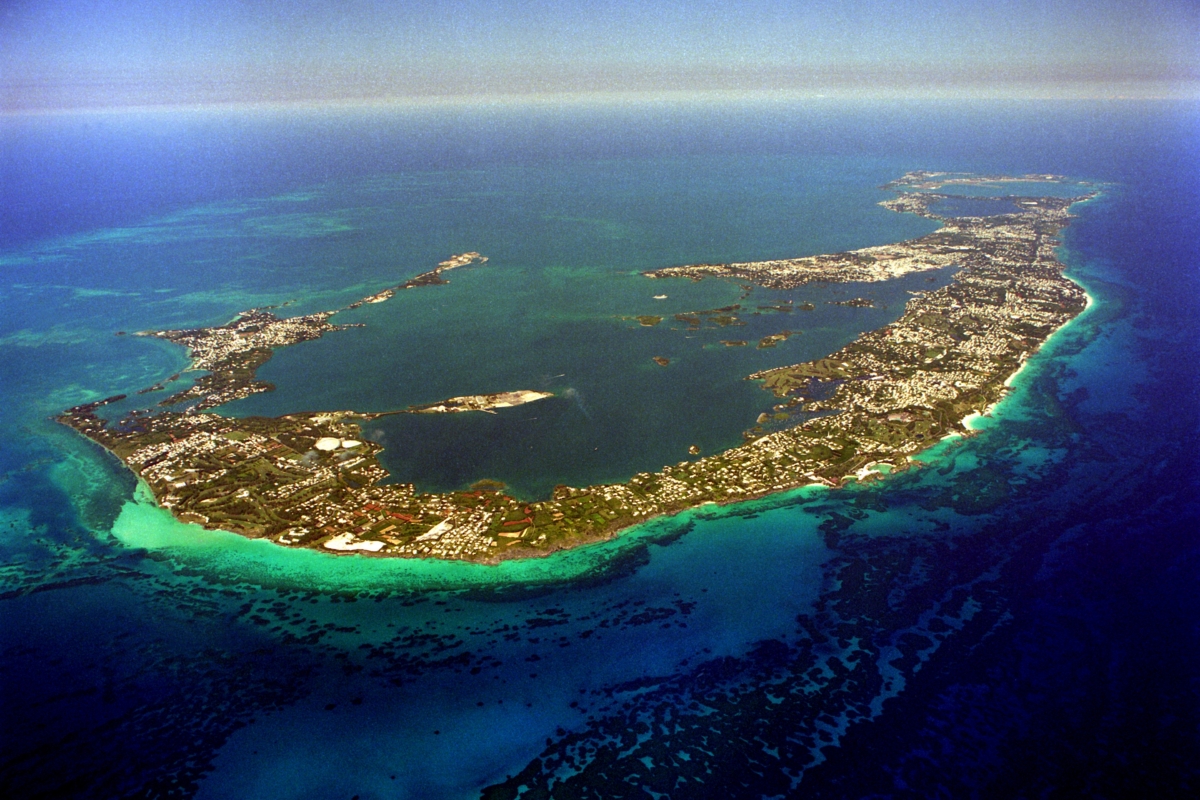


A Layer of Rock 20 Kilometers Below the Oceanic Crust Can Support the Elevated Relief of the Region Even After 31 Million Years Without Eruptions
Bermuda has gained a new mystery in the North Atlantic. A 20-kilometer-thick layer of rock has been identified below the oceanic crust, at a depth where the mantle would typically appear.
The finding helps clarify why the archipelago remains above a bulge in the ocean floor, with the crust higher than the surrounding areas, even without signs of current volcanic activity.
The last known eruption in Bermuda occurred 31 million years ago, but the elevated relief has not subsided over time, as often happens in many volcanic scenarios in the ocean.
-
Satellites reveal beneath the Sahara a giant river buried for thousands of kilometers: study shows that the largest hot desert on the planet was once traversed by a river system comparable to the largest on Earth.

-
Scientists have captured something never seen in space: newly born stars are creating gigantic rings of light a thousand times larger than the distance between the Earth and the Sun, and this changes everything we knew about stellar birth.

-
Geologists find traces of a continent that disappeared 155 million years ago after separating from Australia and reveal that it did not sink, but broke into fragments scattered across Southeast Asia.
-
Samsung launches cordless vertical vacuum cleaner with up to 400W of suction and relies on AI to automatically recognize corners, carpets, and different surfaces.


What Happened and Why It Caught Attention
The identified structure has an unusual thickness. It is a layer positioned beneath the oceanic crust, within the tectonic plate on which Bermuda sits.
In typical oceanic configurations, the base of the crust gives way to the mantle. In Bermuda, an additional unit appears, with characteristics not seen at this scale in other equivalent locations.
The difference is noteworthy as it suggests a special process of formation and preservation of this rock in a part of the Earth where, in general, the transition between crust and mantle is more direct.
How the Layer Can Support Bermuda Above the Surroundings

Bermuda sits on a bulge in the ocean, an area where the seabed is higher than the rest. The proposed hypothesis links this relief to rocky material that would have been inserted into the crust and solidified.
The idea is that the last phase of volcanism injected rock from the mantle into the crust, where the material cooled and became trapped. This may have created a kind of rigid base, helping to maintain the elevated ocean floor.
The estimated effect is a lift of about 500 meters at the ocean floor, which helps explain the persistence of the bulge around the archipelago.
Why the Bulge Has Not Disappeared After 31 Million Years
Island chains like Hawaii are often associated with hotspots in the mantle, areas where hotter material rises and fuels volcanism.
When the tectonic plate moves and the hotspot is left behind, the tendency is for the ocean floor bulge to diminish over time. In Bermuda, this has not occurred, even after 31 million years without known eruptive activity.
There is still debate about what happens in the mantle beneath the island, but there are no eruptions on the surface. The presence of this extra layer, less dense than the surrounding rocks, reinforces the possibility of a prolonged support mechanism.
How Scientists Saw What Exists Up to 50 Kilometers Deep

The identification came through records from a seismic station in Bermuda, using large and distant earthquakes to map the interior of the Earth.
Seismic waves change behavior when crossing boundaries between different materials. By observing points where these waves undergo sharp changes, it was possible to visualize structures up to about 50 kilometers below Bermuda.
This mapping highlighted the unusual layer and indicated that it has lower density than the surrounding rocks, an important clue to understanding its role in the ocean relief.
What the Chemistry of Bermuda Lavas Indicates About the Origin of the Material
Research on Bermuda’s volcanic history points to lavas with low silica content, a sign of origin linked to carbon-rich rocks.
Analysis of variations in zinc molecules in samples from the island indicated that this carbon comes from deep regions of the mantle. The origin of this carbon may be linked to ancient processes associated with the formation of Pangea, between 900 million and 300 million years ago.
This scenario differs from the pattern observed in islands formed by hotspots in the Pacific or Indian Oceans. One explanation raised is that the Atlantic is a younger ocean, opened when Pangea broke apart, while the Pacific and Indian Oceans already existed on the edges of the supercontinent.
What Could Happen From Now On
The next step is to compare Bermuda with other islands around the world to check if there are similar layers anywhere or if the archipelago is truly a unique case.
Understanding an extreme location can help interpret less remarkable regions of the planet, separating common processes from the rare events that leave unusual geological signatures.
The discovery of the 20-kilometer-thick layer of rock creates a direct line of inquiry into how ancient structures can remain active in ocean relief for tens of millions of years.
Bermuda continues to show no evidence of current volcanism on the surface, but what exists at depth may be the key to explaining why the bulge in the ocean floor is still there, even after 31 million years since the last known eruption.






Muito relevante estudos devem continuar