





 Portuguese
  English
  Spanish
  3 min of reading
  0 comments


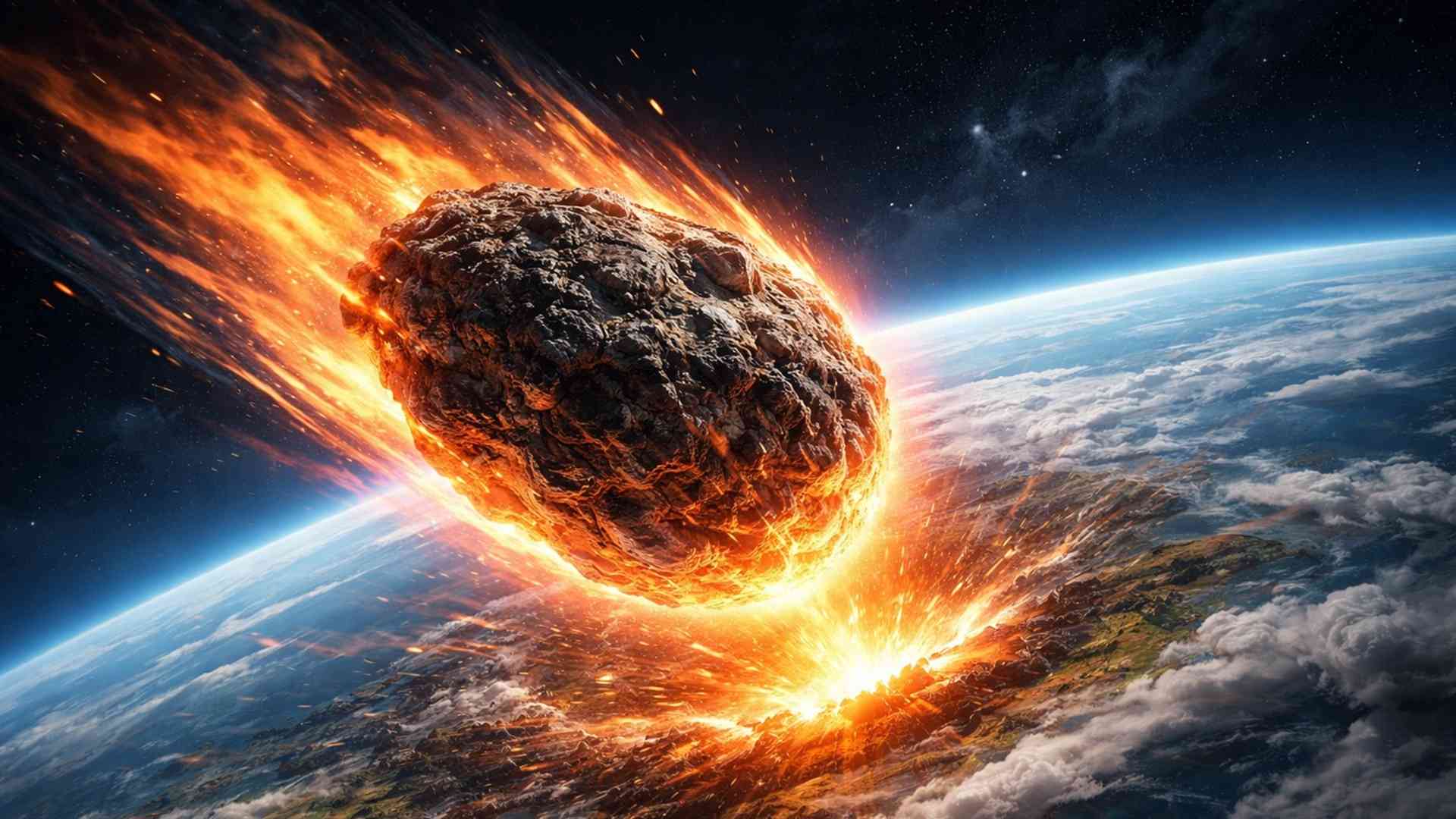
An International Study Indicates That Iron-Rich Asteroids May Be More Resistant To Atmospheric Entry, Absorbing Energy And Strengthening Their Structure, Despite 37,000 NEAs Monitored, Active Alerts, And Safety Assurance Against PHOs For 100 Years, With Direct Implications For Deflection Strategies
Scientists highlight that the solar system hosts numerous bodies that approach Earth, including 37,000 Near-Earth Asteroids (NEAs) and 120 short-period Near-Earth Comets (NECs). Alert systems continually track these rocks.
NASA and other space agencies closely monitor potential threats to identify impact risks.
Researchers claim that Earth is completely safe from Potentially Hazardous Objects (PHOs) for at least the next 100 years.
-
Motorola launched the Signature with a gold seal from DxOMark, tying with the iPhone 17 Pro in camera performance, Snapdragon 8 Gen 5 that surpassed 3 million in benchmarks, and a zoom that impresses even at night.

-
Satellites reveal beneath the Sahara a giant river buried for thousands of kilometers: study shows that the largest hot desert on the planet was once traversed by a river system comparable to the largest on Earth.

-
Scientists have captured something never seen in space: newly born stars are creating gigantic rings of light a thousand times larger than the distance between the Earth and the Sun, and this changes everything we knew about stellar birth.

-
Geologists find traces of a continent that disappeared 155 million years ago after separating from Australia and reveal that it did not sink, but broke into fragments scattered across Southeast Asia.

Despite this scenario, studies continue to understand how different compositions can alter behavior during atmospheric entry and, thus, influence the potential risk associated with impacts.
Simulations Reveal Unexpected Behavior Of Metallic Asteroids
An international team analyzed a specific type of asteroid and found surprising results.
M-type asteroids, rich in metals, showed a capacity to absorb significantly more energy without fragmenting.
Simulations indicated that these bodies might even become more resistant during the atmospheric entry process, unlike other space rocks, altering assumptions used in risk assessments.
The study was published in the journal Nature Communications, reinforcing the scientific relevance of the observations and the need to revise traditional fragmentation models.
Experimental Tests With Iron Meteorite At CERN
To validate the simulations, researchers used the High Radiation to Materials (HiRadMat) facility at CERN. A sample of the Campo del Cielo iron meteorite was subjected to extremely energetic proton beams.
The tests applied protons of 440 GeV while real-time data was collected via Doppler vibrometry. The goal was to measure how much stress a metal-rich asteroid can withstand as it enters Earth’s atmosphere.
The measurements showed how the material reacted to increasing stress, allowing for the observation of deformations and internal responses without destroying the sample, something considered unprecedented by the researchers.
Internal Structure Adapts And Amplifies Stress
Scientists observed that as stress levels increased, the meteorite released more energy. This suggests that energy travels into the asteroid, altering its internal structure.
According to the researchers, this internal adaptation can amplify stress and strengthen the metallic body instead of causing fragmentation, contradicting previous expectations used in impact models.
Co-author Professor Gianluca Gregori from the Department of Physics at University of Oxford stated that this was the first non-destructive, real-time observation of deformation and strengthening of a meteorite under extreme conditions.
Implications For Deflection Missions And Earth Impact
The discovery raises relevant implications for asteroid deflection missions. If certain types strengthen under pressure, strategies based on fragmentation may not work as expected.
This means that during an impact with Earth, one could not rely on atmospheric disintegration. Instead, there would be a possibility of progressive strengthening under pressure, increasing the potential risk.
The authors emphasize that while current safety is guaranteed for 100 years, understanding these differences is essential for planning effective long-term responses and avoiding surprises in future scenarios.








-

-

-

-

6 pessoas reagiram a isso.