





 Portuguese
  English
  Spanish
  3 min of reading
  0 comments


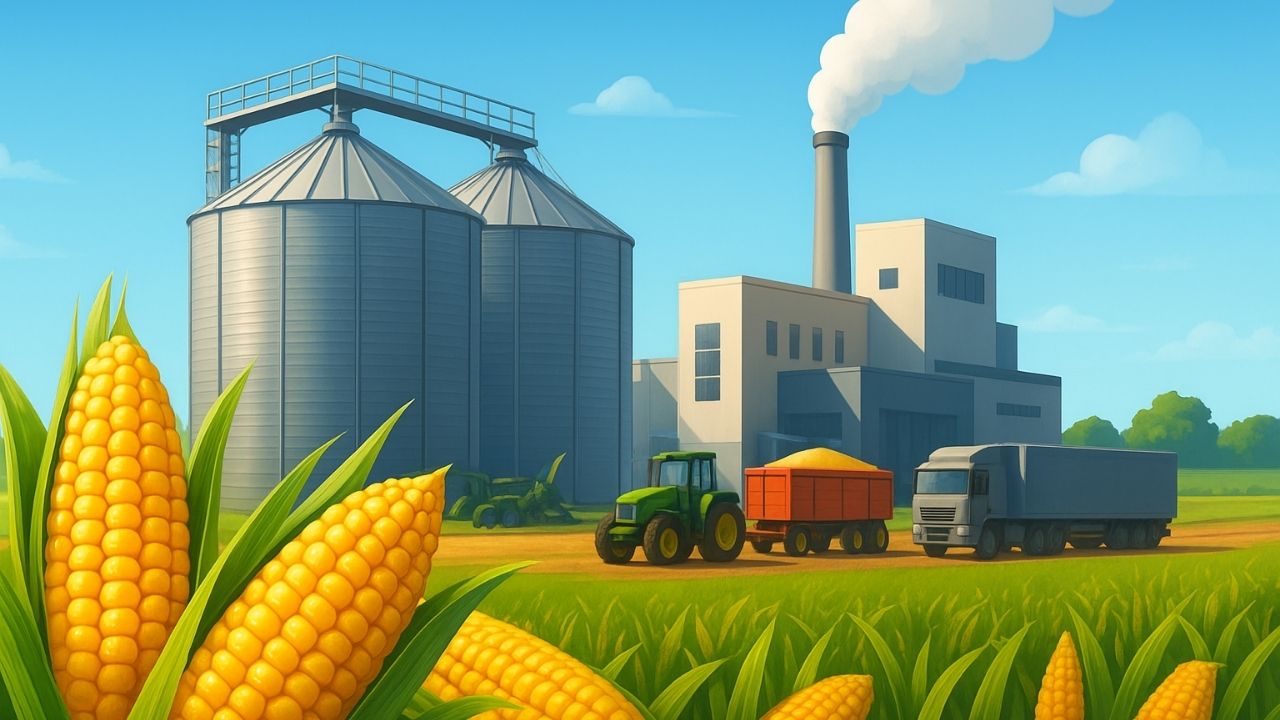
Maize Ethanol Production Could Reach 18.7 Billion Liters by 2030, with Lower Costs and Higher Profitability than Sugarcane.
The maize ethanol is expected to gain even more prominence in the fuel market in Brazil. According to projections presented by specialists from Itaú BBA and JP Morgan, the production of this biofuel could jump from the current 9 billion liters to 18.7 billion liters by 2030.
The data was released on 09/30/2025, during the Teco Latin America event, focused on the grains and renewable energy industry.
The significant advancement not only consolidates maize as a solid alternative to sugarcane but also increases attractiveness for investors, as the profitability of grain mills proves to be higher than traditional sugarcane mills.
-
Historic bankruptcy of Centauro shocks the market, and the century-old company puts more than 500,000 products, machines, and complete infrastructure up for online auction.

-
New shoe factory in Ceará is expected to create 400 jobs and strengthen the local economy.

-
No one imagined it, but a mixture of sawdust with a mineral that fights fires surprises scientists with a result that changes the course of fire-resistant construction.

-
From empty land to a high-end house, wooden construction uses a lightweight system, metal structure for the foundation, ventilated ceramic cladding, and special windows to create an efficient and comfortable living space throughout the year.

Maize Ethanol Could Account for 40% of National Supply
According to Lucas Brunetti, agricultural consultant at Itaú BBA, if confirmed, the projection will make maize ethanol represent about 40% of all national ethanol production.
“This growth is striking to investors,” also highlighted JP Morgan market analyst, Larissa Perez.
This expansion occurs within a transforming biofuels sector, with a greater search for competitive and sustainable alternatives for the fuel market.
Lower Costs and Higher Margins than Sugarcane
One of the factors driving the advancement of the grain industry is the cost of production. According to calculations from Itaú BBA, while the production of sugarcane ethanol is expected to cost an average of R$ 2.55 per liter in 2025/26, maize will reach much more competitive values, around R$ 1.79 per liter.
“For the sugarcane industry, what really matters is the price relationship between ethanol and sugar,” explained Brunetti. This is because sugar-energy mills already have the sugarcane fields established and just need to harvest.
However, with the recent focus on sugar production, the margins for maize ethanol have become even more advantageous.
Projections for the Next Harvest
In a considered average scenario, Itaú BBA estimates the production of 26 billion liters of sugarcane ethanol in the Centro-South, plus 2 billion in the North-Northeast and another 12 billion of maize ethanol, totaling 40 billion liters.
With this supply, the participation of the fuel in the Otto cycle (combustion engines) could grow from 21% to 26% in 2026/27.
If sugar prices continue to decline, sugarcane production could reach up to 29 billion liters, increasing the share of the biofuel to 30%.
Brunetti adds that ethanol prices are expected to fall between 10% and 25% in the next cycle, reflecting the greater participation of sugarcane mills in the production.
Return on Maize Ethanol Exceeds That of Sugarcane
In terms of profitability analysis, maize ethanol also has the advantage. According to Larissa Perez from JP Morgan, grain mills can generate free cash flow up to twice as high as sugarcane mills.
Additionally, the return on invested capital (Roic) of a maize unit reaches 18.1%, compared to 11.4% in sugarcane mills. “It’s an industry that is growing a lot and has very high profitability,” reinforced Perez.
Another important differential is DDG (dried distillers grains), a by-product of maize used in animal nutrition, which increases the revenue of the mills and reduces risks.
Producers’ Confidence and Challenges
During the event, the company Novonesis presented a survey on the perception of the production chain regarding maize ethanol.
The survey revealed that 63% of participants view profitability as high and 25% as “very high.”
On the other hand, challenges were pointed out that could limit sector growth, such as maize price volatility, regulatory changes, capital costs, logistical infrastructure and the very demand for ethanol.
Still, Ivan Roccon from Novonesis highlighted that the sector is experiencing a moment of consolidation.
“We are entering the third phase of the grain ethanol industry, with regional diversification, new player profiles, and accelerated expansion,” he stated.
A Promising Future for Renewable Fuel
The combination of competitive cost, high profitability, and growing demand for cleaner fuels places maize ethanol in a strategic position in Brazil.
With the forecast of doubling its production by 2030, the biofuel is consolidating itself as a key player for the energy sector, bringing opportunities for both the grain industry and sustainable transition in the fuel market.









Seja o primeiro a reagir!