





 Português
  Inglês
  Espanhol
  3 min de leitura


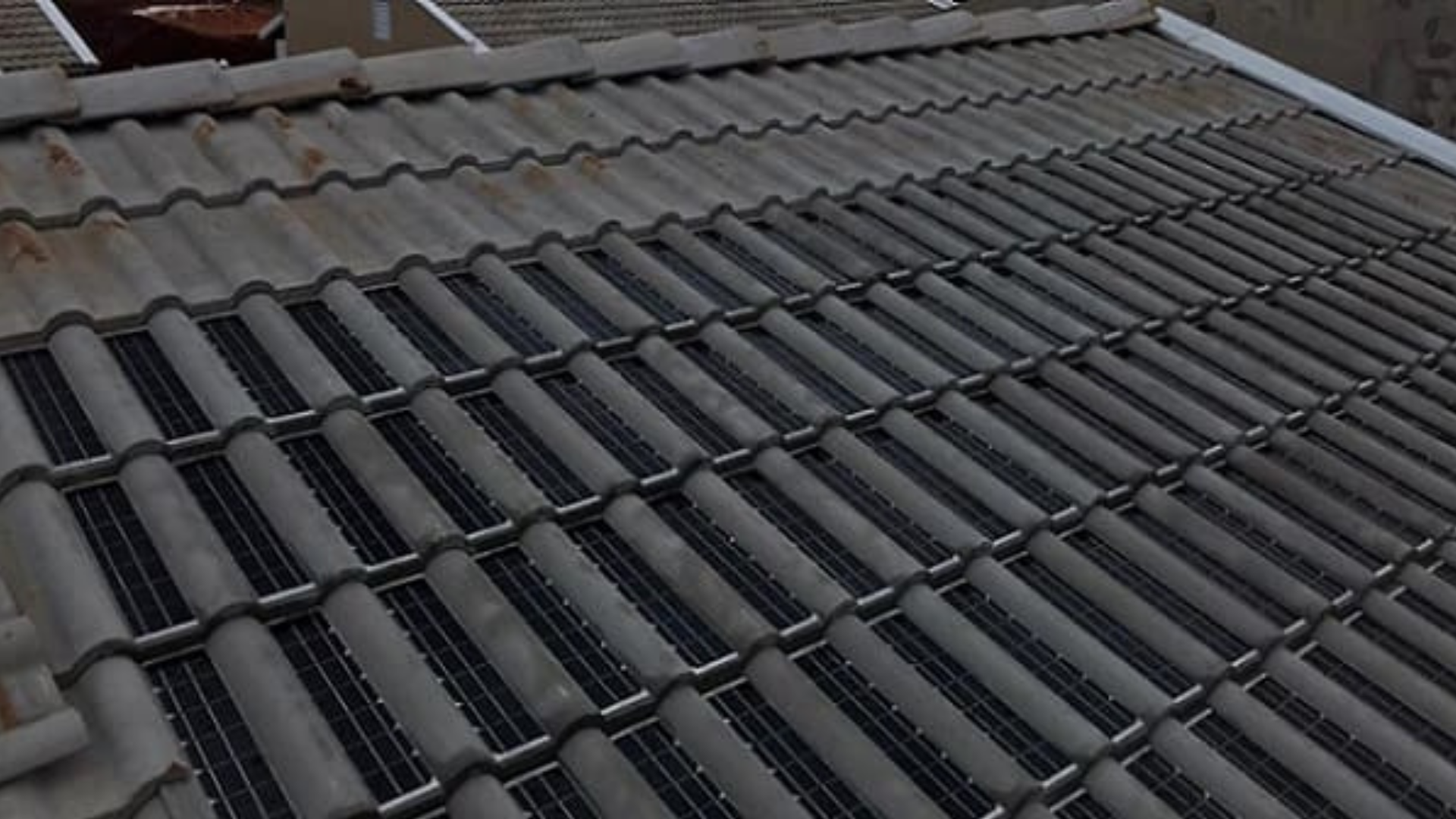
Called BIG-F10, the First Photovoltaic Tile Marketed in Brazil, is One of Eternit’s Main Technology Bets
Eternit – a company specialized in supplying raw materials, products, and solutions for the construction sector, and a market leader in the roofing segment – has begun marketing its BIG-F10 concrete photovoltaic tiles this month. The Tégula Solar product, one of the company’s main technology bets, is unprecedented in the Brazilian market and allows the transformation of sunlight into electric energy. Also check out: AXS Energia Will Invest R$ 1 Billion in 60 Solar Photovoltaic Power Plants in Minas Gerais
- How a Floating Nuclear Power Plant Works That Promises to Solve the Energy Shortage in Remote Regions
- Ibama Authorizes Petrobras to Conduct Seismic Research in the Campos Basin
- Synthetic Gasoline Promises to Save the Fuel Market and End Oil Dependency
- A Section of the Centro-Atlântica Railway in Bahia Will Receive R$ 3.5 Billion in Investments
- Cummins Plans to Manufacture Hydrogen-Powered Internal Combustion Engines
The Sale of the Company’s Photovoltaic Tiles
At this initial stage, Eternit’s photovoltaic tiles were sold to selected customers in the State of São Paulo and nearby the manufacturing unit in Atibaia. The selection was made by the company’s technical and commercial team based on the initial production capacity and the formation of a reference project portfolio for various climatic conditions, construction standards, and application possibilities.
The new product is part of the company’s restructuring process and is aligned with the strategy of building a sustainable and innovative product portfolio. “We want to democratize access to electric energy generated from renewable sources in Brazil, through a revolutionary technology that can generate returns on investment in a period of 3 to 5 years,” emphasizes the president of the Eternit Group, Luís Augusto Barbosa.
-
Renewable energy advances over protected areas in Brazil, and a survey by the Energy Transition Observatory reveals silent impacts that challenge environmental conservation and pressure sensitive traditional territories.

-
Rio Grande do Sul accelerates energy transition: State invests in renewable technologies and consolidates decarbonization strategies and pathways to attract billions in new industrial investments.

-
With 160,000 m² of collectors, an area larger than 20 football fields, Silkeborg, in Denmark, hosts a solar thermal plant that heats 19,500 homes and could become the largest solar heating plant in the world.

-
A study reveals the expansion of renewable energy procurement in Brazil and shows how companies are taking advantage of opportunities to reduce expenses, ensure energy efficiency, and strengthen strategic environmental commitments.


Details of Eternit’s Project
Approved and registered by Inmetro since 2019, the Tégula Solar tile measures 36.5 cm by 47.5 cm and is made of concrete, incorporating photovoltaic cells on its surface. It has a power output of 9.16 watts, which represents an average monthly production capacity of 1.15 Kwh, with an estimated lifespan of 20 years. “It is an easy-to-install product that does not interfere with the architecture of buildings, with weight and structure similar to conventional tiles, but adds value to the roof, in addition to offering protection, thermal comfort, and acoustic comfort,” adds Luiz Antonio Lopes.
To achieve the expected results, the product underwent a series of rigorous performance and durability tests, both in Brazil and abroad, over nearly three years. In 2019, internal installation tests began. By early 2020, installations were carried out at the Federal University of Santa Catarina’s (UFSC) photovoltaic systems laboratory in Florianópolis and at the Engineering and Environmental Institute of the University of São Paulo (IEE/USP). Next, pilot project implementations took place in various regions and climatic conditions across the country.
Also Read This News: Eternit Plans to Build Two New Fiber Cement Tile Factories in the North and Northeast of the Country
Eternit will present to its board of directors a proposal for the construction of two fiber cement tile factories. The proposal will be made by October, and the units will be built in the North or Northeast of the country, with a capacity to produce 14,000 tons. One of the factories may also expand its installed capacity by 20% and will start operations in the first quarter of 2023. Soon after, Eternit will also seek approval for the other unit, also in the North or Northeast, but with production start planned for 2024.
Together, the two new factories and Confibra, acquired this year, will enable a 50% increase in the company’s capacity. According to Eternit’s president, Luís Augusto Barbosa, there is a repressed demand in the North and Northeast due to a lack of supply. Meanwhile, in the Southeast and South, the growth will be driven by purchases of fiber cement tiles.
The company expects to complete the acquisition of Confibra in the coming weeks. In addition to constructing the new fiber cement tile factories in the North and Northeast, the company is also expanding its factories in Rio de Janeiro and Goiânia, with completion expected in the fourth quarter of this year and the first quarter of next year, respectively.









Seja o primeiro a reagir!