





 Portuguese
  English
  Spanish
  5 min of reading
  0 comments


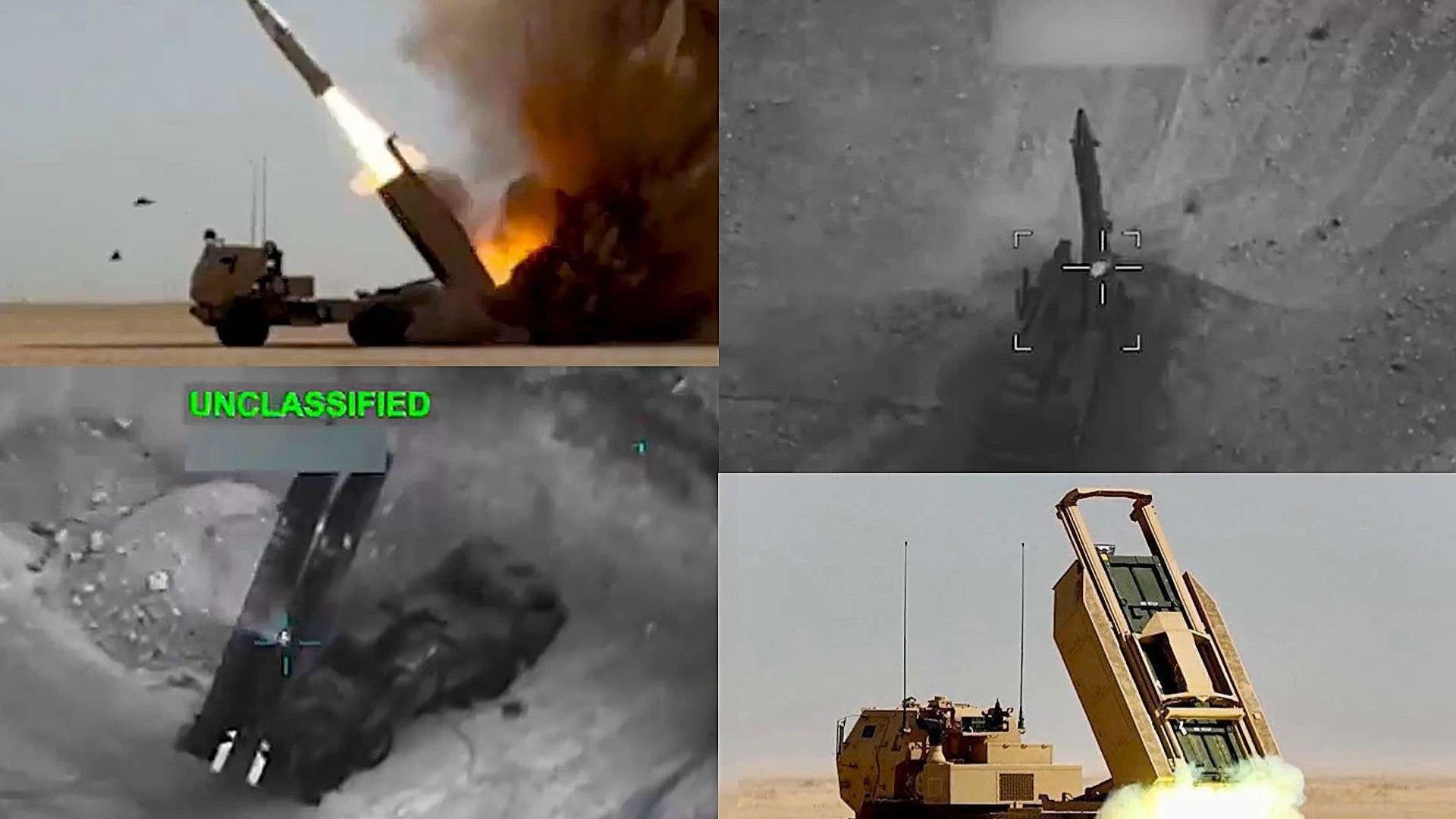
Air Mobility, Precision Strikes, and Rapid Repositioning Place the HIMARS System at the Center of a Large-Scale Military Offensive. Present in the Operation Epic Fury, the Wheeled Launcher Illustrates How Logistical Speed and Guided Fire Have Redefined Modern Attack Strategies.
The M142 HIMARS made headlines in the war between the United States and Iran after explicitly appearing among the means used in the Operation Epic Fury, a campaign that began on February 28, 2026, according to U.S. Central Command.
In the official reports from the first 48 and 72 hours, the system was listed alongside B-1, B-2, and B-52 bombers, fighters, drones, ships, support aircraft, and missile defense systems, indicating that Washington treated it as part of the core precision fire used against Iranian targets.
Epic Fury and the Presence of HIMARS in the Military Offensive
The presence of the HIMARS stands out because it does not fit the classic image of heavy artillery, slow and dependent on large logistical columns.
-
3,500-year-old tear discovered reveals a textile technique much more advanced than previously thought in the Bronze Age.

-
One of the largest manufacturers of military ammunition in the world is Brazilian and has just signed an agreement with the Navy to develop national ammunition for the frigates built in Santa Catarina that will protect the Blue Amazon.
-
Scientists are baffled by hundreds of perfect circles that have emerged on the seabed in Scotland, formed by living seagrass meadows, and no one can explain whether it is nature self-organizing or something completely unknown to science.

-
The energy consumption that goes unnoticed in millions of Brazilian homes does not come from the refrigerator or the air conditioner; it occurs even when everything seems to be turned off and can represent up to 12% of the electricity bill according to the International Energy Agency.


Documents released by CENTCOM state that the campaign surpassed 1,250 targets in the first 48 hours and over 1,700 in the initial 72 hours, with a declared focus on command and control centers, IRGC headquarters, integrated air defense systems, ballistic missile positions, ships, submarines, anti-ship batteries, and military communication capabilities.
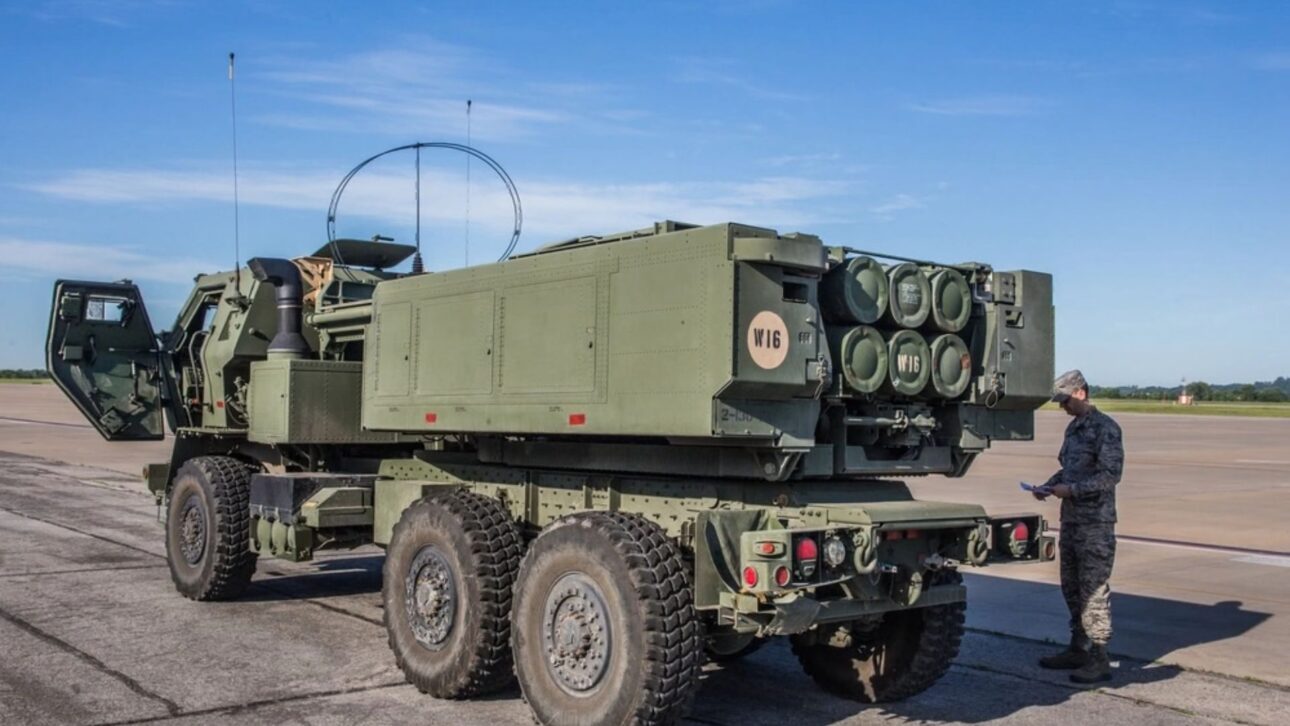
This framing helps explain why the wheeled launcher has returned to the center of military conversation.
In a video released by CENTCOM on March 4, 2026, the command directly identified the equipment in action by releasing the material “HIMARS Support Operation Epic Fury,” public confirmation that the system participated in the operational effort.
The weight of the information lies not only in the image itself but in the fact that the platform was presented as a relevant asset in an operation designed to neutralize threats deemed immediate.
Range, Mobility, and Precision of the HIMARS System
The main characteristic of the HIMARS is to combine high mobility and guided long-range munitions in a relatively compact vehicle.
In official descriptions from the Army and defense industry, the system is presented as a wheeled launcher transportable by C-130 and C-17, capable of firing a pod with six rockets from the MLRS family or one missile in the traditional configuration cited by the U.S. Army.
The manufacturer, in more recent material, also points to the integration of two PrSM missiles, indicating an expansion of the platform’s employment range.
In practice, this combination reduces the time between arrival at the operational theater, firing, and exiting the position.
The U.S. Army summarized this profile in recent exercises by defining the HIMARS as a wheeled artillery platform, transportable by land or air, capable of launching up to six rockets or one missile at a time.
The operational logic is simple: quickly occupy an advanced area, execute the attack with precision, and leave before the adversary can react.
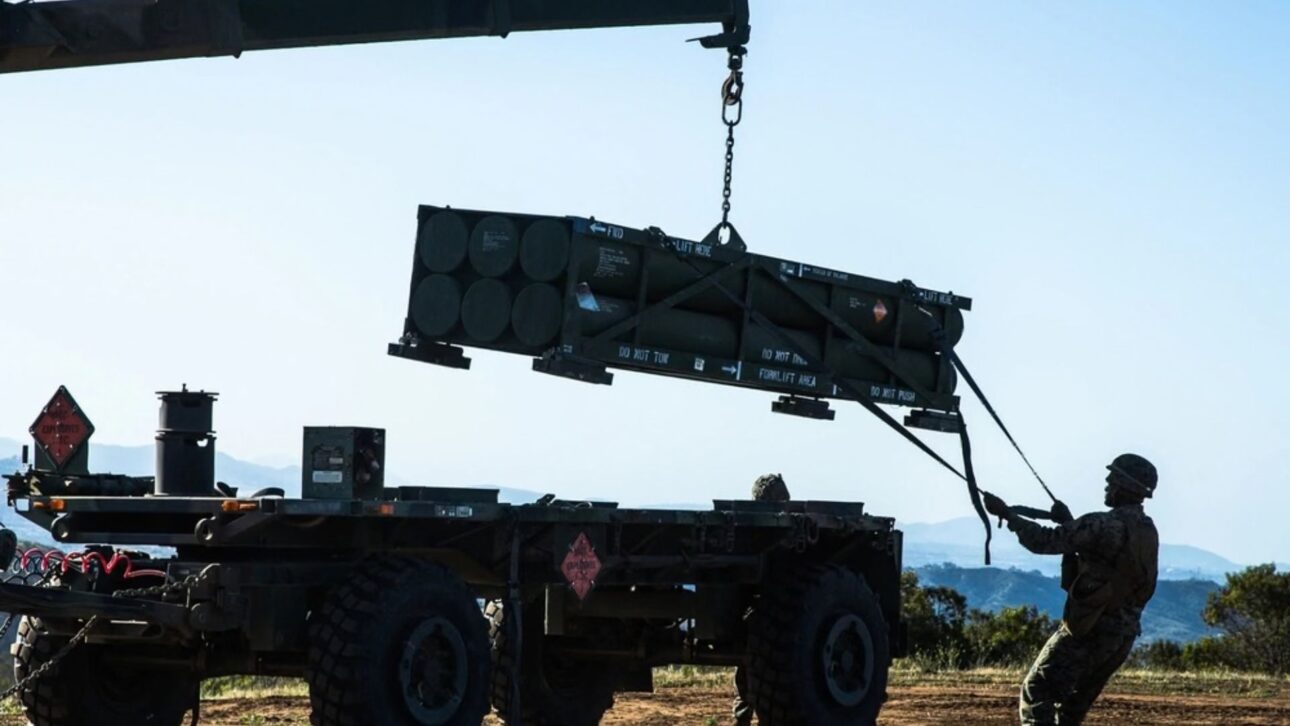
This design favors a type of employment that has gained strength in recent years, especially in scenarios of dispersion and constant threat against fixed bases.
Instead of relying solely on larger and more visible means, the command now counts on a piece capable of being airlifted, set up in a short time, and moved again before its signature is fully identified.
For this reason, the HIMARS often appears in discussions about force survivability, logistical agility, and the ability to respond to short windows of opportunity.
HI-RAIN Tactics and the “Shoot and Disappear” Strategy
The concept most associated with the system today is HI-RAIN, an acronym used by U.S. military to describe the rapid infiltration of HIMARS by aircraft such as C-130 or C-17.
In an exercise reported by the Army in March 2025, Captain Will Patterson stated that the platform allows this type of rapid insertion to deliver long-range precision fires virtually anywhere.
This statement encapsulates why the equipment is seen as a useful asset in operations requiring extreme mobility and quick reaction.
The application of this concept was clearly demonstrated in a multinational training exercise conducted in Europe.
In March 2025, the U.S. Army reported that HIMARS launchers were loaded onto C-130, landed at a new operational point, and executed a fire mission within minutes of landing, simulating an attack followed by repositioning under pressure.
The official account emphasized this short sequence between receiving the target, firing, and departing before the enemy could accurately identify the source of the attack.
In the Indo-Pacific, another demonstration reinforced the same logic through an even more complex route.
In an exercise conducted in the Philippines, the HIMARS was transported by C-130J, moved on the ground, taken to port, loaded onto a Philippine ship, and conducted for maritime landing training, in a chain between air, land, and sea domains.


The Army itself described the activity as proof of the multimodal mobility of the system, with the ability to quickly enter and exit the operational environment without losing precision firing capability.
This mobility helps explain the curiosity the system arouses outside the strictly military circle.
Unlike a strategic bomber or a destroyer, the HIMARS projects less visual spectacle and more tactical discretion.
Even so, the platform concentrates a relevant military effect because it combines a lightweight chassis, rapid displacement, and long-range guided munitions, which enhances the value of each repositioning.
In an extensive campaign, the ability to move quickly can be as important as the gross volume of fire employed.
Why HIMARS Gained Relevance in Operation Epic Fury
In the Operation Epic Fury, the prominence of HIMARS stems less from symbolism and more from the very architecture of the campaign.
CENTCOM’s fact sheet shows that, in the initial 72 hours, the operation gathered strategic bombers, stealth and conventional fighters, drones, ships, patrol aircraft, refueling means, missile defense, and the M-142 High Mobility Artillery Rocket Systems in the same set of assets used against Iranian targets.
When a launcher of this caliber appears in the same operational inventory as much larger platforms, the message is clear: precision, mobility, and rapid dispersion have taken a central role in the design of the attack.
The inclusion of the system also indicates that the campaign did not solely rely on high-value and high-signature means.
Alongside aircraft and ships capable of producing massive impact, the HIMARS offers a different response: lean presence, rapid arrival, and reduced time spent in the firing position.
In environments where minutes can determine the survival of a unit after firing, this profile ceases to be a technical detail and becomes part of the central calculation of force employment.





Seja o primeiro a reagir!