





 Portuguese
  English
  Spanish
  5 min of reading
  0 comments


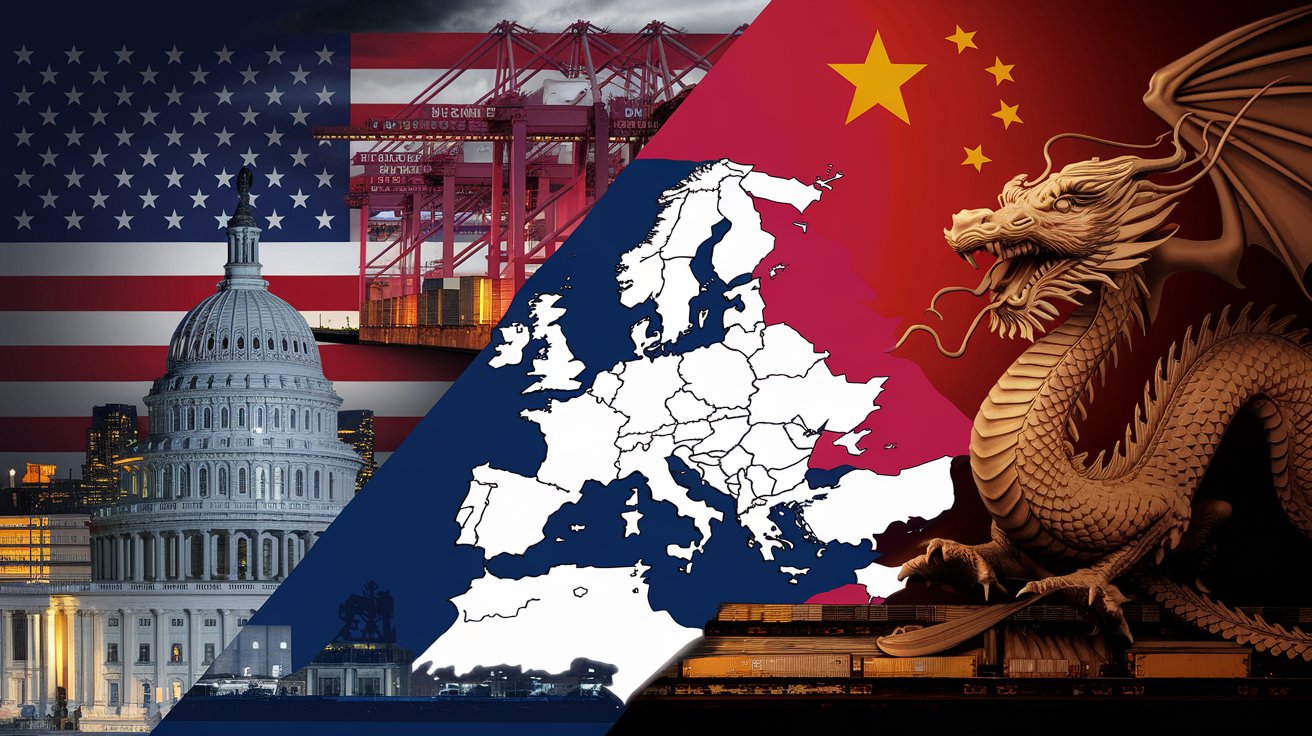
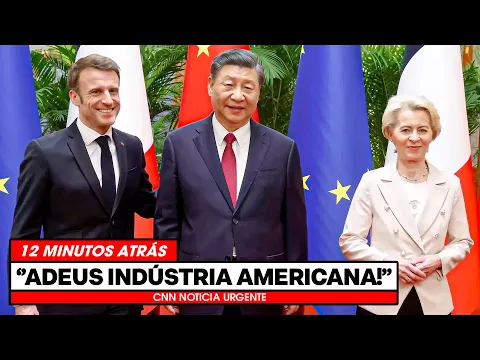
Global Geopolitics Is Changing! Europe and China Are Coming Together, Creating a Powerful Economic Alliance That Threatens the United States.
Did you know that global geopolitics is undergoing a full transformation?
A new economic alliance is challenging the supremacy of the United States in global trade.
While Americans try to maintain their influence, Europe and China are getting closer, which could reshape the global economic landscape. What is behind this change?
-
Jeep Avenger begins production in Brazil, debuting as the brand’s new entry-level SUV and inaugurating an unprecedented phase by becoming the first national Jeep manufactured outside of Goiana, as part of a R$ 3 billion plan.
-
Costing R$ 12,490, the new Shineray Urban Lite 150 “cheap one” arrives in Brazil with a CVT transmission, digital dashboard, and LED lights, making it more affordable than the Biz and targeting those who want to abandon the bus.

-
Ducati brings to Brazil the Superleggera V4 Centenario: 228 hp that become 247 with a track kit, carbon fiber and carbon-ceramic brakes, estimated price between R$ 1.5 and 2 million, deliveries only in 2027.

-
Used cars with electric steering for R$ 30,000: check out 5 practical and economical options for everyday use.


How could this new partnership impact the future of major economies, especially the American one?
Let’s explore how the growing strength of the Middle Corridor can transform international trade and challenge U.S. hegemony. Information based on analyses from the Turbo Formula channel.
Europe and Its Search for Safer, More Efficient Alternatives
For decades, Europe has been a continent dependent on major shipping routes for its imports, often dominated by Western companies and trade alliances with the United States.
However, this dependence is rapidly being replaced by a new economic model, where China emerges as a significant strategic partner.
Recent geopolitical instability, coupled with health crises and increasing American protectionism, has accelerated this shift.
Europe is now seeking safer and more efficient alternatives, distancing itself from the vulnerability of relying on the economic fluctuations of Western markets.
As detailed by the Turbo Formula channel, the realignment of supply chains did not happen by chance.
The realignment of supply chains did not happen by chance.
Europe’s response has been clear: strengthen trade ties with countries in the Middle Corridor, reducing exposure to the volatile U.S. markets.
This change has inevitable consequences. The United States, which has always been the main center of economic influence in Europe, is beginning to lose space.
If before European nations rigidly followed U.S. trade policy, now they prioritize economic pragmatism, seeking real advantages and not just political alliances.
The Turbo Formula, in its recent analyses, points out this new dynamic among economies.
The Weakening of the United States: The Challenge of the Middle Corridor
This new movement from Europe raises a crucial question: to what extent can the United States allow this trade arrangement to consolidate without suffering even greater economic weakening?
For much of the 20th century and the early 21st century, the United States dominated global trade, with logistical networks ruling the oceans and trade agreements ensuring influence over its allies.
However, this dominance is being challenged with the emergence of new trading powers and the rise of logistical alternatives outside U.S. control.
A clear example of this shift is the strengthening of the Middle Corridor, causing products and goods to be routed through channels increasingly less controlled by the United States.
The diminishing importance of key points like the Suez Canal, traditionally central in the distribution of goods between Asia and Europe, is a reflection of this change.
According to the Turbo Formula channel, the strategic relevance of such canals diminishes as land routes become more viable and efficient, challenging America’s historical influence.
The Middle East: New Logistical Epicenter of Global Trade
Another key factor in understanding this reconfiguration of global trade is the growing role of the Middle East as a logistical center.
For decades, this region has been viewed as strategic only due to its oil and natural gas reserves, but this scenario is changing rapidly.
Countries like Turkey, Saudi Arabia, and Iran are now positioning themselves as essential trade hubs, leveraging the growth of the Middle Corridor and offering faster and more efficient alternatives to traditional shipping routes.
Historically, the Suez Canal played a crucial role in global trade, allowing ships to pass between Asia and Europe without the need to circumnavigate the African continent.
However, this route has become increasingly expensive and vulnerable, with vessel congestion, attacks on ships, and political instability affecting the security and predictability of trade.
These factors have opened the door for new land and rail routes, with the Middle East playing a central role in this transformation. Supplementary information from the Turbo Formula channel confirms this growing trend.
Heavy Investments in Infrastructure and the Growing Chinese Presence
The Middle East, especially Turkey, is investing billions of dollars in infrastructure modernization, focusing on railways and ports.
These investments not only strengthen the region’s position as a trade hub but also make land routes more attractive than traditional shipping routes.
Turkey, for example, is already a vital connection point between Asia and Europe and is now further expanding its infrastructure to handle the growing volume of goods.
Iraq has also joined the race with a billion-dollar infrastructure project aimed at creating railways and highways that connect the country directly to Europe, eliminating intermediaries and making the movement of goods faster and more efficient.
These movements are creating a new commercial landscape where dependence on shipping routes is significantly decreasing.
According to the Turbo Formula channel, these transformations are not only strategic but also a reflection of the new era of global trade alliances.
Moreover, the growing Chinese presence in the Middle East is accelerating this transformation.
China has been making hefty investments in the construction and modernization of ports and railways in key countries like Iran and the United Arab Emirates.
Beijing has already signed billion-dollar trade agreements with local governments, ensuring that its goods have priority in using these new infrastructures.
As a result, China’s dependence on shipping routes decreases while the United States increasingly loses its influence over the flow of goods around the world. This information was detailed by the Turbo Formula channel.
The Future of Global Trade and Its Impact on the United States
As the Middle Corridor strengthens and new trade routes emerge, the major question arises: what will be the implications for international trade in the coming years?
The Middle East, with its expanding infrastructure, is becoming a crucial logistical point, while the United States, with its traditional shipping routes, is losing its ability to directly influence global trade.
The United States’ ability to respond to this loss of control over key trade routes will be determinative for its economic future.
How will Washington react to this new geopolitical arrangement, where China and the Middle East occupy an increasingly central role in global trade?
As discussed by the Turbo Formula channel, the future of global trade is becoming increasingly unpredictable.
With new alliances and trade routes shaping commerce between China, Europe, and the Middle East, U.S. hegemony in global trade is being questioned like never before.










Seja o primeiro a reagir!