





 Portuguese
  English
  Spanish
  3 min of reading
  0 comments


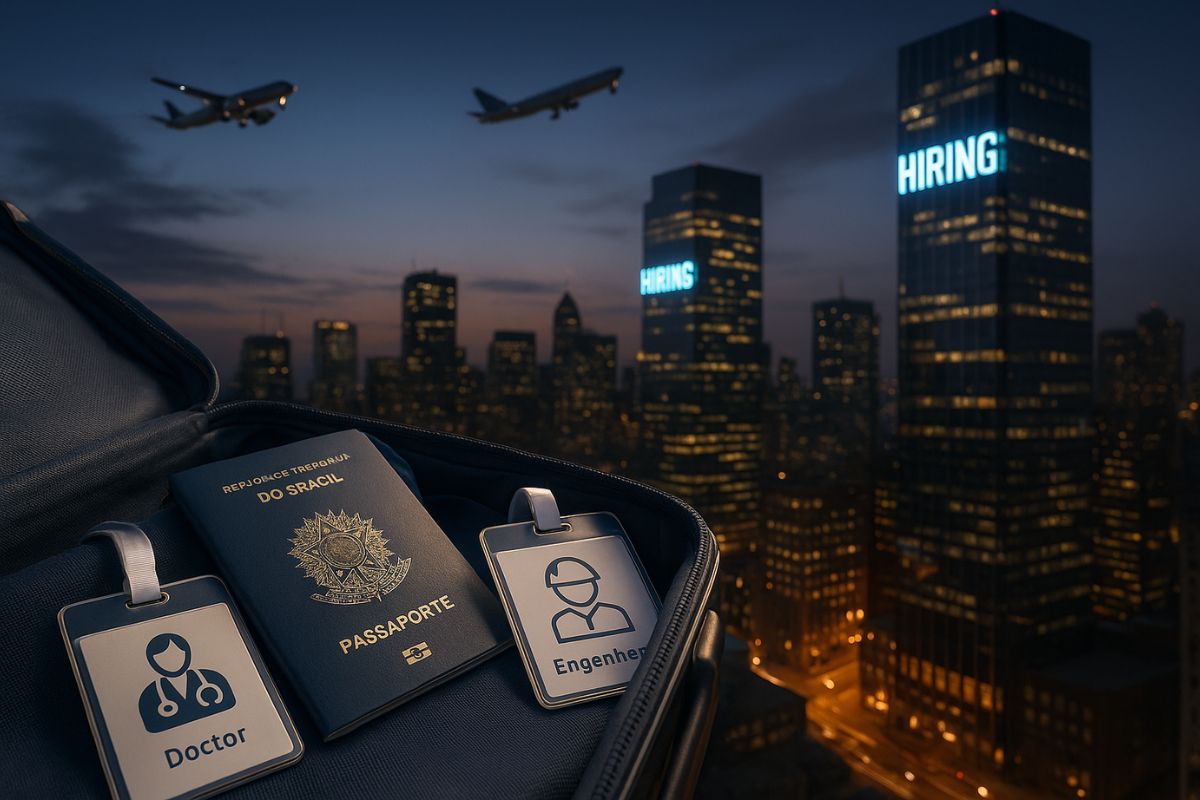
For The First Time In 60 Years, Immigration Fell In The US: 1.4 Million Immigrants Left In 2025, But The Market Opened 7 Million Qualified Jobs That Americans Alone Cannot Fill.
For the first time in six decades, the United States recorded a decline in the number of immigrants. In 2025 alone, 1.4 million foreigners left the country, reducing the immigrant population from 53.3 million to 51.9 million. At the same time, the market faces a bottleneck: 7 million jobs remain open in areas such as technology, healthcare, and engineering, sectors where the local workforce supply is insufficient.
According to an analysis published by hubTNT, by Davi Aragão, this imbalance represents a historic window for Brazilians who seek to migrate legally and occupy high-skilled positions in the US.
Why Did The US Lose Immigrants In 2025?
The decline is directly linked to the tightening of immigration policies. The US government revoked temporary protections, limited residency visas, and reinforced barriers against illegal immigration. These measures resulted in a mass exodus of workers in sectors such as agriculture, construction, and hospitality, which have historically depended on foreign labor.
-
Brazil produces too much clean energy and doesn’t know what to do with it: over 20% of solar and wind capacity was wasted in 2025 while investors flee and 509 renewable generation projects were abandoned in the last year.

-
Piauí will produce a new fuel that replaces diesel without needing to change anything in the truck’s engine and reduces pollutant gas emissions by half: truck drivers from all over the Northeast are already celebrating the news that will arrive later this decade.

-
A new Brazilian shopping center worth R$ 400 million will be built in an area equivalent to more than 4 football fields, featuring 90 stores, 5 cinemas, a supermarket, a college, and parking for 1,700 cars, potentially generating 3,000 jobs.

-
Larger than entire cities in Brazil: BYD is building a 4.6 km² complex in Bahia with a capacity for 600,000 vehicles per year, but the discovery of 163 workers in conditions analogous to slavery has shaken the entire project.

The economic effect was immediate. This year alone, the immigrant workforce shrank by 750,000 people. The Brookings Institution estimates that the reduction could cut 0.4% off US GDP growth in 2025 by diminishing the labor supply in critical sectors for the economy.
Where Are The Millions Of Open Jobs?
Despite the departure of immigrants, the US continues to generate jobs in high-demand sectors. Currently, there are 7 million open jobs, concentrated in areas that require technical and university-level training:
- Information Technology: programmers, data scientists, software engineers.
- Healthcare: doctors, nurses, physical therapists, specialized caregivers.
- Engineering: civil, electrical, mechanical, and environmental.
- Specialized Services: from scientific research to advanced logistics support.
The scarcity of local professionals to fill these positions has led the US to pay more attention to qualified legal immigrants.
What Visas Are Available For Brazilians?
With the doors closing for irregular immigration, the country has started to value those who arrive through formal channels. Among the most commonly used pathways for Brazilians are:
- EB2-NIW: aimed at professionals with advanced degrees in strategic areas, waiving the need for a prior job offer.
- H1B: allows individuals to work in American companies in technical and highly specialized roles.
- O1: intended for professionals with extraordinary abilities in science, arts, or business.
Recent data indicates that approvals for EB2-NIW have increased by over 40% in recent years for fields related to science and technology, reinforcing the need for qualified talent to sustain the US economy.
Why Are Brazilians in a Strategic Position?
Brazil has specific advantages at this moment. The country does not face travel restrictions, maintains good diplomatic relations with the US, and trains professionals precisely in the areas of highest demand, such as engineering, IT, and healthcare.
Moreover, experience in emerging markets and cultural flexibility make Brazilians competitive in a globalized environment. For those preparing with solid education, proven experience, and adequate legal support, the decline in the number of illegal immigrants may not be a barrier but a shortcut to gain a foothold in the American market.
The scenario shows that the departure of immigrants weakened the American economy in key sectors but opened 7 million jobs for those seeking opportunities legally and professionally.
And you, do you believe this is a unique opportunity for Brazilians to secure a place in the US? Or do you see risks in relying on this new immigration policy? Share your opinion in the comments and take part in this debate about professional future and international mobility.









-

-

-

6 pessoas reagiram a isso.