





 Portuguese
  English
  Spanish
  5 min of reading
  1 comment


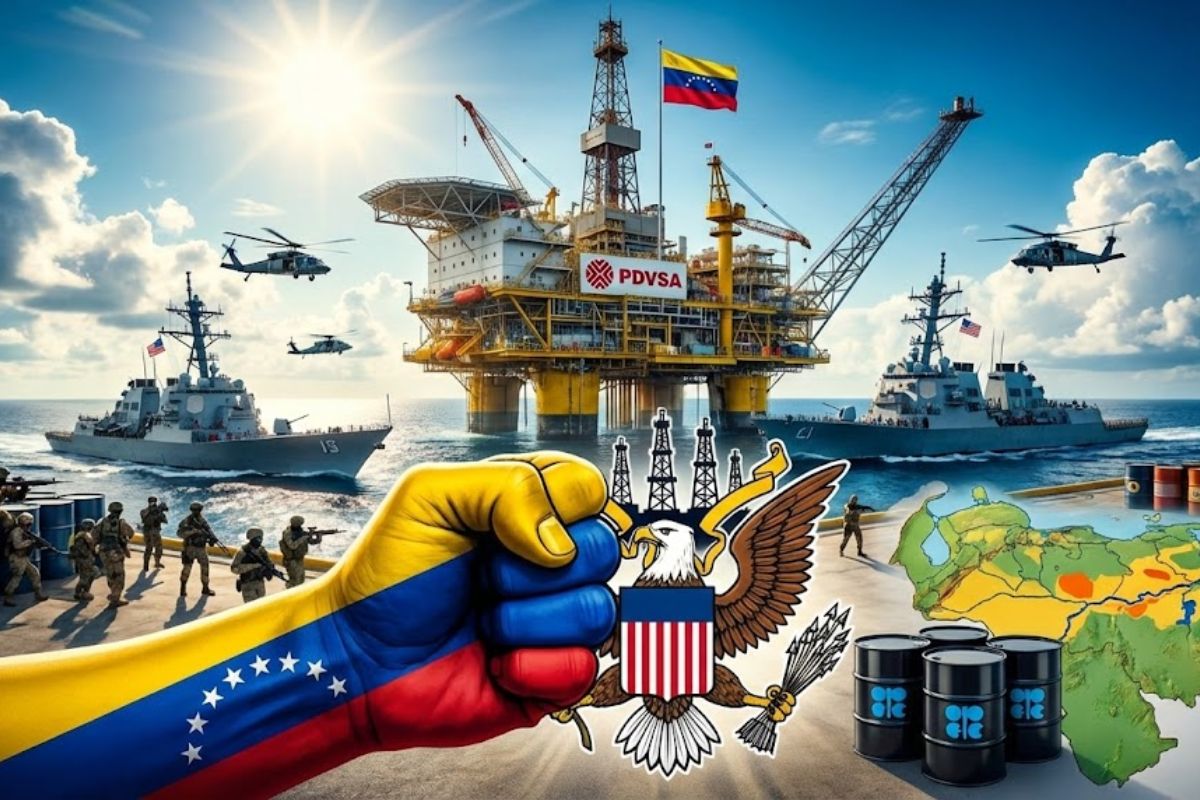


In Letter Read at OPEC, Maduro Accuses the US of Planning to Use Military Force to Control Venezuelan Oil, Quotes Donald Trump, Warns of Impact on the World’s Largest Reserves, on Regional Stability, on the Global Energy Market, and on Venezuelan Sovereignty Amid Sanctions Imposed by the US.
Venezuela has escalated its tone against Washington by bringing to OPEC the allegation that the United States would be willing to use military power to seize Venezuelan oil, currently described by the government itself as the largest reserve in the world. The message, signed by President Nicolás Maduro and read by Vice President Delcy Rodríguez in a virtual meeting, states that such an offensive could shake the global energy market and jeopardize regional peace.
While accusing the White House of attempting to redraw the geopolitical chessboard around Venezuelan oil, Caracas points to Donald Trump as responsible for a growing pressure campaign, combining economic sanctions, military reinforcement in the Caribbean, and operations against alleged drug trafficking boats. The document sent to OPEC seeks to mobilize producing countries to see the dispute not just as a bilateral conflict but as a test of limits regarding the sovereignty of natural resources.
Maduro’s Letter to OPEC Transforms Dispute Into an Oil Agenda Theme

In the letter addressed to the Secretary-General of OPEC and to OPEC and OPEC+ member countries, the Venezuelan government asserts that the United States intends to seize the country’s oil reserves through the direct use of military force.
-
A new Brazilian shopping center worth R$ 400 million will be built in an area equivalent to more than 4 football fields, featuring 90 stores, 5 cinemas, a supermarket, a college, and parking for 1,700 cars, potentially generating 3,000 jobs.

-
Larger than entire cities in Brazil: BYD is building a 4.6 km² complex in Bahia with a capacity for 600,000 vehicles per year, but the discovery of 163 workers in conditions analogous to slavery has shaken the entire project.

-
With an investment of R$ 612 million, a capacity to process 1.2 million liters of milk per day, Piracanjuba inaugurates a mega cheese factory that increases national production, reduces dependence on imports, and repositions Brazil on the global dairy map.

-
Brazilian city gains industrial hub for 85 companies that is equivalent to 55 football fields.


The text explicitly links American ambition regarding Venezuelan oil to the stability of the entire global energy chain.
Maduro argues that Trump’s offensive against Caracas, intensified since August, is not limited to a political or diplomatic clash but takes on the contours of a concrete threat to regional peace.
The letter recalls that previous military interventions by the US in other producing countries resulted in the destruction of infrastructure, abrupt production drops, and long periods of instability, with lasting effects on global oil prices and supply.
The Venezuelan government further asserts its intention to defend its natural resources in all available multilateral forums, treating Venezuelan oil as a central element of its economic and political identity.
By bringing the dispute to the OPEC table, Caracas attempts to transform a conflict with Washington into a collective theme for oil exporters.
Impact on the Energy Market and on the World’s Largest Oil Reserve
In Caracas’ assessment, any military escalation regarding Venezuelan oil would have immediate repercussions on the global energy market.
The letter warns that an intervention in Venezuelan territory could disrupt export flows, cause damage to production and transportation infrastructure, and generate prolonged uncertainty about the country’s ability to fulfill contracts.
The central argument is that, by holding what is called the largest oil reserves on the planet, Venezuela occupies a key position in balancing global supply and demand.
An intervention seen as an attempt to forcibly seize Venezuelan oil could trigger reactions in other producing countries, raise risk premiums, pressure prices, and accelerate the reconfiguration of trade alliances in the energy sector.
The communication sent to OPEC emphasizes that the dispute transcends political rhetoric and directly impacts market design.
For Maduro’s government, leaving a military action against Venezuelan oil unanswered would set a dangerous precedent for other countries’ strategic reserves to also be treated as legitimate targets in geopolitical disputes.
Production Down, Export Concentration, and Economic Fragility
While raising international allegations, Caracas admits it faces a scenario of economic vulnerability.
Venezuela’s oil production, a traditional OPEC member, has stabilized around 1.1 million barrels per day this year, less than one-third of the peak recorded at the end of the 1990s.
This figure highlights the loss of productive capacity after years of a lack of investment and asset deterioration.
Besides the drop in production, the country has become even more reliant on a few buyers.
More than 80% of Venezuela’s oil exports were directed to China between June and October, according to shipping data cited by the government.
In practice, this reduces Caracas’ room for maneuver while reinforcing the reading that any interruption of Venezuelan flow would have a direct impact on the supply chains of strategic partners.
This combination of low production and concentration of destinations makes Venezuelan oil a simultaneously vital and fragile asset.
On one hand, it remains the main instrument for state financing; on the other, the ability to negotiate favorable terms diminishes when the portfolio of buyers and sources of investment narrows amid sanctions.
Sanctions, US Military Presence, and Risk of Escalation
The Maduro government links US military pressure directly to the interest in Venezuelan oil.
The text sent to OPEC mentions the harassment campaign led by Donald Trump, who reinforced the presence of ships and military assets in the Caribbean under the pretext of combating drug trafficking.
Operations against suspicious vessels in the Caribbean and the Pacific, which already resulted in dozens of deaths, are presented by Caracas as part of a strategy that could evolve into land actions in the country.
At the same time, Washington claims to be open to negotiations with the Venezuelan government, despite maintaining the sanctions regime that hinders foreign investment attraction for oil fields.
This duality between offering dialogue and maintaining military and economic pressure is interpreted by Maduro as a tactic to force strategic concessions regarding Venezuelan oil without, officially, committing to direct intervention.
On the Venezuelan side, the response includes demonstrations of strength and recurrent speeches on defending sovereignty.
The government presents itself as the guardian of natural resources threatened by foreign powers, attempting to mobilize internal support and solidarity among producing countries.
In the letter, Caracas states that it will not relinquish control over Venezuelan oil and is willing to activate multilateral mechanisms to contain what it describes as a threat to international peace and stability.
Sovereignty, Energy, and Open Geopolitical Dispute
At the center of the conflict is the question of how far one country can pressure another in the name of energy and security interests.
For Caracas, there is no ambiguity: any attempt to use military force to determine the fate of Venezuelan oil is, by definition, a violation of sovereignty.
For Washington, the official narrative still combines justifications related to combating drug trafficking, concern for democracy, and regional stability.
The sending of the letter to OPEC indicates that Venezuela seeks to transform an asymmetric dispute with the United States into a systemic theme of oil governance.
If Maduro’s thesis gains adherence, other producing countries may see the situation as an important test of the limits of pressure regarding strategic reserves.
If isolated, the denunciation runs the risk of being treated as just another chapter of the tension between Caracas and Washington.
In the face of this rhetorical and military escalation involving Venezuelan oil, do you believe that OPEC and other producing countries should intervene politically to reduce the risk of a direct confrontation between the United States and Venezuela?





Eu poria cargas de explosivos em todas as operações de petróleo se continuassem as ameaças contra o país e colocaria o mundo inteiro dentro do problema que não deixa de ser um problema mundial